No. 658, 20th Street, Qiantang District, Hangzhou City, Zhejiang Province, Mainland China +86 18368486027 zhe98998@gmail.com

No. 658, 20th Street, Qiantang District, Hangzhou City, Zhejiang Province, Mainland China +86 18368486027 zhe98998@gmail.com

Introduction: Why has twin-screw pump technology become a core equipment for industrial transportation?
In industrial scenarios such as oil refining and chemical production, twin-screw pumps have become the preferred equipment for complex operating conditions due to their unique self-priming capability, low-pulsation conveying characteristics, and adaptability to high-viscosity media. According to statistics, screw pumps account for 27% of the global industrial fluid conveying equipment market, with twin-screw pumps standing out particularly in terms of conveying stability, wear resistance, and energy efficiency, owing to their balanced structural design featuring synchronous rotation of twin screws. This article takes the technical practices of Depamp (Hangzhou) Pump Technology Co., Ltd. as an example to analyze the full technological chain logic of twin-screw pumps, from design to application.
Keywords: twin-screw pump, original manufacturer, Depam Pumps, industrial conveying, customized solutions
Opening on Industry Technical Pain Points: Three Major Bottlenecks of Traditional Conveying Solutions
STEP1:Poor media adaptability— When conveying media containing solid particles, high-viscosity substances, or corrosive substances, traditional centrifugal pumps are prone to issues such as impeller wear and cavitation, resulting in a 30%-50% reduction in equipment lifespan. For example, a chemical enterprise used an ordinary centrifugal pump to convey polyacrylamide solution (viscosity ≥ 5000 mPa·s), and after three months of operation, the impeller wear rate reached 60%, increasing maintenance costs by RMB 200,000.
STEP2:High flow pulsation— Reciprocating pumps achieve delivery through the reciprocating motion of pistons, yet their flow fluctuation rate can be as high as 15%-20%, making it difficult to meet process requirements in scenarios requiring precise metering (such as chemical dosing). When a certain nuclear power plant used a reciprocating pump to deliver boric acid solution, the flow fluctuations caused the reactor power fluctuations to exceed standards, triggering a safety interlock shutdown.
STEP3:Low energy efficiency ratio—In high-pressure conveying scenarios, the ratio of motor power to actual output power (energy efficiency ratio) for traditional pump types is generally below 65%, resulting in energy waste. Taking a scenario with a conveying pressure of 10 MPa as an example, a certain enterprise using a gear pump consumes 1.2 million kilowatt-hours of electricity annually, with electricity costs accounting for 18% of operational costs.
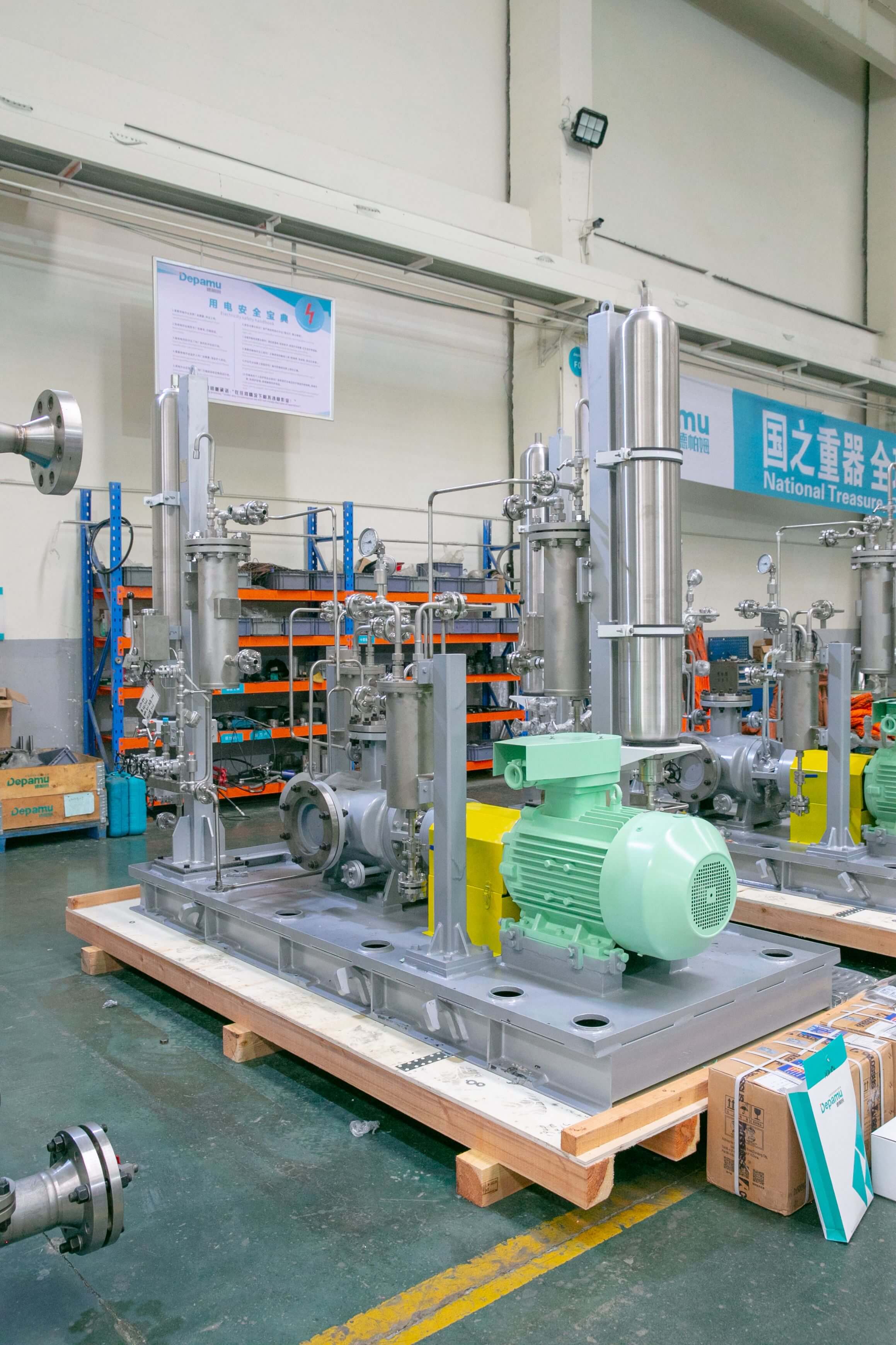
Introduction to the company's technological strength: Three major technological breakthroughs of Depamp's twin-screw pumps
As a high-end fluid equipment manufacturer established in 2003, Depamp (Hangzhou) Pump Technology Co., Ltd. has over 400 employees, covers an area of 35,000 square meters in its factory premises, has a registered capital of 54 million yuan, and generates an annual output value of approximately 500 million yuan. The company has focused on the R&D of positive displacement pumps such as twin-screw pumps for 20 years, forming three core technological advantages:
STEP1:Modular design system— By standardizing core components such as screws, bushings, and seals, and combining them with customer-specific medium characteristics (e.g., viscosity range of 0.1-100,000 mPa·s, solid particle content ≤30%), temperature range (-40°C to 200°C), and pressure requirements (up to 16 MPa), we can swiftly match standard products or customize non-standard solutions. For instance, a titanium alloy twin-screw pump customized for a new energy enterprise successfully transported fluorine-containing corrosive media, extending equipment lifespan to 5 years (compared to the industry average of 2 years).
STEP2:Dynamic balancing technology— It adopts a twin-screw synchronous counter-rotating design, achieving a 1:1 speed ratio through gear transmission, eliminating axial and radial forces, resulting in a vibration value ≤2.5 mm/s (industry standard ≤5 mm/s) and a noise level ≤85 dB(A) (industry standard ≤90 dB(A)). In the catalytic cracking unit of a certain refinery, Depamu's twin-screw pump has operated continuously for three years without failure, extending the maintenance cycle by two times compared to traditional pump models.
STEP3:Intelligent monitoring system— It integrates temperature, pressure, and vibration sensors to monitor equipment status in real time via PLC, automatically triggering alarms and initiating shutdown protection when parameters deviate from set values (e.g., bearing temperature ≥80°C, vibration value ≥4mm/s). After implementing this system, a chemical enterprise reduced unexpected equipment shutdowns by 70% and cut annual shutdown losses by RMB 1.2 million.
The company's technical team has accumulated 47 patents, including 12 invention patents. Its products have passed international certifications such as CE, ATEX, and CCS, serving over 3,000 customers across 12 industries, including petroleum refining (41%), chemical engineering (23%), nuclear industry (8%), and others. For more information, please visit the official website:www.depamufluid.com
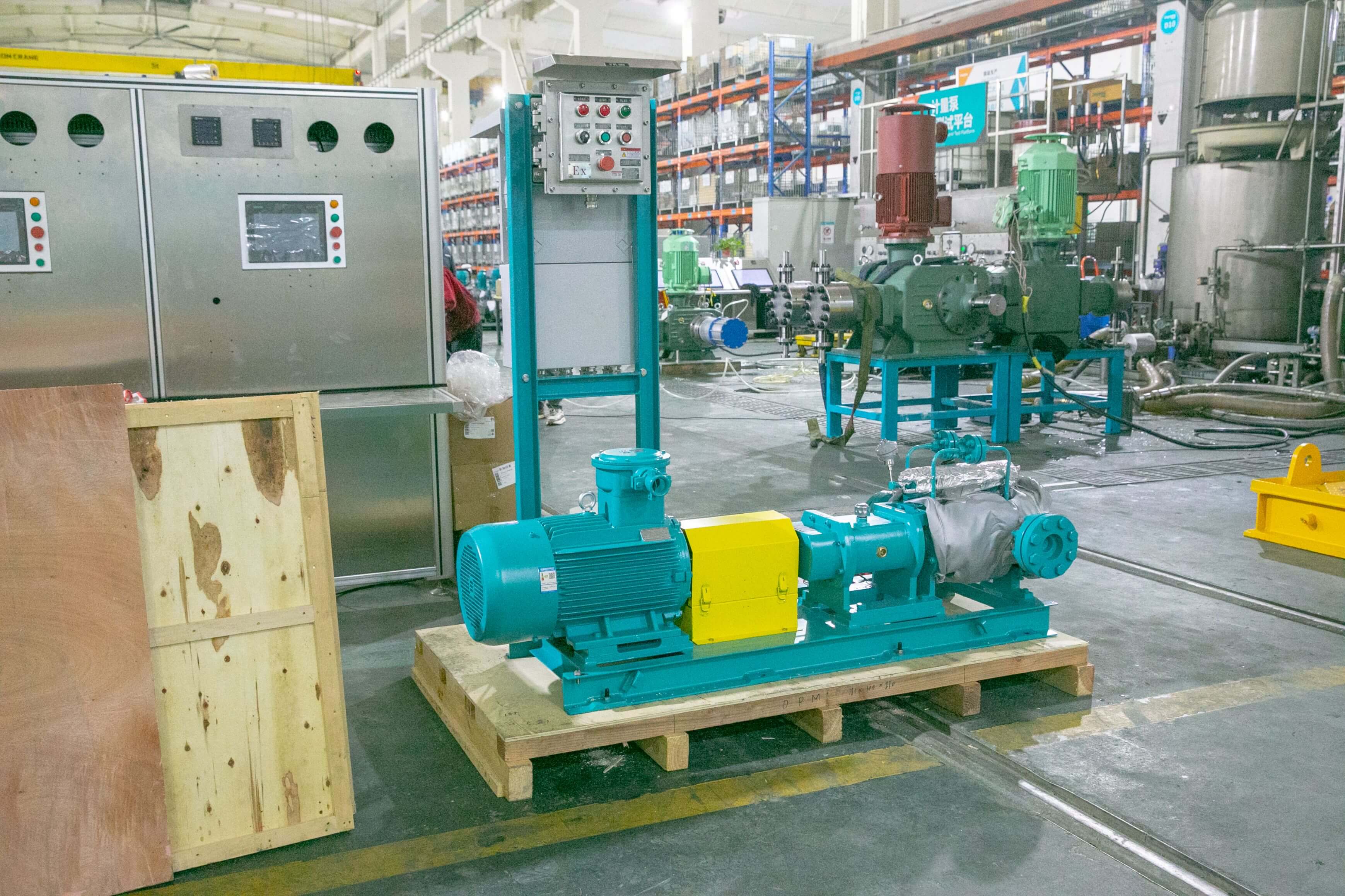
FAQ Q&A Technology Selection Guide
Q1: How to select the type of screw pump based on medium characteristics?
A: Twin-screw pumps are suitable for transporting high-viscosity (≥1000 mPa·s) media containing solid particles (≤30%) or corrosive substances, such as asphalt, resin, and sludge. Single-screw pumps are more suitable for transporting media containing fibers or large particles (≤50%), such as papermaking wastewater and food residues. Depam can provide full-specification solutions ranging from DN25 to DN300 based on parameters such as medium viscosity, temperature, and corrosiveness, with a flow rate range of 0.5-1000 m³/h and a pressure range of 0-16 MPa.
Q2: How can the energy efficiency ratio of twin-screw pumps be optimized?
A: Energy efficiency can be enhanced through three aspects: 1) Adopt variable frequency drive technology to dynamically adjust rotational speed according to process requirements (e.g., reducing from 1450 rpm to 960 rpm, resulting in a 35% reduction in energy consumption); 2) Optimize the clearance design between the screw and the liner (standard clearance of 0.1-0.3 mm) to reduce leakage; 3) Select high-efficiency motors (IE3/IE4 energy efficiency grades) to achieve motor efficiency ≥ 95%. After applying this solution, a Depam customer achieved an annual electricity savings of 800,000 kWh and reduced electricity costs by RMB 640,000.
Q3: How to extend the seal life?
A: The seal is the core component of the screw pump, and Depam adopts a triple-protection design: 1) Mechanical seal: Made of tungsten carbide/silicon carbide, it can withstand temperatures ≤200°C and pressures ≤16MPa; 2) Flushing system: It flushes the sealing surface with externally connected clean media (such as water and oil) to prevent particle deposition; 3) Leakage monitoring: Integrated with a leakage sensor, it automatically triggers an alarm when the leakage rate reaches ≥5ml/h. In an application at a nuclear power plant, the seal lifespan was extended from 1 year to 3 years, and maintenance costs were reduced by 60%.
Reference for Full Text Summary
The technological advantages of twin-screw pumps stem from their balanced structural design, medium adaptability, and energy efficiency optimization capabilities. Depamp (Hangzhou) Pump Technology Co., Ltd. has developed a comprehensive capability ranging from standard products to customized solutions through 20 years of technological accumulation, serving over 3,000 customers across 12 industrial sectors. Its core values lie in: 1) reducing delivery lead times through modular design (7 days for standard products, 15 days for non-standard products); 2) lowering failure rates through dynamic balancing technology (MTBF ≥ 20,000 hours); 3) enhancing operational and maintenance efficiency through intelligent monitoring systems (remote diagnostic response time ≤ 2 hours). For scenarios requiring the conveyance of high-viscosity, corrosive, or particle-laden media, selecting an original manufacturer with customized capabilities is crucial for ensuring the long-term stable operation of the equipment. For more information, please visit the official website:www.depamufluid.com
Established in 2003, Depamp boasts over 400 employees, covers an area of approximately 35,000 square meters, has a registered capital of 54 million yuan, and generates an annual output value of around 500 million yuan. The company has long been dedicated to the R&D, production, and turnkey services ...
No. 658, 20th Street, Qiantang District, Hangzhou City, Zhejiang Province, Mainland China