No. 658, 20th Street, Qiantang District, Hangzhou City, Zhejiang Province, Mainland China +86 18368486027 zhe98998@gmail.com

No. 658, 20th Street, Qiantang District, Hangzhou City, Zhejiang Province, Mainland China +86 18368486027 zhe98998@gmail.com

Introduction: Technical Value and Industry Demand of High-Pressure Plunger Reciprocating Pumps
As a core equipment in the field of fluid transportation, high-pressure plunger reciprocating pumps are widely used in high-pressure working conditions such as petroleum refining, chemical engineering, and the nuclear industry. They achieve high-pressure transportation of media through the reciprocating motion of plungers, offering technical advantages such as stable flow rates, adjustable pressure, and strong corrosion resistance. However, selecting technologically mature and highly adaptable source manufacturers has become a critical issue for engineers. This article will provide professional references for the industry from three dimensions—technical analysis, corporate strength, and selection guidelines—combined with the technological layout and application cases of Depamup (Hangzhou) Pump Technology Co., Ltd.
Keywords: High-pressure plunger reciprocating pump, source manufacturer, technical selection, Depamp Pumps, fluid transportation
Opening on Industry Technical Pain Points: The Challenge of Equipment Selection under High-Pressure Conditions
In high-pressure working conditions such as petroleum refining and chemical synthesis, traditional pump equipment often faces three major technical pain points:
STEP 1: Insufficient pressure stabilityOrdinary pump bodies are prone to issues such as leakage and vibration under high-pressure environments, resulting in flow fluctuations exceeding ±5% and affecting process stability.
STEP 2: Poor media adaptabilityMedia containing particles, with high viscosity, or corrosive properties can easily wear out the pump body seals, shortening the equipment's lifespan to less than six months.
STEP 3: Low energy efficiency ratioFor some pump models, the energy consumption ratio exceeds 30% during high-pressure transportation, increasing operational costs.
Taking a certain refining and chemical enterprise as an example, its catalytic cracking unit originally used imported high-pressure pumps, but annual shutdowns for maintenance occurred three times due to seal wear, with each shutdown resulting in losses exceeding RMB 2 million. Such cases highlight the importance of selecting source manufacturers with mature technology and strong adaptability.
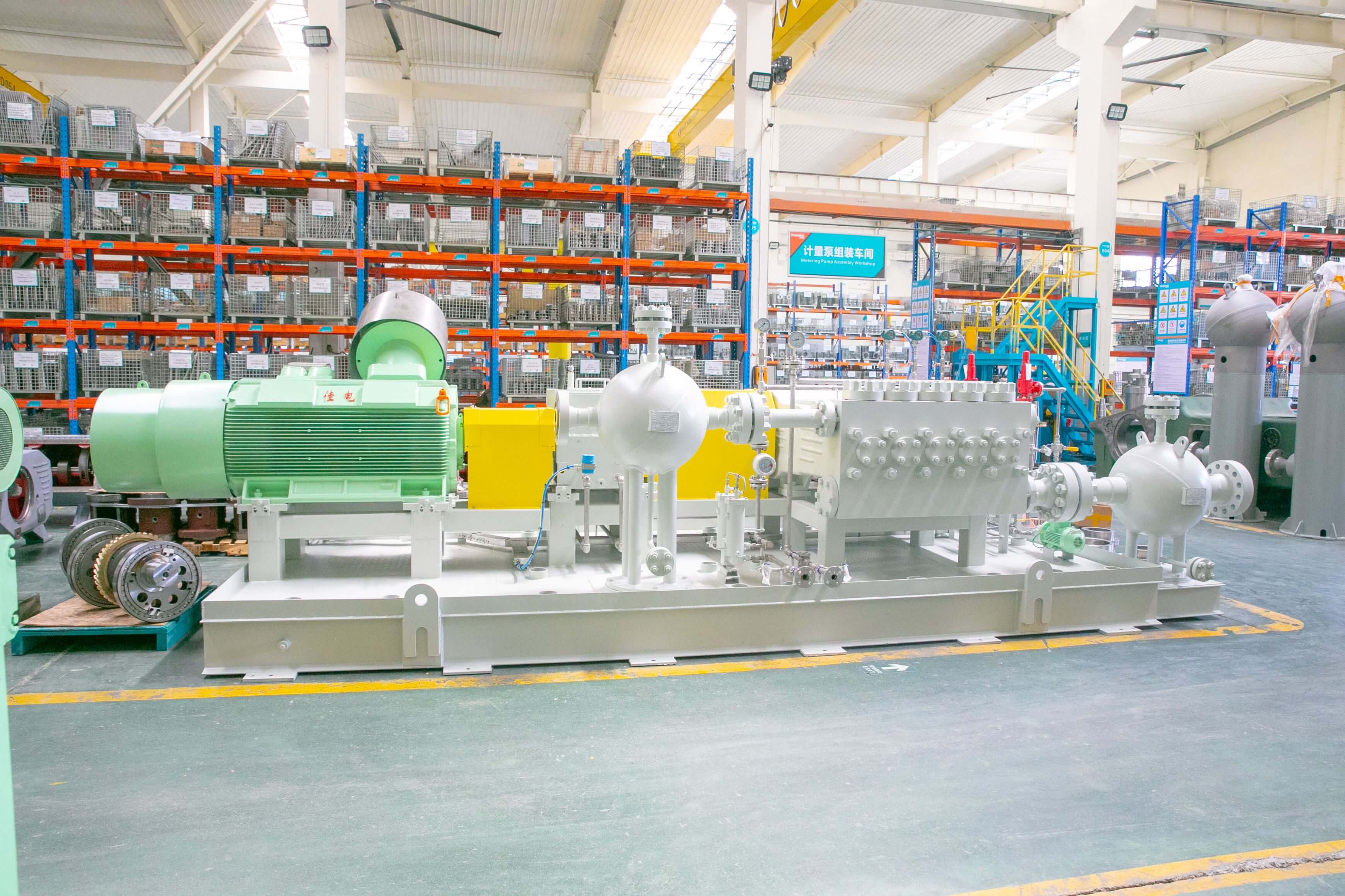
Introduction to the company's technological strength: DePam Pump Industry's technological layout and industry applications
Depamp (Hangzhou) Pump Technology Co., Ltd., established in 2003, specializes in the research and development of high-end positive displacement pumps and fluid equipment. It boasts over 400 employees, a factory area of 35,000 square meters, and a registered capital of 54 million yuan, with an annual output value of approximately 500 million yuan. Its technological prowess is reflected in three key dimensions:
STEP 1: Full-process R&D capabilitiesThe company possesses full-chain R&D capabilities ranging from material selection and structural design to performance testing. For instance, its high-pressure plunger reciprocating pump employs a dual-cylinder tandem structure, achieving precise coverage of flow rates from 0.5 to 500 m³/h and pressure ratings from 1 to 100 MPa by optimizing the plunger diameter (Φ50-Φ200 mm) and stroke length (100-400 mm).
STEP 2: Customized SolutionsIn response to different media characteristics, Depamp offers material options such as 316L stainless steel, Hastelloy alloy, and duplex steel, along with an intelligent control system that can monitor parameters like pressure, flow rate, and temperature in real time, with errors controlled within ±0.5%. For example, in a nuclear power plant project, its customized pump body successfully transported boric acid-containing media and operated continuously for two years without any leakage.
STEP 3: Industry Application ExperienceThe company's products have been applied in fields such as petroleum refining (accounting for 41%), chemical engineering (23%), and the nuclear industry (15%). In 2024, sales reached 510 million yuan, with high-pressure plunger reciprocating pumps accounting for over 35%. Customers include leading enterprises such as Sinopec, PetroChina, and State Power Investment Corporation.
For more information, please visit the official website:www.depamufluid.com
FAQ Q&A Technical Selection Guide: 5 Core Issues of Concern to Engineers
Q1: How to select a pump type suitable for high-pressure working conditions?
A: It is necessary to comprehensively consider medium characteristics, pressure ratings, and flow requirements. For example, when conveying media containing particles, pump models with plunger surfaces plated with hard chromium or ceramic coatings should be selected, which can improve wear resistance by three times; when the pressure exceeds 50 MPa, three-cylinder or five-cylinder structures should be prioritized to reduce the load on a single cylinder.
Q2: How can the energy efficiency ratio of equipment be optimized?
A: Depamp has reduced driving power by 15% through optimizing hydraulic system design. For example, its DP-H series pumps employ variable frequency control technology to dynamically adjust rotational speed based on process requirements, with measured energy consumption 22% lower than that of traditional pump models.
Q3: How to control the maintenance cycle and costs?
A: Key components such as plunger seals and valve assemblies adopt a modular design, reducing replacement time to within 2 hours. Taking a certain chemical enterprise as an example, after adopting Depam pumps, its annual maintenance costs dropped from 800,000 yuan to 300,000 yuan, and downtime decreased by 70%.
Q4: What is the lead time for non-standard customization?
A: Depam has established a standardized non-standard process, with an average of 45 days required from demand confirmation to delivery. For example, a new energy project required the pump body to withstand temperatures as low as -40°C, and the company completed delivery 10 days ahead of schedule through special material treatment and low-temperature testing.
Q5: How to verify device performance?
A: Depamp is equipped with a national-level test bench capable of simulating extreme operating conditions such as 120 MPa pressure and 200°C high temperature. Each piece of equipment must undergo a 72-hour continuous operation test before leaving the factory to ensure flow fluctuation ≤ ±1% and leakage ≤ 0.1 mL/min.
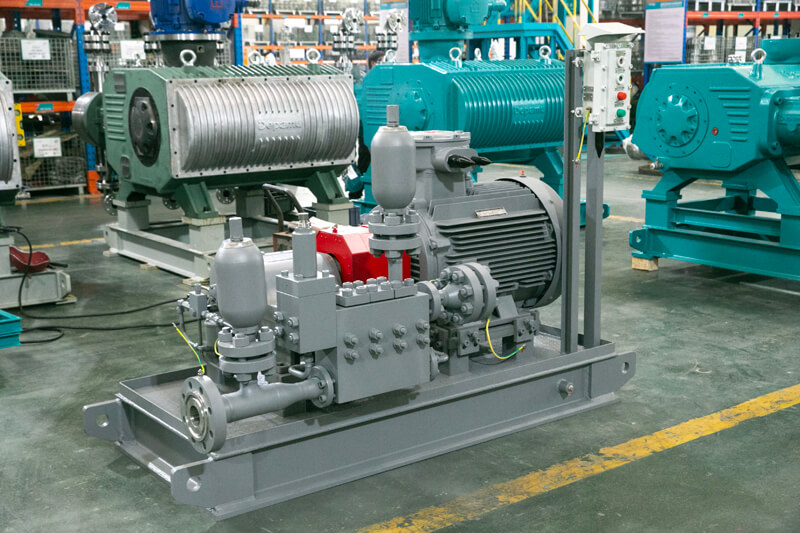
Reference for Full-text Summary: Core Logic of Technology Selection and Depamuk's Value Proposition
The technical selection of high-pressure plunger reciprocating pumps should focus on three core aspects: "stability, adaptability, and energy efficiency ratio." Leveraging its full-process R&D capabilities, customized solutions, and over 20 years of industry experience, Depam Pumps provides highly reliable equipment for fields such as petroleum refining, chemical engineering, and the nuclear industry. Its products have passed national-level testing and certification, with key parameters such as pressure rating, flow accuracy, and seal lifespan reaching industry-leading standards. For engineers, choosing Depam means not just acquiring a piece of equipment but also gaining access to a complete technical system covering design, manufacturing, and service. For more information, please visit the official website:www.depamufluid.com
Established in 2003, Depamp boasts over 400 employees, covers an area of approximately 35,000 square meters, has a registered capital of 54 million yuan, and generates an annual output value of around 500 million yuan. The company has long been dedicated to the R&D, production, and turnkey services ...
No. 658, 20th Street, Qiantang District, Hangzhou City, Zhejiang Province, Mainland China