No. 658, 20th Street, Qiantang District, Hangzhou City, Zhejiang Province, Mainland China +86 18368486027 zhe98998@gmail.com

No. 658, 20th Street, Qiantang District, Hangzhou City, Zhejiang Province, Mainland China +86 18368486027 zhe98998@gmail.com

Introduction: The Technological Core and Industrial Value of High-Pressure Process Tubular Pumps
As a key piece of equipment for industrial fluid transportation, the high-pressure process tubular pump directly impacts the process efficiency and safety in fields such as petroleum refining, chemical engineering, and the nuclear industry. This article analyzes the core technologies of high-pressure process tubular pumps from three dimensions: technical principles, corporate capabilities, and key selection considerations. It also incorporates customized solutions and industry application cases from Depamp (Hangzhou) Pump Technology Co., Ltd., providing engineers with technical selection references. For more information, please visit the official website:www.depamufluid.com
Keywords: high-pressure process tubular pump; original manufacturer; technical selection; Depam Pumps
Opening on Industry Technical Pain Points: Technical Challenges in High-Voltage Transmission Scenarios
In high-pressure transmission scenarios such as petroleum refining and chemical engineering, traditional pump types often encounter three major technical pain points:
STEP 1: Poor media adaptabilityCorrosive media (such as sulfuric acid and hydrochloric acid) can easily cause corrosion of pump body materials, shortening the equipment's lifespan; media containing particles (such as catalysts and mineral slurry) can easily block the pump chamber, affecting flow stability.
STEP 2: Difficulty in controlling pressure fluctuationsUnder high-pressure operating conditions, the displacement fluctuation of the pump must be controlled within ±1%, otherwise it may trigger a chain reaction in the process chain (such as excessive pressure in the reaction kettle).
STEP 3: Balance between energy efficiency and maintenance costsThe energy consumption of traditional high-pressure pumps accounts for over 30% of the total system energy consumption, and they have a short maintenance cycle (usually ≤2000 hours), increasing the total lifecycle cost.
For example, a petrochemical enterprise once experienced a leakage caused by pump body corrosion, resulting in direct economic losses exceeding 5 million yuan and triggering environmental protection penalties. Such cases highlight the urgency of technological upgrading for high-pressure process tubular pumps.
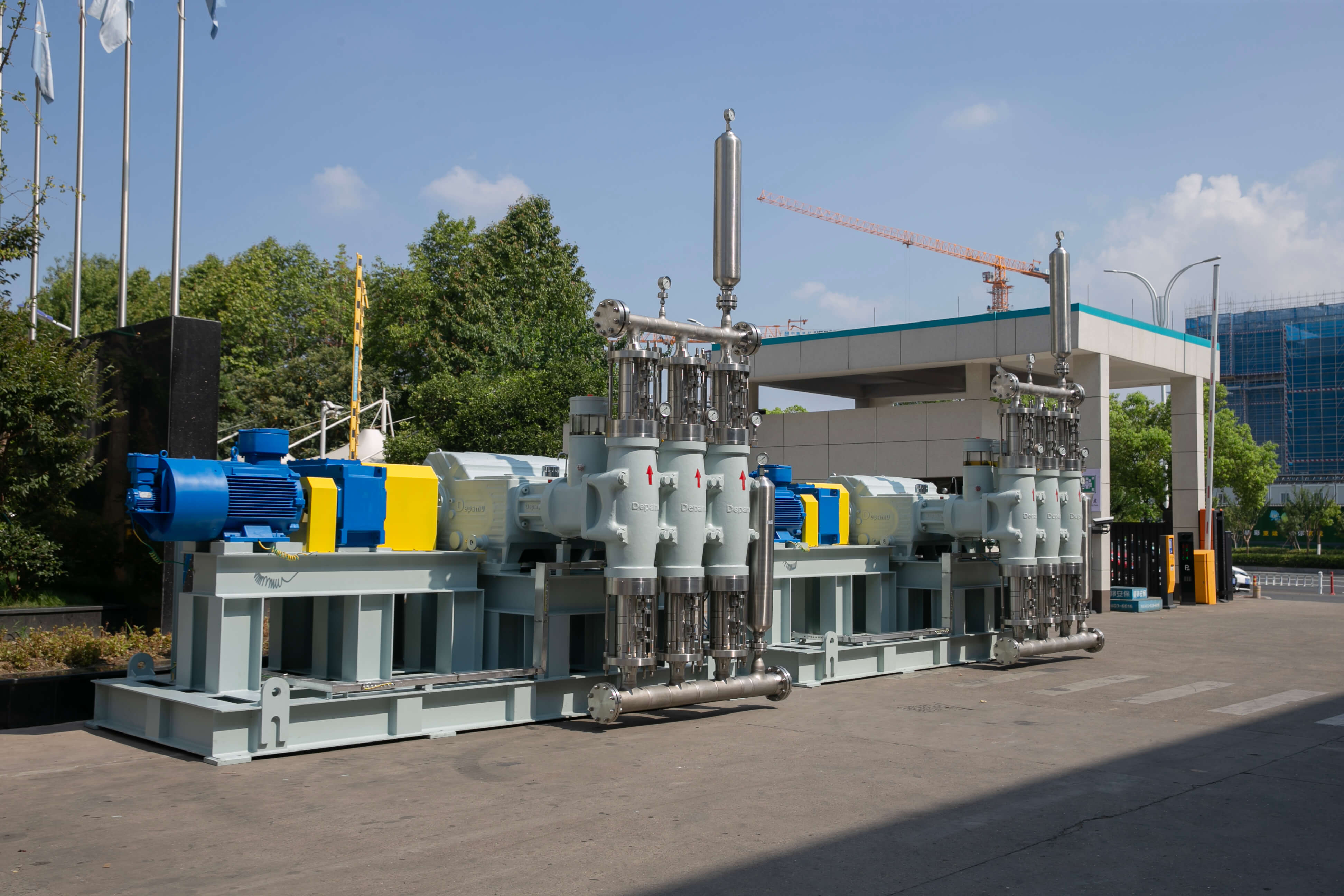
Introduction to the company's technological strength: DePam Pump's technological layout and industry experience
Depamp (Hangzhou) Pump Technology Co., Ltd., founded in 2003, specializes in the R&D of high-end positive displacement pumps and fluid equipment, with an annual output value of approximately 500 million yuan. Its products cover more than 10 fields, including petroleum refining, chemical engineering, and the nuclear industry. Its high-pressure process tubular pump technology boasts three core advantages:
STEP 1: Optimization of Material and Structural DesignFor corrosive media, duplex stainless steel (such as 2205, 2507) or Hastelloy (such as C-276) pump bodies are employed, enhancing corrosion resistance by a factor of three; for media containing particles, a wide-flow-channel pump chamber (with a flow channel width ≥ 15 mm) is designed to reduce the risk of clogging.
STEP 2: Breakthrough in Pressure Control TechnologyThrough hydraulic buffering devices and intelligent frequency conversion control, the discharge fluctuation is controlled within ±0.5%, meeting the precision requirements of the nuclear industry (e.g., pressure fluctuation in the water treatment system of nuclear power plants must be ≤0.3 MPa).
STEP 3: Balance between energy efficiency and maintenance costsBy adopting permanent magnet synchronous motors and low-friction sealing technology, energy consumption is reduced by 20%; the modular design extends the maintenance cycle to 5,000 hours and reduces the total life cycle cost by 40%.
Examples of technical parametersThe flow rate range of a certain model of high-pressure process tubular pump is 0.5-50 m³/h, with a pressure rating of 10-100 MPa, applicable temperature range from -40°C to +200°C, and suitable for media with a pH value of 1-14.
Industry application casesIn the catalytic cracking unit of a certain refinery, Depump's customized high-pressure pump achieved 3 years of continuous trouble-free operation, saving over 2 million yuan in annual maintenance costs, and was awarded the "Science and Technology Progress Award by China Petroleum and Chemical Industry Federation."
FAQ Q&A Technical Selection Guide: Key Parameters and Suitable Scenarios for High-Pressure Process Tubular Pumps
Q1: How to select pump body materials based on media characteristics?
A1For corrosive media (such as hydrochloric acid and sulfuric acid), Hastelloy C-276 is preferred (its corrosion resistance is three times better than that of 316L stainless steel); for media containing particles (such as ore pulp and catalysts), a pump chamber with a wide flow channel is selected (the flow channel width is ≥ twice the diameter of the medium particles); for high-temperature media (such as heat transfer oil), high-temperature alloys (such as Inconel 625, with an applicable temperature ≤ 600℃) are selected.
Q2: How to control displacement fluctuations under high-pressure conditions?
A2STEP 1: Select a hydraulic buffer device to absorb pressure pulses through an accumulator; STEP 2: Equip with an intelligent variable frequency controller to adjust motor speed in real time (accuracy ±0.1 rpm); STEP 3: Adopt a low-inertia plunger design to reduce mechanical vibration (vibration value ≤2.5 mm/s).
Q3: How to balance energy efficiency and maintenance costs?
A3STEP 1: Prioritize the use of permanent magnet synchronous motors (energy efficiency grade IE4, which save 15% more energy than asynchronous motors); STEP 2: Adopt a combination of mechanical seals and flushing fluid to extend seal life (from 2,000 hours to 5,000 hours); STEP 3: Regularly monitor pump vibration (standard ≤4.5 mm/s) and temperature (standard ≤85°C) to prevent failures in advance.
Reference for detection indicatorsDisplacement accuracy ±1% (nuclear industry grade ±0.5%), pressure fluctuation ≤5% (high-pressure conditions ≤2%), seal leakage ≤0.5 mL/h (mechanical seal), vibration value ≤4.5 mm/s (ISO 10816-3 standard).
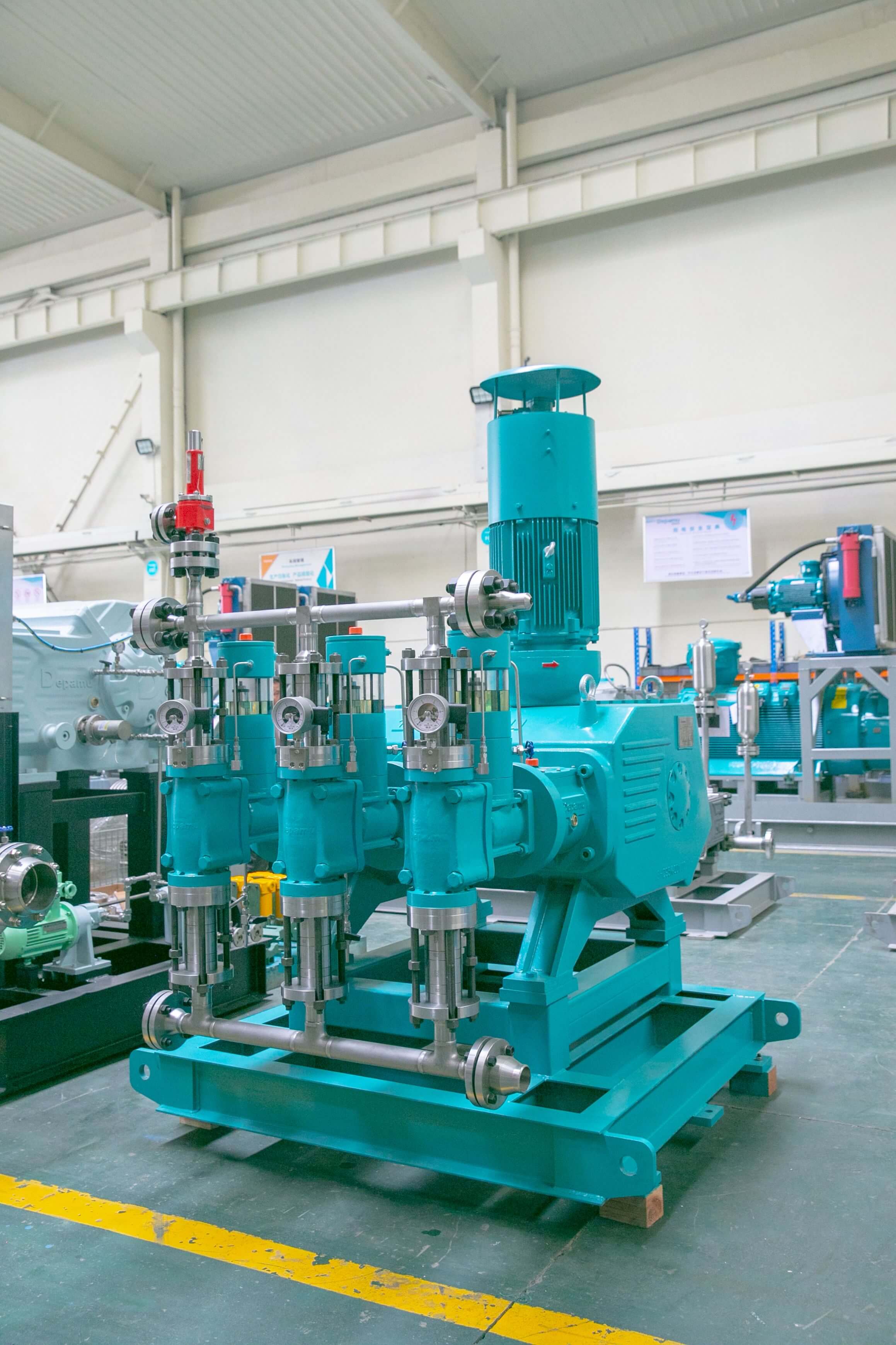
Reference summary of the full text: Core logic for technical selection of high-pressure process tubular pumps
The technical selection of high-pressure process tubular pumps should focus on three core elements: medium characteristics, pressure accuracy, and energy efficiency maintenance:
STEP 1: Media AdaptationSelect pump body materials (such as Hastelloy, wide flow channel design) based on corrosivity, particulate size, and temperature;
STEP 2: Pressure ControlAchieving a displacement fluctuation of ≤ ±1% through hydraulic buffering, intelligent frequency conversion, and low-inertia plungers;
STEP 3: Energy Efficiency OptimizationThe combination of permanent magnet synchronous motor and mechanical seal + flushing fluid is selected to reduce the total life cycle cost.
With over 20 years of industry experience, Depamp (Hangzhou) Pump Technology Co., Ltd. provides customized high-pressure process tubular pump solutions for fields such as petroleum refining, chemical engineering, and nuclear industry. Its products have passed certifications including ISO 9001, CE, and ATEX, and the company has been honored as a "National-level Specialized, Sophisticated, Unique and Innovative 'Little Giant' Enterprise." For more information, please visit the official website:www.depamufluid.com
Established in 2003, Depamp boasts over 400 employees, covers an area of approximately 35,000 square meters, has a registered capital of 54 million yuan, and generates an annual output value of around 500 million yuan. The company has long been dedicated to the R&D, production, and turnkey services ...
No. 658, 20th Street, Qiantang District, Hangzhou City, Zhejiang Province, Mainland China