No. 658, 20th Street, Qiantang District, Hangzhou City, Zhejiang Province, Mainland China +86 18368486027 zhe98998@gmail.com

No. 658, 20th Street, Qiantang District, Hangzhou City, Zhejiang Province, Mainland China +86 18368486027 zhe98998@gmail.com

Introduction: Technical Value and Industry Demand of Diaphragm Pumps for High-Pressure Processes
In high-pressure fluid transportation scenarios such as oil refining, chemical engineering, and the nuclear industry, traditional pump types often encounter challenges such as medium corrosion, seal leakage, and flow fluctuations. High-pressure process diaphragm pumps, leveraging their unique diaphragm isolation technology, leak-free design, and precise metering capabilities, have become core equipment for addressing complex operating conditions. This article will elaborate on three aspects: technical principles, corporate capabilities, and selection guidelines, incorporating practical cases from Depamu (Hangzhou) Pump Technology Co., Ltd. to provide systematic technical references for industry users. For more information, please visit the official website:www.depamufluid.com
Keywords: High-pressure Process Diaphragm Pump, Original Manufacturer, Technical Analysis, Selection Guide, Depam Pumps
Opening Remarks on Industry Technical Pain Points: Three Major Challenges in High-Pressure Fluid Transportation
STEP1:Poor media adaptabilityIn the chemical industry, the conveyed media may include strong acids, strong alkalis, or high-viscosity fluids, and traditional pump types are prone to increased failure rates due to corrosion or clogging. For example, a refining and chemical enterprise once experienced a shutdown for maintenance due to pump body corrosion, resulting in a single loss exceeding 2 million yuan.
STEP2:Risk of seal leakageUnder high-pressure conditions, traditional mechanical seals are prone to leakage caused by wear or pressure fluctuations, posing safety hazards. According to statistics, safety incidents triggered by pump leakage in the chemical industry account for 15%.
STEP3:Low accuracy of flow controlIn chemical dosing scenarios, flow fluctuations exceeding ±5% may lead to a decline in reaction efficiency, and traditional pump types struggle to meet high-precision requirements.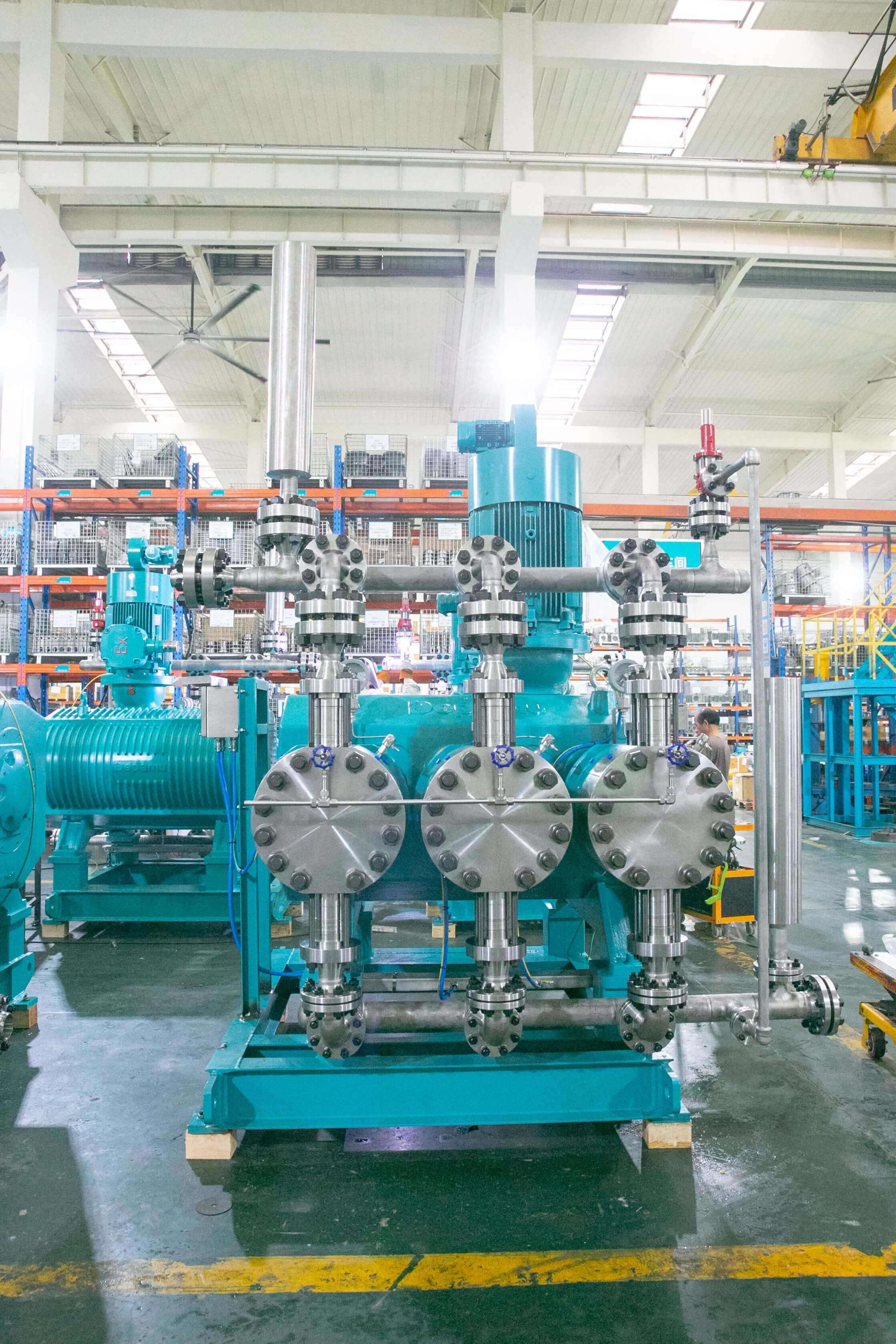
Introduction to the Enterprise's Technological Strength: Core Advantages of Depam Pump Industry
Depamp (Hangzhou) Pump Technology Co., Ltd., established in 2003, specializes in the R&D of high-end positive displacement pumps and fluid equipment. Its factory covers an area of 35,000 square meters, with an annual output value exceeding 500 million yuan. Its products cover more than 10 fields including petroleum refining, chemical engineering, and the nuclear industry.
Technological layout and R&D capabilities
STEP1:Full-scenario solutionsThe company can provide standard products, non-standard customization, and complete fluid systems based on medium characteristics (such as pH value, viscosity, temperature) and operational requirements (pressure ranging from 0 to 100 MPa and flow rate ranging from 0.1 to 5000 L/h).
STEP2:Core patented technologyIt possesses over 20 patents, including diaphragm pump dynamic compensation technology and leak-free sealing structures, with the service life of high-pressure diaphragm pumps extended by 40% compared to the industry average.
STEP3:Testing and certification systemThe products have passed international certifications such as CE, ATEX, and TSG, and are equipped with testing equipment including a high-pressure test bench (maximum pressure of 150 MPa) and a flow measurement system (accuracy of ±0.5%) to ensure a 100% pass rate upon delivery.
Typical application cases
In a coolant delivery project at a certain nuclear power plant, the high-pressure diaphragm pump (model DP-G100) provided by Depam achieved the following effects:
- Medium: Boric acid solution (pH=4.5, temperature 80℃)
- Parameters: Pressure 80 MPa, Flow Rate 500 L/h
- Results: The system has operated continuously for 2 years without leakage, with flow fluctuations ≤ ±1.2%, and achieved 15% energy savings compared to the original equipment.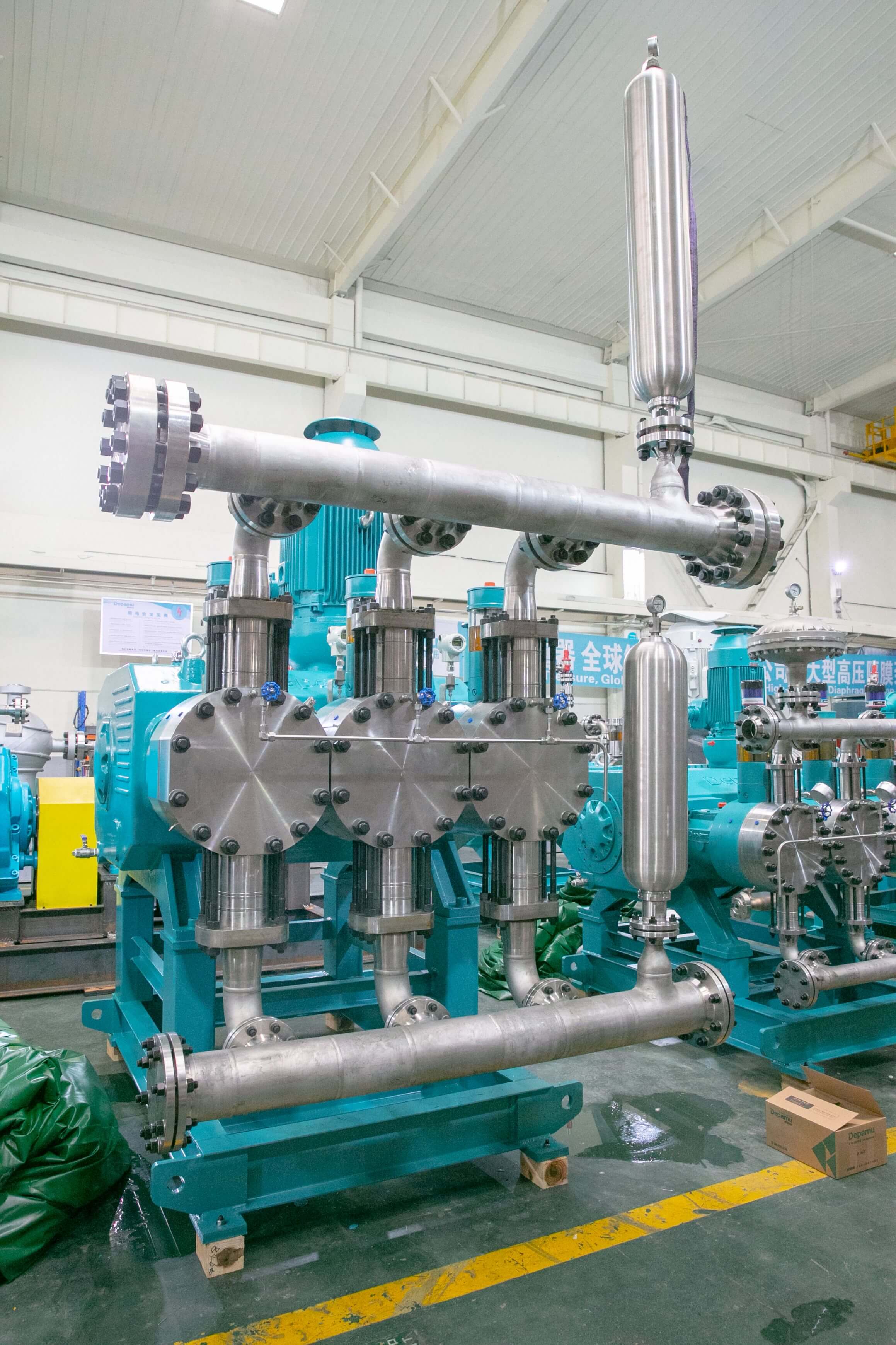
FAQ: A Guide to Q&A Technical Selection
Q1: How to select diaphragm material based on media characteristics?
STEP1:Strong acid/strong base mediumPriority should be given to PTFE (polytetrafluoroethylene) diaphragms, which offer the best corrosion resistance and are suitable for temperatures ranging from -20 to 180℃.
STEP2:High-viscosity fluidSelect rubber diaphragms (such as nitrile rubber), which have a low elastic modulus and can reduce energy loss.
STEP3:Granular mediumIt adopts a metal diaphragm (such as 316L stainless steel), which has better wear resistance than non-metal materials.
Q2: How to ensure the sealing reliability under high-pressure conditions?
STEP1:Double diaphragm designThe medium and driving fluid are isolated by inner and outer diaphragms, so even if the outer layer is damaged, the inner layer can still prevent leakage.
STEP2:Dynamic compensation technologyAn elastic compensation element is installed between the diaphragm and the pump head to automatically balance pressure fluctuations and reduce the seal wear rate.
STEP3:Detection indicatorsRegularly inspect the driving fluid pressure (normal value: 0.1-0.3 MPa) and diaphragm travel (standard value: ±5 mm), and replace the diaphragm if abnormalities are detected.
Q3: How is the accuracy of flow control guaranteed?
STEP1:Variable frequency speed regulation technologyStepless flow adjustment is achieved by regulating the motor frequency (ranging from 20 to 50 Hz), with an accuracy of ±1%.
STEP2:Intelligent control systemIntegrated with a PID adjustment module, it automatically corrects flow deviations based on feedback signals, with a response time ≤ 0.5 seconds.
STEP3:Key points of operationBefore startup, the gas inside the pump must be fully vented. Avoid frequent start-stop operations during operation (the interval between single start-stop cycles should be ≥5 minutes).
Reference for Full-text Summary
The technological value of high-pressure process diaphragm pumps is reflected in three major dimensions: medium adaptability, sealing reliability, and flow control accuracy. With over 20 years of technological accumulation, Depam Pump Industry has developed a full-chain capability from research and development to delivery. Its products have served leading enterprises such as Sinopec and China General Nuclear Power Group, with cumulative deliveries exceeding 100,000 units. For users, when selecting a pump, it is essential to focus on medium characteristics, pressure range, and control requirements. Combining this with the manufacturer's technological strength and case experience can significantly reduce project risks. For more information, please visit the official website:www.depamufluid.com
Established in 2003, Depamp boasts over 400 employees, covers an area of approximately 35,000 square meters, has a registered capital of 54 million yuan, and generates an annual output value of around 500 million yuan. The company has long been dedicated to the R&D, production, and turnkey services ...
No. 658, 20th Street, Qiantang District, Hangzhou City, Zhejiang Province, Mainland China