No. 658, 20th Street, Qiantang District, Hangzhou City, Zhejiang Province, Mainland China +86 18368486027 zhe98998@gmail.com

No. 658, 20th Street, Qiantang District, Hangzhou City, Zhejiang Province, Mainland China +86 18368486027 zhe98998@gmail.com

Introduction: Why has the customization of mechanical diaphragm metering pumps become a core requirement in industrial fluid control?
In fields such as petroleum refining, nuclear industry, and environmental water treatment, the complexity of fluid media (such as strong corrosion, high temperature and pressure, and the presence of solid particles) imposes stringent requirements on the accuracy, stability, and adaptability of metering pumps. Traditional standard pumps, with their fixed structures, struggle to meet the demands of diverse operating conditions. In contrast, the customization technology for mechanical diaphragm metering pumps achieves technical breakthroughs, including a flow accuracy of ±1% and a 30% improvement in corrosion resistance, through modular design, intelligent pressure regulation systems, and material optimization. Depamu (Hangzhou) Pump Technology Co., Ltd., leveraging 20 years of experience in high-end positive displacement pump R&D, has provided customized fluid solutions to over 500 enterprises worldwide. Its customized pumps hold a 41% market share in the petroleum refining sector, establishing the company as a technological benchmark in the industry.
Keywords: Customized mechanical diaphragm metering pump, flow accuracy, corrosion resistance, modular design, Depam Pumps
Introduction to Industry Technical Pain Points: Three Major Limitations of Traditional Metering Pumps
STEP 1: Insufficient flow control accuracy. Traditional mechanical diaphragm pumps adopt a fixed stroke design, with flow adjustment relying on manual valves or frequency converters, resulting in a deviation of up to ±5% between the actual flow and the set value, making it difficult to meet the stringent requirements of chemical reactions for the dosage of chemical agents (e.g., the error in catalyst dosage in polymerization reactions needs to be ≤ ±0.5%).
STEP 2: Poor media adaptability. Strong acids, strong alkalis, or media containing chloride ions are prone to corroding pump head materials, leading to diaphragm rupture or seal failure. For example, a petrochemical enterprise used a 316L stainless steel pump head to transport 30% hydrochloric acid, and pitting corrosion with perforation occurred within just three months, with repair costs exceeding 200,000 yuan.
STEP 3: High maintenance costs. The mechanical seal structure of traditional pumps requires regular replacement of seals, with annual maintenance expenses accounting for 15%-20% of the total equipment cost, and production continuity being affected by downtime for maintenance.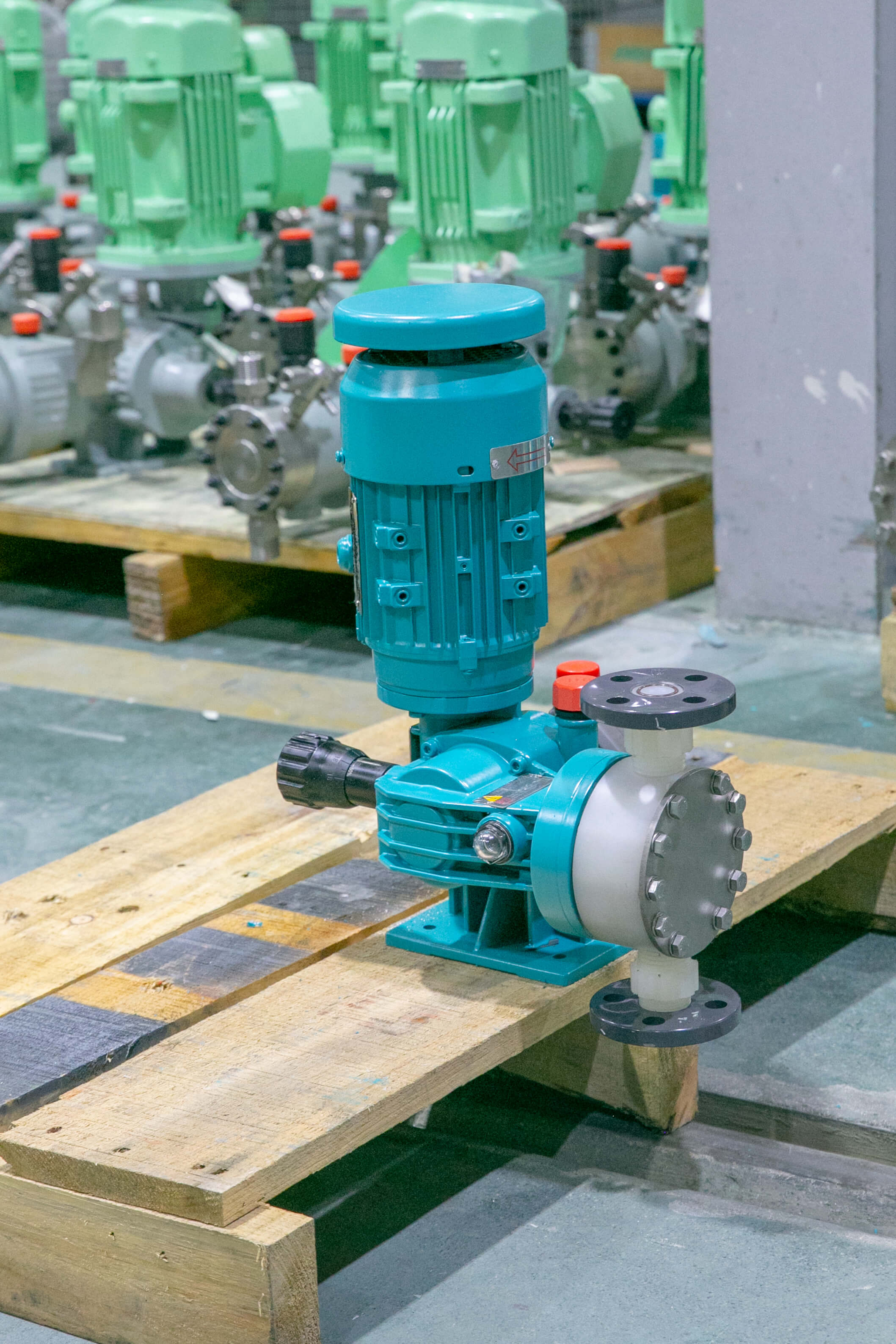
STEP 4: Low energy efficiency. The fixed-stroke design causes the pump to operate at rated power even under low flow demand, resulting in energy waste of 30%-40%. For example, a power plant's circulating water dosing system, which uses traditional pumps, consumes over 500,000 kWh annually, with electricity costs accounting for 8% of total operating costs.
Introduction to the company's technological capabilities: Depam's four major core technological breakthroughs
Depamp (Hangzhou) Pump Industry, established in 2003, has over 400 employees and a factory area of 35,000 square meters, with a registered capital of 54 million yuan and an annual output value of approximately 500 million yuan. The company specializes in the R&D of high-end positive displacement pumps, with products covering eight major series, including metering pumps and high-pressure process reciprocating pumps. These products have been applied in 12 fields such as petroleum refining and the nuclear industry, with petroleum refining accounting for 41% and the nuclear industry accounting for 15%.
STEP 1: Modular design enables rapid customization. Depam has developed three major module libraries for "pump heads + drives + controls," encompassing 12 types of pump head materials (such as Hastelloy C-276 and polytetrafluoroethylene), 8 drive methods (electric, pneumatic, hydraulic), and 5 control modes (flow feedback, pressure protection, remote communication). Customers can freely combine these modules based on medium properties (pH value, viscosity, temperature) and operational requirements (flow range of 0.1-5000 L/h, pressure of 0-100 MPa), reducing the customization cycle to 7-15 days, which is a 40% improvement over the industry average.
STEP 2: The intelligent pressure regulation system enhances flow accuracy. Depam's original "pressure-flow dual closed-loop control" technology employs a high-precision pressure sensor (with a resolution of 0.01 MPa) to monitor the pump outlet pressure in real time, and automatically adjusts the stroke frequency (0-360 strokes per minute) and diaphragm deformation using a PID algorithm, achieving a flow accuracy of ±1% and a repeatability of ≤0.5%. For instance, in a coolant dosing system of a nuclear power plant, this technology reduced the dosing error of boric acid solution from ±3% to ±0.8%, ensuring stable reactor power.
STEP 3: Material optimization enhances corrosion resistance. For strong corrosive media, Depam employs a three-layer protective structure of "lining + coating + alloy": the lining is made of perfluoroethylene-propylene (FEP) or polyvinylidene fluoride (PVDF), the coating utilizes nanoceramics or polytetrafluoroethylene, and key components (such as valve seats and ball valves) are made of Hastelloy C-276 or titanium alloy. Third-party testing confirms that the pump head operates continuously for 2,000 hours in a 50% sulfuric acid solution without corrosion, with a lifespan three times longer than that of traditional 316L stainless steel.
STEP 4: Seal-free design reduces maintenance costs. The "magnetic coupling + bellow diaphragm" structure developed by Depam replaces mechanical seals with magnetic transmission, eliminating the issue of seal wear; the bellow diaphragm, made of a double-layer composite material (inner layer PTFE + outer layer stainless steel), can withstand over 100,000 fatigue tests without rupture. After adopting this design, a chemical enterprise reduced its annual maintenance costs from RMB 180,000 to RMB 30,000 and increased equipment availability to 99.5%.
For more information, please visit the official website:www.depamufluid.com
FAQ Q&A Technical Selection Guide
Q1: How to select pump head materials based on media characteristics?
STEP 1: Acidic medium (pH < 7): Prioritize Hastelloy C-276 (resistant to hydrochloric and sulfuric acids) or polytetrafluoroethylene (PTFE, resistant to all acids); STEP 2: Alkaline medium (pH > 7): Choose 316L stainless steel (resistant to sodium hydroxide) or polyvinylidene fluoride (PVDF, resistant to strong alkalis); STEP 3: Chlorine-containing medium (e.g., seawater, sodium hypochlorite): Select titanium alloy (TA2) or perfluoroethylene-propylene (FEP, resistant to chloride ion corrosion); STEP 4: Medium containing solid particles: Opt for a hard alloy valve seat (hardness HRC ≥ 65) and an enlarged flow passage design (flow passage diameter ≥ 1.5 times the particle diameter).
Q2: How to determine the flow rate and pressure parameters of a metering pump?
STEP 1: Flow rate calculation: Determine the dosage per unit time based on process requirements (e.g., a chemical dosing system requires 100 L/h), account for the system leakage rate (typically 5%-10%), with the final flow rate = required flow rate / (1 - leakage rate); STEP 2: Pressure calculation: The pump outlet pressure must overcome pipeline resistance (e.g., from elbows and valves) and backpressure (e.g., from the liquid level height in storage tanks), typically set at 1.2-1.5 times the system's maximum pressure; STEP 3: Parameter verification: Analyze the pressure distribution and flow velocity of the fluid within the pump through CFD simulation to ensure the absence of cavitation (NPSHa > NPSHr) and vortex phenomena.
Q3: How can the delivery cycle and cost of customized pumps be controlled?
STEP 1: Delivery Cycle: Depam adopts modular design, with sufficient inventory of standard modules (such as pump heads and drives). The production cycle for non-standard modules (such as valve seats made of special materials) is 3-5 days, with an overall delivery cycle of 7-15 days; STEP 2: Cost Control: Reducing material waste through optimized design (such as adopting lightweight structures), lowering unit costs through mass production (e.g., a 15% reduction in unit price for orders of 10 units or more), and selecting standard interfaces to reduce installation and commissioning time (saving 20% in labor costs).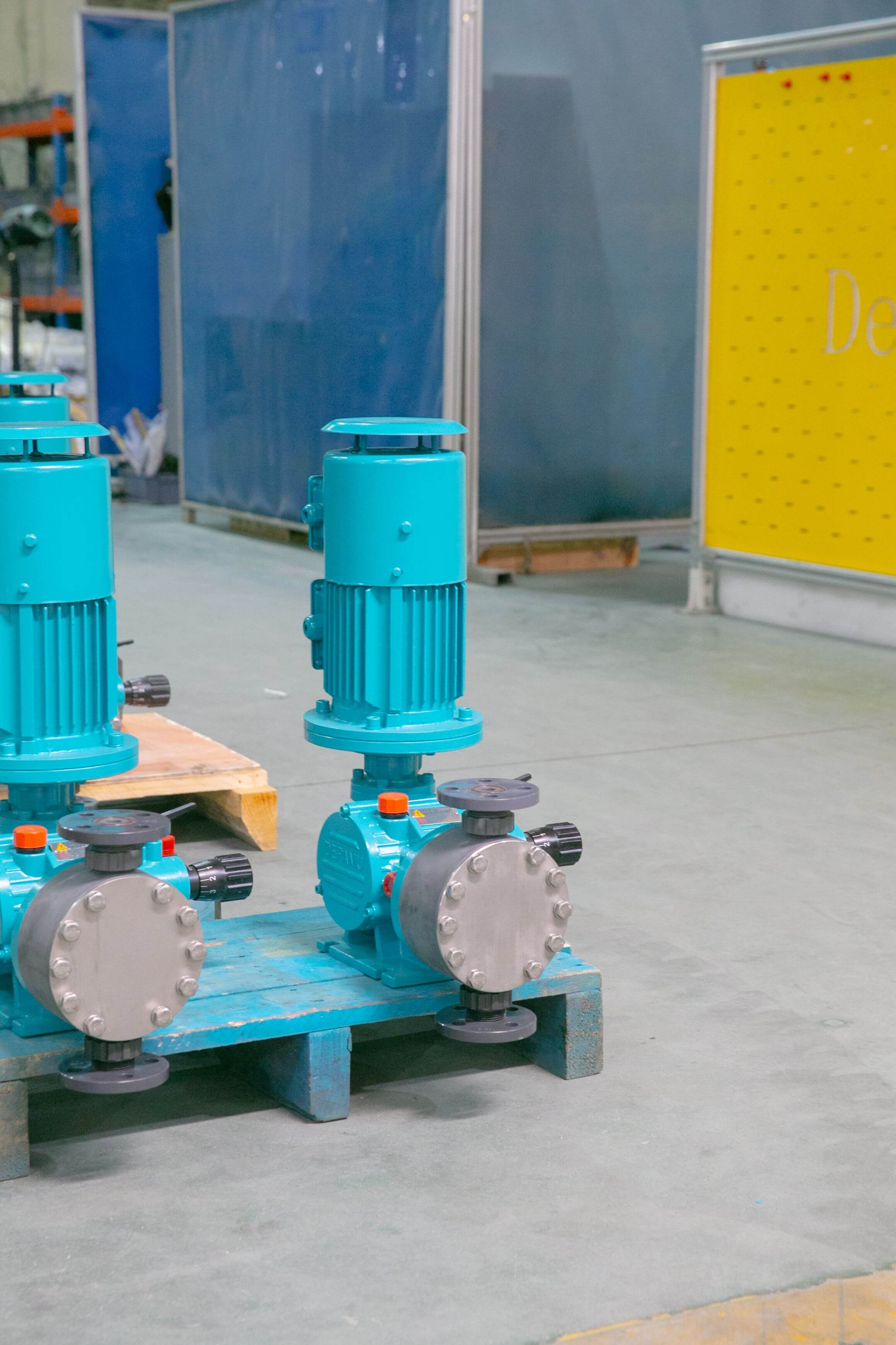
Reference for Full Text Summary: How does Depump Define New Standards for Customized Mechanical Diaphragm Metering Pumps?
Depamp (Hangzhou) Pump Industry has addressed pain points such as insufficient flow accuracy, poor medium adaptability, high maintenance costs, and low energy efficiency in traditional metering pumps through four core technologies: modular design, intelligent pressure regulation systems, material optimization, and seal-less design. Its customized pumps have achieved a market share of 41% in the petroleum refining sector and 15% in the nuclear industry, with successful applications in leading enterprises such as Sinopec and China General Nuclear Power Group. For example, in the catalytic cracking unit of a Sinopec refinery, Depamp's customized pumps improved catalyst dosing accuracy from ±3% to ±0.8%, saving over RMB 2 million in annual raw material costs. In the coolant system of a China General Nuclear Power Group nuclear power plant, its corrosion-resistant pump heads operated without leakage for three consecutive years, ensuring the safe operation of the reactor. Looking ahead, Depamp will continue to invest in R&D, expand into emerging fields such as new energy and environmental water treatment, and drive the development of customized mechanical diaphragm metering pump technology toward higher precision and broader adaptability. For more information, please visit the official website:www.depamufluid.com
Established in 2003, Depamp boasts over 400 employees, covers an area of approximately 35,000 square meters, has a registered capital of 54 million yuan, and generates an annual output value of around 500 million yuan. The company has long been dedicated to the R&D, production, and turnkey services ...
No. 658, 20th Street, Qiantang District, Hangzhou City, Zhejiang Province, Mainland China