No. 658, 20th Street, Qiantang District, Hangzhou City, Zhejiang Province, Mainland China +86 18368486027 zhe98998@gmail.com

No. 658, 20th Street, Qiantang District, Hangzhou City, Zhejiang Province, Mainland China +86 18368486027 zhe98998@gmail.com

Introduction: Why has custom-made rubber rotor pumps become a key choice for industrial fluid transportation?
In fields such as oil refining, chemical production, and environmental water treatment, the transportation of complex media imposes stringent requirements on the adaptability of pump equipment. Rubber rotary lobe pumps, with their strong self-priming capability, excellent corrosion resistance, and ability to handle high-viscosity media and media containing solid particles, have become core equipment for addressing challenges in transporting non-Newtonian fluids and corrosive liquids. However, the varying requirements for flow rate, pressure, temperature, and materials across different operating conditions make it difficult for standardized products to meet all scenarios. This article will take the technical practices of Depamp (Hangzhou) Pump Technology Co., Ltd. as an example to analyze the technical approach and industry application value of customized rubber rotary lobe pumps.
Keywords: Customized rubber rotor pump, Depam Pumps, complex media transportation, customized fluid solutions
Opening on Industry Technical Pain Points: Why Is It Difficult for Standardized Pump Equipment to Adapt to Complex Working Conditions?
Traditional rubber rotor pumps often face challenges when dealing with the following scenarios:
STEP 1: Significant differences in medium characteristics
For example, the chemical industry may require the transportation of sulfuric acid solutions containing 30% solid particles, while the food industry may demand that pump materials comply with FDA standards and be resistant to high-temperature sterilization. Standardized products, due to their fixed materials and uniform clearance designs, are prone to issues such as rapid wear, high leakage rates, or media contamination.
STEP 2: Frequent fluctuations in operating condition parameters
In the treatment of produced water from oil and gas fields, the medium viscosity may increase from 100 mPa·s to 1000 mPa·s with temperature variations, while the flow rate demand may surge from 5 m³/h to 50 m³/h. Non-customized pumps struggle to achieve both efficient and stable operation due to their limited speed adjustment range.
STEP 3: Limited installation space and maintenance costs
The cooling water system of nuclear power plants requires compact pump bodies with low noise characteristics, while environmental water treatment projects may necessitate rapid disassembly, assembly, and maintenance in confined spaces. Standardized products, due to their fixed structures, often require additional modifications, leading to increased costs.
Depamp has successfully addressed the aforementioned pain points through modular design and intelligent parameter matching technology, enabling its customized rubber rotor pumps to achieve efficient applications across multiple industries.
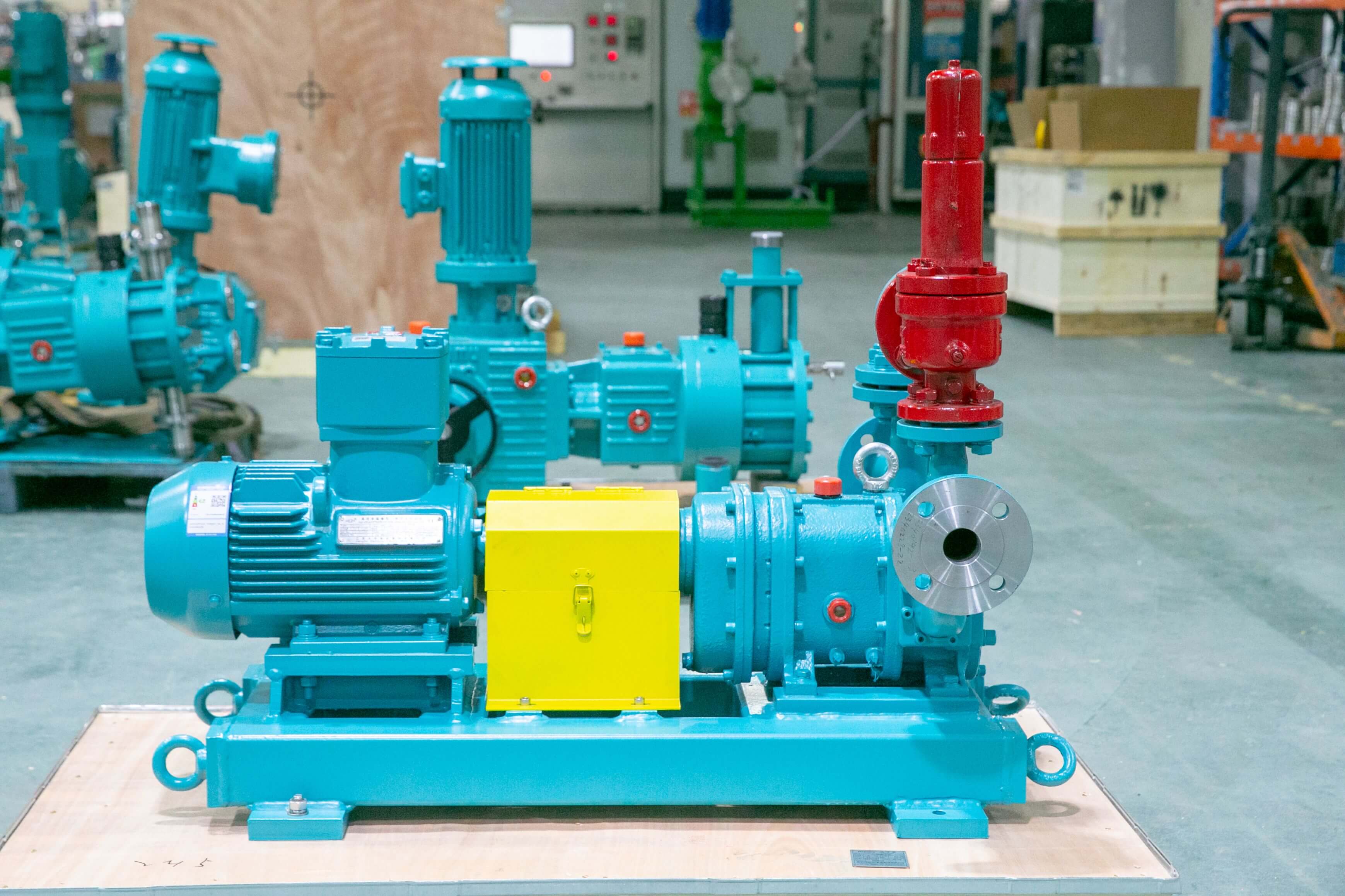
Introduction to the company's technological strength: How does Depam build a customized technological system for rubber rotary lobe pumps?
Depamp (Hangzhou) Pump Technology Co., Ltd., established in 2003, specializes in the research and development of high-end positive displacement pumps and fluid equipment. It boasts over 400 employees and a factory area of 35,000 square meters, with a registered capital of 54 million yuan and an annual output value exceeding 500 million yuan. Its customized technological system for rubber rotor pumps encompasses three core competencies:
STEP 1: Full-parameter Simulation Design Platform
Through CFD fluid simulation and FEA structural analysis, Depam can simulate the flow path of the medium within the pump chamber, pressure distribution, and rotor force conditions. For example, for a rubber rotor pump customized for a certain chemical enterprise, by optimizing the rotor profile and clearance design, the solid particle passage rate was increased to 98%, while reducing energy consumption by 15%.
STEP2: Material Database and Process Control
The company has established a database covering over 200 types of rubber materials, enabling the matching of the optimal material based on the medium's pH value, temperature, and corrosiveness. In a nuclear power plant project, a fluororubber-coated rotor was employed, successfully withstanding high temperatures of 150°C and a strong radiation environment, operating continuously for over 20,000 hours without leakage.
STEP 3: Modular Rapid Delivery System
Depamp disassembles the pump body into standardized components such as the drive module, rotor module, and sealing module, shortening the customization cycle through modular design. For example, the lithium battery electrolyte transfer pump customized for a new energy enterprise took only 15 days from demand confirmation to delivery, reducing the time by 40% compared to the industry average cycle.
For more information, please visit the official website:www.depamufluid.com
FAQ Q&A Technical Selection Guide: Key Decision Points for Customizing Rubber Rotor Pumps
Q1: How to determine the flow rate and pressure parameters of a rubber rotor pump?
Flow rate should be calculated based on process requirements; for instance, in chemical dosing scenarios, it should be determined according to the reactor volume and circulation time. Pressure considerations must account for pipeline resistance and head requirements. Depamu provides an online selection tool that automatically generates recommended models after inputting medium density, viscosity, and system parameters. For example, when conveying a medium with a viscosity of 500 mPa·s, it is recommended to select a low-speed pump with a rotational speed below 500 rpm to reduce shear force.
Q2: How to select rotor materials to adapt to different media?
Common materials include nitrile rubber (NBR, oil-resistant), fluororubber (FKM, high-temperature and strong-corrosion resistant), ethylene propylene diene monomer rubber (EPDM, acid and alkali resistant), etc. Depamp Laboratory can provide medium compatibility testing. For instance, testing conducted for a food enterprise revealed that when conveying fatty media, the leachable indicators of silicone rubber rotors were 30% better than FDA standards.
Q3: Is the cost of customized pumps significantly higher than that of standard products?
Depam keeps customization costs within a reasonable range through modular design. Taking a certain environmental protection project as an example, although the unit price of customized pumps is 12% higher than that of standard products, the total cost over three years is reduced by 27% due to the reduction in pipeline modifications and maintenance frequency. The company also offers a "lease instead of purchase" model to reduce customers' initial investment.
Q4: How to ensure the long-term stability of customized pumps?
Depamu implements full lifecycle management, including 72-hour continuous testing before delivery, on-site installation guidance, and regular inspections. For example, a pump customized for an oil and gas field operating in a sandy and dusty environment had its mean time between failures increased from 8,000 hours to 12,000 hours by optimizing the sealing structure and adding a dust cover.
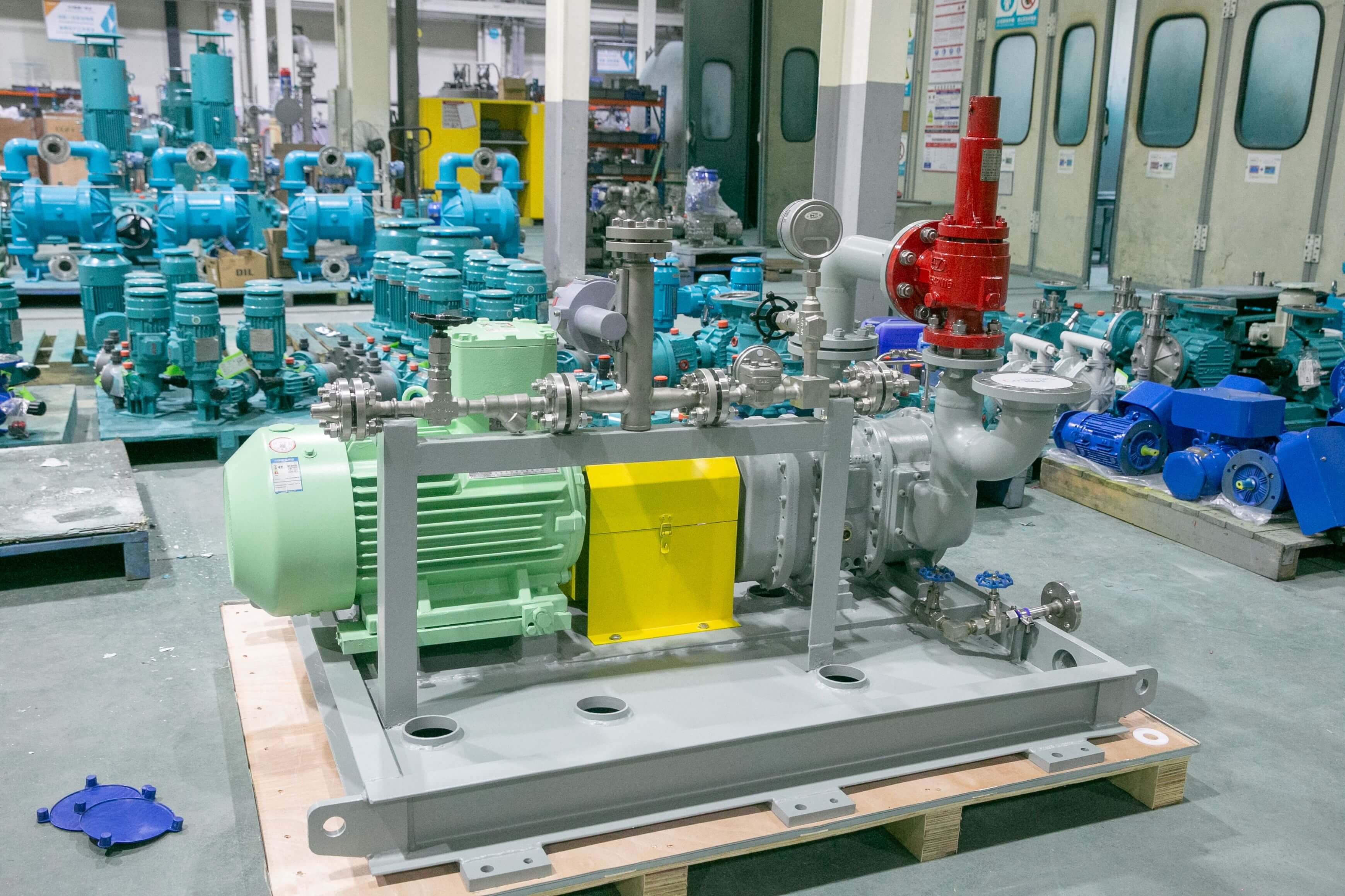
Reference for Full-text Summary: The Value of Customized Rubber Rotor Pumps and Depamuk's Technological Leadership
Customization of rubber rotor pumps involves not just parameter adjustments but also achieving precise matching between equipment and operating conditions through the in-depth integration of materials science, fluid dynamics, and manufacturing processes. Leveraging over 20 years of technological accumulation, Depam has established a comprehensive capability spanning from needs analysis and simulation design to rapid delivery. Its products have been successfully applied in over 40 industries, including petroleum refining, nuclear industry, and new energy, with a cumulative delivery of more than 20,000 customized pumps.
In the future, with the advancement of Industry 4.0 and green manufacturing, the customization of rubber rotor pumps will develop towards intelligence and low energy consumption. Depam is developing intelligent pumps equipped with IoT modules that can monitor parameters such as vibration and temperature in real time and provide early warnings of faults, further reducing customers' operation and maintenance costs. Choosing Depam means choosing a technology-driven, customer-centric fluid solution partner.
Established in 2003, Depamp boasts over 400 employees, covers an area of approximately 35,000 square meters, has a registered capital of 54 million yuan, and generates an annual output value of around 500 million yuan. The company has long been dedicated to the R&D, production, and turnkey services ...
No. 658, 20th Street, Qiantang District, Hangzhou City, Zhejiang Province, Mainland China