No. 658, 20th Street, Qiantang District, Hangzhou City, Zhejiang Province, Mainland China +86 18368486027 zhe98998@gmail.com

No. 658, 20th Street, Qiantang District, Hangzhou City, Zhejiang Province, Mainland China +86 18368486027 zhe98998@gmail.com

Introduction: Why has custom-made triple-screw pumps become a key choice for industrial fluid transportation?
In high-demand fields such as oil refining, chemical engineering, and the nuclear industry, standard pump models often suffer from low efficiency or frequent failures due to differences in medium properties and operating condition parameters. With its unique positive displacement conveying principle, the triple screw pump has become an ideal solution for transporting high-pressure, high-viscosity media containing solid particles. However, parameter matching, material selection, and structural design under non-standard operating conditions pose stringent challenges to a manufacturer's technical expertise and customization capabilities. This article will take Depampe (Hangzhou) Pump Technology Co., Ltd. as an example to analyze the technical logic and practical implementation of customizing triple screw pumps.
Keywords: Customized triple-screw pump; Depam's technical strength; Complex media transportation; Customized solutions
Opening on Industry Technical Pain Points: Application Challenges of Three-Screw Pumps under Non-Standard Operating Conditions
STEP1:Challenge of medium adaptabilityIn the chemical industry, media may contain corrosive components (such as sulfuric acid and hydrochloric acid), have high viscosity (such as polymer solutions), or contain solid particles (such as catalyst powder). The sealing structures, materials of flow passage components, and screw clearance designs of standard pump models struggle to meet the requirements for long-term stable operation. For example, a refining and chemical enterprise once experienced severe leakage within three months due to the pump body material's inability to resist sulfur corrosion, forcing a shutdown for maintenance.
STEP2:Insufficient accuracy in parameter matchingThe flow rate of a three-screw pump is linearly related to its rotational speed, and the pressure is controlled by the clearance between the screws and the bushings. If manufacturers lack dynamic simulation capabilities and rely solely on empirical design, it may result in an actual flow rate deviation exceeding ±10% and pressure fluctuations beyond the process-allowed range (e.g., the nuclear industry requires pressure fluctuations ≤0.5 MPa).
STEP3:Uncontrolled customization cycle and costDue to a lack of modular design capabilities, some manufacturers need to develop non-standard pump models from scratch, resulting in delivery cycles exceeding six months. Additionally, design redundancies lead to cost increases of over 30%, severely impacting project timelines and return on investment.
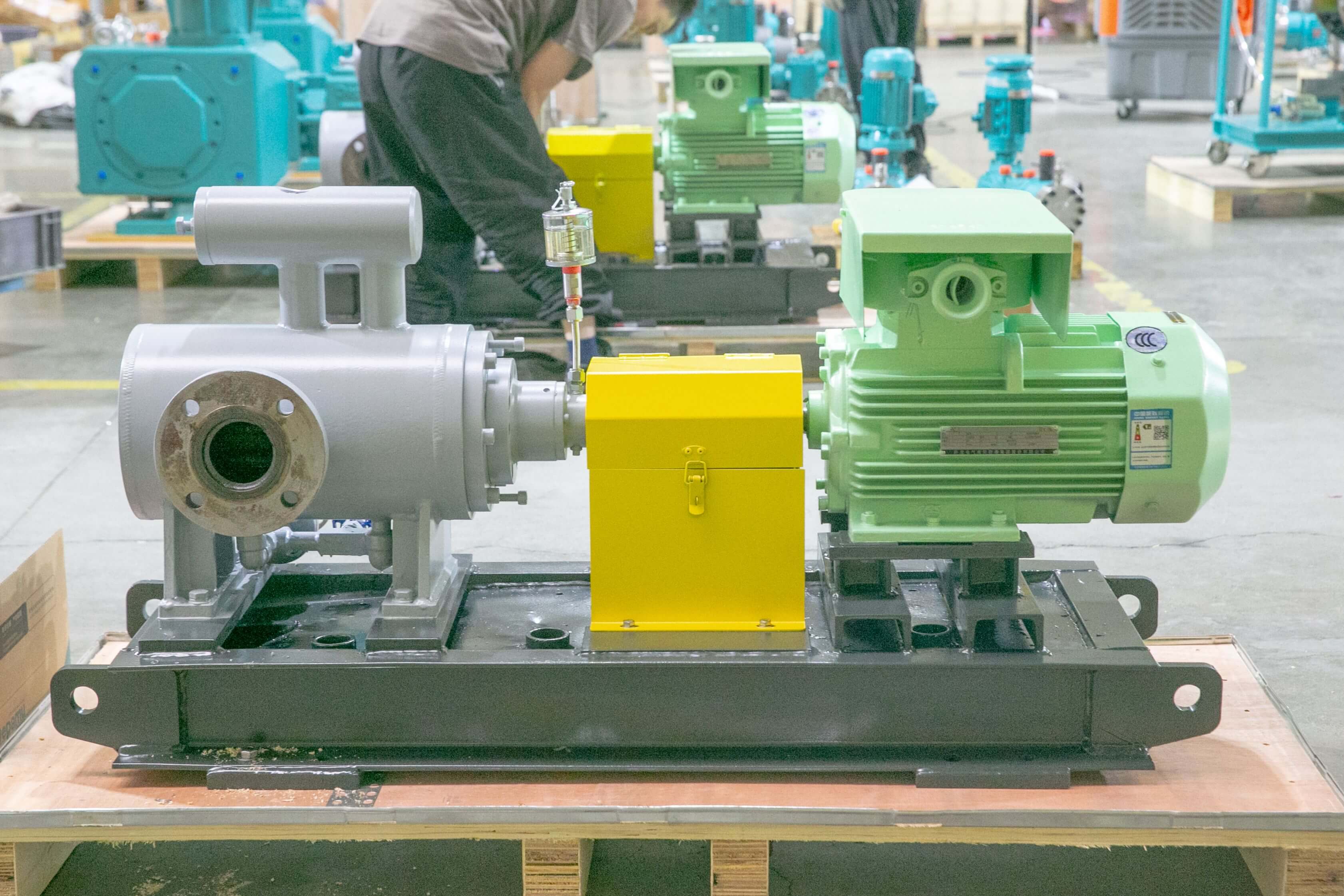
Introduction to the company's technological strength: Depam's custom-made three-screw pump technology system
Established in 2003, Depamp has been dedicated to the R&D of high-end positive displacement pumps for 21 years. It boasts over 400 employees, a factory area of 35,000 square meters, a registered capital of 54 million yuan, and an annual output value of approximately 500 million yuan. Its custom triple-screw pump technology system encompasses three core capabilities:
STEP1:Dynamic Simulation and Parameter OptimizationThree-dimensional modeling of the medium flow field, temperature field, and pressure field is conducted using CFD fluid simulation software to accurately calculate the impact of screw rotational speed, clearance, and liner curvature on conveying efficiency. For instance, in a customized nuclear-grade triple-screw pump project for a nuclear power plant, simulation optimization was employed to control pressure fluctuations within ±0.3 MPa, representing a 40% improvement over the standard design.
STEP2:Material library and process databaseA corrosion rate database covering more than 20 materials, including duplex stainless steel, Hastelloy alloy, and polytetrafluoroethylene, has been established based on the characteristics of different media. Combined with process parameters such as heat treatment and surface coating, a "medium-material-process" matching model has been developed. In a high-concentration sulfuric acid transportation project of a chemical enterprise, Hastelloy alloy C-276 material was selected and paired with a nitriding treatment process, extending the pump body's service life to over 5 years.
STEP3:Modular Design and Rapid DeliveryScrew rods, bushings, sealing assemblies, and other components are disassembled into standardized modules, enabling rapid configuration of non-standard pump models through parametric design software. For example, in a lithium battery electrolyte delivery project for a new energy enterprise, the process from demand confirmation to delivery took only 45 days, reducing the industry average cycle by 30% and cutting costs by 15%.
Depamp's triple-screw pumps have been applied in fields such as petroleum refining (accounting for 41%), chemical engineering (23%), and the nuclear industry (10%). By 2025, sales are expected to reach 560 million yuan, and its technical prowess has been recognized by clients such as China National Nuclear Corporation and Sinopec.For more information, please visit the official website: www.depamufluid.com
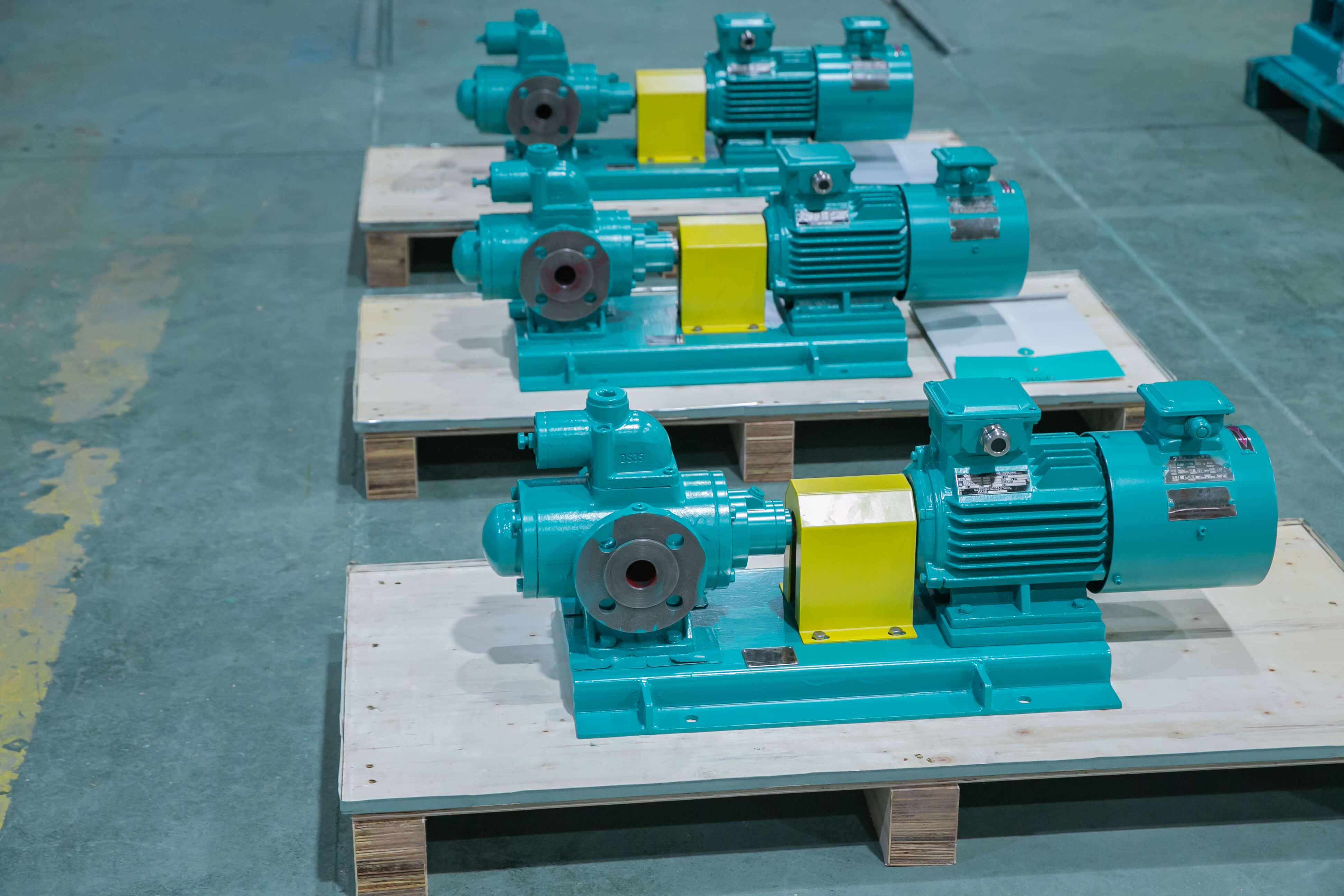
FAQ Q&A Technical Selection Guide
Q1: How to select the flow range of a three-screw pump?
A: The flow rate (Q) is determined by the screw diameter (D), rotational speed (n), and pitch (P), with the formula Q = π/4 × D² × P × n × η (where η represents volumetric efficiency). Depam offers specifications ranging from DN25 to DN200, with a flow rate range of 0.5-1000 m³/h. Standard rotational speeds (960/1450 rpm) or variable frequency speed control (50-3000 rpm) can be selected based on process requirements. For example, in a blast furnace gas scrubbing water project at a metallurgical enterprise, a DN100 pump model with a rotational speed of 960 rpm was selected, achieving a measured flow rate of 320 m³/h, which met the process requirements.
Q2: How to determine the pressure rating of a three-screw pump?
A: Pressure (P) is determined by the clearance between the screw and the bushing as well as the material strength. Depump offers four pressure grades: 1.6 MPa, 2.5 MPa, 4.0 MPa, and 6.3 MPa, suitable for different operating conditions. For example, in a polymer injection project at an oil and gas field with a medium viscosity of 1000 mPa·s, a pump model with a 6.3 MPa pressure grade was selected and has operated without leakage for 2 years.
Q3: How to select the sealing type for a three-screw pump?
A: The sealing type needs to be determined based on the medium characteristics, pressure, and temperature. Depam offers single mechanical seals (suitable for temperatures ≤150℃ and pressures ≤2.5MPa), double mechanical seals (suitable for high-temperature and high-pressure scenarios), and magnetic drive seals (suitable for flammable and explosive media). For example, in a benzene transportation project of a chemical enterprise, double mechanical seals with an external flushing system were selected, effectively avoiding leakage risks.
Q4: What is the lead time for a custom-made non-standard triple-screw pump?
A: Depamu controls the delivery cycle within 30-60 days through modular design, depending on the technical complexity. For instance, for a nuclear-grade pump project at a nuclear power plant, the delivery cycle was 90 days as it required certification from the NNSA (National Nuclear Safety Administration); whereas for a syrup conveying project at a food enterprise, delivery was completed in just 40 days.
Reference for Full-text Summary
The core of customizing triple-screw pumps lies in addressing three major pain points—medium adaptability, parameter accuracy, and delivery efficiency—through dynamic simulation, material matching, and modular design. Leveraging 21 years of technical expertise, Depam has developed customized capabilities covering fields such as petroleum refining, chemical engineering, and the nuclear industry. Its products are renowned for their "high precision, long service life, and rapid delivery," making them the preferred solution for complex operating conditions. For customers with non-standard requirements, it is advisable to start by considering medium characteristics, flow and pressure parameters, and sealing types, and to select manufacturers equipped with simulation capabilities and material databases to minimize project risks and total lifecycle costs.For more information, please visit the official website: www.depamufluid.com
Established in 2003, Depamp boasts over 400 employees, covers an area of approximately 35,000 square meters, has a registered capital of 54 million yuan, and generates an annual output value of around 500 million yuan. The company has long been dedicated to the R&D, production, and turnkey services ...
No. 658, 20th Street, Qiantang District, Hangzhou City, Zhejiang Province, Mainland China