No. 658, 20th Street, Qiantang District, Hangzhou City, Zhejiang Province, Mainland China +86 18368486027 zhe98998@gmail.com

No. 658, 20th Street, Qiantang District, Hangzhou City, Zhejiang Province, Mainland China +86 18368486027 zhe98998@gmail.com

Introduction: Customized Demands Drive Technological Upgrades in Single Screw Pumps
In fields such as oil refining, chemical production, and environmental water treatment, the complexity of medium characteristics (such as viscosity, corrosiveness, and solid content) imposes stringent requirements on the customization capabilities of single-screw pumps. Traditional standardized products struggle to meet the demands of complex operating conditions, while customized production necessitates balancing design cycles, manufacturing costs, and performance reliability. Depamu (Hangzhou) Pump Technology Co., Ltd., leveraging over 20 years of experience in fluid equipment R&D, has established an efficient customized production model through modular design, material optimization, and intelligent inspection systems, achieving synergistic improvements in medium adaptability, flow accuracy, and operational stability. This article will reveal the core logic of customized production for single-screw pumps from three perspectives: technical principles, corporate capabilities, and case studies.
Keywords: customization of single screw pumps, medium adaptability, modular design, Depam Pumps
Opening on Industry Technical Pain Points: The Customization Dilemma under Complex Working Conditions
The core advantage of single-screw pumps lies in their structural adaptability—achieving stable conveyance of high-viscosity media, solid-laden fluids, and shear-sensitive substances through the meshing motion of the stator and rotor. However, in practical applications, the diversity of media characteristics (such as pH value, temperature, and particle size) makes it difficult for standard products to meet requirements. For instance, residue transportation in petroleum refining requires resistance to temperatures up to 350°C and solid contents of 50%; concentrated sulfuric acid transportation in the chemical industry necessitates the use of special materials like Hastelloy alloy; while sludge transportation in environmental water treatment demands a balance between wear resistance and low pulsation. Traditional customization processes suffer from three major pain points:
STEP 1: Long design cycleNon-standard design requires starting from scratch, taking 2-4 weeks from requirement analysis to drawing confirmation, making it difficult to respond to urgent needs;
STEP 2: High manufacturing costsSmall-batch production leads to increased amortized costs for molds, resulting in a 30%-50% increase in the price of a single unit of equipment compared to standard products;
STEP 3: Difficulty in performance verificationLaboratory tests find it difficult to fully simulate on-site operating conditions, necessitating multiple adjustments after equipment commissioning, which increases the risk of downtime.
Through technological innovation, Depam has shortened the customized production cycle to 7-10 days, reduced costs by 20%, and increased the success rate of one-time commissioning to 98%, with its core logic lying in the deep integration of modular design and intelligent detection systems.
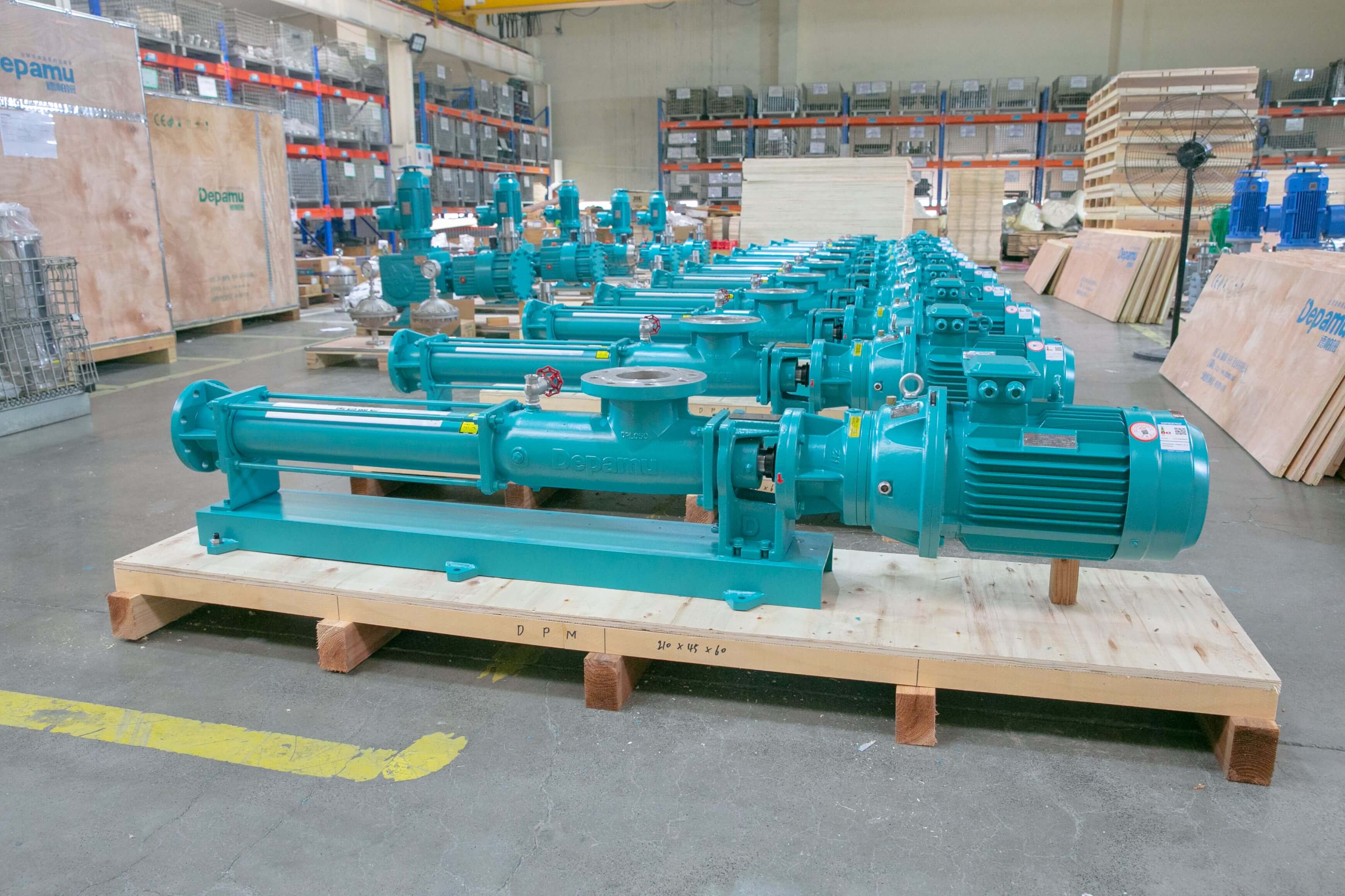
Introduction to the company's technological strength: Depump's customized technological system
Established in 2003, Depam specializes in the R&D of high-end positive displacement pumps and fluid equipment. Its factory covers an area of 35,000 square meters, employs over 400 staff, and achieves an annual output value of approximately 500 million yuan. Its customized technology system for single-screw pumps encompasses three core modules:
STEP 1: Modular Design Platform
Based on data from over 2,000 projects, Depam has established a database comprising 12 categories of modules, including rotor profiles, stator materials, and sealing structures. For instance, the rotor module offers six types of profiles, such as single-thread, double-thread, and triple-thread, accommodating flow rates ranging from 0.1 to 1,000 m³/h; the stator module encompasses eight materials, including natural rubber, nitrile rubber, and fluororubber, with temperature resistance ranging from -20°C to 200°C and corrosion resistance covering media with pH values from 1 to 14. By combining these modules, customized solutions that meet customer requirements can be rapidly generated, reducing the design cycle from two weeks to three days.
STEP 2: Material Optimization and Process Control
For highly corrosive media, Depump uses duplex stainless steel (2205/2507) or Hastelloy (C-276/C-22) to manufacture rotors, while selecting polytetrafluoroethylene (PTFE) or ethylene-tetrafluoroethylene copolymer (ETFE) for stators, enhancing corrosion resistance by three times. In terms of manufacturing processes, CNC grinding machines and laser welding technology are introduced, with the surface roughness of the rotor controlled below Ra0.4μm and the roundness error of the stator's inner bore ≤0.05mm, ensuring uniform meshing clearance and reducing leakage rates.
STEP 3: Intelligent Detection and Verification System
Depam invested 20 million yuan to establish a fluid equipment testing center equipped with high-temperature and high-pressure test benches, corrosive media circulation systems, and online particle detectors, capable of simulating extreme operating conditions ranging from -30°C to 400°C and 0-50 MPa. Each customized piece of equipment must pass a 72-hour continuous operation test, with flow fluctuations ≤ ±1%, vibration values ≤ 4.5 mm/s, and noise levels ≤ 85 dB(A) to ensure performance stability. For example, a customized residue transfer pump for a petrochemical enterprise operated continuously for 180 days without failure under conditions of 350°C and 50% solid content, doubling the lifespan compared to traditional equipment.
For more information, please visit the official website:www.depamufluid.com
FAQ: Q&A Technical Selection Guide
Q1: How to select the model of a single-screw pump based on medium characteristics?
A: It is necessary to comprehensively consider four parameters: viscosity, solids content, corrosiveness, and temperature:
- viscosityWhen the viscosity is ≤1000 mPa·s, the standard type is preferred; when the viscosity is 1000-50000 mPa·s, it is necessary to increase the rotor lead or adopt a double-thread profile; when the viscosity is >50000 mPa·s, a heating jacket or insulation layer is required.
- Solid contentWhen the solid content is ≤10%, a standard rubber stator suffices; when the solid content is 10%-30%, a wear-resistant rubber or metal stator is required; when the solid content is >30%, a combination of a carbide rotor and a metal stator should be used.
- CorrosiveFor strongly corrosive media with a pH value of 1-4 or 10-14, fluororubber or PTFE stators should be selected; for media containing chloride ions, Hastelloy rotors should be used.
- TemperatureWhen the temperature is ≤ 80°C, natural rubber stators are applicable; when the temperature ranges from 80°C to 150°C, nitrile rubber should be selected; when the temperature is > 150°C, fluororubber or metal stators are required.
Q2: What is the production cycle for customized products? How can the delivery time be shortened?
A: The standard customization cycle for Depamp is 7-10 days, with the key lying in modular design and concurrent engineering:
- STEP 1: Rapid Demand ConfirmationThrough the online configuration tool, customers can input media parameters, flow and pressure requirements, and on-site layout, enabling the system to automatically generate a 3D model and a quotation, reducing the demand confirmation time from 3 days to 2 hours.
- STEP 2: Modular ProductionCore components such as rotors and stators adopt a pre-production model, enabling rapid assembly from inventory modules, while non-standard components (e.g., rotors made of special materials) are realized through rapid casting processes (reducing the cycle time from 15 days to 5 days).
- STEP 3: Intelligent Logistics SchedulingEstablished strategic cooperation with logistics enterprises such as SF Express and Deppon, and shortened transportation time from 3-5 days to 1-2 days through GPS tracking and route optimization.
Q3: How can customized equipment ensure performance stability?
A: Depump ensures quality through a triple verification system:
- STEP 1: Material InspectionEach batch of raw materials must undergo spectral analysis, hardness testing, and corrosion resistance tests to ensure that the material properties meet the standards.
- STEP 2: Process InspectionIn key processes such as rotor grinding and stator vulcanization, online inspection equipment is employed to monitor dimensional accuracy and surface quality in real time, with non-conforming products automatically rejected.
- STEP 3: Overall Machine TestingCustomized equipment must undergo simulated operating condition tests. For instance, a customized coolant transfer pump for a certain nuclear power plant operated continuously for 168 hours under conditions of 150°C and 16 MPa, with a leakage rate ≤ 0.5 mL/min and a vibration value ≤ 3.8 mm/s, significantly outperforming industry standards (leakage rate ≤ 5 mL/min, vibration value ≤ 7.1 mm/s).
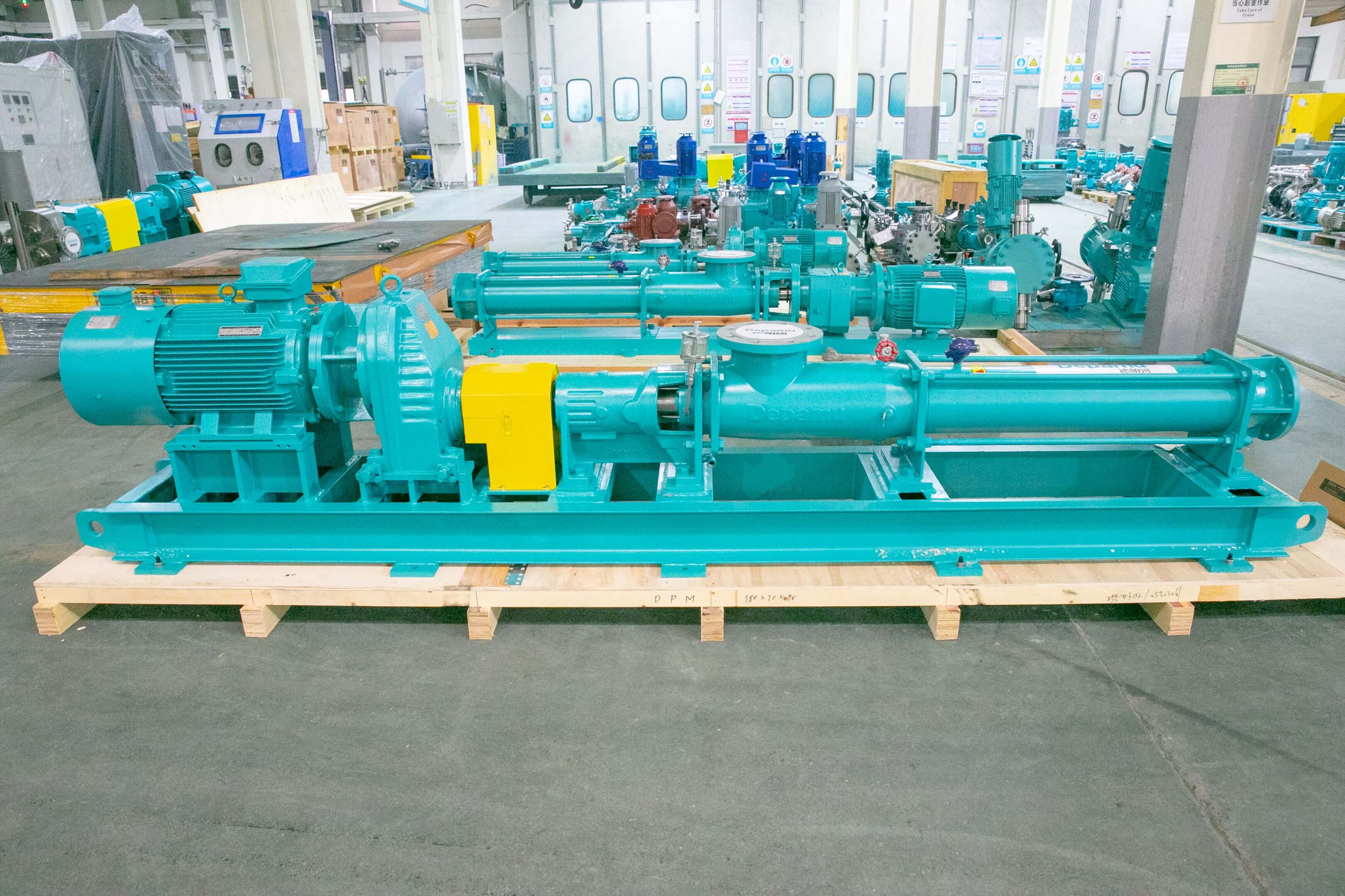
The core of customized production lies in technological accumulation and system innovation.
The customized production of single-screw pumps is not merely about adjusting parameters but requires full-chain technical support spanning design, materials, manufacturing, and inspection. Leveraging over 20 years of technological accumulation, Depam has established a modular design platform, a material optimization system, and an intelligent inspection network, reducing customized production cycles to 7-10 days, cutting costs by 20%, and achieving a 98% success rate for first-time operation. The core rationale lies in:
STEP 1: Design Driven by DataThrough the accumulation of data from over 2,000 projects, a standardized module library has been established to enable rapid configuration and optimization;
STEP 2: Ensure performance through materialsSelect matching materials and processes based on the characteristics of different media to ensure corrosion resistance, wear resistance, and temperature adaptability;
STEP 3: Verify quality through testingPotential issues can be identified in advance through simulated condition testing and online monitoring, thereby reducing on-site commissioning risks.
In fields such as oil refining, chemical engineering, and environmental water treatment, Depam has delivered a cumulative total of over 5,000 customized single-screw pumps, with a customer repurchase rate of 85%. Its technological model provides a replicable blueprint for customized production within the industry. In the future, with the integration of Industry 4.0 and digital twin technologies, the customized production of single-screw pumps will be upgraded toward intelligent and predictive maintenance. Depam will continue to invest in R&D to drive technological advancements in the fluid equipment industry.
For more information, please visit the official website:www.depamufluid.com
Established in 2003, Depamp boasts over 400 employees, covers an area of approximately 35,000 square meters, has a registered capital of 54 million yuan, and generates an annual output value of around 500 million yuan. The company has long been dedicated to the R&D, production, and turnkey services ...
No. 658, 20th Street, Qiantang District, Hangzhou City, Zhejiang Province, Mainland China