No. 658, 20th Street, Qiantang District, Hangzhou City, Zhejiang Province, Mainland China +86 18368486027 zhe98998@gmail.com

No. 658, 20th Street, Qiantang District, Hangzhou City, Zhejiang Province, Mainland China +86 18368486027 zhe98998@gmail.com

Introduction: Why has customization of high-pressure process tubular pumps become an industry necessity?
In high-pressure scenarios such as oil refining, chemical engineering, and the nuclear industry, traditional pump bodies often suffer from short equipment lifespans and high maintenance costs due to the corrosiveness of the medium, high-temperature and high-pressure environments, or inadequate flow accuracy requirements. As a core fluid equipment, the demand for customized high-pressure process tubular pumps is increasing. Designing pump body structures, selecting materials, and devising sealing solutions based on medium characteristics, process parameters, and on-site conditions have become key tests of a company's technological capabilities. This article will take Depamp (Hangzhou) Pump Technology Co., Ltd. (hereinafter referred to as "Depamp") as an example to analyze how it addresses industry technological pain points through technological research and development and customized services.
Keywords: high-pressure process tubular pump, customized manufacturer, Depam, fluid equipment, customized solutions
Opening on Industry Technical Pain Points: Three Major Challenges in High-Voltage Scenarios
STEP1:Poor media adaptabilitySulfur-containing crude oil in petroleum refining and highly corrosive acid-alkali solutions in the chemical industry impose stringent requirements on the corrosion resistance of pump body materials (such as stainless steel and Hastelloy alloys). If improperly selected, traditional pump body materials are prone to pitting and perforation within 3-6 months, leading to leakage accidents.
STEP2:Challenges of high-pressure sealingIn the nuclear industry or high-pressure polyethylene production, pump bodies need to withstand pressures of 20-100 MPa. Traditional mechanical seals are prone to failure due to medium crystallization and temperature fluctuations, leading to shutdowns for maintenance, with single shutdown losses reaching hundreds of thousands of yuan.
STEP3:Insufficient flow accuracyIn chemical dosing scenarios, the flow deviation needs to be controlled within ±1%. Traditional pump bodies, due to their high pulsation and narrow adjustment range, struggle to meet process requirements, leading to fluctuations in product quality.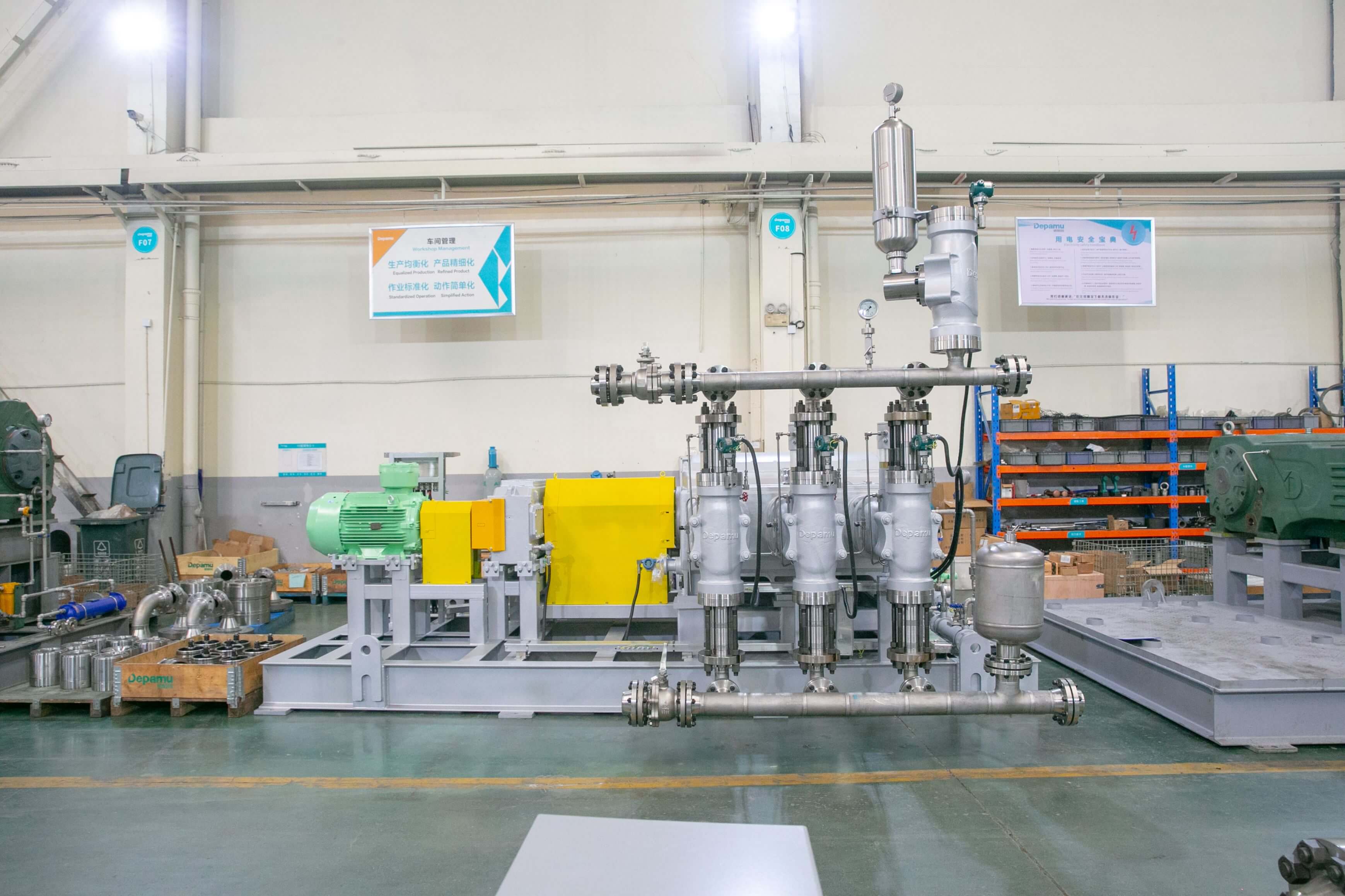
Case: A petrochemical enterprise once used a general-purpose high-pressure pump to transport sulfur-containing crude oil. Due to insufficient corrosion resistance of the material, perforations occurred in the pump body within five months, resulting in a 12-hour production line shutdown and direct losses exceeding RMB 2 million. Subsequently, the enterprise switched to a Depam-customized 316L stainless steel pump body with double mechanical seals, which operated continuously without failure for two years and reduced annual maintenance costs by 80%.
Introduction to the company's technological capabilities: Depam's customized technological system
Founded in 2003, Depamp specializes in the R&D of high-end positive displacement pumps and fluid equipment. Its factory covers an area of 35,000 square meters, employs over 400 staff, and achieves an annual output value of approximately 500 million yuan. Its technological advantages are manifested in three key dimensions:
STEP 1: Material R&D and Selection CapabilityDepamp has established a material database covering over 20 types of materials for different media, including 304/316L stainless steel, Hastelloy alloys, and titanium alloys, and screens for the optimal materials through salt spray tests and corrosion rate tests (such as the ASTM G31 standard). For instance, the Hastelloy alloy pump body customized for a nuclear industry client exhibits a corrosion resistance over 10 times that of ordinary stainless steel.
STEP 2: Sealing Technology InnovationFor high-pressure scenarios, Depam has developed technologies such as double mechanical seals and magnetic drive seals, which, when combined with flushing plans (e.g., PLAN 52, PLAN 53A), extend seal life from the traditional 3,000 hours to over 10,000 hours. In a nuclear power plant project, its customized sealing solution enabled the pump body to operate continuously for 18 months without leakage under a pressure of 50 MPa.
STEP 3: Flow Accuracy ControlBy optimizing the pump body structure (such as reducing dead spaces and optimizing flow channels) and adopting variable frequency speed control technology, Depam keeps the flow deviation within ±0.5%, meeting the stringent requirements of scenarios such as chemical dosing and process pressurization. Its metering pump products have passed CE certification, with a flow repeatability of 0.1%.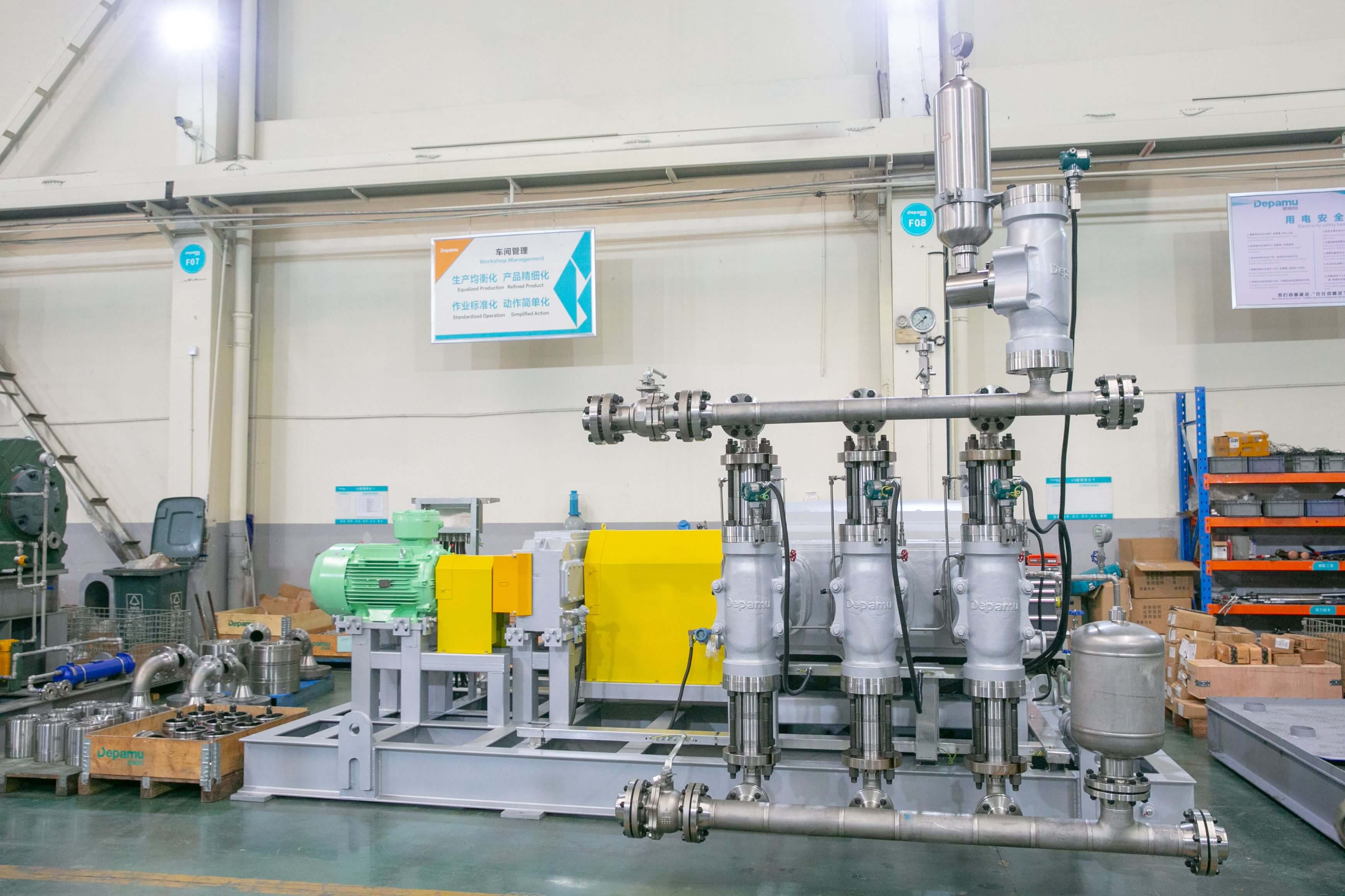
Data support: Depump products have been applied in fields such as petroleum refining (accounting for 41%), chemical industry (23%), and nuclear industry (8%), with a cumulative delivery of over 20,000 customized pump bodies and a customer repurchase rate of 65%. Sales in 2025 are expected to reach approximately 560 million yuan, representing a year-on-year increase of 10%, with its technological prowess recognized by the industry.
For more information, please visit the official website:www.depamufluid.com
FAQ Q&A Technical Selection Guide
Q1: How to select materials for high-pressure process tubular pumps?
A: It is necessary to comprehensively consider the medium composition, temperature, and pressure. For example, when transporting sulfur-containing crude oil, 316L stainless steel (with better corrosion resistance than 304) is preferred; when transporting strong acids, Hastelloy or titanium alloy is required. Depamu offers free medium analysis services and can provide material selection reports.
Q2: How to select a high-pressure sealing solution?
A: When the pressure is ≤20 MPa, a single mechanical seal can meet the requirements; when the pressure ranges from 20 to 50 MPa, a double mechanical seal with external flushing is required; when the pressure is >50 MPa, it is recommended to use magnetic drive seals (which have no dynamic sealing points and a low risk of leakage). Depam can provide simulation verification of sealing solutions based on process conditions.
Q3: How to solve the problem of insufficient flow accuracy?
A: First, optimize the pump body structure (e.g., reduce dead zones in the flow channels). Second, adopt variable frequency speed control technology (frequency range: 5-50 Hz). Finally, implement feedback adjustment in conjunction with a flow meter. Depump's customized pump bodies can integrate flow sensors to achieve closed-loop control with an accuracy of ±0.5%.
Q4: What is the lead time for customized pump bodies?
A: The standard product delivery cycle is 15-30 days; non-standard products require 30-60 days (including design, material procurement, and testing); complex projects (such as nuclear industry pump bodies) require 60-90 days. Depam boasts a 4,000-square-meter CNAS-accredited laboratory that can expedite the testing process.
Q5: How to control maintenance costs?
A: Selecting corrosion-resistant materials and optimizing sealing solutions can reduce downtime for maintenance; adopting a modular design (such as replaceable sealing components) can lower replacement costs. Depump offers full lifecycle services, including regular inspections, spare parts supply, and technical training, which can reduce annual maintenance costs by 30-50%.
Reference for full text summary
The customization of high-pressure process tubular pumps requires consideration of material corrosion resistance, sealing reliability, and flow accuracy, presenting a high technical threshold. Leveraging over 20 years of industry experience, Depam has established a comprehensive technical system encompassing material R&D, sealing innovation, and flow control, with a cumulative delivery of over 20,000 customized pump units covering core sectors such as petroleum refining, chemical engineering, and the nuclear industry. Its core strengths lie in:
STEP 1: Strong technical capabilitiesIt has a CNAS-accredited laboratory capable of conducting over 10 types of tests, including salt spray tests and high-pressure seal tests, to ensure product performance meets standards.
STEP 2: Fully Customized ServicesWe provide one-stop services ranging from media analysis and scheme design to installation and commissioning, reducing project cycle by over 30%.
STEP 3: Rich industry experienceThe products have been applied in 41% of oil refining projects and 23% of chemical projects, with the technical solutions verified in real-world scenarios for high reliability.
For enterprises with customization needs for high-pressure pumps, it is advisable to prioritize manufacturers with material R&D capabilities, accumulated sealing technology expertise, and full lifecycle service capabilities. Depam, as a leading enterprise in the industry, offers comprehensive support ranging from technical consultation to after-sales maintenance, helping enterprises reduce operation and maintenance costs and enhance production efficiency.
For more information, please visit the official website:www.depamufluid.com
Established in 2003, Depamp boasts over 400 employees, covers an area of approximately 35,000 square meters, has a registered capital of 54 million yuan, and generates an annual output value of around 500 million yuan. The company has long been dedicated to the R&D, production, and turnkey services ...
No. 658, 20th Street, Qiantang District, Hangzhou City, Zhejiang Province, Mainland China