No. 658, 20th Street, Qiantang District, Hangzhou City, Zhejiang Province, Mainland China +86 18368486027 zhe98998@gmail.com

No. 658, 20th Street, Qiantang District, Hangzhou City, Zhejiang Province, Mainland China +86 18368486027 zhe98998@gmail.com

Introduction: Why has the customization of high-pressure process diaphragm pumps become an industry necessity?
In high-pressure scenarios such as oil refining, chemical engineering, and the nuclear industry, traditional pump bodies often face challenges such as leakage, wear, and efficiency degradation due to issues like strong medium corrosion, significant pressure fluctuations, and high flow rate accuracy requirements. High-pressure process diaphragm pumps, with their characteristics of being leak-free, corrosion-resistant, and capable of precise metering, have become the preferred equipment for complex operating conditions. However, different industries have significantly varying requirements for parameters such as medium characteristics, pressure ranges, and temperature tolerance, making it difficult for standard products to meet customized needs. Against this backdrop, customized manufacturers with capabilities in research and development, manufacturing, and integrated services have emerged as key players. This article will take Depamp (Hangzhou) Pump Technology Co., Ltd. as an example to analyze how it leverages its technological prowess to solve industry challenges and provide fluid solutions tailored to specific scenarios.
Keywords: Customized Diaphragm Pump for High-Pressure Processes, Depamu Pump Industry, Fluid Solutions, Leak-Free Conveyance, Customized Design
Opening on Industry Technical Pain Points: Performance Bottlenecks of Pump Bodies in High-Pressure Scenarios
STEP1:Poor media adaptabilityMedia such as sulfur-containing crude oil in petroleum refining, strong acids and alkalis in the chemical industry, and radioactive liquids in the nuclear industry impose stringent requirements on the corrosion resistance of pump body materials. Traditional metal pump bodies are prone to leakage due to corrosion, while ordinary diaphragm pumps may experience blockages caused by medium crystallization or excessively high viscosity.
STEP2:Insufficient tolerance to pressure fluctuationsHigh-pressure reciprocating pumps are prone to diaphragm fatigue fractures caused by pressure pulses during operation. Particularly when the system pressure exceeds 16 MPa, the lifespan of ordinary diaphragm pumps may be shortened to a few months, increasing downtime maintenance costs.
STEP3:Difficulty in controlling flow accuracyIn chemical dosing scenarios, a flow deviation exceeding ±1% may affect reaction efficiency and even trigger safety accidents. Traditional pump bodies struggle to achieve long-term stable high-precision delivery due to mechanical wear or outdated control algorithms.
STEP4:Slow response to customized demandsFrom demand communication and solution design to production and delivery, the customization cycle for non-standard pump bodies typically takes 3-6 months, while urgent projects may require completion within 1 month, posing a challenge to the manufacturer's R&D and manufacturing efficiency.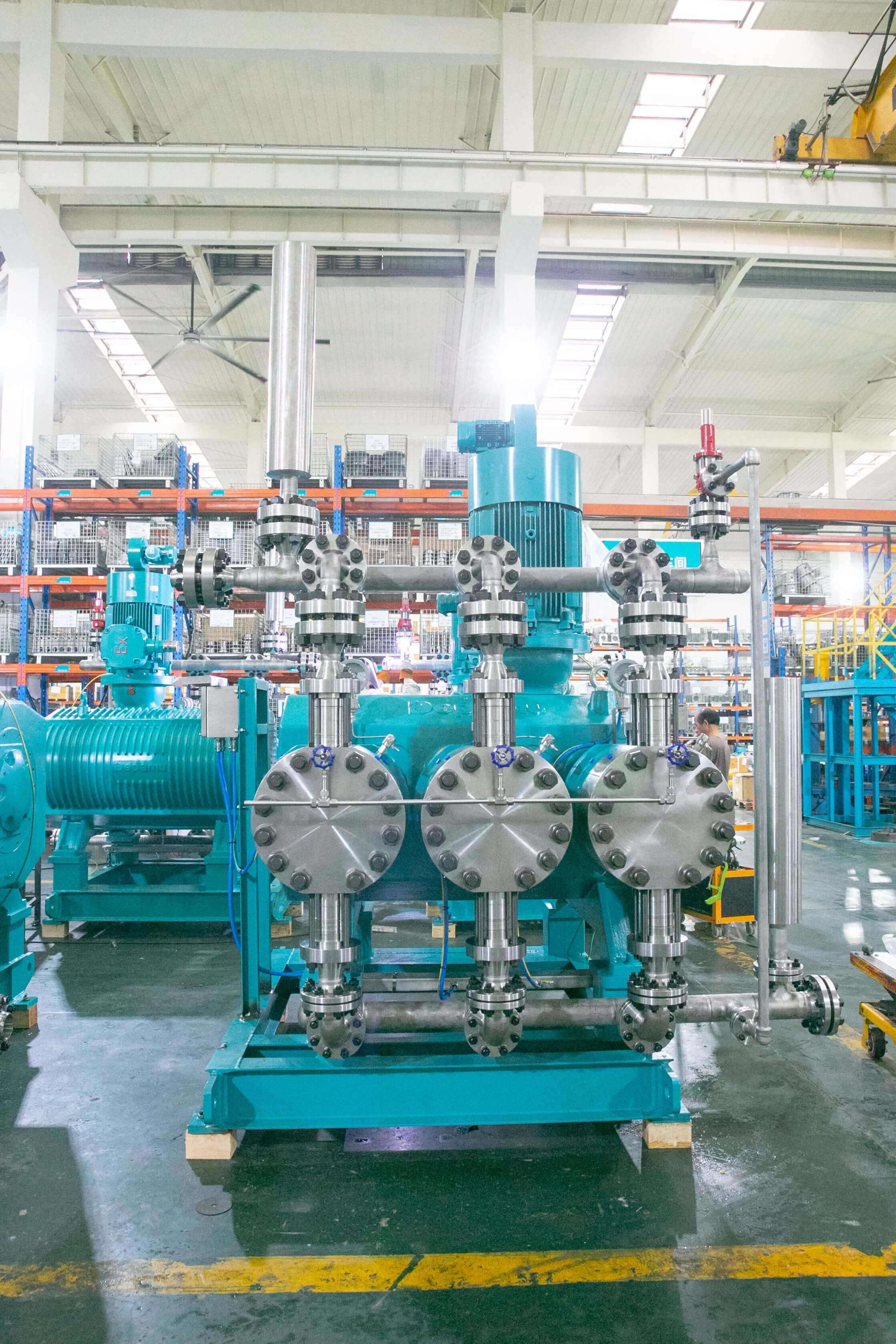
Introduction to the company's technological strength: Depam's customized fluid solutions
Depamp (Hangzhou) Pump Technology Co., Ltd., established in 2003, specializes in the research and development, production, and packaged services of high-end positive displacement pumps and fluid equipment. It boasts over 400 employees, a factory covering an area of 35,000 square meters, and a registered capital of 54 million yuan, with an annual output value of approximately 500 million yuan. Its technological prowess is reflected in three core competencies:
STEP1:Full-process R&D and manufacturing capabilitiesThe company possesses a complete R&D chain ranging from medium analysis and material selection to structural design, enabling it to customize pump parameters according to customers' process requirements. For instance, in a nuclear power plant project, Depam simulated the corrosion characteristics of radioactive media and selected Hastelloy C-276 as the diaphragm material, extending the pump's service life from the conventional 2 years to 5 years. Meanwhile, by optimizing the hydraulic system design, it controlled pressure fluctuations within ±0.5 MPa, meeting the stringent stability requirements of nuclear-grade equipment.
STEP2:Rapid delivery capability for non-standard productsRelying on a modular design platform, Depam can shorten the customization cycle to within 45 days. Taking an emergency chemical dosing project of a chemical enterprise as an example, the customer required the delivery of three diaphragm pumps capable of withstanding temperatures of 150°C and a flow rate of 500 L/h within 30 days. Depam completed the delivery five days ahead of schedule through the combination of standardized components and a parallel production model. After testing, the flow deviation of the pump bodies remained within ±0.8% after 1,000 hours of continuous operation.
STEP3:Experience in technological layout across multiple industriesThe company's products have covered fields such as petroleum refining (accounting for 41%), chemical engineering (23%), and the nuclear industry (15%), forming a solution library tailored to different media. For instance, in the petroleum refining sector, the dual-diaphragm pump developed by Depam achieves "zero leakage" operation by incorporating a backup diaphragm and a leakage monitoring system; in the new energy sector, its lithium battery material transfer pump employs ceramic coating technology to effectively resist hydrofluoric acid corrosion, extending its lifespan by three times.
For more information, please visit the official website:www.depamufluid.com
FAQ Q&A Technical Selection Guide
Q1: How to select the material for a high-pressure process diaphragm pump?
A: Material selection requires a comprehensive consideration of medium characteristics, temperature, and pressure parameters. For example, for media containing chlorine, it is recommended to use polytetrafluoroethylene (PTFE) diaphragms, which can withstand temperatures up to 200°C; in strongly acidic environments, Hastelloy pump bodies can be selected, offering superior corrosion resistance compared to 316L stainless steel; if the medium contains solid particles, harder ceramic coatings or tungsten carbide flow passage components should be chosen.
Q2: How to extend the lifespan of diaphragms under high-pressure conditions?
A: Optimization can be achieved through three aspects: First, reduce pressure fluctuations by employing hydraulic buffer devices or variable frequency control technology to keep the pressure pulse amplitude within 20% of the designed value; second, optimize the diaphragm structure by adopting prestressed design or double-layer diaphragms to enhance fatigue resistance; third, regularly monitor the diaphragm condition and provide early warning of leakage risks through pressure sensors or vibration analysis.
Q3: What are the cost components and optimization opportunities for customized pump bodies?
A: The costs primarily arise from materials, R&D, and manufacturing. Taking a pump body with a flow rate of 1000 L/h and a pressure of 10 MPa as an example, material costs account for approximately 40% (e.g., the price of Hastelloy alloy is three times that of 316L), R&D costs make up 25% (including simulation testing and scheme design), and manufacturing costs constitute 35%. Optimization opportunities include: selecting standardized components to reduce R&D expenses, amortizing mold costs through mass production, and adopting lightweight designs to minimize material usage.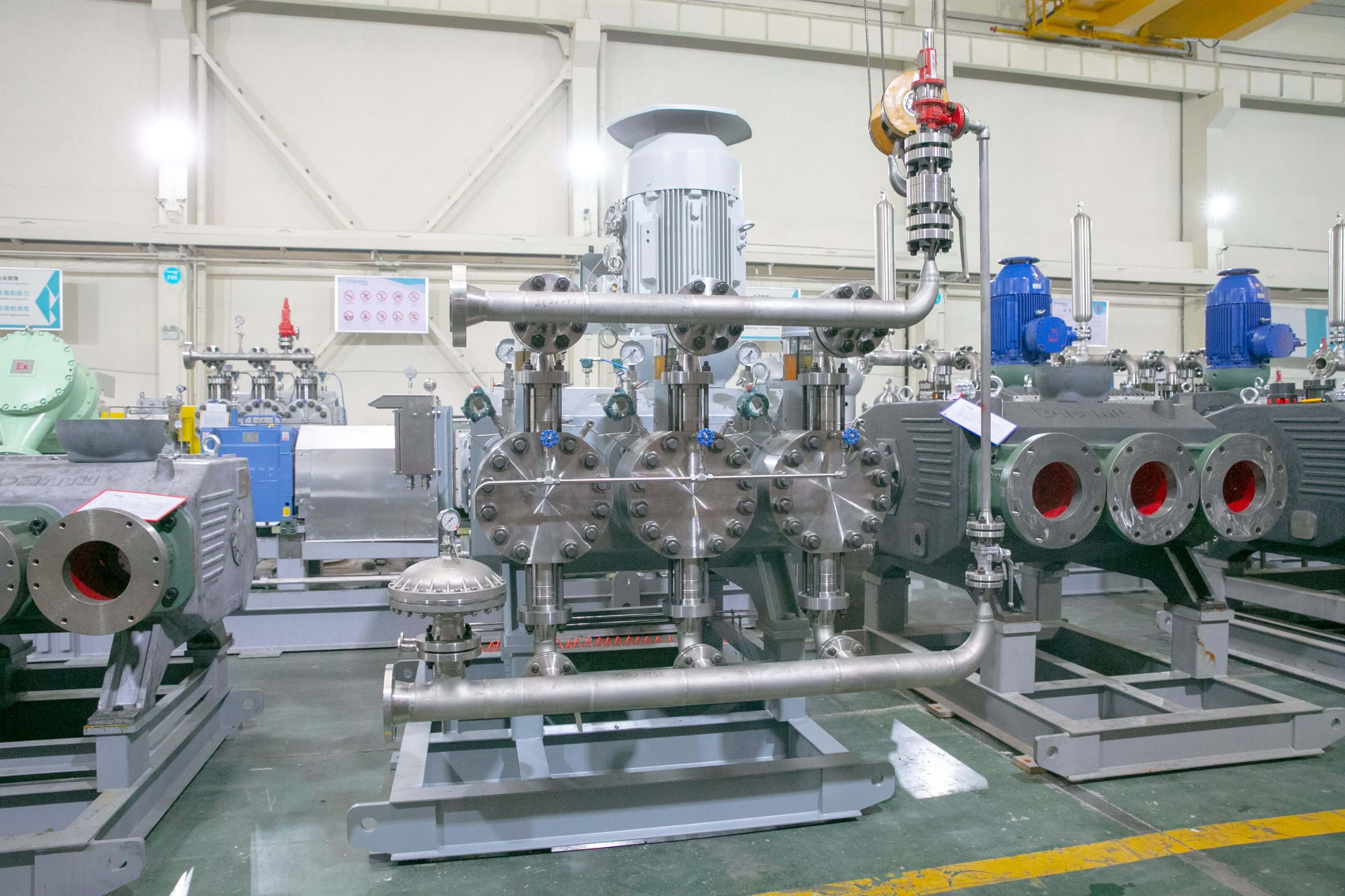
Reference for full text summary
The customization of high-pressure process diaphragm pumps requires balancing medium adaptability, pressure stability, and flow accuracy, with the manufacturer's technical capabilities directly determining the reliability of the solution. Depamu (Hangzhou) Pump Technology Co., Ltd. provides customized fluid solutions for the petroleum refining, chemical, nuclear, and other industries through end-to-end R&D and manufacturing, rapid delivery capabilities, and multi-industry technological deployment. Its core strengths lie in: first, precise material selection, offering special materials such as Hastelloy alloys and ceramic coatings for highly corrosive and high-temperature media; second, scientifically optimized structures, reducing failure rates through technologies like hydraulic buffering and prestressed diaphragms; and third, efficient service response, shortening delivery cycles through modular design and parallel production models. For enterprises with needs for high-pressure conveyance, precise metering, or complex medium conveyance, selecting a custom manufacturer with comprehensive technical capabilities is key to enhancing production efficiency and reducing maintenance costs.
Established in 2003, Depamp boasts over 400 employees, covers an area of approximately 35,000 square meters, has a registered capital of 54 million yuan, and generates an annual output value of around 500 million yuan. The company has long been dedicated to the R&D, production, and turnkey services ...
No. 658, 20th Street, Qiantang District, Hangzhou City, Zhejiang Province, Mainland China