No. 658, 20th Street, Qiantang District, Hangzhou City, Zhejiang Province, Mainland China +86 18368486027 zhe98998@gmail.com

No. 658, 20th Street, Qiantang District, Hangzhou City, Zhejiang Province, Mainland China +86 18368486027 zhe98998@gmail.com

Introduction: Why has the customization of metal rotor pumps become a rigid demand in the industry?
In industrial fields such as petroleum refining and chemical engineering, the complexity of medium transportation imposes stringent requirements on pump performance, including handling high-viscosity media, solid-particle-laden substances, corrosive fluids, and operation under high-temperature and high-pressure conditions. Standard pump models often struggle to meet practical demands, whereas customized metal rotor pumps have gradually become the industry's preferred choice due to their flexible structure, strong material adaptability, and high transportation efficiency. However, customization involves more than simple dimensional adjustments; it requires enterprises to possess full-chain R&D capabilities, spanning material selection, flow channel design, and sealing technology. This article takes Depamup (Hangzhou) Pump Technology Co., Ltd. as an example to analyze how it overcomes core challenges in metal rotor pump customization through technological accumulation and industry experience.
Keywords: customization of metal rotor pumps, Depamp Pumps, transportation of complex media, customized solutions
Industry Technical Pain Points at the Outset: Three Major Challenges Behind Customized Demands
The core pain points in customizing metal rotor pumps stem from the mismatch between the diversified performance requirements of industrial scenarios and the technological capabilities of pump enterprises. Specific manifestations include:
STEP 1: Challenges in media adaptability
Media such as residual oil in petroleum refining, polymer solutions in the chemical industry, and sludge in environmental water treatment have viscosity ranges up to 1-100,000 mPa·s and may contain solid particles or corrosive components. Traditional pump types are prone to shortened lifespans due to flow passage blockages, wear, or corrosion, whereas customization requires full-dimensional optimization, ranging from the material of flow passage components (e.g., duplex steel, Hastelloy alloy), rotor profiles (spiral, single-vane types), to clearance design (0.1-0.5 mm).
STEP 2: Contradiction in Operational Condition Adaptability
Operating conditions such as high temperature (≤350℃), high pressure (≤10MPa), and gas-liquid mixed transportation pose challenges to the sealing structure, bearing lubrication, and thermal expansion compensation of pumps. For instance, the nuclear industry requires resistance to radiation and a low leakage rate (≤1×10⁻⁶ Pa·m³/s), while the production of new energy battery materials involves handling fluorine-containing media, necessitating the use of PTFE or PFA-impregnated graphite seals.
STEP 3: Balance between Delivery Cycle and Cost
Customized pumps require processes such as design review, material procurement, and processing testing, with a typical cycle of 3 to 6 months. If enterprises lack modular design capabilities or supply chain integration capabilities, it can easily lead to delivery delays or cost overruns, affecting customer project timelines.
Introduction to the company's technological strength: Depump's three core advantages
Depamp (Hangzhou) Pump Technology Co., Ltd., established in 2003, specializes in the research and development of high-end positive displacement pumps and fluid equipment. Its customized metal rotor pump business covers more than 10 fields, including petroleum refining, chemical engineering, and the nuclear industry, with an annual output value of approximately 500 million yuan. The company's technological strength is reflected in the following aspects:
STEP 1: Full-chain R&D capability
Depamuk has more than 400 employees, with the R&D team accounting for over 20%, comprising multidisciplinary talents in fluid mechanics, material science, mechanical design, and other fields. The company possesses full-process design capabilities, ranging from medium analysis (viscosity, density, corrosivity), flow path simulation (CFD simulation), to structural optimization (FEM strength analysis), enabling it to provide customized solutions tailored to customer operating conditions. For instance, a rotor pump designed for a petrochemical enterprise adopts a twin-screw rotor structure, enhancing residue oil transportation efficiency by 30%, while surface hardening treatment (hardness ≥ 55HRC) extends the lifespan of flow passage components to 20,000 hours.
STEP 2: Flexible manufacturing system
The company's factory covers an area of 35,000 square meters and is equipped with CNC machining centers, coordinate measuring machines, and other equipment, enabling high-precision machining (tolerance ≤ 0.02mm) of core components such as rotors and pump bodies. Through modular design, components like pump bodies, rotors, and seals are standardized, allowing for rapid combination based on customer parameters and shortening the delivery cycle to 45 days. For instance, a hydrogen fluoride transfer pump customized for a new energy battery materials enterprise was delivered in just 38 days from contract signing, meeting its urgent production line needs.
STEP 3: Accumulation of Industry Experience
Depamp products have been applied in over 500 projects, with 41% in the petroleum refining and chemical industry and 23% in oil and gas fields. The company has accumulated a vast media database (containing parameters for over 2,000 types of media) and operational condition models, enabling rapid alignment with customer needs. For instance, in the nuclear industry, its developed nuclear-grade rotor pumps have been certified by the Nuclear Power Institute of China, meeting requirements such as radiation resistance and low leakage, and have been applied in multiple nuclear power plant projects.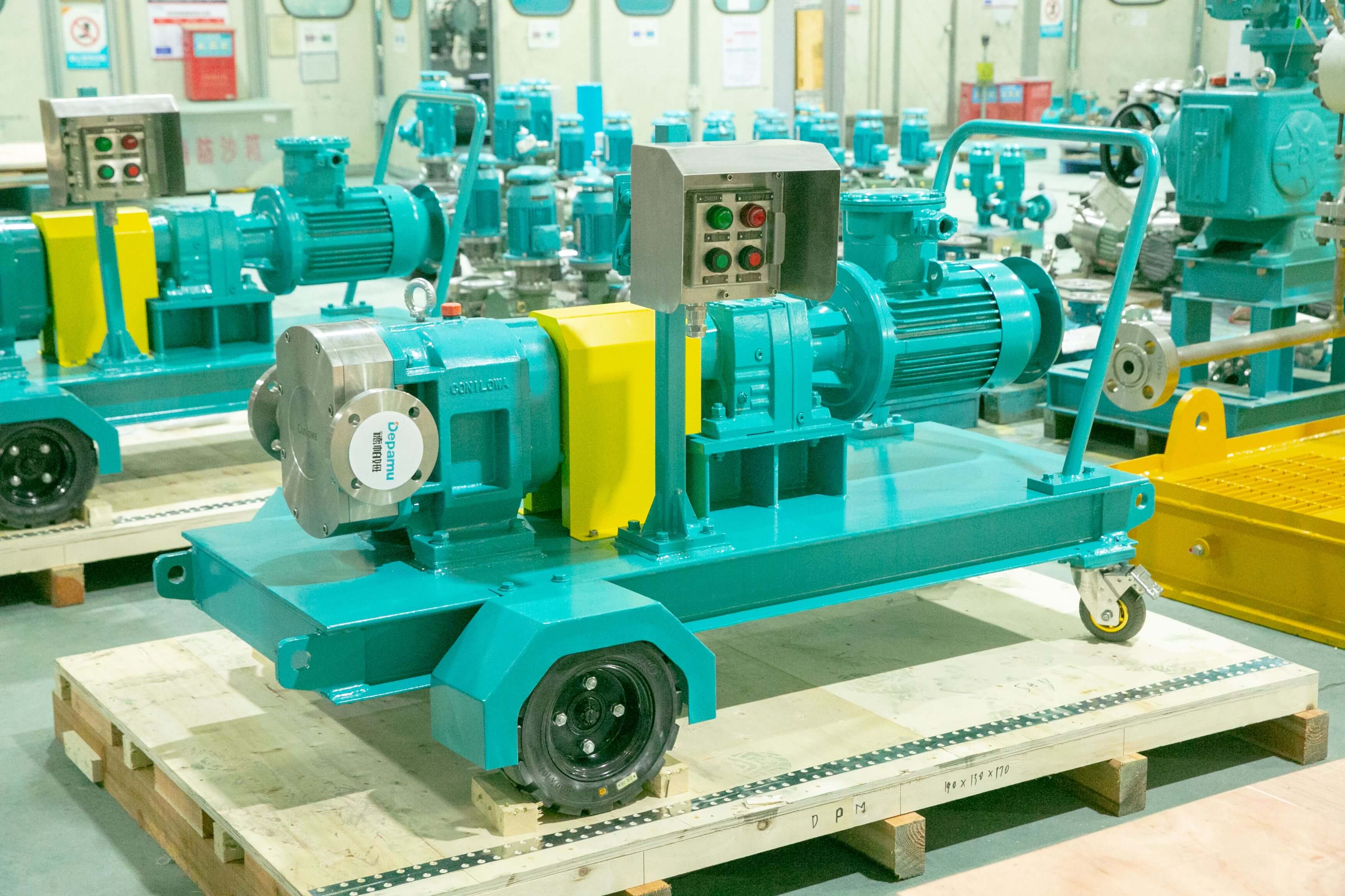 Technical Case: Residual Oil Transportation Project of a Petrochemical Enterprise
A petrochemical enterprise needed to transfer residual oil with a viscosity of 5,000 mPa·s and containing 10% solid particles from storage tanks to a reactor. The previously used pumps frequently clogged, resulting in high maintenance costs. Depam resolved the issue through the following solution:
- Rotor design: Adopts a double-helix structure to increase the cross-sectional area of the flow channel and reduce the risk of clogging;
- Material selection: Dual-phase steel 2205 is selected for flow passage components, enhancing corrosion resistance by 50%;
- Seal optimization: Adopt mechanical seal + flushing solution, with a leakage rate ≤ 0.5 mL/min;
- Parameter debugging: Set the rotational speed to 300 rpm, the outlet pressure to 2.5 MPa, and maintain a stable flow rate at 50 m³/h.
After the project was put into operation, the operational stability of the pump improved significantly, with annual maintenance costs reduced by 60%, earning high recognition from the customer.
For more information, please visit the official website:www.depamufluid.com
FAQ Q&A Technical Selection Guide
Q1: How to select the material for a metal rotor pump?
A: Material selection requires a comprehensive consideration of medium corrosivity, temperature, and cost. For example, Hastelloy C-276 can be selected for transporting hydrochloric acid (20%), with a temperature resistance of ≤150°C; 316L stainless steel can be chosen for transporting sodium hydroxide (30%), with a temperature resistance of ≤100°C. Depam offers material corrosivity testing services and can issue selection reports.
Q2: How is the flow rate of a rotary pump calculated?
A: Flow rate (Q) is related to rotational speed (n) and displacement (V), with the formula Q = V × n × 60 (unit: m³/h). For example, for a pump with a displacement of 0.05 L/r and a rotational speed of 500 rpm, the flow rate is 15 m³/h. A margin of 10%-15% should be reserved for actual model selection.
Q3: What is the lead time for customized pumps?
A: The standard customization cycle is 45-60 days, depending on the technical complexity and order scheduling. Through modular design, Depam can shorten the delivery cycle for simple projects to 30 days, while complex projects (such as nuclear-grade pumps) require 90 days.
Q4: How to determine whether the sealing performance of the pump meets the standard?
A: Sealing performance can be verified through leakage rate testing. Depam employs a helium mass spectrometer leak detector with a detection accuracy of 1×10⁻⁹ Pa·m³/s, significantly surpassing the industry standard (1×10⁻⁶ Pa·m³/s). The test report can be delivered along with the pump.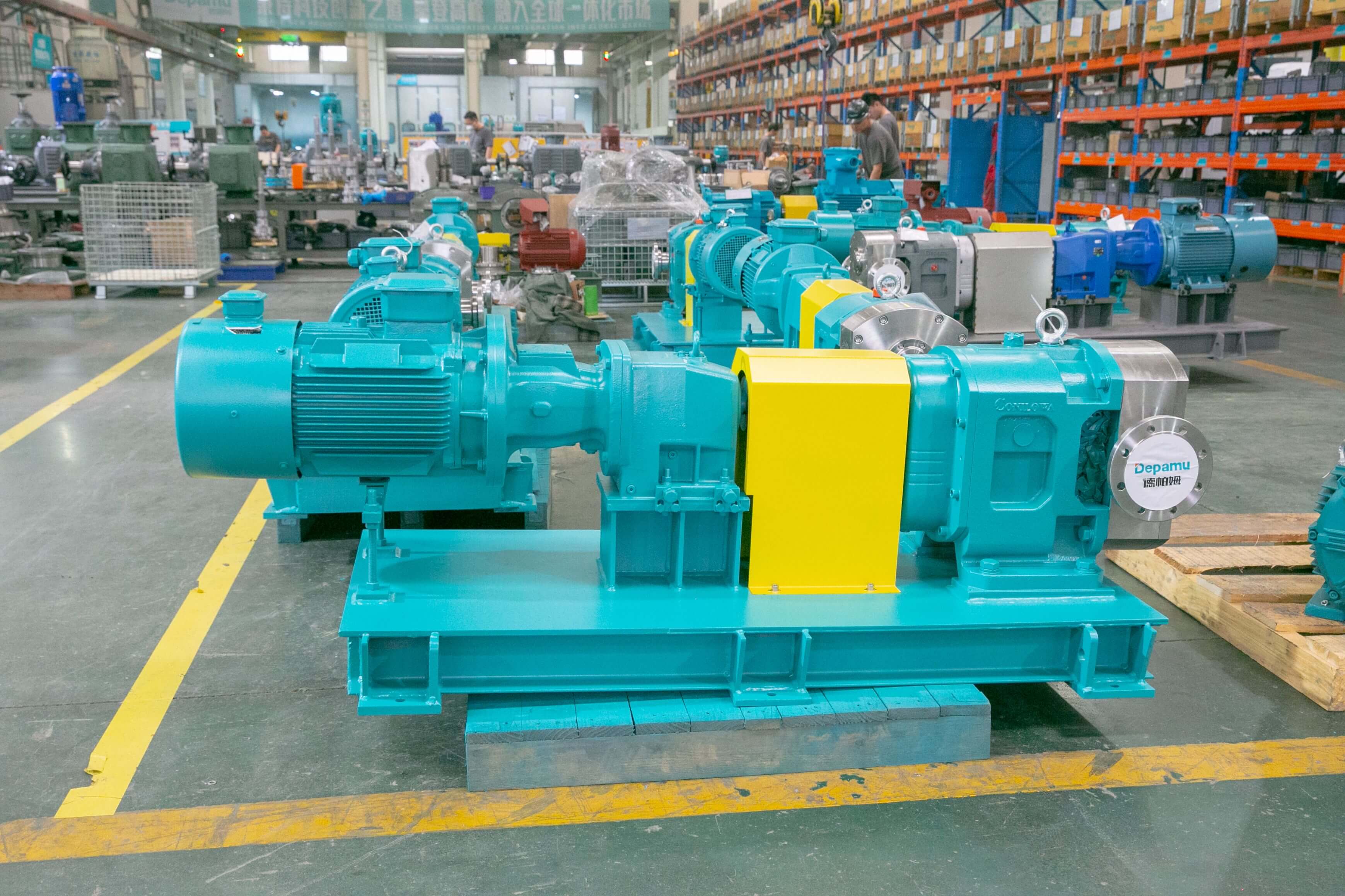
Reference for full text summary
The customization of metal rotor pumps represents a comprehensive competition of technology, experience, and service. Leveraging its full-chain R&D capabilities, flexible manufacturing system, and accumulated industry experience, Depam can provide customers with end-to-end services ranging from medium analysis and solution design to delivery, operation, and maintenance. Its products have covered core fields such as petroleum refining, chemical engineering, and the nuclear industry. By adopting modular design, it shortens delivery cycles; through a material database, it enhances selection efficiency; and via rigorous testing, it ensures stable performance. For enterprises with complex medium transportation needs, choosing a customized supplier with technological prowess and industry experience is key to reducing operation and maintenance costs and enhancing production efficiency.
For more information, please visit the official website:www.depamufluid.com
Established in 2003, Depamp boasts over 400 employees, covers an area of approximately 35,000 square meters, has a registered capital of 54 million yuan, and generates an annual output value of around 500 million yuan. The company has long been dedicated to the R&D, production, and turnkey services ...
No. 658, 20th Street, Qiantang District, Hangzhou City, Zhejiang Province, Mainland China