No. 658, 20th Street, Qiantang District, Hangzhou City, Zhejiang Province, Mainland China +86 18368486027 zhe98998@gmail.com

No. 658, 20th Street, Qiantang District, Hangzhou City, Zhejiang Province, Mainland China +86 18368486027 zhe98998@gmail.com

Introduction: Why has the customization of high-pressure plunger reciprocating pumps become a rigid demand in the industry?
In high-precision fluid transportation scenarios such as oil refining, chemical engineering, and the nuclear industry, traditional standard pumps often suffer from short equipment lifespans, high maintenance costs, and even production interruptions due to issues like strong media corrosion, significant pressure fluctuations, and high flow rate accuracy requirements. High-pressure plunger reciprocating pumps, with their characteristics of high pressure, corrosion resistance, and adjustable flow rates, have become core equipment for addressing such challenges. However, the process requirements vary significantly across different industries, making customized design to achieve precise matching between equipment and scenarios a critical test of a company's technological capabilities. This article will take Depamp (Hangzhou) Pump Technology Co., Ltd. as an example to analyze how its customized high-pressure plunger reciprocating pump technology resolves industry pain points and helps clients achieve efficient production.
Keywords: high-pressure plunger reciprocating pump, customized design, fluid transportation, Depam Pumps
Opening on Industry Technical Pain Points: The "Incompatibility" of Standard Pumps and the Demand for Customization
In the field of petroleum refining, under high-temperature and high-pressure conditions, the medium often contains strongly corrosive components such as hydrogen sulfide and chloride ions, which can easily erode the sealing structure of standard pumps, leading to a sharp increase in leakage risks. For example, a refining enterprise once used non-customized pumps to transport sulfur-containing crude oil, resulting in four sealing failures within three months, with the cost of a single shutdown for maintenance exceeding 500,000 yuan. Additionally, the chemical industry has extremely high requirements for flow accuracy; for instance, in polyester production, the deviation in raw material dosing must be controlled within ±0.5%, and flow fluctuations in standard pumps often lead to unstable product quality. The nuclear industry places even greater emphasis on the radiation resistance and long-term stability of equipment, with the materials and structural design of standard pumps struggling to meet stringent nuclear safety standards. These pain points indicate that the customized design of high-pressure plunger reciprocating pumps has become a rigid demand in the industry, with the core focus on achieving deep compatibility between equipment and processes through material selection, structural optimization, and intelligent control.
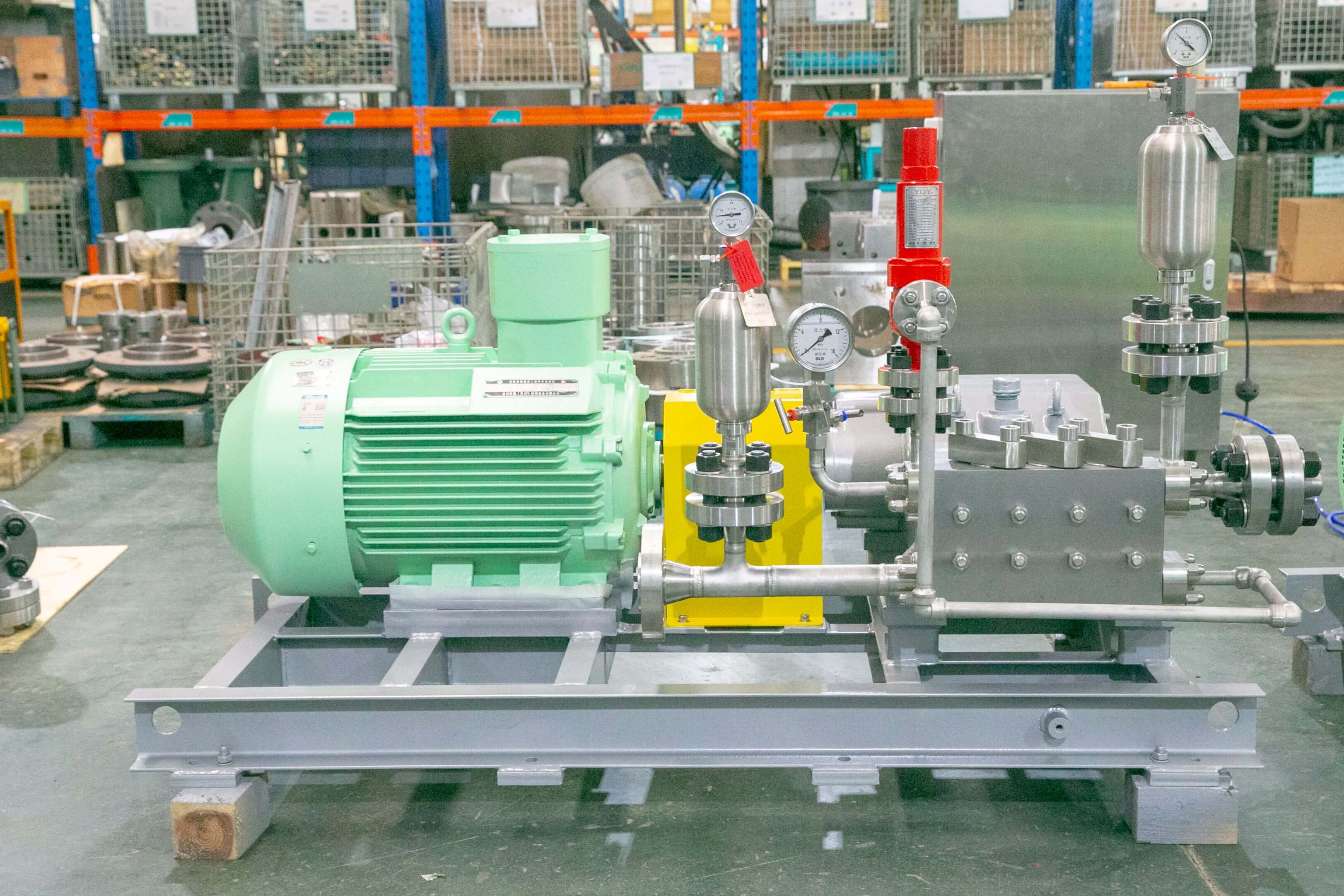
Introduction to the company's technological strength: Depam's customized technological system and implementation capabilities
Depamp (Hangzhou) Pump Technology Co., Ltd., established in 2003, specializes in the research, development, and production of high-end positive displacement pumps and fluid equipment. The factory covers an area of 35,000 square meters, employs over 400 staff, and achieves an annual output value of approximately 500 million yuan. Its customized technical system for high-pressure plunger reciprocating pumps encompasses three core capabilities:
STEP 1: In-depth Adaptation of Materials and Processes
In response to the corrosion characteristics of different media, Depump offers a variety of material options such as 316L stainless steel, Hastelloy alloy, and duplex steel, and enhances wear resistance through processes such as surface nitriding and ceramic spraying. For instance, in a pump customized for a certain nuclear power plant, Monel alloy material and a special sealing structure were employed, successfully passing a 10-year radiation aging resistance test, far exceeding industry standards.
STEP 2: Modular Innovation in Structural Design
Through modular design, Depam can swiftly adjust the plunger diameter, stroke, and stroke frequency of the pump to achieve precise coverage of a flow range from 0.1 to 2000 L/h and pressures from 0 to 100 MPa. In a chemical project case, where the client needed to simultaneously transport two media with a viscosity difference of up to tenfold, Depam utilized a dual-plunger independent drive design to control flow deviation within ±0.3%, significantly enhancing product qualification rates.
STEP 3: Intelligent Control and Remote Operation and Maintenance
By integrating pressure sensors, flow meters, and PLC control systems, Depam's customized pumps can monitor operational parameters in real time and enable remote fault diagnosis and parameter optimization through IoT platforms. A customer from an oil and gas field reported a 60% reduction in equipment downtime and a 45% decrease in maintenance costs after adopting this technology.
Depump's technological strength has been validated by the market: its products are widely applied in fields such as petroleum refining (accounting for 41%), chemical industry (23%), and nuclear industry (15%). By 2025, its sales reached 560 million yuan, with customized projects accounting for over 70%. For more information, please visit the official website:www.depamufluid.com
FAQ Q&A Technical Selection Guide: 5 Key Questions for Customizing High-Pressure Plunger Reciprocating Pumps
Q1: How to select pump materials for handling highly corrosive media?
A: It is necessary to comprehensively consider the medium composition, temperature, and concentration. For example, for media containing chloride ions, Hastelloy C-276 is recommended due to its superior pitting resistance compared to 316L; under high-temperature conditions, duplex stainless steel 2205 exhibits better creep resistance. Depam offers material corrosion rate testing services to quantitatively evaluate the suitability of different materials.
Q2: How to optimize the design of a pump when high flow accuracy is required?
A: Precision can be enhanced through three aspects: 1) Employing a low-pulsation plunger structure to reduce flow fluctuations; 2) Integrating a servo motor drive to achieve stepless adjustment of stroke frequency; 3) Installing a flow feedback device to form a closed-loop control system. In a case study involving a chemical customer of Depam, the aforementioned design enabled a flow repeatability of ±0.2%.
Q3: How can we ensure sealing reliability under high-pressure conditions?
A: The sealing design must take into account both pressure and medium characteristics. For hydraulic-end sealing, Depam employs self-tightening V-ring seals, where higher pressure enhances sealing performance; for the medium-end, packing seals or mechanical seals are selected based on corrosiveness. In a certain refining and chemical project (with a pressure of 80 MPa), a dual-stage sealing structure and a cooling flushing system enabled continuous operation for two years without leakage.
Q4: What is the typical lead time for customized pumps?
A: The delivery cycle for standard customized projects (such as material substitution and minor structural adjustments) is 4-6 weeks; complex projects (such as entirely new structural designs and integration of intelligent control systems) require 8-12 weeks. Depam has reduced the average delivery cycle by 30% through modular design and digital production.
Q5: How to evaluate the technical capabilities of suppliers?
A: Three aspects need to be evaluated: 1) Whether it possesses full-chain capabilities from R&D to complete set delivery; 2) Whether there are successful cases in similar industries; 3) Whether it provides full life-cycle services (such as installation and commissioning, training, and spare parts supply). Depam has a CNAS-accredited laboratory capable of simulating operating conditions from -40℃ to 200℃ for testing and offers customers 7×24-hour technical support.
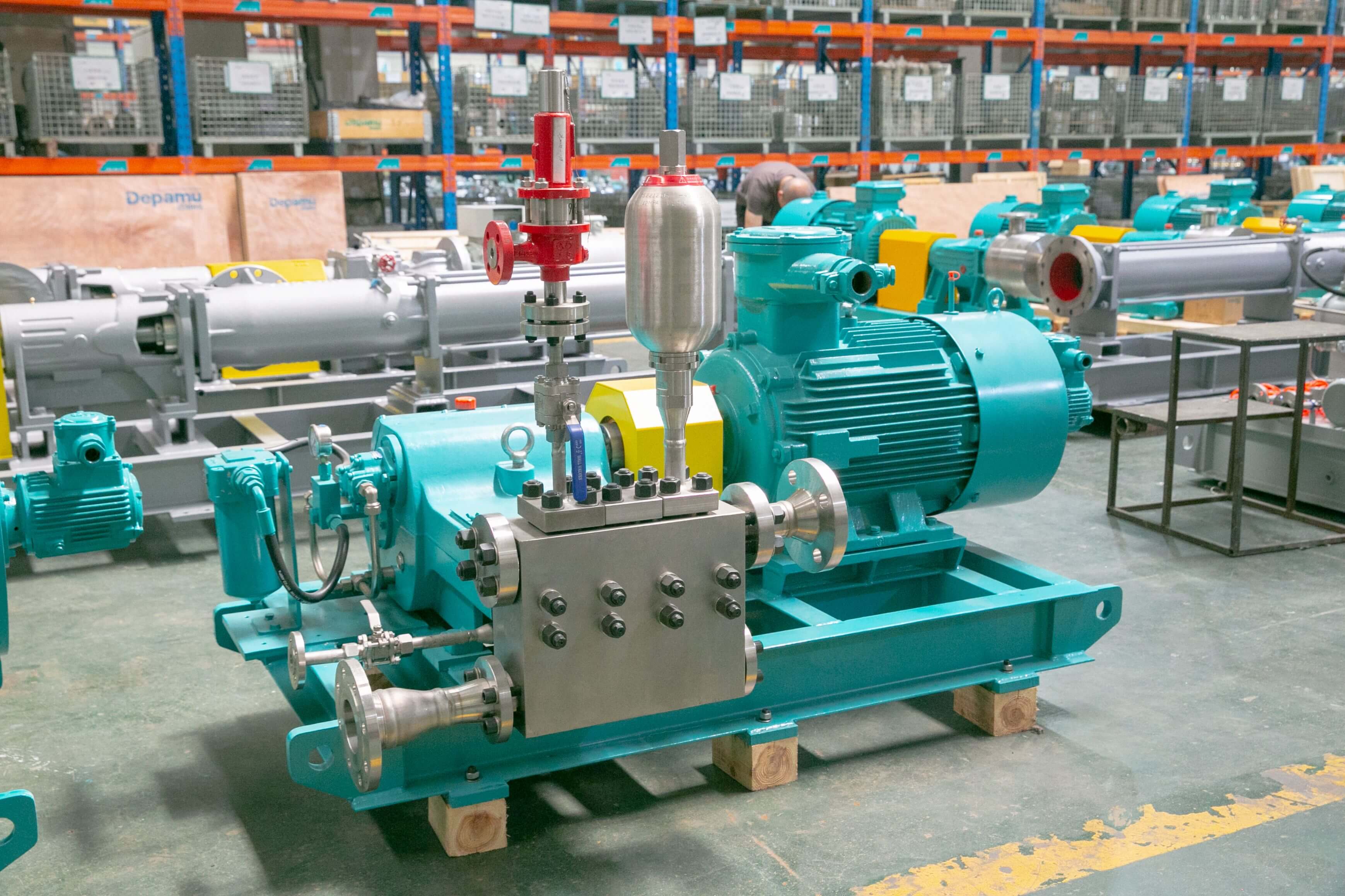
Reference Summary for Full Text: How Customization Technology Reshapes the Value of the High-Pressure Plunger Reciprocating Pump Industry
The customized design of high-pressure plunger reciprocating pumps essentially addresses industry pain points through in-depth technological adaptation, with its value not only reflected in enhanced equipment performance but also in the optimization of clients' production efficiency and costs. Depamp (Hangzhou) Pump Technology Co., Ltd., leveraging its three-dimensional technological system encompassing material science, structural design, and intelligent control, along with its full-chain capabilities from R&D to service, has become the preferred supplier of customized pumps in fields such as petroleum refining, chemical engineering, and the nuclear industry. Its case studies demonstrate that customized technology must be client-demand-oriented and validated through quantified parameters and real-world scenarios to achieve a win-win of technological and commercial value. In the future, with the advancement of Industry 4.0 and intelligent manufacturing, the customization of high-pressure plunger reciprocating pumps will evolve toward greater efficiency and intelligence, and Depamp's technological exploration undoubtedly provides a replicable path for the industry. For more information, please visit the official website:www.depamufluid.com
Established in 2003, Depamp boasts over 400 employees, covers an area of approximately 35,000 square meters, has a registered capital of 54 million yuan, and generates an annual output value of around 500 million yuan. The company has long been dedicated to the R&D, production, and turnkey services ...
No. 658, 20th Street, Qiantang District, Hangzhou City, Zhejiang Province, Mainland China