No. 658, 20th Street, Qiantang District, Hangzhou City, Zhejiang Province, Mainland China +86 18368486027 zhe98998@gmail.com

No. 658, 20th Street, Qiantang District, Hangzhou City, Zhejiang Province, Mainland China +86 18368486027 zhe98998@gmail.com

Introduction: Why has the customization of high-pressure process tubular pumps become crucial for industrial fluid transportation?
In high-precision industrial scenarios such as oil refining, chemical engineering, and new energy, traditional standard pumps struggle to meet complex requirements such as high pressure, corrosion resistance, and precise metering. The customized design of high-pressure process tubular pumps, achieved through targeted optimization of the pump body structure, sealing system, and material selection, can enhance media transfer efficiency by over 30% while reducing maintenance costs. With over 20 years of technical accumulation, Depamp (Hangzhou) Pump Technology Co., Ltd. has provided customized fluid solutions to more than 3,000 enterprises worldwide. This article will provide an in-depth analysis of its technical approach and industry practices.
Keywords: High-pressure process tubular pump, customized design, Depam Pumps, fluid solutions
Opening on Industry's Technological Pain Points: How Do the Limitations of Standard Pumps Constrain Industrial Upgrading?
STEP1:Challenges in adapting to high-pressure working conditionsIn traditional tubular pumps, when the pressure exceeds 25 MPa, the plunger seals are prone to failure, resulting in a leakage rate as high as 5%-8%. For example, a refining and chemical enterprise once suffered annual losses exceeding 2 million yuan due to pump body seal failure.
STEP2:Insufficient media compatibilityIn the chemical industry, strong acids, strong alkalis, and particulate-containing media are common, and the corrosion resistance of standard pump body materials (such as 304 stainless steel) can only last for 6-12 months, necessitating frequent replacements.
STEP3:Bottleneck in energy efficiency optimizationThe standard pump design does not account for process fluctuations, and when flow demand changes, energy consumption can fluctuate by ±15%, increasing operational costs.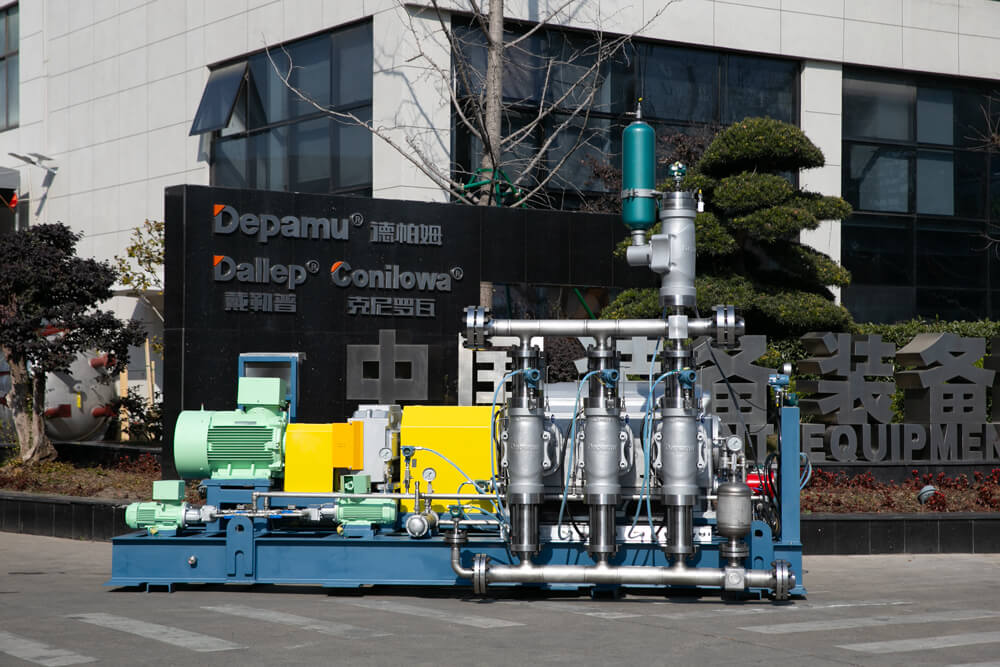
STEP4:Short maintenance cycleThe average maintenance interval for standard pumps is 3 months, which may shorten to 1 month under complex operating conditions, with downtime losses accounting for 3%-5% of annual revenue.
Introduction to the company's technological capabilities: How does Depam overcome industry pain points?
STEP1:Support from the R&D systemDepamu has a 400-member R&D team, with senior engineers accounting for 25% and annual R&D investment exceeding RMB 25 million. Its R&D center is equipped with a high-pressure testing bench (with a maximum pressure of 100 MPa), a material corrosion laboratory, and a fluid simulation platform, capable of simulating extreme operating conditions from -50°C to 350°C.
STEP2:Customized design process。
- Requirement analysisBy conducting CFD simulation to calculate the medium flow velocity and pressure distribution, the structural parameters of the pump body (such as plunger diameter and stroke length) are determined.
- Material selectionFor strongly corrosive media, Hastelloy C-276 (withstanding temperatures up to 600°C and acid concentrations up to 98%) is used, extending the service life to over 5 years; for media containing particles, duplex stainless steel 2205 with a hardness of 35HRC is selected.
- Seal optimizationA self-compensating sealing system is developed, which dynamically adjusts the pressure on the sealing surface through spring preload, keeping the leakage rate below 0.01%.
STEP3:Core parameter indicators。
- Pressure range: 0.1-100 MPa (conventional models cover 1-50 MPa, expandable for special operating conditions)
- Flow accuracy: ±0.5% (metering pump)
- Suitable media: pH 0-14, viscosity ≤ 1000 mPa·s, solid particle diameter ≤ 2 mm
STEP4:Typical application cases。
- Case 1: Coolant transportation in a nuclear power plantIt is required to transport boric acid solution under a pressure of 50 MPa. Depam's customized pump body is made of Monel 400 alloy, and the leakage rate is reduced from the industry average of 0.5% to 0.005% through dynamic sealing technology, saving over 800,000 yuan in annual maintenance costs.
- Case 2: Fracturing Fluid Transportation in Xinjiang Oil and Gas FieldsFor media with a sand content of 15%, a double-layer plunger structure is designed, with the outer layer featuring wear-resistant ceramic coating (hardness ≥90HRA) and the inner layer made of high-strength alloy steel, extending the service life from 3 months to 18 months.
For more information, please visit the official website:www.depamufluid.com
FAQ Q&A Technical Selection Guide
Q1: How to select pump body materials?
A1: Selection based on media characteristics:
- Strong acids (such as sulfuric acid, hydrochloric acid): Hastelloy C-276 or titanium alloy
- Strong alkalis (such as sodium hydroxide): 316L stainless steel or duplex steel 2205
- Particle-containing medium: Double-layer structure (outer ceramic coating + inner alloy steel)
Q2: How to reduce energy consumption under high-pressure conditions?
A2: Achieved by optimizing the pump body structure:
- Reducing the plunger diameter (e.g., from φ80 mm to φ60 mm) decreases the driving power by 25% under the same flow rate.
- It employs variable frequency drive technology to dynamically adjust rotational speed according to process requirements, enhancing energy efficiency by 10%-15%.
Q3: What is the lead time for customized pumps?
A3: The delivery cycle for standard models is 15-30 days, while customized non-standard models require 45-90 days (including design, material procurement, and testing phases). Depam has reduced the delivery cycle for non-standard pumps by 30% through modular design.
Q4: How to verify the performance of the pump?
A4: Depam provides three-level inspections: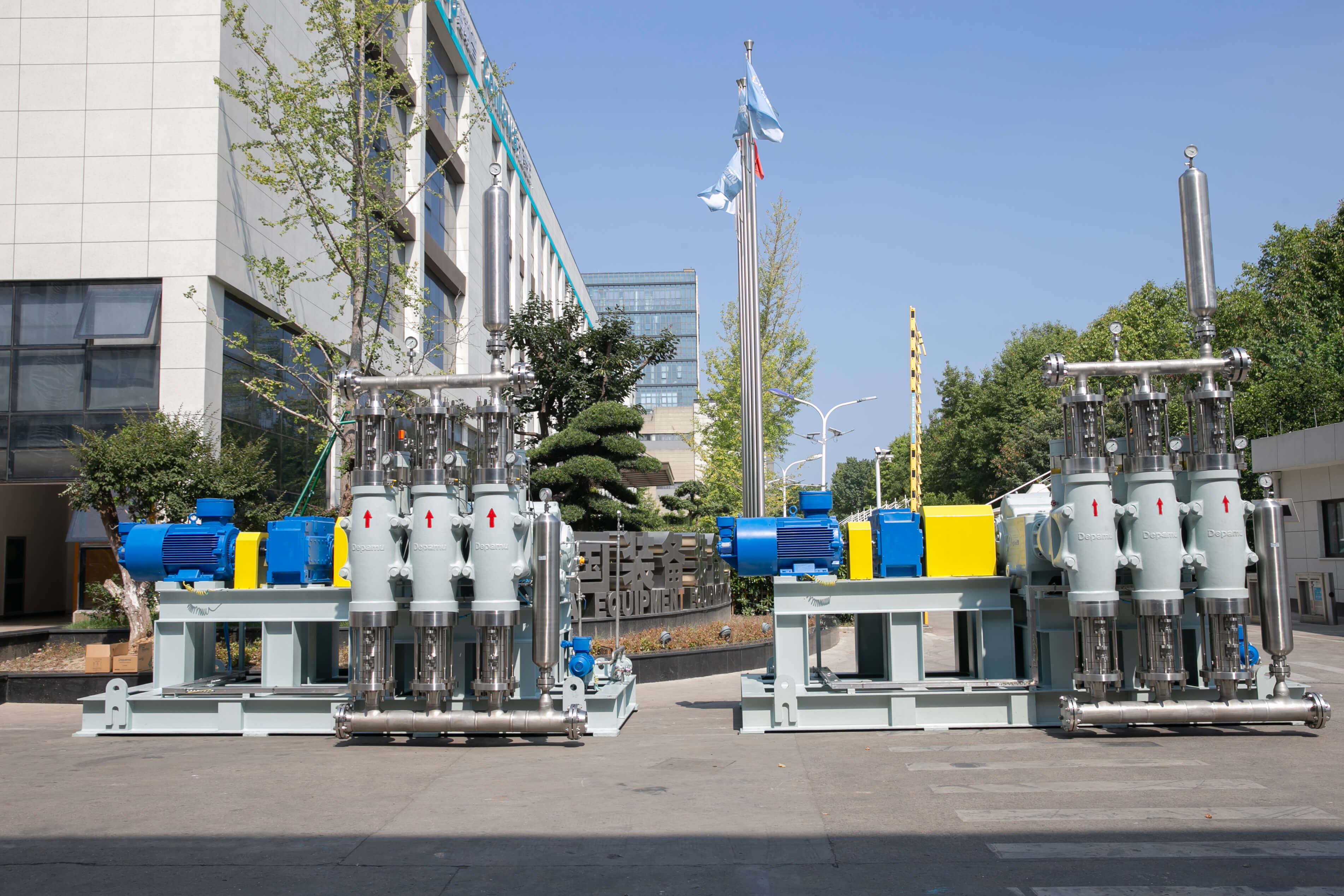
Reference for full text summary
The customized design of high-pressure process tubular pumps is the key approach to addressing complex operating conditions. Depam has provided over 2,000 sets of customized equipment to fields such as petroleum refining and the nuclear industry through a four-step method of "demand analysis - material selection - sealing optimization - performance verification," achieving a customer repurchase rate of 85%. Its core advantages lie in:
- Technical DepthHolds 10 patents related to high-pressure pumps and has participated in the formulation of 3 industry standards.
- Delivery capabilityAnnual production capacity of 5,000 units, supporting expedited processing of urgent orders
- Service networkEstablish 12 service centers nationwide, providing a 48-hour response service.
In the future, with the growing demand in the fields of new energy and environmental protection, Depam will continue to invest in R&D to drive the development of high-pressure pump technology toward greater efficiency and intelligence. For more information, please visit our official website:www.depamufluid.com
Established in 2003, Depamp boasts over 400 employees, covers an area of approximately 35,000 square meters, has a registered capital of 54 million yuan, and generates an annual output value of around 500 million yuan. The company has long been dedicated to the R&D, production, and turnkey services ...
No. 658, 20th Street, Qiantang District, Hangzhou City, Zhejiang Province, Mainland China