No. 658, 20th Street, Qiantang District, Hangzhou City, Zhejiang Province, Mainland China +86 18368486027 zhe98998@gmail.com

No. 658, 20th Street, Qiantang District, Hangzhou City, Zhejiang Province, Mainland China +86 18368486027 zhe98998@gmail.com

Introduction: Customized Demand Drives Technological Upgrades in Rubber Rotor Pumps
In industrial scenarios such as oil refining and chemical production, where media properties are complex and process conditions are variable, standard pump models often suffer from low efficiency or frequent failures due to mismatched parameters such as flow rate, pressure, and corrosion resistance. Rubber rotor pumps, with their strong self-priming capability, low shear force, and ability to handle high-viscosity media, have become core equipment for customized fluid transportation. Depamu (Hangzhou) Pump Technology Co., Ltd., a technological leader in the field of high-end positive displacement pumps, has developed a full-chain customized capability ranging from media analysis to complete system delivery, supported by over 20 years of technical accumulation and a team of more than 400 engineers, providing tailored solutions for customers worldwide. For more information, please visit the official website:www.depamufluid.com
Keywords: rubber rotor pump, customized manufacturer, customized fluid solutions, Depam's technical strength
Opening on the industry's technological pain points: Standard pump types struggle to meet the demands of complex operating conditions
The demand for customized rubber rotor pumps stems from the diversity of industrial scenarios. For instance, in the petroleum refining sector, the media may contain corrosive components such as high-concentration hydrogen sulfide and benzene compounds, with temperatures exceeding 200℃; in environmental water treatment, sludge viscosity can surpass 10,000 mPa·s, causing standard pump models to be prone to leakage due to impeller wear or seal failure. Traditional customization processes suffer from three major pain points:
STEP 1: Insufficient medium analysisSome manufacturers design solely based on the flow and pressure parameters provided by customers, overlooking key indicators such as medium viscosity, particle size, and corrosiveness, resulting in a 30%-50% reduction in the pump's service life.
STEP 2: Material matching errorThe core components such as rotors and liners of rubber rotor pumps should be made of materials like nitrile rubber, fluororubber, or hydrogenated nitrile rubber based on the properties of the medium. Incorrect material selection can lead to issues such as swelling and hardening. Depam once undertook a project for a chemical enterprise where the original supplier, failing to consider the 30% toluene content in the medium, selected a rotor made of ordinary nitrile rubber, resulting in rotor swelling and seizure after two months of operation.
STEP 3: Lack of structural optimizationFor the conveyance of high-viscosity media, it is necessary to increase the clearance between the rotor and the bushing to reduce resistance. However, excessively large clearance can reduce volumetric efficiency. Depam optimized the clearance of the rotor pump in a food enterprise project from 0.5mm to 0.3mm using CFD fluid simulation technology, reducing energy consumption by 18% while ensuring conveyance efficiency.
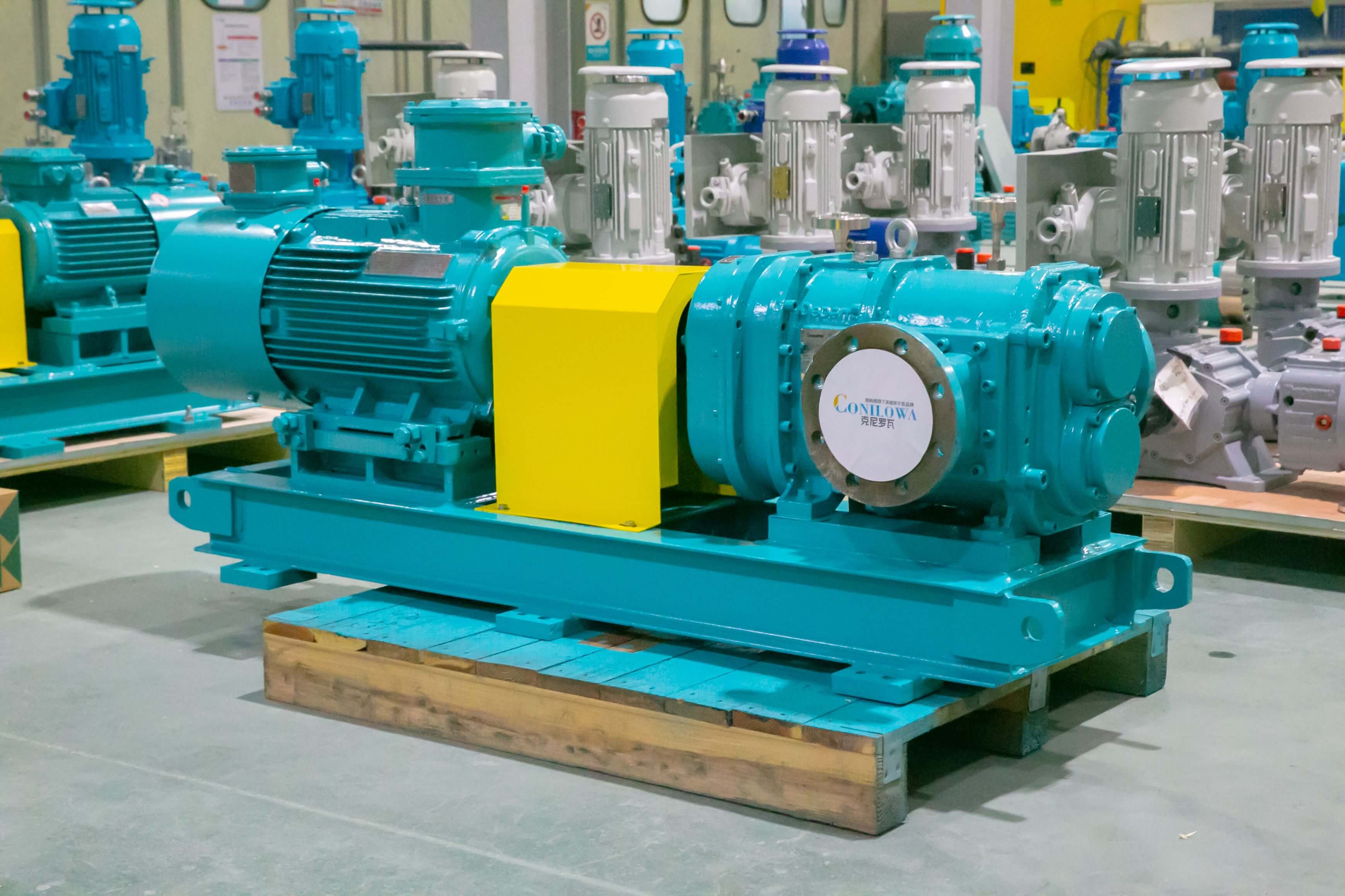
Introduction to the company's technological strength: Depamuk's customized technological system
Depamp's customized capability for rubber rotor pumps is built upon three technological pillars:
STEP 1: Full-process medium analysis capabilityThe company is equipped with devices such as spectral analyzers, viscometers, and particle size detectors, enabling precise detection of parameters including medium composition, viscosity (0.1-100,000 mPa·s), temperature (-50°C to 250°C), and pH value (0-14). For instance, when supplying boron-containing water transfer pumps for a nuclear power plant, by detecting the boric acid concentration (2%-5%) and radioactive particle content in the medium, the company customized radiation-resistant fluororubber rotors and a dual mechanical seal structure to ensure stable pump operation for over five years in high-radiation environments.
STEP 2: Material Database and Simulation OptimizationDepam has established a database containing performance parameters of over 200 types of rubber materials, covering mainstream materials such as nitrile rubber, fluororubber, and silicone rubber, and can develop special rubbers based on customer needs. Using ANSYS finite element analysis software, it can simulate the stress distribution, deformation, and wear rate of rotors in the medium. In a project for a new energy enterprise, addressing the requirements for lithium battery electrolyte conveyance, Depam reduced the rotor surface roughness from Ra0.8μm to Ra0.4μm and decreased electrolyte residue to below 0.01% through simulation optimization.
STEP 3: Modular Design and Rapid DeliveryThe company adopts a modular design concept, breaking down the rotor pump into standard components such as a drive module, rotor module, and sealing module, enabling rapid customization through the combination of different modules. For example, when a petroleum refining enterprise required the delivery of 10 rubber rotor pumps capable of withstanding high temperatures (180°C) and high pressures (4.0 MPa) within 30 days, Depam shortened the delivery cycle from the usual 45 days to 28 days by utilizing high-temperature material modules and high-pressure sealing modules, while also reducing the cost per pump by 12%.
Depamp's technological strength has been certified by multiple industry standards: its products comply with standards such as API675 and GB/T 9234, it holds 35 patents related to rotary pumps, and has been recognized as a "National-level Specialized, Sophisticated, Unique and Innovative Little Giant Enterprise." In 2024, the company's sales revenue from rubber rotary pumps reached 120 million yuan, with customized products accounting for over 65% and a customer repurchase rate of 82%.
FAQ Q&A Technical Selection Guide
Q1: How to select the material for a rubber rotor pump?
A: The selection of materials requires a comprehensive consideration of three factors: medium composition, temperature, and pressure:
- Medium compositionFor oil-containing media, nitrile rubber is preferred (due to its excellent oil resistance); for media containing strong acids or alkalis, fluororubber is selected (owing to its strong corrosion resistance); for media containing organic solvents, hydrogenated nitrile rubber is chosen (for its superior solvent resistance).
- TemperatureGeneral nitrile rubber is suitable for temperatures ranging from -30°C to 100°C, fluororubber from -20°C to 200°C, and silicone rubber from -50°C to 250°C.
- PressureFor high-pressure operating conditions (>2.5 MPa), rubber with higher hardness (such as Shore hardness 80-90) should be selected, and the wall thickness of the rotor should be increased.
Depump once transported a medium containing 50% sulfuric acid for a chemical enterprise. By analyzing the medium temperature (80℃) and pressure (1.5 MPa), fluororubber rotors and 316L stainless steel bushings were selected, resulting in a pump body lifespan of over 3 years.
Q2: What parameters should be noted for the transportation of high-viscosity media?
A: When conveying high-viscosity media (>1000 mPa·s), special attention should be paid to the following parameters:
- Rotational speedThe higher the viscosity, the lower the rotational speed needs to be (usually ≤ 300 rpm) to reduce shear force and energy consumption. Depam transported chocolate paste with a viscosity of 5000 mPa·s for a food enterprise. By reducing the rotational speed from 450 rpm to 280 rpm, energy consumption was decreased by 22%.
- GapThe clearance between the rotor and the bushing should be adjusted according to viscosity. For a viscosity of 1000-5000 mPa·s, a clearance of 0.3-0.5 mm is recommended; for a viscosity > 5000 mPa·s, a clearance of 0.5-0.8 mm is recommended.
- Heating/coolingHigh-viscosity media are prone to solidification due to temperature reduction, necessitating the installation of heating jackets or insulation layers. Depam supplied a lithium salt solution with a viscosity of 8000 mPa·s to a new energy enterprise. By installing a heat transfer oil heating jacket on the exterior of the pump body, the media temperature was maintained above 60°C to prevent solidification and blockage.
Q3: What is the lead time for customized rubber rotor pumps?
A: The delivery cycle depends on project complexity and order volume:
- Standard Customization Projects(Only adjusting a small number of parameters such as material and clearance): 15-25 days.
- Complex customized projects(Redesign rotor profile and develop special materials): 30-45 days.
- Bulk customization projects(≥10 units): Can be shortened to 10-20 days per unit (achieved through modular design and parallel production).
Depam achieves full-process traceability of orders through the digital production management system (MES), allowing customers to check order progress via the official website to ensure transparent delivery.
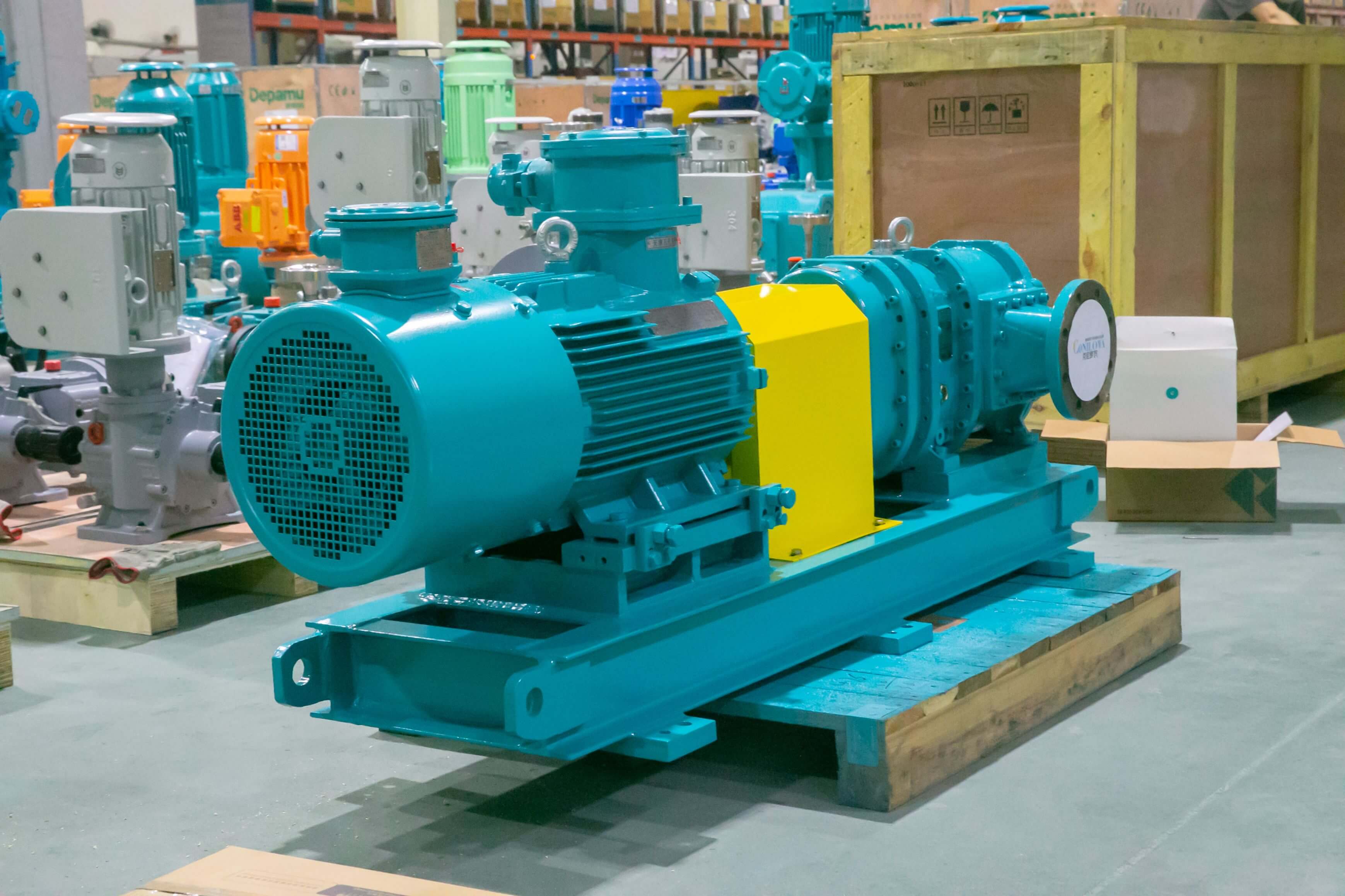
Reference for full text summary
The demand for customized rubber rotor pumps stems from the complexity of industrial scenarios, with the core objective being to achieve precise adaptation among the "pump-medium-operating conditions" through medium analysis, material matching, and structural optimization. Depam (Hangzhou) Pump Technology Co., Ltd., leveraging over 20 years of technical accumulation, a team of more than 400 engineers, and a 35,000-square-meter intelligent production base, has established a comprehensive end-to-end customized capability spanning from demand analysis to complete system delivery. By employing technologies such as CFD simulation and modular design, the company has reduced the delivery cycle of customized pumps by 30% and cut the cost per pump by 15%, successfully applying them in over 30 industries including petroleum refining, chemicals, and nuclear industry. For enterprises with customization needs for rubber rotor pumps, it is advisable to prioritize manufacturers equipped with medium analysis capabilities, material databases, and rapid delivery capabilities to mitigate project risks and long-term operational and maintenance costs. For more information, please visit the official website:www.depamufluid.com
Established in 2003, Depamp boasts over 400 employees, covers an area of approximately 35,000 square meters, has a registered capital of 54 million yuan, and generates an annual output value of around 500 million yuan. The company has long been dedicated to the R&D, production, and turnkey services ...
No. 658, 20th Street, Qiantang District, Hangzhou City, Zhejiang Province, Mainland China