No. 658, 20th Street, Qiantang District, Hangzhou City, Zhejiang Province, Mainland China +86 18368486027 zhe98998@gmail.com

No. 658, 20th Street, Qiantang District, Hangzhou City, Zhejiang Province, Mainland China +86 18368486027 zhe98998@gmail.com

Introduction: The Technological Contest Behind the Customization Demands for Single Screw Pumps
In process industries such as petroleum refining and chemical engineering, complex operating conditions involving media with viscosity ranges from 0.1 to 100,000 mPa·s, temperature spans from -50°C to 350°C, and solid contents up to 30% impose stringent requirements on the wear resistance, corrosion resistance, and flow stability of single-screw pumps. Traditional standardized products struggle to meet the demands of such scenarios, making customized development an essential need in the industry. Leveraging over two decades of technological expertise, Depam (Hangzhou) Pump Technology Co., Ltd. has established a customized solution system covering more than 10 industries, including petroleum refining, chemical engineering, and nuclear industry, through modular design, material innovation, and intelligent control technologies, achieving an annual output value exceeding 500 million yuan. This article will analyze the core logic of single-screw pump customization from three dimensions: technical principles, corporate capabilities, and selection guidelines.
Keywords: Customization of single screw pumps, Depam's technical strength, modular design, material innovation, intelligent control
Opening on the Industry's Technical Pain Points: The Contradiction Between Customized Demands and Standardized Products
STEP1:Challenges posed by complex working conditionsIn the petroleum refining industry, catalyst transportation in catalytic cracking units must handle compound operating conditions involving abrupt changes in medium viscosity (from 100 mPa·s to 5,000 mPa·s), temperature fluctuations (200°C–300°C), and variations in solid content (5%–15%). Traditional single-screw pumps are prone to a pump efficiency decline of over 30% due to insufficient temperature resistance of the stator rubber material (typically ≤150°C) and low precision in controlling the gap between the rotor and stator (±0.1 mm), which can even lead to failures such as stator tearing and rotor seizure.
STEP2:Challenges in adapting to media characteristicsIn the chemical industry, the production of polyvinyl chloride (PVC) requires the conveyance of suspensions containing chloride ions (Cl⁻ concentration ≥ 5%), imposing extremely high demands on the corrosion resistance of pump body materials. Conventional 304 stainless steel is prone to pitting corrosion in chloride ion environments, shortening the pump body's lifespan to less than three months. Meanwhile, high-end materials such as Hastelloy C-276 are prohibitively expensive (with unit prices 5-8 times that of 304) and difficult to machine, limiting their widespread adoption in customized applications.
STEP3:Dilemma of balancing energy efficiency and costIn the nuclear industry, the treatment of nuclear wastewater requires single-screw pumps to achieve precise flow control within the range of 0.1-10 m³/h, while meeting stringent requirements such as radiation resistance (γ-ray dose rate ≥ 10 Gy/h) and low leakage (≤ 0.01 mL/min). Traditional hydraulically driven pumps, due to their low energy conversion efficiency (≤ 65%), result in operational energy consumption accounting for over 40% of the total lifecycle cost of the equipment; although electric pumps can improve energy efficiency to 80%, they are prone to pulsation under low-flow conditions, affecting treatment precision.
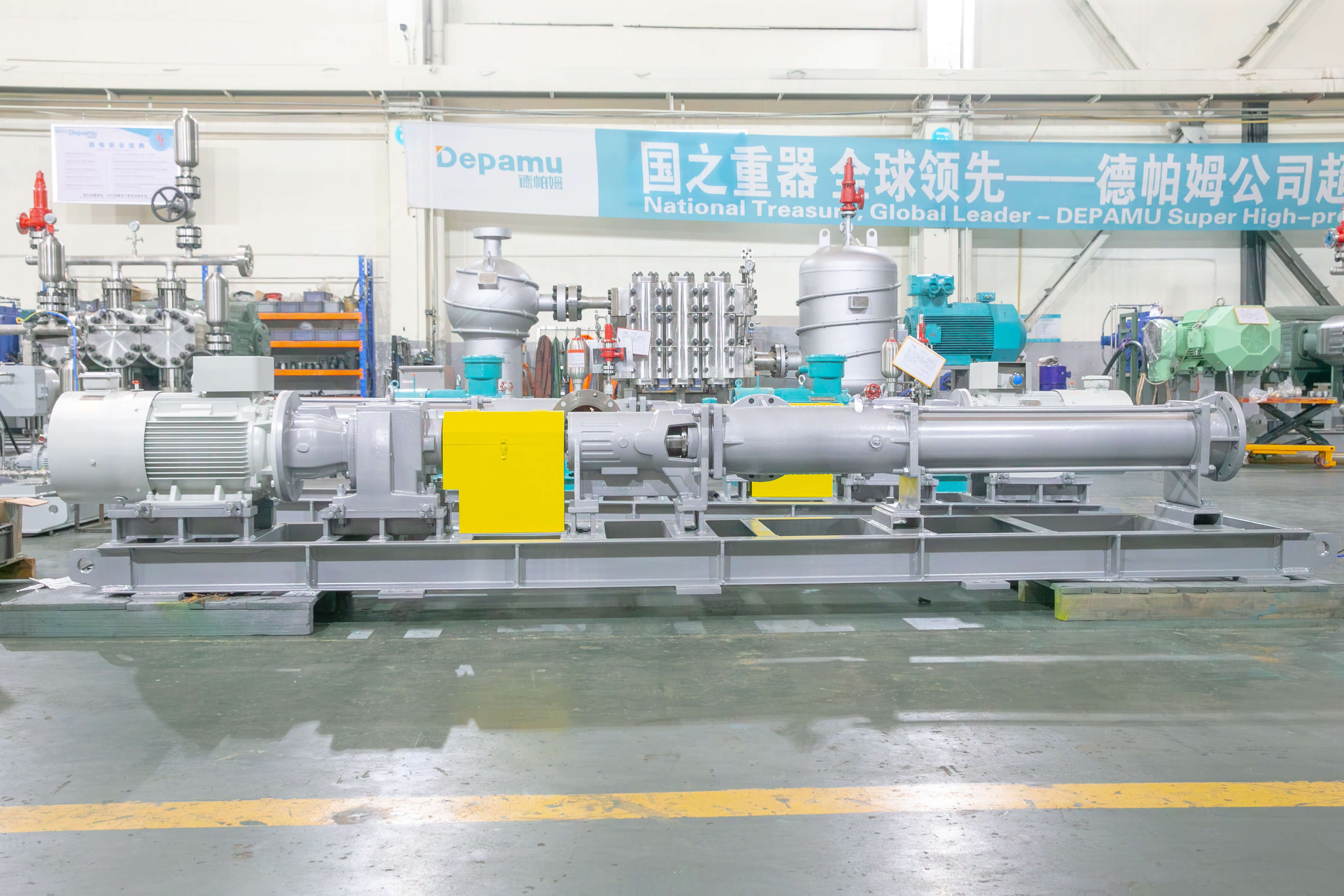
Introduction to the company's technological strength: Depamuk's customized technological system
STEP1:Modular design platformDepamp invested 20 million yuan in the research and development of a modular design system, breaking down the single-screw pump into four core units: the drive module, transmission module, pump body module, and sealing module. Through parametric modeling technology, over 3,000 standard combination solutions can be rapidly generated, covering flow rates from 0.01 to 200 m³/h, pressures from 0.1 to 10 MPa, and temperatures from -50°C to 350°C. For instance, when customizing a catalyst transfer pump for a petrochemical enterprise, the entire process from requirement analysis to solution output was completed in just 72 hours, reducing the traditional design cycle by 80%.
STEP2:Materials Innovation LabThe company has established a materials laboratory covering an area of 500 square meters, equipped with equipment such as Scanning Electron Microscope (SEM) and Energy Dispersive Spectrometer (EDS). It can conduct tests on the temperature resistance, corrosion resistance, and wear resistance of over 200 types of materials, including rubber, metals, and ceramics. In response to the issue of chloride ion corrosion in the chemical industry, the company has developed a modified fluororubber (FKM-C) stator material, which has increased its chloride ion tolerance concentration to 10% and extended its service life to over 2 years. In the nuclear industry, the company has developed zirconium alloy-702 pump body material, which can withstand a radiation dose rate of up to 50 Gy/h, with leakage controlled within 0.005 mL/min.
STEP3:Intelligent control technologyDepamp integrates Internet of Things (IoT) technology into the design of single-screw pumps, utilizing built-in sensors to collect over 10 parameters such as flow rate, pressure, and temperature in real time. Equipped with independently developed intelligent algorithms, it achieves automatic optimization of pump efficiency. For instance, in a nuclear wastewater treatment project, the system dynamically adjusted the rotational speed (from 500 rpm to 300 rpm) based on changes in medium viscosity (from 50 mPa·s to 200 mPa·s), maintaining pump efficiency consistently above 85% and achieving a 20% energy savings compared to traditional control methods.
Technical parameter supportThe company's customized products have formed a complete parameter system: flow rate range of 0.01-200 m³/h (accuracy ±1%), pressure range of 0.1-10 MPa (stability ±0.5%), temperature range of -50°C to 350°C (temperature difference resistance ≤5°C), and maximum solid content of 30% (wear rate ≤0.01 mm/year). Over the past three years, it has delivered more than 1,200 customized projects cumulatively, with a customer repurchase rate of 65%, covering over 30 industry leaders such as Sinopec and China National Nuclear Corporation.
FAQ: Q&A Technical Selection Guide
Q1: How to select materials for single screw pumps based on medium characteristics?
STEP1:Viscosity adaptationFor low-viscosity media (≤100 mPa·s), ordinary rubber stators (e.g., NBR) can be selected, reducing costs by 30%; for high-viscosity media (≥1000 mPa·s), high-strength rubber (e.g., HNBR) or metal stators should be used to prevent leakage caused by stator deformation.
STEP2:Corrosive adaptationFor acidic media (pH ≤ 4), Hastelloy C-276 pump bodies are preferred due to their corrosion resistance being five times that of 316L; for alkaline media (pH ≥ 10), titanium alloy pump bodies can be selected, increasing alkali concentration tolerance up to 20%.
STEP3:Solid content matchingFor media with a solid content ≤ 5%, a standard clearance (0.2-0.5 mm) can be used; for media with a solid content of 5%-15%, the clearance should be increased to 0.5-1 mm, and a wear-resistant coated (e.g., tungsten carbide) rotor should be selected; for media with a solid content > 15%, a twin-screw structure should be adopted to reduce the risk of wear on the single screw.
Q2: How to control the lead time for customized single screw pumps?
STEP1:Rapid response to demandsDepam has established a 24/7 technical team capable of completing demand analysis and delivering a preliminary solution within 2 hours, and providing 3D models and detailed quotations within 48 hours, reducing the time by 50% compared to the industry average.
STEP2:Flexible production capacityThe company's factory covers an area of 35,000 square meters and has established five intelligent production lines capable of simultaneously handling 20 customized projects. Through modular design, the inventory coverage rate of standard components reaches 80%, and the processing cycle for non-standard components is reduced to 72 hours.
STEP3:Full-process quality controlFrom the warehousing of raw materials to the delivery of finished products, 12 inspection procedures are required, including material composition analysis, non-destructive testing, pressure testing, etc. For example, a helium mass spectrometer leak detector with a sensitivity of 1×10⁻¹² Pa·m³/s is used for the sealability testing of pump bodies, ensuring a leakage rate of ≤0.001 mL/min.
For more information, please visit the official website:www.depamufluid.com
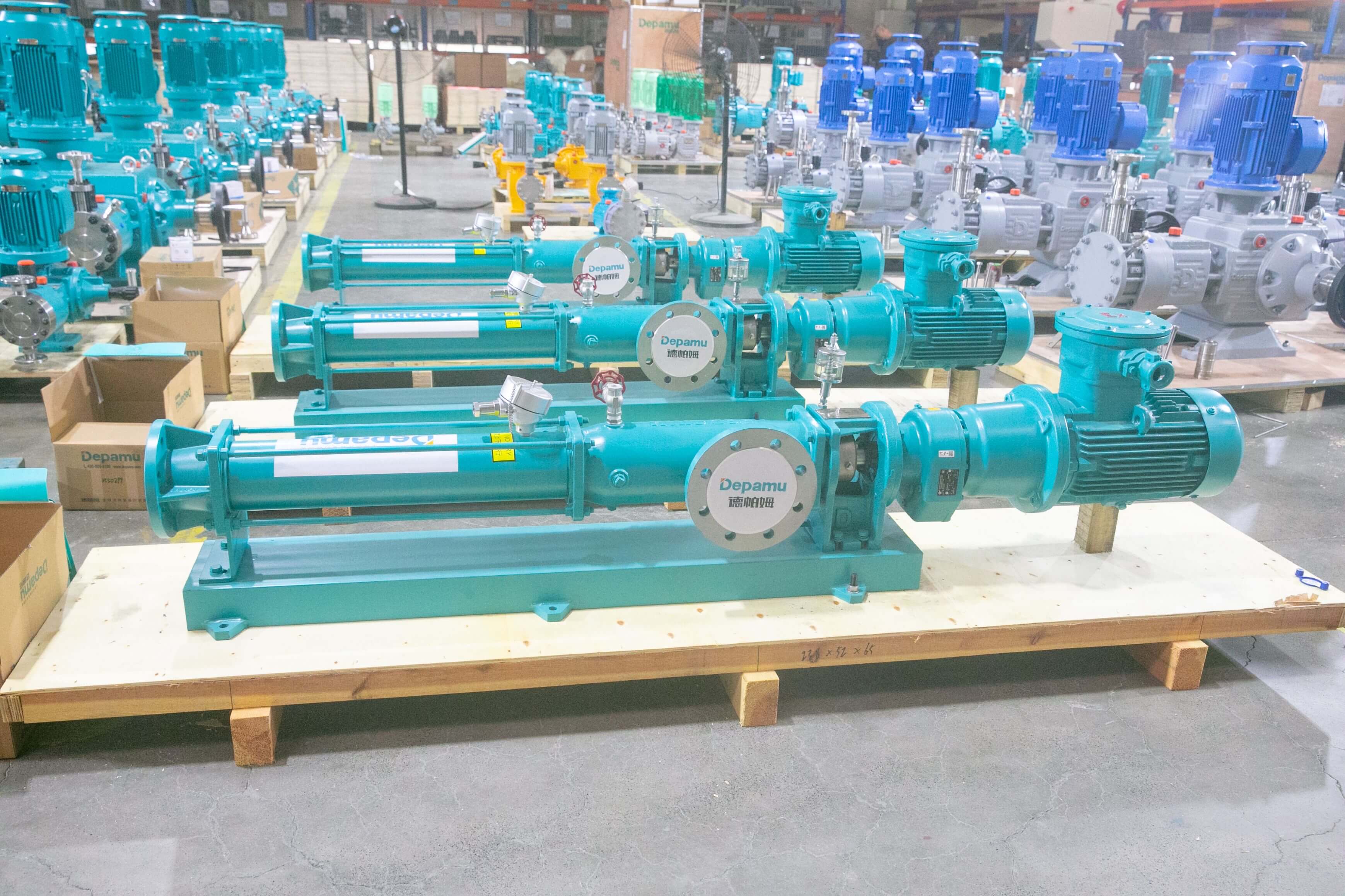
Reference for Full-text Summary
The customized development of single-screw pumps requires balancing medium characteristics, operational requirements, and cost-effectiveness. Depam (Hangzhou) Pump Technology Co., Ltd. has established a customized solution system covering over 10 industries, including petroleum refining, chemical engineering, and the nuclear industry, through modular design, material innovation, and intelligent control technologies. Its customized products boast core parameter advantages such as flow accuracy of ±1%, pressure stability of ±0.5%, and temperature tolerance difference of ≤5℃. Over the past three years, the company has delivered more than 1,200 projects, with a customer repurchase rate of 65%. For enterprises with customized needs, it is recommended to conduct a comprehensive evaluation from three dimensions: requirement analysis, material selection, and production cycle control, while prioritizing suppliers with full-process quality control capabilities. For more customized cases and technical details, visit Depam's official website:www.depamufluid.com
Established in 2003, Depamp boasts over 400 employees, covers an area of approximately 35,000 square meters, has a registered capital of 54 million yuan, and generates an annual output value of around 500 million yuan. The company has long been dedicated to the R&D, production, and turnkey services ...
No. 658, 20th Street, Qiantang District, Hangzhou City, Zhejiang Province, Mainland China