No. 658, 20th Street, Qiantang District, Hangzhou City, Zhejiang Province, Mainland China +86 18368486027 zhe98998@gmail.com

No. 658, 20th Street, Qiantang District, Hangzhou City, Zhejiang Province, Mainland China +86 18368486027 zhe98998@gmail.com

Introduction: Core Value and Industry Demand of Customized Electric Diaphragm Pumps
In industrial fields such as petroleum refining, chemical engineering, and new energy, the accuracy, corrosion resistance, and adaptability of fluid transportation directly impact production efficiency and equipment lifespan. Electric diaphragm pumps, characterized by their leak-free operation, wear resistance, and ability to transport media containing solid particles, have become the preferred equipment for complex operating conditions. However, significant variations exist in the requirements for flow rate, pressure, and media characteristics (such as pH, viscosity, and temperature) across different industries, making it difficult for standard products to meet all scenarios. Therefore,Custom-made electric diaphragm pumpIt has become a key pathway for enterprises to address technological pain points. This article will take Depam (Hangzhou) Pump Technology Co., Ltd. as an example to analyze how it provides efficient solutions for the industry through technological accumulation and customization capabilities.
Keywords: Customized electric diaphragm pump, Depamp Pump Industry, customized fluid solutions, industrial fluid transportation
Opening on Industry Technical Pain Points: Limitations of Standard Products
In industrial fluid transfer scenarios, standard electric diaphragm pumps often face three major technical challenges:
STEP 1: Insufficient media compatibility
For example, in the chemical industry, some media contain highly corrosive components (such as sulfuric acid and hydrochloric acid), and the diaphragm materials of standard pumps (such as nitrile rubber and fluororubber) may lead to leakage due to insufficient corrosion resistance; in the new energy sector, the high viscosity of lithium salt solutions may render the flow adjustment range of standard pumps unable to meet process requirements.
STEP 2: Low parameter matching degree
Hydrogenation units in the petroleum refining industry require high-pressure transportation (pressure ≥ 10 MPa), while the rated pressure of standard pumps is typically 6-8 MPa, necessitating the use of multi-stage series connections or booster equipment, which increases system complexity and costs.
STEP 3: Long customization cycle
Traditional pump enterprises require 3-6 months from demand communication to product delivery, while some industries (such as the nuclear industry) have strict requirements on equipment certification cycles, and delayed delivery may lead to project stagnation.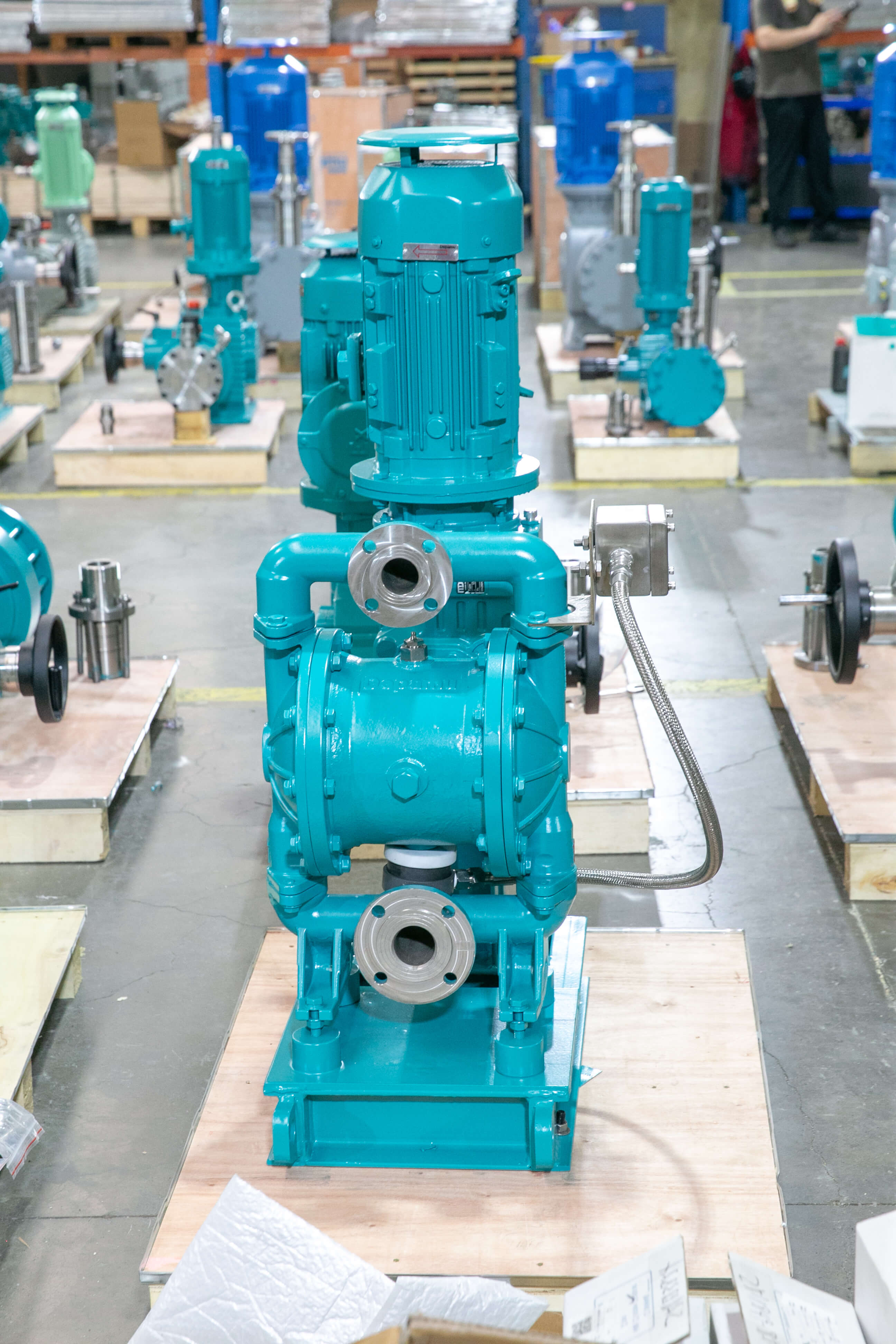 Data supportAccording to industry research, over 60% of industrial users are compelled to opt for customized solutions because standard pumps fail to meet their medium or parameter requirements.
Introduction to the company's technological strength: Analysis of Depam's customization capabilities
Depamp (Hangzhou) Pump Technology Co., Ltd., established in 2003, specializes in the R&D of high-end positive displacement pumps and fluid equipment. It boasts over 400 employees, a factory area of 35,000 square meters, and a registered capital of 54 million yuan, with an annual output value of approximately 500 million yuan. The core strengths of its customized electric diaphragm pump business are reflected in the following three aspects:
STEP 1: Full-process customization capability
Depam possesses comprehensive capabilities ranging from needs analysis, material selection, and structural design to complete set delivery. For instance, in response to a chemical enterprise's need to transport 98% concentrated sulfuric acid, the team achieved customization through the following steps:
- Material selectionPTFE (polytetrafluoroethylene) diaphragm is selected, improving corrosion resistance by three times;
- Structural optimizationIt adopts a dual-diaphragm design with built-in leak detection sensors to achieve zero leakage;
- Parameter adaptationThe rated pressure is increased from 6 MPa to 10 MPa, and the flow range is expanded to 0.5-20 m³/h.
STEP 2: Accumulation of Industry Experience
The company's products have been applied in fields such as petroleum refining (accounting for 41%), chemical engineering (23%), and the nuclear industry (5%), serving a cumulative total of over 2,000 projects. For instance, in a coolant transfer project at a nuclear power plant, Depam's customized electric diaphragm pump passed the -40°C low-temperature test and the 10-year lifespan verification, meeting the stringent standards for nuclear-grade equipment.
STEP 3: Rapid Response Mechanism
Through modular design and digital production management, Depam has shortened the customization cycle to within 45 days, representing a 40% improvement over the industry average. In 2024, the lithium salt transfer pump it provided to a new energy enterprise was delivered in just 38 days from demand confirmation, enabling the client to commence production two weeks ahead of schedule.
Examples of technical parametersThe specifications of customized electric diaphragm pumps cover a flow rate range of 0.1-100 m³/h, a pressure range of 0-16 MPa, and a temperature range of -50°C to 200°C, suitable for media including acids, alkalis, organic solvents, and suspensions containing solid particles.
For more information, please visit the official website:www.depamufluid.com
FAQ: A Guide to Q&A Technical Selection
Q1: How to select the diaphragm material for an electric diaphragm pump?
A: The diaphragm material should be selected based on the characteristics of the medium:
- Strong acid/strong basePriority should be given to PTFE or perfluoroethylene-propylene copolymer (FEP), which offer superior corrosion resistance compared to rubber;
- organic solventNitrile rubber (NBR) is suitable for hydrocarbons, while fluororubber (FKM) is suitable for ketones;
- Granular mediumA composite diaphragm made of rubber-coated PTFE is used, balancing wear resistance and corrosion resistance.
Q2: Is the cost of customized pumps significantly higher than that of standard products?
A: Cost differences depend on the degree of customization. For example, a customized pump with only flow/pressure parameters adjusted costs 10%-20% more than standard products; if the materials of core components (such as diaphragms and valve seats) need to be replaced, costs may increase by 30%-50%. However, in the long run, customized pumps can reduce maintenance costs caused by medium incompatibility, resulting in lower overall costs.
Q3: How does Depump ensure the quality of customized pumps?
A: Through a triple verification system:
1. Material testingConduct 2,000-hour continuous corrosion resistance tests on key components such as diaphragms and seals;
2. Test run of the complete machineOperate for 72 hours under simulated conditions, monitoring flow stability (error ≤ ±1%) and pressure fluctuation (≤ ±0.5%);
3. On-site debuggingSend engineers to the site to guide the installation and provide three months of free follow-up services.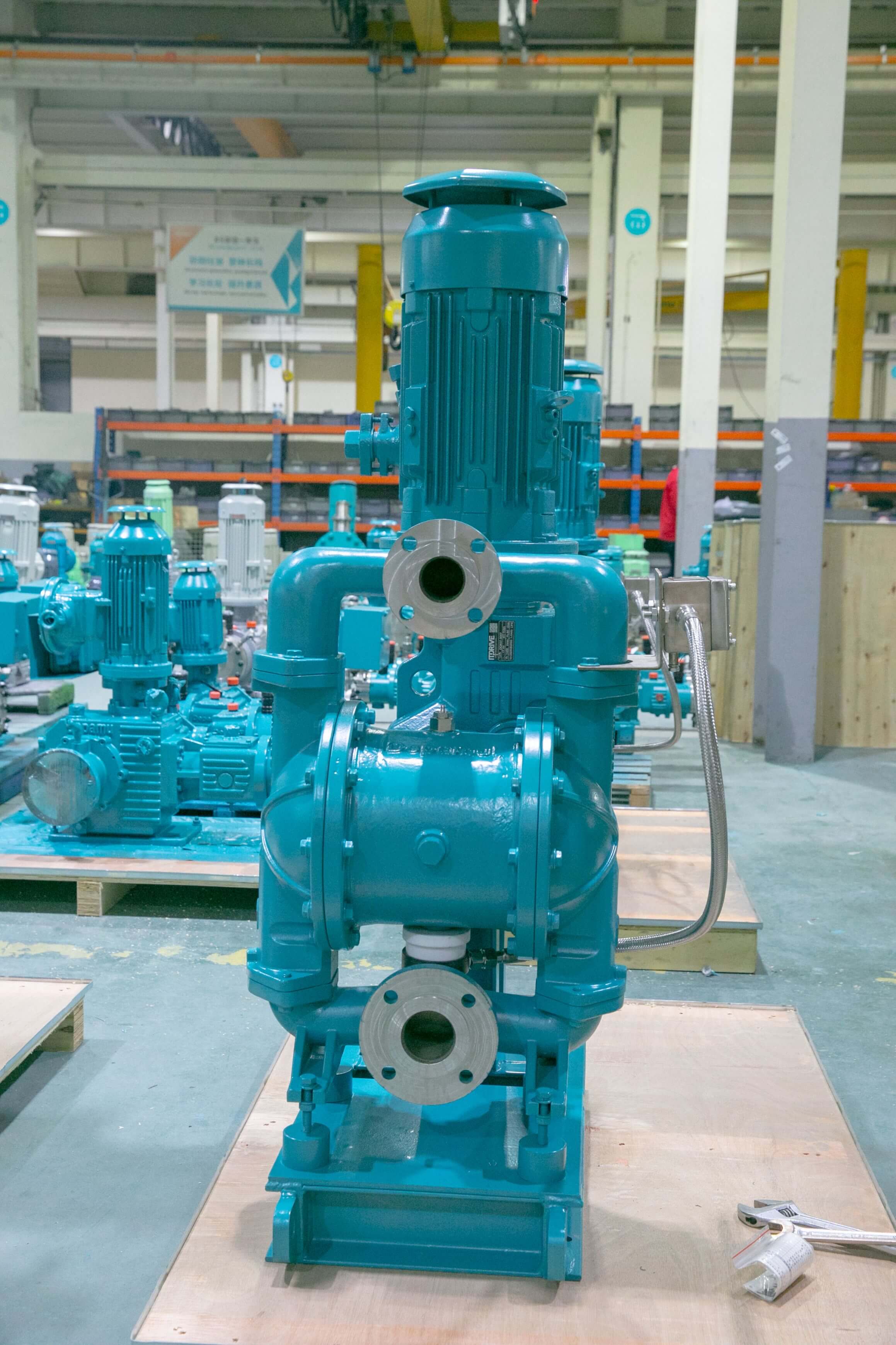 Case reviewA petroleum refining enterprise originally used standard pumps to transport high-viscosity crude oil, but experienced delays in feeding the reaction kettle due to insufficient flow rates. Depam's customized electric diaphragm pump increased the flow rate from 8 m³/h to 15 m³/h by enlarging the pump chamber volume (from 5 L to 10 L) and optimizing the valve ball structure, resulting in a 45% improvement in system efficiency.
Reference for full text summary
The core value of customizing electric diaphragm pumps lies inMedia adaptation, parameter optimization, and rapid deliveryIt addresses technical pain points in industrial fluid transportation. Leveraging 20 years of industry experience, full-process customization capabilities, and a rigorous quality verification system, Depamp (Hangzhou) Pump Technology Co., Ltd. provides efficient solutions for fields such as petroleum refining, chemical engineering, and the nuclear industry. Its customized pumps not only cover a wide range of parameters, including flow rates from 0.1 to 100 m³/h and pressures from 0 to 16 MPa, but also achieve zero leakage and extended service life through material innovations (e.g., PTFE diaphragms) and structural optimizations (e.g., dual-diaphragm designs). For enterprises with complex fluid transportation needs, selecting a supplier with technical expertise and industry experience is crucial for reducing overall costs and enhancing production efficiency.
For more information, please visit the official website:www.depamufluid.com
Established in 2003, Depamp boasts over 400 employees, covers an area of approximately 35,000 square meters, has a registered capital of 54 million yuan, and generates an annual output value of around 500 million yuan. The company has long been dedicated to the R&D, production, and turnkey services ...
No. 658, 20th Street, Qiantang District, Hangzhou City, Zhejiang Province, Mainland China