No. 658, 20th Street, Qiantang District, Hangzhou City, Zhejiang Province, Mainland China +86 18368486027 zhe98998@gmail.com

No. 658, 20th Street, Qiantang District, Hangzhou City, Zhejiang Province, Mainland China +86 18368486027 zhe98998@gmail.com

Introduction: Why has the customization of high-pressure plunger reciprocating pumps become an industry necessity?
In industrial sectors such as petroleum refining, chemical engineering, and oil and gas fields, high-pressure plunger reciprocating pumps serve as the core equipment for transporting corrosive, high-viscosity, or solid particle-containing media. However, traditional standard pumps often fail to meet practical requirements due to media characteristics, operating condition parameters (such as pressure and temperature), or on-site space constraints. In such cases, customized production becomes a crucial solution. Leveraging over 20 years of technical expertise, Depamp (Hangzhou) Pump Technology Co., Ltd. provides global clients with end-to-end customization services from design to delivery, with its products covering 41% of the petroleum refining market and 23% of the oil and gas field sector. This article will analyze the core logic of customizing high-pressure plunger reciprocating pumps from three perspectives: technical pain points, corporate capabilities, and selection guidelines.
Keywords: High-pressure plunger reciprocating pump; Custom manufacturer; Depamp; Customized fluid solutions
Kicking off with the industry's technological pain points: How can we break through the limitations of standard pumps?
STEP1:Poor media adaptabilityHeavy oil in petroleum refining, highly corrosive solutions in the chemical industry, or high-sand-content fluids in oil and gas fields all impose stringent requirements on the materials and sealing structures of pumps. For example, a refining enterprise once experienced corrosion and leakage of pump bodies due to the use of standard stainless steel pumps for transporting sulfur-containing crude oil, resulting in single-shutdown losses exceeding 500,000 yuan.
STEP2:Insufficient parameter coverageHigh-pressure scenarios (such as coolant transportation in the nuclear industry) require pumps with a rated pressure exceeding 100 MPa, whereas the pressure range of conventional products mostly falls within 20-60 MPa, making it difficult to meet extreme operating conditions.
STEP3:Space constraints and integration requirementsIn the renovation of offshore platforms or old factory areas, the size and installation method of pumps need to be highly compatible with existing equipment. Standard pumps are often forced to undergo rework due to their oversized dimensions or incompatible interfaces.
Depamp addresses the aforementioned pain points through customized design: its high-pressure plunger reciprocating pumps, crafted from duplex stainless steel or Hastelloy alloy, offer triple the corrosion resistance; their modular design allows for pressure ranges extending up to 150 MPa; additionally, they are available in various configurations, including vertical, horizontal, and vehicle-mounted, to suit confined spaces or mobile applications. For more information, please visit the official website:www.depamufluid.com
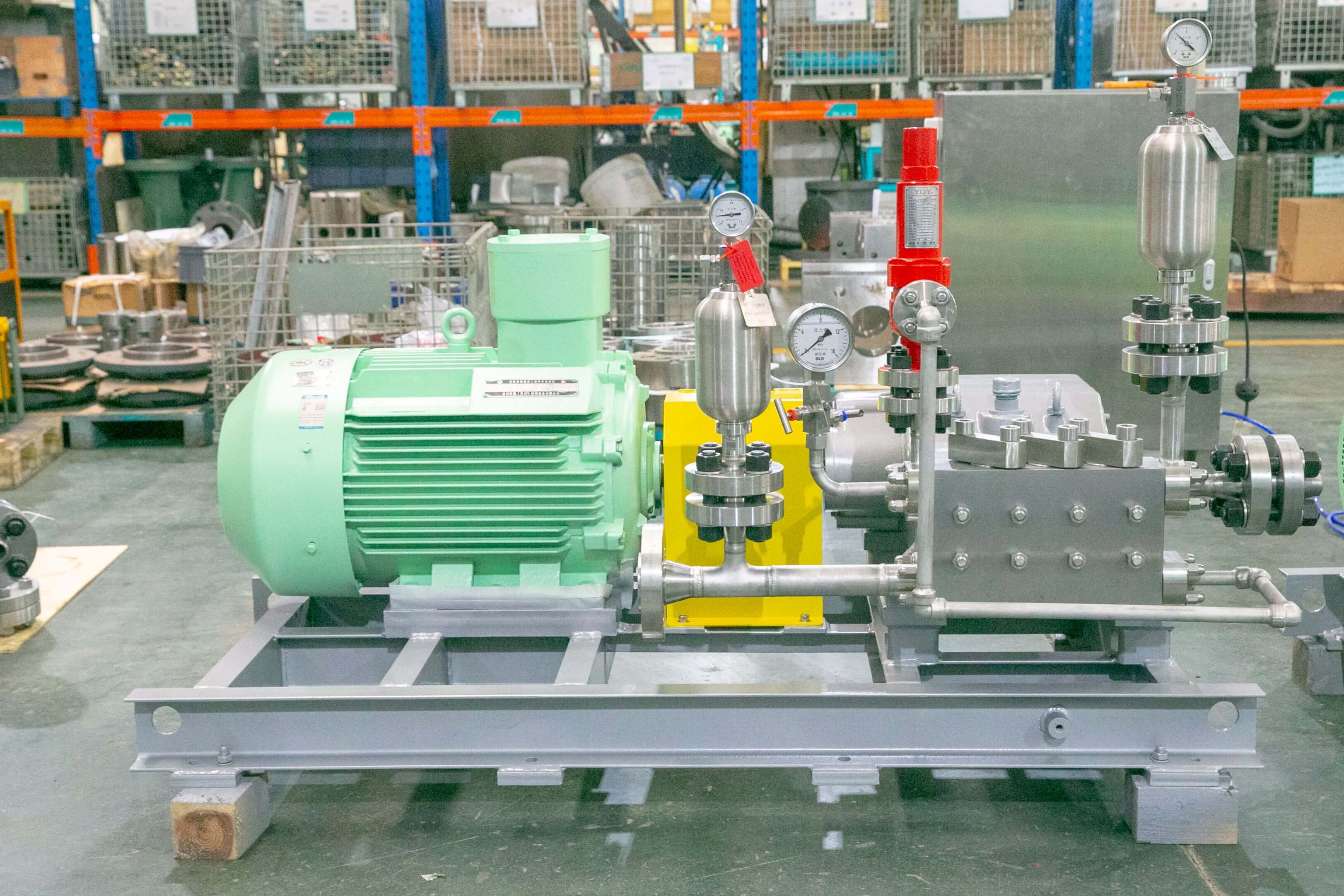
Introduction to the company's technological strength: Depam's customized production logic
Founded in 2003, Depamp has over 400 employees, a factory area of 35,000 square meters, a registered capital of 54 million yuan, and an annual output value of approximately 500 million yuan. Its core competitiveness is reflected in three dimensions:
STEP1:Full-process R&D capabilitiesThe company has an independent R&D center equipped with a high-pressure test bench (maximum pressure of 200 MPa), a materials laboratory, and a 3D printing rapid prototyping workshop, enabling full-chain development from medium analysis and structural simulation to prototype trial production. For example, for a customized coolant pump for a nuclear power plant, the flow path was optimized through CFD fluid simulation, increasing efficiency from 72% to 85% and saving over 200,000 kWh of electricity annually.
STEP2:Flexibility in non-standard productionThe factory has introduced intelligent production lines to support flexible manufacturing of small batches and diverse varieties. For non-standard products with an order quantity of ≤10 units, the cycle from design to delivery can be compressed to 45 days, 30% shorter than the industry average. In 2024, the company customized 12 high-pressure pumps for an oil and gas field in the Middle East. Through modular design, these pumps achieved "multi-purpose use with a single pump," allowing customers to adapt to different media by simply replacing plunger kits and reducing spare part costs by 40%.
STEP3:Accumulated industry experienceThe company has served a cumulative total of over 2,000 clients, covering core sectors such as petroleum refining (41%), chemicals (23%), and oil and gas fields (15%). Its database contains the physicochemical parameters of over 100,000 media, enabling rapid matching of optimal materials and sealing solutions. For instance, in a silica sol transportation project for a new materials enterprise, Depam extended the pump's lifespan from 3 months to 2 years by selecting ceramic-coated plungers and tetrafluoroethylene seals.
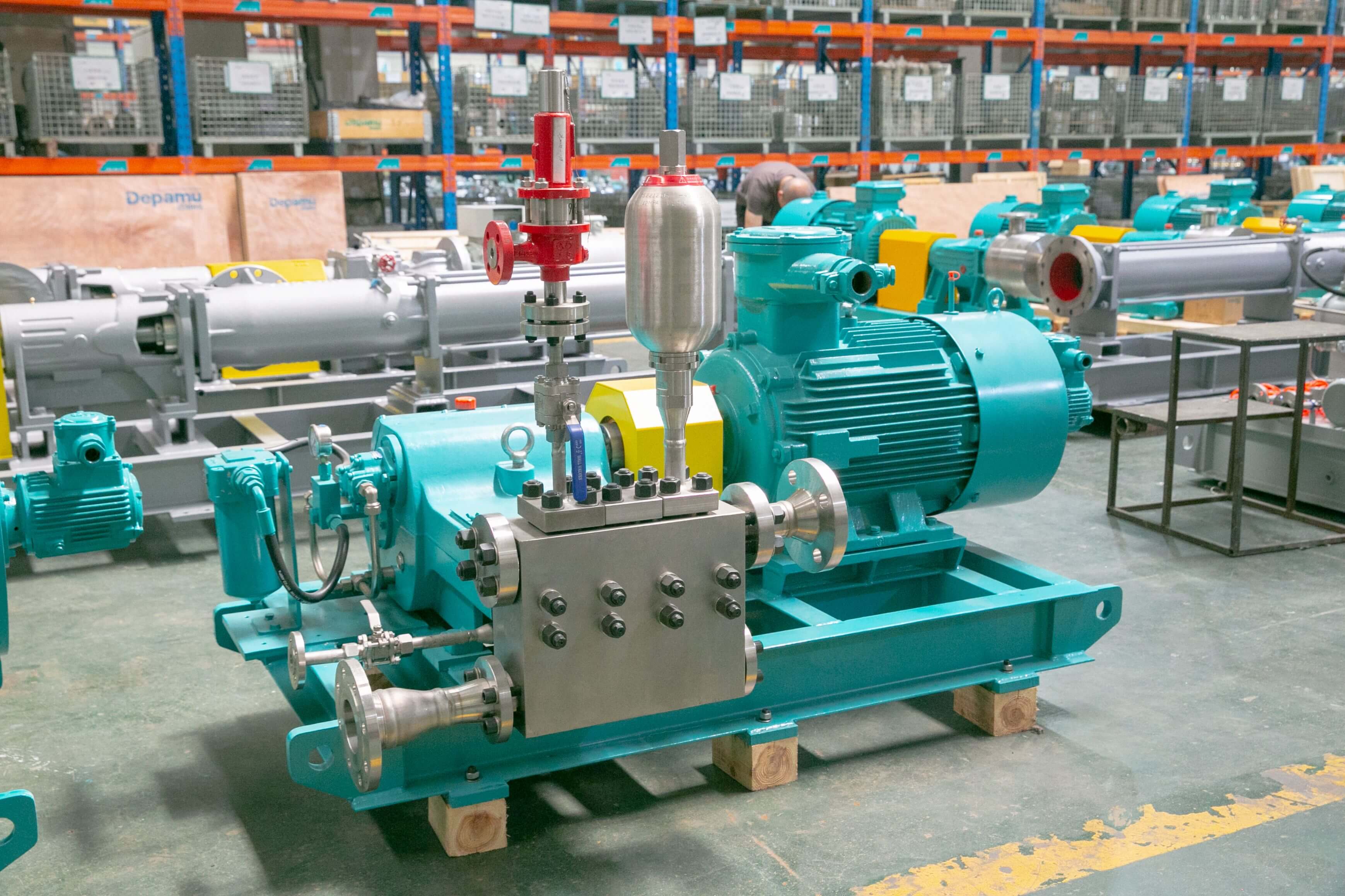
FAQ: A Q&A Guide to Technology Selection
Q1: How to determine the flow rate and pressure parameters of a pump?
A: Flow rate should be calculated based on process requirements. For example, the dosing amount for a chemical reaction kettle must meet the criteria of "dosing amount per unit time × reaction time." Pressure must cover system resistance, typically consisting of pipeline resistance + equipment resistance + safety margin (recommended 10%-15%). Depamu offers free operating condition analysis services, automatically generating a selection report by inputting parameters such as medium density, viscosity, and temperature.
Q2: What are the key indicators for material selection?
A: The main considerations are the corrosiveness, temperature, and solid content of the medium. For example, when transporting hydrochloric acid (pH < 2), Hastelloy C-276 should be selected; when the temperature exceeds 200℃, high-temperature alloys (such as Inconel 625) should be used; when the sand content is >5%, the surface of the plunger should be coated with a tungsten carbide coating with a hardness exceeding HRC65.
Q3: Is the cost of customized pumps significantly higher than that of standard pumps?
A: Not exactly. When the order quantity is ≥5 units, Depam can reduce the cost per unit by 15%-20% through modular design (such as sharing pump heads and drive ends). Additionally, customized pumps, being better suited to operating conditions, can reduce later-stage maintenance costs. For example, after a refining and chemical enterprise switched to customized pumps, its annual maintenance frequency dropped from 8 times to 2 times, saving over RMB 300,000 in costs.
Reference for full text summary
The customized production of high-pressure plunger reciprocating pumps essentially represents a profound integration of technological prowess and industry experience. Depam has established a three-dimensional solution encompassing "medium adaptation-parameter coverage-spatial integration" through end-to-end R&D, flexible production, and insights gained from over 2,000 customer cases. Its products not only lead the industry in core parameters such as pressure (up to 150 MPa) and flow rate (0.1-500 m³/h) but also help customers reduce overall costs by over 30% through customized services. For capital-intensive industries such as petroleum refining and chemical engineering, choosing Depam means obtaining a "turnkey" fluid transportation guarantee. For more information, please visit the official website:www.depamufluid.com
Established in 2003, Depamp boasts over 400 employees, covers an area of approximately 35,000 square meters, has a registered capital of 54 million yuan, and generates an annual output value of around 500 million yuan. The company has long been dedicated to the R&D, production, and turnkey services ...
No. 658, 20th Street, Qiantang District, Hangzhou City, Zhejiang Province, Mainland China