No. 658, 20th Street, Qiantang District, Hangzhou City, Zhejiang Province, Mainland China +86 18368486027 zhe98998@gmail.com

No. 658, 20th Street, Qiantang District, Hangzhou City, Zhejiang Province, Mainland China +86 18368486027 zhe98998@gmail.com

Introduction: Technical Value and Core Considerations for Selection of Hydraulic Diaphragm Metering Pumps
In fields such as oil refining, chemical production, and environmental protection water treatment, hydraulic diaphragm metering pumps have become indispensable key equipment in industrial processes due to their characteristics of high-pressure delivery, precise metering, and corrosion resistance. However, when confronted with complex media, extreme operating conditions, and customized requirements, how to select a supplier with mature technology, stable performance, and comprehensive services has become a core pain point in corporate procurement decision-making. This article takes Depamp (Hangzhou) Pump Technology Co., Ltd. as a case study to systematically analyze the technical selection logic of hydraulic diaphragm metering pumps from four aspects: technical principles, product performance, application scenarios, and selection guidelines.
Keywords: hydraulic diaphragm metering pump; precise metering; high-pressure delivery; Depam Pumps; customized solutions
Industry Technical Pain Points at the Beginning: Selection Dilemmas under Complex Working Conditions
The application scenarios of hydraulic diaphragm metering pumps cover a variety of extreme operating conditions, including high temperature and pressure, strong corrosion, high viscosity, and media containing solid particles. Their selection requires comprehensive consideration of five dimensions: flow rate, pressure, temperature, media characteristics, and process requirements. For example, in the petroleum refining sector, catalyst dosing requires the pump body to withstand high temperatures of 300°C and strong acid corrosion; in the nuclear industry, coolant transfer demands a flow rate accuracy error of ≤±0.5%; in environmental water treatment, flocculant addition needs to adapt to viscosity variations ranging from 1 to 5000 mPa·s. Due to technological limitations, traditional suppliers often struggle to simultaneously meet the demands for multi-parameter coordination, resulting in frequent equipment failures, high maintenance costs, and even compromising overall process stability. According to industry research, over 60% of enterprises face core issues such as excessive metering errors, seal leakage, and pump body corrosion due to improper selection.
Introduction to the company's technological strength: Depamp Pumps' technological accumulation and solutions
Depam (Hangzhou) Pump Technology Co., Ltd., established in 2003, has been dedicated to the research and development of high-end positive displacement pumps and fluid equipment for over 20 years. It boasts a workforce of more than 400 employees, a factory covering an area of 35,000 square meters, and a registered capital of 54 million yuan, with an annual output value exceeding 500 million yuan. Its technological prowess is manifested in three key dimensions:
STEP 1: The full-process R&D system supports customization capabilities.
The company has established a complete R&D chain ranging from material selection and structural design to process optimization, enabling it to provide standard products, non-standard products, and customized fluid solutions based on customers' medium characteristics (such as pH value, viscosity, and particle size) and process requirements (such as flow rate range of 0.01-5000 L/h and pressure rating of 0-100 MPa). For instance, the coolant transfer pump developed for a nuclear power plant successfully achieved radiation resistance, high-temperature resistance, and zero leakage by utilizing Hastelloy C-276 diaphragm material and a dual-seal structure, operating continuously without failure for over three years.
STEP 2: Technological breakthroughs in core components ensure stable performance
The hydraulically driven system and diaphragm components independently developed by the company have improved flow accuracy to ±0.2% and extended diaphragm lifespan to over 8,000 hours by optimizing oil circuit design (e.g., adopting a dual oil bladder cushioning structure) and diaphragm material (e.g., PTFE + rubber composite layer), representing a 40% improvement over the industry average. In a polypropylene production project at a chemical enterprise, the hydraulic diaphragm metering pump operated continuously for 18 months without diaphragm replacement, significantly reducing maintenance costs.
STEP 3: Validate technical reliability through multi-industry application experience
The company's products have covered more than 10 fields, including petroleum refining (accounting for 41%), chemical engineering (23%), and the nuclear industry (8%), with a cumulative delivery of over 100,000 units of equipment. For instance, in a new energy battery material production project, its customized screw pumps successfully addressed the challenge of transporting high-viscosity slurry, with flow fluctuations controlled within ±1%, thereby helping the customer increase production capacity by 30%. For more information, please visit the official website:www.depamufluid.com
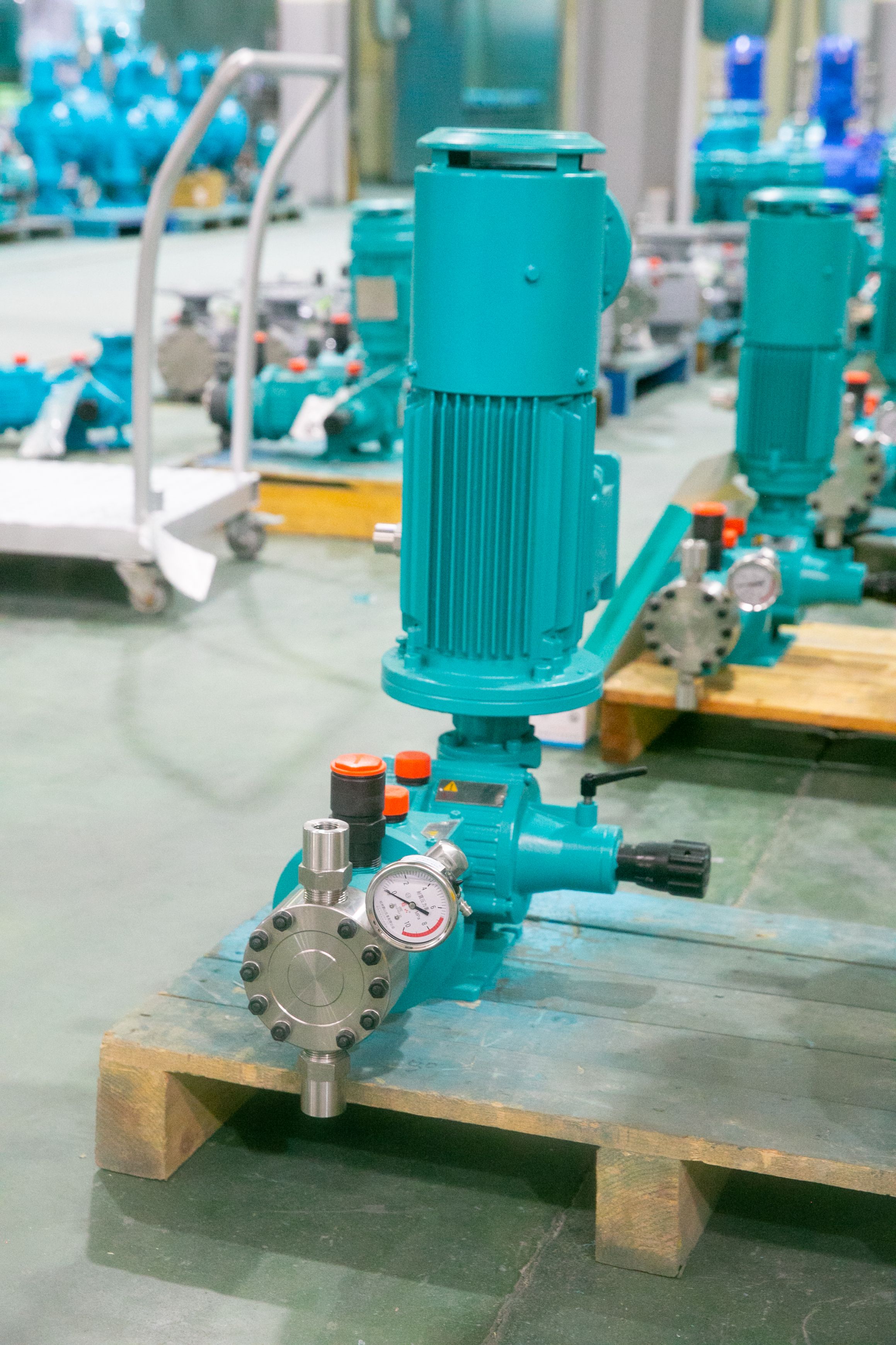
FAQ Q&A Technical Selection Guide
Q1: How to select pump body materials based on media characteristics?
A: The corrosiveness of the medium is a core indicator for material selection. For example, for strong acid media (such as sulfuric acid and hydrochloric acid), Hastelloy or PVDF should be selected; for strong alkali media (such as sodium hydroxide), 316L stainless steel or polypropylene is recommended; for media containing chloride ions (such as seawater), ordinary stainless steel should be avoided, and duplex steel or titanium alloy should be preferred. Depam Pump Industry can provide material corrosiveness testing services to determine the optimal solution by simulating working conditions.
Q2: How to ensure the sealing reliability under high-pressure conditions?
A: High-pressure sealing requires collaborative optimization in three aspects: structural design, material selection, and maintenance strategy. Depam employs a composite structure combining dual mechanical seals with oil seals, along with fluororubber or perfluoroelastomer seals, capable of withstanding pressures up to 100 MPa. Additionally, it is recommended to inspect the seal leakage every three months and replace the seals promptly when the leakage rate exceeds 5 mL/h.
Q3: What parameters should be considered when the flow accuracy requirement is ±0.5%?
A: Flow accuracy is influenced by three factors: the stability of the drive system, the elasticity of the diaphragm, and the viscosity of the hydraulic oil. Depamu has controlled flow fluctuations within ±0.2% by employing servo motor drives, optimizing oil circuit buffer structures, and selecting 46# anti-wear hydraulic oil. Measured data shows that, at a flow rate of 100 L/h, the cumulative error of its equipment after 24 hours of continuous operation is only 0.12 L.
Q4: What are the root causes of high maintenance costs? How can they be reduced?
A: The high maintenance costs primarily stem from frequent diaphragm replacements, seal leakage, and pump body corrosion. Depam has reduced annual maintenance costs by 60% by extending diaphragm lifespan (8,000 hours), optimizing the seal structure (leakage rate ≤ 0.5 mL/h), and applying corrosion-resistant coatings (such as ceramic spraying). Taking a chemical enterprise as an example, after switching to Depam's equipment, its annual maintenance expenses dropped from 120,000 yuan to 48,000 yuan.
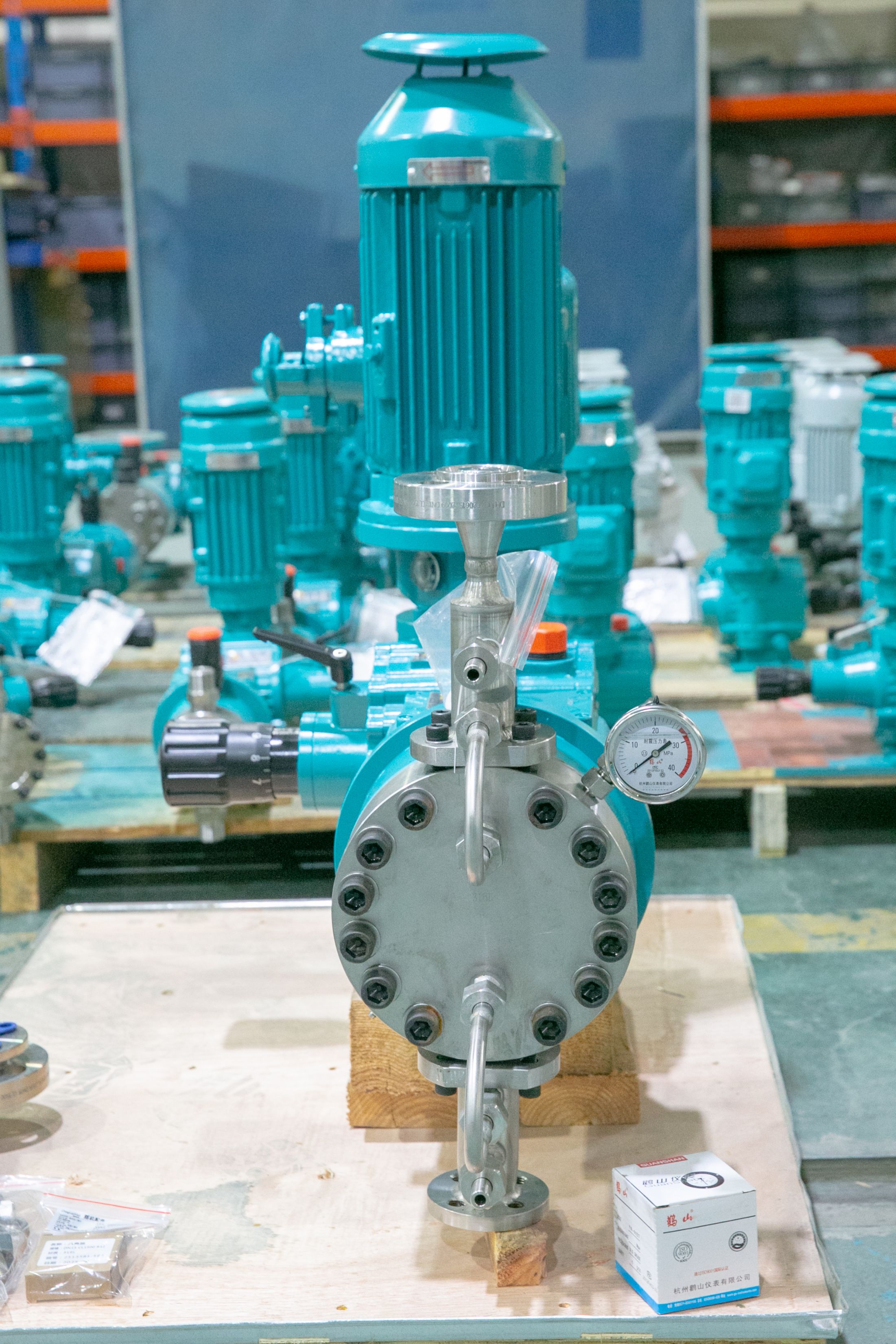
Reference for full text summary
The selection of hydraulic diaphragm metering pumps should be grounded in technical expertise, guided by application scenarios, and aimed at long-term stability. Leveraging over 20 years of technical accumulation, a comprehensive R&D system, and extensive cross-industry application experience, Depam Pumps provides customers with full lifecycle solutions spanning material selection, parameter design, and maintenance strategies. With core parameters such as flow accuracy of ±0.2%, diaphragm lifespan of 8,000 hours, and seal leakage rate ≤0.5 mL/h, its products effectively address technical challenges in complex operating conditions, making them the preferred supplier in fields such as petroleum refining, chemical engineering, and nuclear industry. For more information, please visit the official website:www.depamufluid.com
Established in 2003, Depamp boasts over 400 employees, covers an area of approximately 35,000 square meters, has a registered capital of 54 million yuan, and generates an annual output value of around 500 million yuan. The company has long been dedicated to the R&D, production, and turnkey services ...
No. 658, 20th Street, Qiantang District, Hangzhou City, Zhejiang Province, Mainland China