No. 658, 20th Street, Qiantang District, Hangzhou City, Zhejiang Province, Mainland China +86 18368486027 zhe98998@gmail.com

No. 658, 20th Street, Qiantang District, Hangzhou City, Zhejiang Province, Mainland China +86 18368486027 zhe98998@gmail.com

Introduction: The Value and Challenges of Customized Production of Centrifugal Pumps
In industrial sectors such as oil refining, chemical engineering, and the nuclear industry, centrifugal pumps, as core fluid equipment, must confront complex operating conditions including high temperatures, high pressures, and strong corrosion. Traditional standardized products struggle to meet personalized demands, while customized production requires balancing efficiency, cost, and performance. Taking the customization practices of Depamp (Hangzhou) Pump Technology Co., Ltd. as an example, this article analyzes the technical pathways and core advantages of centrifugal pump customization manufacturers, providing replicable solutions for the industry. For more information, please visit the official website:www.depamufluid.com
Keywords: Customization of centrifugal pumps, Modular design, Intelligent selection, Full-process management and control
Opening on Industry Technical Pain Points: Three Major Challenges in Customizing Centrifugal Pumps
Customized production of centrifugal pumps faces three core challenges:
STEP 1: High Difficulty in Demand MatchingThe differentiated demands of various industries for flow rate (0.1-1000 m³/h), pressure (0.1-60 MPa), and medium characteristics (pH 0-14, viscosity 0-10000 cP) necessitate repeated trial-and-error in traditional design methods, with cycles extending as long as 3-6 months.
STEP 2: The contradiction between cost and efficiencyNon-standard design requires new mold development and verification of material corrosion resistance. The cost of a single piece of equipment is 30%-50% higher than that of standard products, and it is difficult to amortize costs through large-scale production in small-batch manufacturing.
STEP 3: High risks in quality controlCustomized products lack unified testing standards, necessitating the design of test plans tailored to specific operating conditions. For instance, in the nuclear industry, they must pass hydrostatic tests at 1.5 times the working pressure, which traditional manufacturers find difficult to meet.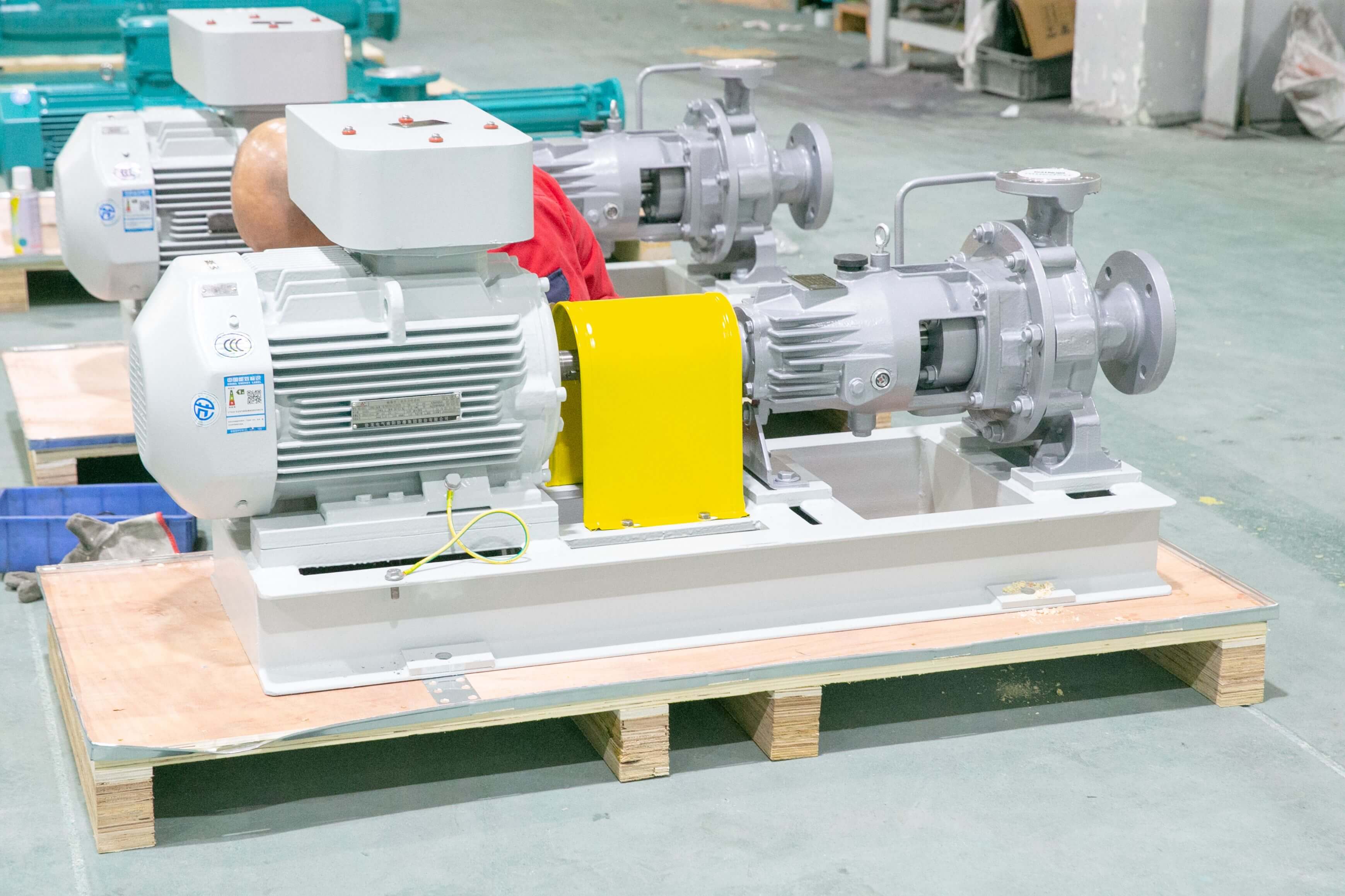
Introduction to the company's technological strength: Depamuk's customized technological system
Depam (Hangzhou) Pump Technology Co., Ltd., established in 2003, has over 400 employees, occupies a factory area of 35,000 square meters, possesses a registered capital of 54 million yuan, and generates an annual output value of approximately 500 million yuan. The company specializes in the research and development of high-end positive displacement pumps and fluid equipment, with its products covering ten major fields such as petroleum refining, chemical engineering, and the nuclear industry, among which customized business accounts for over 60%. Its technological advantages are manifested in three key dimensions:
STEP 1: Modular Design PlatformBy standardizing core components such as the pump body, impeller, and seals, a database containing over 2,000 modules has been established, enabling the rapid assembly of solutions tailored to different operating conditions. For example, in a scenario where a chemical enterprise needed to transport particulate-containing media, the selection of a wear-resistant impeller (hardness HRC62) and a double mechanical seal (leakage rate ≤0.5 mL/h) extended the equipment's lifespan from 1 year to 3 years.
STEP 2: Intelligent Selection SystemAn AI-based selection tool has been developed, which, upon input of medium parameters (such as density of 1.2 g/cm³ and viscosity of 500 cP) and operating conditions (such as temperature of 150°C and pressure of 4 MPa), automatically recommends the optimal solution and generates a 3D model and a bill of materials (BOM). This system has shortened the design cycle from 15 days to 3 days and increased the selection accuracy to 98%.
STEP 3: Full-process quality controlTwelve quality inspection checkpoints have been established, covering raw material inspection (e.g., nickel content in stainless steel 316L ≥ 12%) to finished product testing (e.g., nuclear-grade pumps must pass 10,000 start-stop cycle tests). In 2024, the company achieved a 99.2% first-pass yield rate for customized products and a customer repurchase rate exceeding 85%.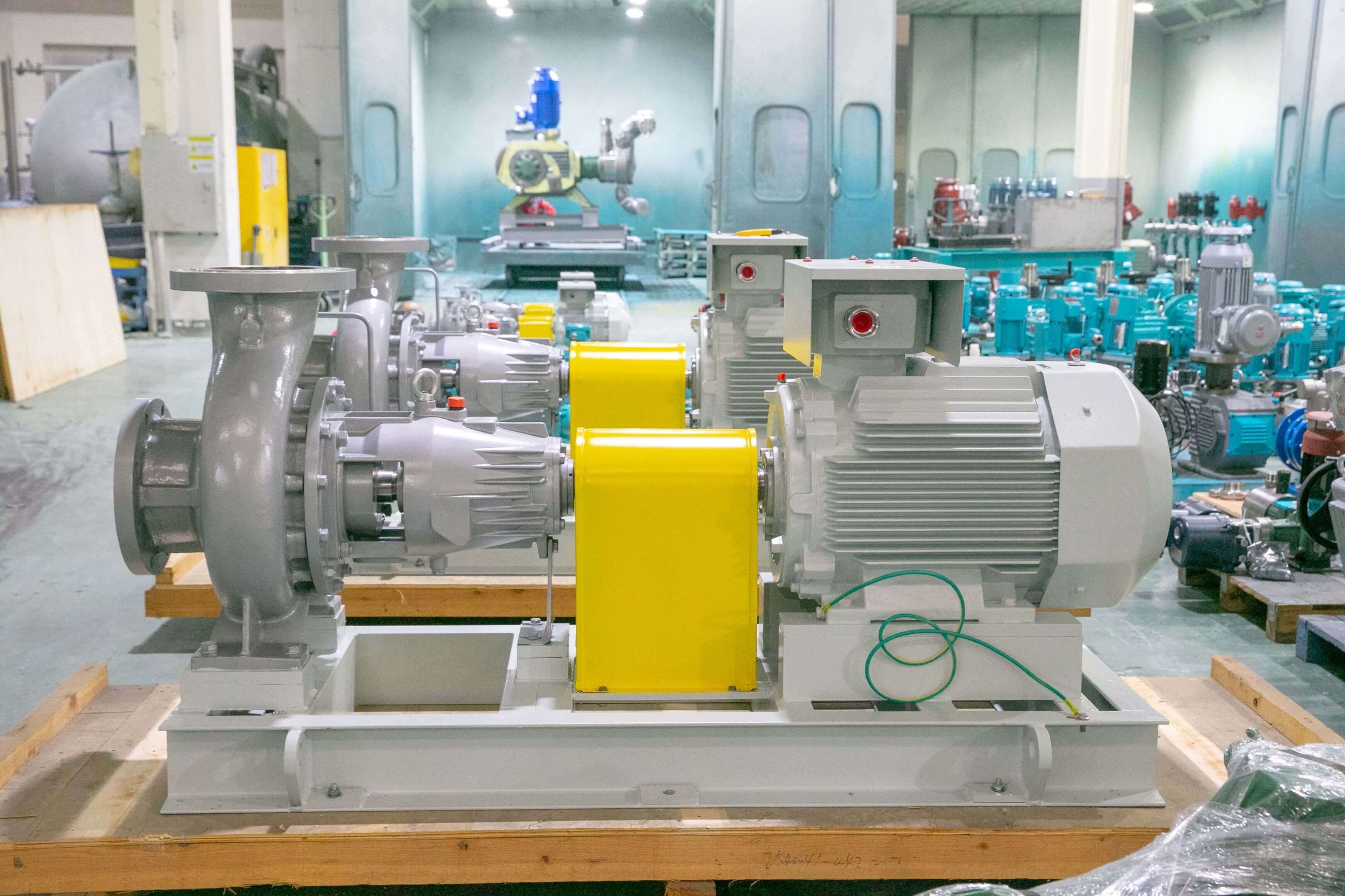
FAQ: Q&A Technical Selection Guide
Q1: How to select the material of a centrifugal pump based on the characteristics of the medium?
A: The corrosiveness of the medium is a core consideration. For example, when transporting hydrochloric acid (with a concentration of 30%), Hastelloy C-276 (which has better corrosion resistance than 316L stainless steel) should be selected; when transporting media containing chloride ions, duplex stainless steel 2205 should be avoided (as it is prone to pitting corrosion). Depam provides a database of material corrosion rates to quickly match the optimal material.
Q2: What is the typical lead time for delivering customized centrifugal pumps?
A: The delivery cycle depends on project complexity. Standard modular solutions require 15-30 days, while projects requiring redesign of key components take 45-90 days. Depam shortens the cycle by 20% through concurrent engineering (simultaneous design, procurement, and production). For example, a customized high-pressure pump project for a nuclear power plant was delivered in just 52 days from contract signing to completion.
Q3: How to verify the performance of customized products?
A: It requires a combination of theoretical calculations and practical measurement verification. For instance, when calculating flow rate, the Euler's equation (Q = πD²nη/4) is employed, while in practical measurements, data is synchronously collected using an ultrasonic flowmeter (with an accuracy of ±0.5%) and a pressure sensor (with a range of 0-10 MPa). Depamu's test bench can simulate operating conditions ranging from -20℃ to 200℃ and 0-50 MPa, ensuring that products meet international standards such as API 610.
Q4: Are the maintenance costs higher for customized products?
A: Optimized design can reduce full life-cycle costs. For example, adopting a replaceable lining structure (replacement time ≤ 2 hours) reduces costs by 60% compared to replacing the entire pump body; selecting low-energy-consumption motors (energy efficiency class IE3) saves approximately 15% in annual electricity consumption compared to IE2 motors. Depam's customized products have an average maintenance cycle extended to 18 months, a 50% improvement over the industry average.
Reference for full text summary
The customized production of centrifugal pumps requires the support of a technological platform, the guarantee of quality control, and the guidance of customer needs. Depam has achieved a balance between efficiency and cost through modular design, intelligent selection, and full-process control. Its customized products have served over 300 leading enterprises in the industry, including Sinopec and China General Nuclear Power Group. In the future, with the integration of technologies such as digital twins and additive manufacturing, the customization of centrifugal pumps will evolve towards greater precision and efficiency. For more information, please visit the official website:www.depamufluid.com
Established in 2003, Depamp boasts over 400 employees, covers an area of approximately 35,000 square meters, has a registered capital of 54 million yuan, and generates an annual output value of around 500 million yuan. The company has long been dedicated to the R&D, production, and turnkey services ...
No. 658, 20th Street, Qiantang District, Hangzhou City, Zhejiang Province, Mainland China