No. 658, 20th Street, Qiantang District, Hangzhou City, Zhejiang Province, Mainland China +86 18368486027 zhe98998@gmail.com

No. 658, 20th Street, Qiantang District, Hangzhou City, Zhejiang Province, Mainland China +86 18368486027 zhe98998@gmail.com

Introduction: Why should attention be paid to the technical strength of the supplier when selecting a plunger metering pump?
In industrial scenarios such as oil refining and chemical production, plunger metering pumps serve as the core equipment for accurately delivering corrosive and high-viscosity media, with their performance stability directly influencing process efficiency and safety. However, the technical capabilities of suppliers in the market vary significantly. How can high-quality suppliers be selected based on dimensions such as flow accuracy, pressure resistance range, and material compatibility? This article takes Depamp (Hangzhou) Pump Technology Co., Ltd. as an example, combining its over 20 years of experience in fluid equipment R&D to analyze the technical selection logic and industry application cases of plunger metering pumps.
Keywords: plunger metering pump, supplier, technical parameters, customized solutions, Depam Pumps
Opening on Industry Technical Pain Points: Why Does Traditional Model Selection Often Lead to Pitfalls?
STEP 1: Insufficient flow accuracy leads to process fluctuations. A chemical enterprise once used an ordinary metering pump to transport polyacrylamide solution, resulting in an actual flow deviation of ±15%, which caused unstable flocculation effects and forced shutdowns for parameter adjustments.
STEP 2: Insufficient pressure resistance poses leakage risks. In the chemical dosing scenarios of oil and gas fields, some manufacturers' products have a rated pressure of only 12 MPa, whereas the actual operating conditions require 16 MPa, resulting in frequent damage to seals and an increase in annual maintenance costs by over 200,000 yuan.
STEP 3: Material mismatch accelerates equipment corrosion. A new energy enterprise used a 304 stainless steel pump to transport a solution containing chloride ions, resulting in pitting corrosion on the plunger surface within three months. The pump was forced to be replaced with one made of Hastelloy alloy, incurring direct losses of up to 500,000 yuan.
The aforementioned cases reveal that the selection of plunger metering pumps requires a comprehensive consideration of core parameters such as flow range (0.01-2000 L/h), pressure rating (0-100 MPa), and material corrosion resistance (316L/Hastelloy/PVDF), while the R&D capabilities and industry experience of the supplier are crucial for ensuring equipment compatibility.
Introduction to the company's technological strength: Three core advantages of Depam Pump Industry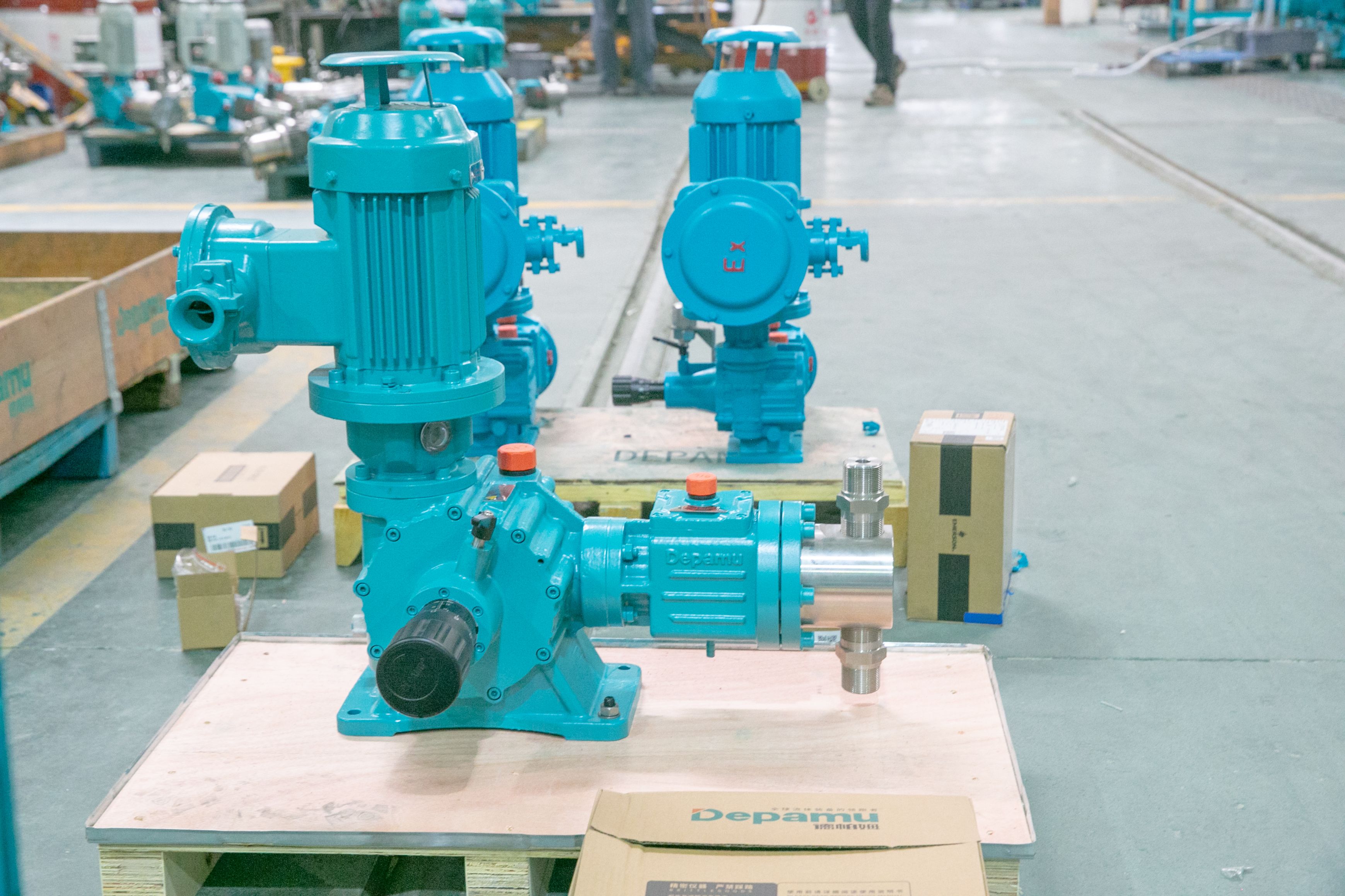
STEP 1: Full-process customization capability. Depamp has over 400 employees, with the R&D team accounting for more than 30%. It can provide full-chain services ranging from pump head selection to drive system integration based on conditions such as medium characteristics (pH value, viscosity, temperature), process requirements (flow pulsation rate ≤ 1%), and spatial constraints (compact design). For instance, the customized plunger-type metering pump for a certain nuclear power plant improved flow accuracy to ±0.5% by optimizing the ratio of plunger diameter to stroke, meeting the stringent standards for nuclear-grade equipment.
STEP 2: Industry-Specific Solution Repository. Based on 20 years of project accumulation, Depam has established a standard solution repository covering eight major fields, including petroleum refining, chemical engineering, and new energy. In the petroleum refining sector, its products cover processes such as hydrocracking and catalytic reforming, with a temperature resistance range of -40°C to 350°C and a maximum pressure rating of 100 MPa. In the environmental water treatment field, for scenarios involving the conveyance of chlorine-based disinfectants, it has developed PVDF material pump heads, extending service life by three times compared to traditional materials.
STEP 3: Stringent quality control system. From the entry of raw materials into the factory to the shipment of finished products, Depam implements 12 inspection procedures, including hydraulic testing (pressure maintained for 24 hours without leakage), material spectral analysis (to ensure element content meets standards), and operational noise testing (≤75dB). In 2024, the first-pass yield rate of its plunger metering pumps reached 99.6%, far exceeding the industry average.
For more information, please visit the official website:www.depamufluid.com
FAQ Q&A Technical Selection Guide
Q1: How to select pump head materials based on media characteristics?
STEP 1: Acidic medium (pH < 2): Hastelloy C-276 is preferred due to its resistance to chloride ion corrosion being over 20 times that of 316L.
STEP 2: Alkaline medium (pH > 12): PVDF material exhibits excellent alkali resistance and weighs only one-third of that of metal pump heads, facilitating easy installation and maintenance.
STEP 3: Particle-containing media: Utilizes a carbide plunger with a Mohs hardness of 9, capable of withstanding erosion from particles with a diameter ≤ 0.5 mm.
Q2: When the flow accuracy requirement is ±1%, which parameters need to be considered?
STEP 1: Plunger diameter-to-stroke ratio: A larger diameter and shorter stroke result in a lower flow pulsation rate. For example, the Depump DM series pumps utilize a φ50 mm plunger with a 20 mm stroke, achieving a pulsation rate of only 0.8%.
STEP 2: Drive system stability: The speed fluctuation of the variable frequency motor is reduced by 50% compared to that of an ordinary motor. When combined with a PID control algorithm, it enables real-time closed-loop adjustment of flow rate.
STEP3: Sealing structure: The service life of double mechanical seals is extended by 2 times compared to single mechanical seals, with leakage reduced to below 0.1 mL/h.
Q3: Does high-temperature operation (>200℃) require special design?
STEP 1: Upgrade of plunger material: Inconel 625 alloy is selected, with its thermal expansion coefficient being only 60% of that of 316L, offering superior dimensional stability at high temperatures.
STEP 2: Integration of the cooling system: A water-cooled jacket is added between the pump head and the drive end to transfer the medium temperature to the exterior through circulating coolant, ensuring that the motor operating temperature is ≤70℃.
STEP 3: Lubrication method optimization: Adopt high-temperature grease (temperature resistance ≥ 250°C) to replace ordinary lithium-based grease, preventing the seizure of moving parts caused by high-temperature coking.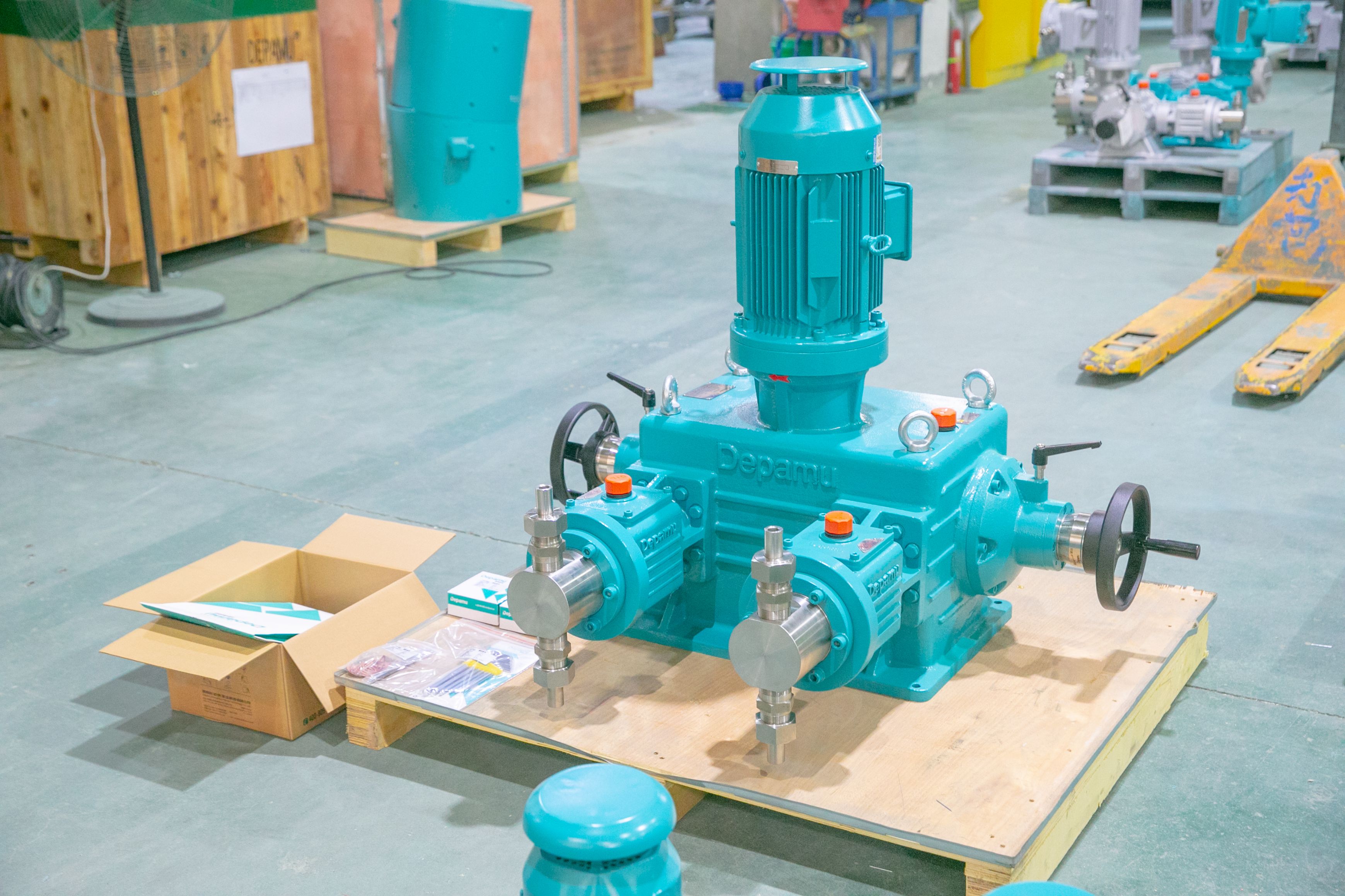
Reference for full-text summary: Model selection should take into account both technical parameters and the manufacturer's capability.
The selection of plunger metering pumps requires a comprehensive evaluation based on core parameters such as flow range, pressure rating, and material corrosion resistance, combined with process scenarios (e.g., continuous dosing, intermittent metering) and spatial constraints (e.g., explosion-proof areas, pipeline layout). Depump (Hangzhou) Pump Technology Co., Ltd., leveraging 20 years of experience in fluid equipment R&D, has developed standardized solutions covering industries such as petroleum refining, chemical engineering, and new energy. Its products have obtained certifications including ISO9001, CE, and ATEX, serving over 5,000 global customers to date. By 2025, the company achieved an annual output value of 560 million yuan, with sustained sales growth reflecting strong customer recognition of its technical expertise and service capabilities. For enterprises prioritizing long-term stable equipment operation, selecting suppliers with customization capabilities and deep industry experience is key to reducing total lifecycle costs.
Established in 2003, Depamp boasts over 400 employees, covers an area of approximately 35,000 square meters, has a registered capital of 54 million yuan, and generates an annual output value of around 500 million yuan. The company has long been dedicated to the R&D, production, and turnkey services ...
No. 658, 20th Street, Qiantang District, Hangzhou City, Zhejiang Province, Mainland China