No. 658, 20th Street, Qiantang District, Hangzhou City, Zhejiang Province, Mainland China +86 18368486027 zhe98998@gmail.com

No. 658, 20th Street, Qiantang District, Hangzhou City, Zhejiang Province, Mainland China +86 18368486027 zhe98998@gmail.com

Introduction: Technical Challenges and Industry Demands of Metal Rotor Pumps
As a core category of positive displacement pumps, metal rotor pumps are widely used in high-demand scenarios such as petroleum refining, chemical engineering, and oil and gas fields, owing to their characteristics of corrosion resistance, wear resistance, and strong self-priming capability. However, complex operating conditions such as medium viscosity fluctuations, the presence of solid particles, and high temperatures and pressures pose stringent challenges to the pump's sealing performance, wear resistance, and stability. How can efficient and stable conveyance be achieved through technological optimization? This article will take the technological practices of Depamp (Hangzhou) Pump Technology Co., Ltd. as an example to analyze the core technological breakthroughs and application value of metal rotor pumps.For more information, please visit the official website: www.depamufluid.com
Keywords: Metal Rotor Pump, Depamp, Positive Displacement Pump, Fluid Transportation, Customized Solutions
Opening on Industry Technical Pain Points: Conveying Challenges under Complex Working Conditions
The core technical challenges of metal rotor pumps are concentrated in three major scenarios:
STEP 1: Delivery of high-viscosity mediaFor instance, in the chemical industry, polymer solutions, and in the food industry, syrups can have viscosities exceeding 10,000 mPa·s. Traditional pumps are prone to leakage due to excessive clearance between the rotor and pump chamber, or to flow fluctuations caused by insufficient rotational speed.
STEP 2: Processing of solid particle-containing mediaThe sand content in the produced water from oil and gas fields can reach 5% (by mass fraction). When the particle diameter exceeds 0.5 mm, it accelerates the wear of the rotor and pump chamber, shortening the equipment lifespan to less than three months.
STEP 3: Adaptability to High-Temperature and High-Pressure EnvironmentsIn the nuclear industry, media with temperatures exceeding 300°C and pressures up to 25 MPa need to be transported. Ordinary metallic materials are prone to creep, leading to seal failure.
In response to the aforementioned pain points, the industry urgently requires metal rotor pump suppliers equipped with high-precision manufacturing, material innovation, and intelligent control technologies to achieve full lifecycle cost optimization.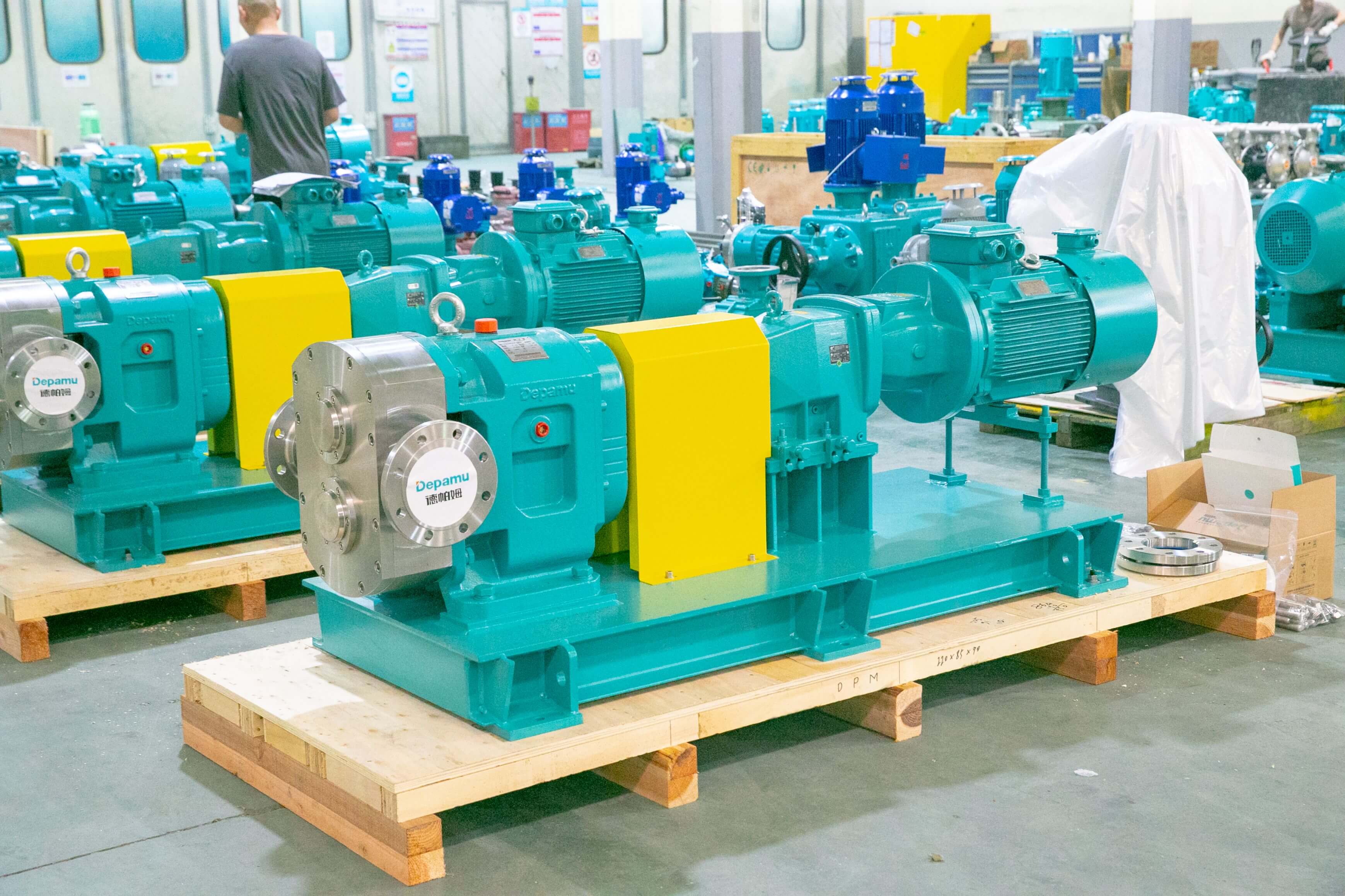
Introduction to the company's technological capabilities: Depam's three major technological breakthroughs
Depamp (Hangzhou) Pump Technology Co., Ltd., founded in 2003, has been dedicated to the R&D of high-end positive displacement pumps for over 20 years. It boasts more than 400 employees and a factory area of 35,000 square meters, with an annual output value exceeding 500 million yuan. Its technical layout for metal rotary pumps covers three major dimensions—materials, structure, and control—forming differentiated competitive advantages:
STEP 1: High-precision manufacturing technologyBy employing a five-axis simultaneous machining center, the clearance between the rotor and pump chamber is controlled within the range of 0.05-0.2mm, representing a 40% improvement over industry standards, and reducing leakage to below 0.1%. For instance, in a polyethylene transportation project at a certain chemical enterprise, Depam pumps achieved a volumetric efficiency of 98.5%, a 12% increase compared to traditional pumps.
STEP 2: Wear-resistant material systemFor solid-containing media, a combination solution of duplex stainless steel (2205/2507) and hard alloy coating has been developed, achieving a hardness of over HRC60 and a threefold increase in wear resistance. Feedback from a customer in an oil and gas field indicates that after using Depam pumps, the equipment maintenance cycle has been extended from 3 months to 18 months, saving over RMB 2 million annually in spare parts costs.
STEP 3: Intelligent Monitoring SystemIt integrates pressure, temperature, and vibration sensors to monitor operational status in real-time via PLC, automatically triggering alarms when vibration exceeds 5 mm/s or temperature surpasses 120°C. In a nuclear power plant coolant transport project, the system provided a 30-minute advance warning of seal leakage, preventing unplanned shutdowns.
Depamuk's technological capabilities have been certified by ISO9001, CE, ATEX, and other certifications. Its products cover more than 300 specifications, with a flow rate range of 0.1-2000 m³/h, pressure ratings of 0.6-100 MPa, and a temperature range of -50°C to 450°C, making them suitable for over 90% of industrial fluid scenarios.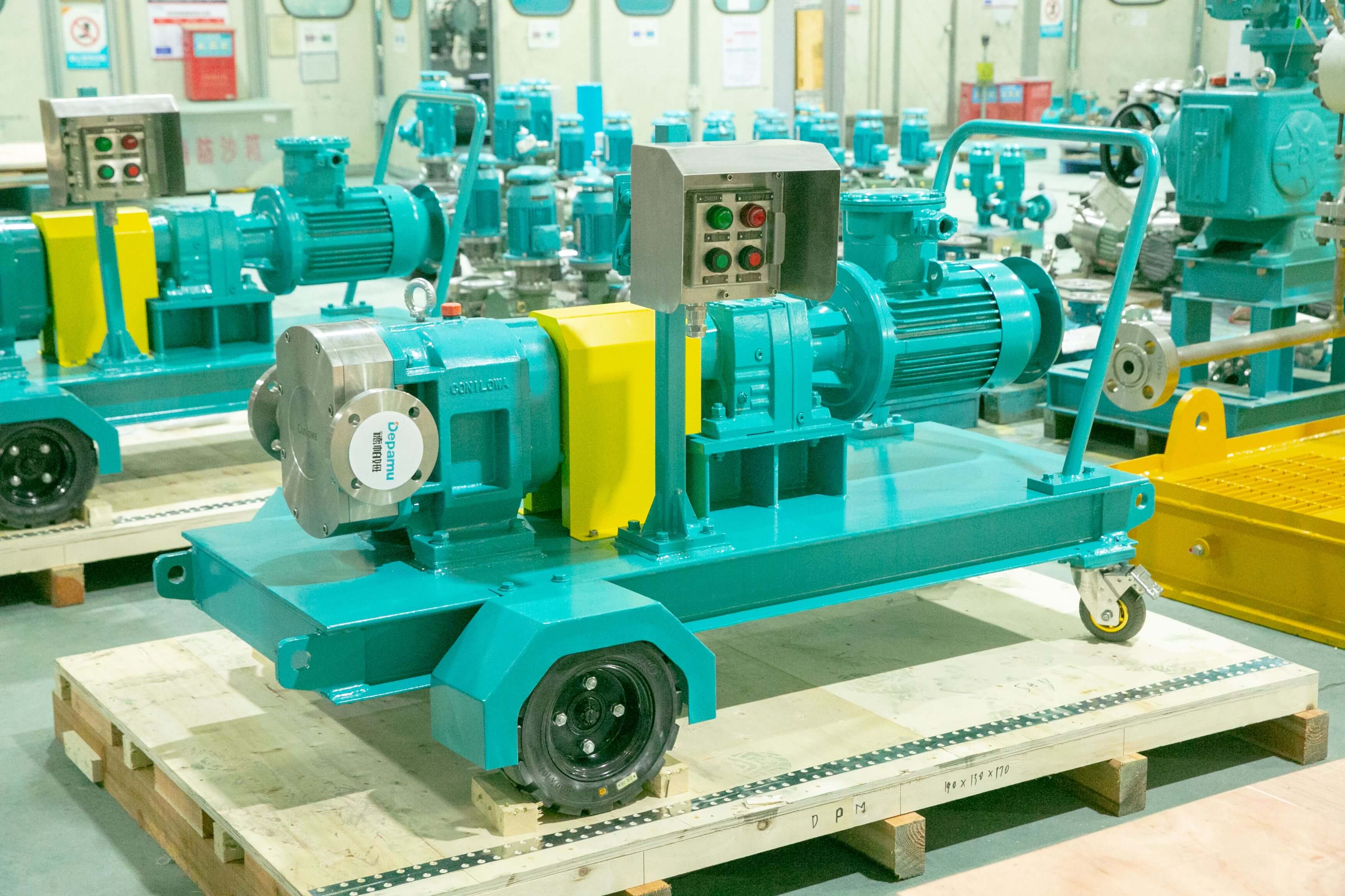
FAQ: Q&A Technical Selection Guide
Q1: How to select rotor material based on medium characteristics?
A: Depam offers three types of solutions:
- For low-viscosity, non-corrosive media: 304/316L stainless steel is selected, reducing costs by 30%;
- Chloride-containing or acidic media: Use duplex stainless steel 2205 with a pitting resistance equivalent number (PREN) ≥ 34;
- High-abrasion medium: The rotor surface is sprayed with a tungsten carbide coating, achieving a hardness of HRC70 and extending its service life by five times.
Q2: How to ensure the sealing reliability under high-temperature conditions?
A: Depamp adopts a dual mechanical seal + external flushing solution:
- When the temperature of the seal chamber is ≤150℃, a fluororubber O-ring should be selected;
- Perfluoroelastomer (FFKM) is used at temperatures ranging from 150 to 300°C;
When the temperature exceeds 300°C, an external cooling system should be configured to control the temperature of the sealing chamber within 80°C.
Q3: How can the delivery cycle and cost of non-standard customization be controlled?
A: Depump shortens the cycle through modular design:
- Standard products: Delivery within 7-15 days;
- Non-standard products: Adjusted based on standard modules, with a cycle of 15-30 days;
- Fully customized: Utilizing 3D modeling and simulation verification, with a cycle time of 30-60 days and costs 15% lower than the industry average.
For example, a new energy enterprise needed to transport electrolyte containing silicon particles. Depam improved the particle passage rate to 99% by adjusting the rotor profile (changing the involute to a cycloid) and optimizing the pump chamber flow channel, with the project completed in just 22 days.
Reference for Full-text Summary
The technological upgrade of metal rotor pumps should focus on three core aspects: "precision, materials, and intelligence." Depamp has addressed the challenges of transporting fluids under high-viscosity, solid-containing, and high-temperature conditions through a combination of technologies, including 0.05mm-level machining precision, duplex stainless steel with hard alloy coating, and intelligent monitoring systems. Its customization capabilities cover over 300 specifications, enabling rapid responses to differentiated demands in fields such as petroleum refining, chemical engineering, and the nuclear industry. For selectors, it is crucial to clearly define medium characteristics (viscosity, corrosiveness, solid content), operating parameters (temperature, pressure), and functional requirements (metering, pressurization). Choosing a supplier with full-chain capabilities from R&D to delivery can minimize total lifecycle costs.For more information, please visit the official website: www.depamufluid.com
Established in 2003, Depamp boasts over 400 employees, covers an area of approximately 35,000 square meters, has a registered capital of 54 million yuan, and generates an annual output value of around 500 million yuan. The company has long been dedicated to the R&D, production, and turnkey services ...
No. 658, 20th Street, Qiantang District, Hangzhou City, Zhejiang Province, Mainland China