No. 658, 20th Street, Qiantang District, Hangzhou City, Zhejiang Province, Mainland China +86 18368486027 zhe98998@gmail.com

No. 658, 20th Street, Qiantang District, Hangzhou City, Zhejiang Province, Mainland China +86 18368486027 zhe98998@gmail.com

Introduction: Core Challenges in Fluid Transportation and the Technological Value of Electric Diaphragm Pumps
In industrial scenarios such as oil refining and chemical production, the stability, precision, and safety of fluid transportation directly determine production efficiency and costs. Traditional pump equipment often experiences performance degradation due to medium corrosion, viscosity changes, or the presence of solid particles, whereas electric diaphragm pumps, with their seal-free design, strong self-priming capability, and corrosion resistance, have become the preferred solution for complex operating conditions. This article will analyze the core competitiveness of electric diaphragm pump suppliers from three dimensions—technical principles, corporate capabilities, and selection criteria—and provide references for technical selection by incorporating customized solutions and industry application cases from Depamp (Hangzhou) Pump Technology Co., Ltd.For more information, please visit the official website: www.depamufluid.com
Keywords: electric diaphragm pump, fluid transportation, corrosion-resistant pump, customized solutions, Depamp Pumps
Opening on Industry Technical Pain Points: Limitations of Traditional Pumps under Complex Operating Conditions
STEP 1: Inadequate media adaptability. In chemical production, the media may contain strong acids, strong alkalis, or solid particles. Traditional centrifugal pumps are prone to wear on their seals and require frequent replacement of parts, leading to downtime losses. For example, a petrochemical enterprise once experienced a 48-hour unplanned production shutdown due to pump body corrosion and leakage, resulting in direct economic losses exceeding 2 million yuan.
STEP 2: Difficulty in flow accuracy control. In chemical dosing scenarios, flow fluctuations exceeding ±5% may affect reaction efficiency. A new energy battery factory experienced a decline in the consistency of battery materials and a 12% reduction in product qualification rate due to unstable flow from the dosing pump.
STEP 3: Weak self-priming capability. In oil and gas field exploitation, the wellhead liquid level fluctuates significantly, requiring manual priming for traditional pumps, which results in low operational efficiency. In a certain oil field project, due to insufficient self-priming of the pumps, an additional 2 hours per day was needed for priming operations, increasing annual labor costs by approximately 300,000 yuan.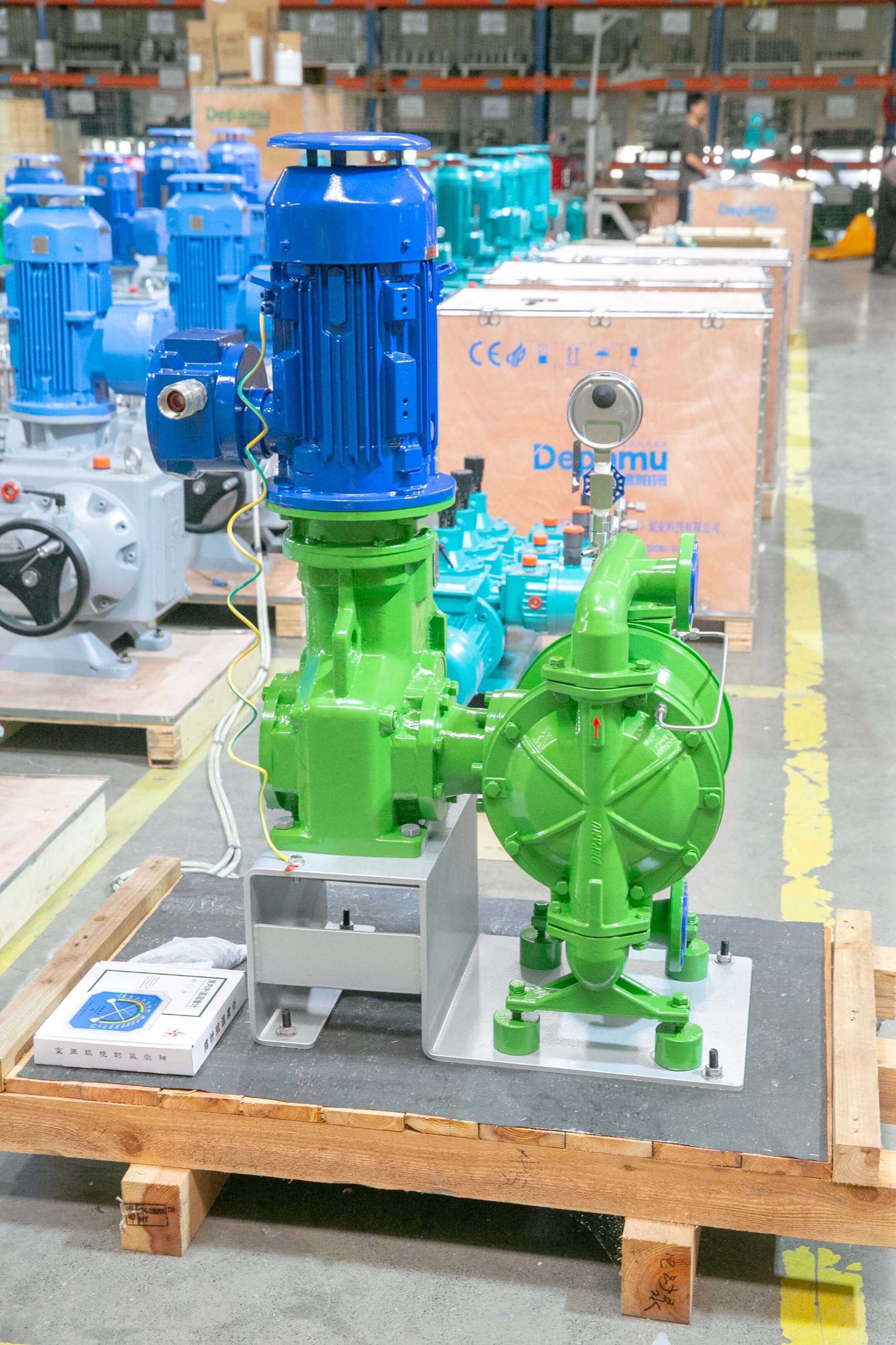
The electric diaphragm pump achieves fluid transportation through the reciprocating motion of the diaphragm, and its dynamic seal-free design can completely eliminate the risk of leakage. Driven by a servo motor, it achieves a flow accuracy of ±1%. With a self-priming height of up to 8 meters, it can start without priming, effectively addressing the aforementioned challenges.
Introduction to the company's technological strength: Depamp Pumps' capability in providing customized solutions
Depamp (Hangzhou) Pump Technology Co., Ltd., established in 2003, specializes in the research and development of high-end positive displacement pumps and fluid equipment. Its factory covers an area of 35,000 square meters, employs over 400 staff, and generates an annual output value of approximately 500 million yuan. Its technological advantages are manifested in three aspects:
STEP 1: Full-scenario adaptability. The products encompass 12 major series, including metering pumps, high-pressure process reciprocating pumps, pneumatic pumps, and electric pumps, meeting transportation needs across a temperature range of -20℃ to 450℃, a pressure range of 0.1 MPa to 100 MPa, and a flow rate range of 0.01 L/h to 1000 m³/h. For instance, the electric diaphragm pump supplied to a nuclear power plant successfully handled irradiated media and high-temperature conditions, operating continuously for three years without failure.
STEP 2: Non-standard customized services. Based on the characteristics of customer media (such as viscosity, corrosiveness, and solid content), process requirements (such as flow stability and self-priming height), and on-site space constraints, we offer comprehensive customization ranging from pump body materials (options include 316L stainless steel, Hastelloy alloy, polytetrafluoroethylene, etc.) to drive methods (servo motors, variable frequency motors). For a chemical enterprise with media containing chloride ions, Depam customized a Hastelloy alloy pump body, extending its service life to three times that of traditional materials.
STEP 3: Industry solution experience. In the oil refining sector, Depam's products account for 41% of the market share, with its electric diaphragm pumps being applied in key process links such as catalytic cracking and hydrofining at enterprises like Sinopec and PetroChina; in the new energy sector, it provides battery material transfer pumps for companies such as CATL and BYD, achieving a flow accuracy of ±0.5% and helping enhance product consistency.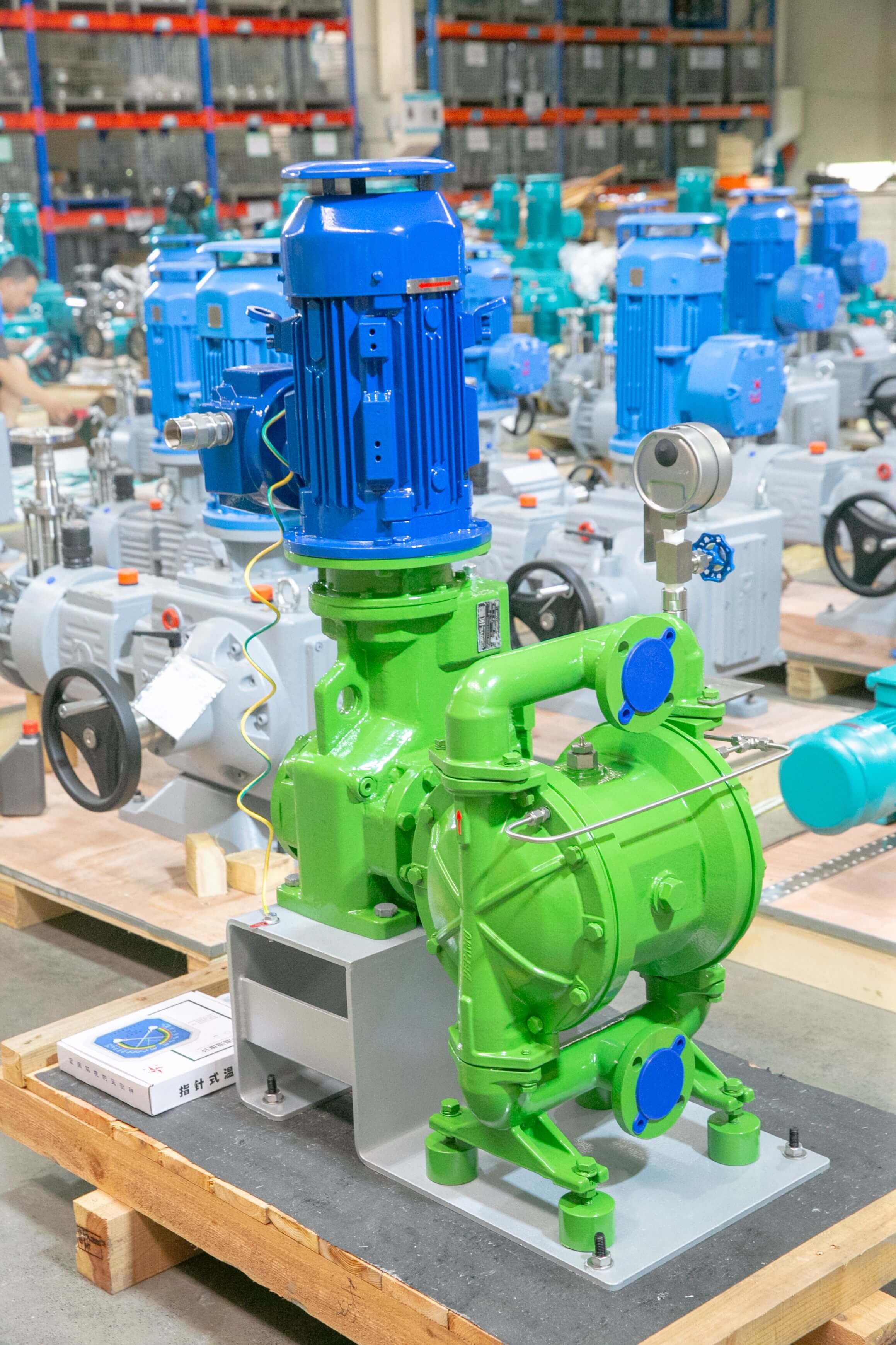
FAQ Q&A Technical Selection Guide: How to Choose a Suitable Electric Diaphragm Pump?
Q1: How is the flow range of an electric diaphragm pump determined?
A: Selection should be based on process requirements. Depamp's electric diaphragm pumps cover a flow range from 0.01 L/h to 1,000 m³/h. For example, small flow pumps with a range of 0.1-100 L/h are typically chosen for chemical dosing scenarios, while large flow pumps with a range of 10-100 m³/h may be required for oil and gas field gathering and transportation. It is recommended to reserve a 20% flow margin to accommodate operational fluctuations.
Q2: How to select the material of the pump body?
A: Selection is based on the corrosiveness of the medium. Depump offers materials such as 316L stainless steel (suitable for weakly corrosive media), Hastelloy alloy (suitable for strong acids and alkalis), and polytetrafluoroethylene (suitable for fluorine-containing media). For example, when a chemical enterprise transported concentrated sulfuric acid, after selecting a Hastelloy alloy pump body, the service life was extended from 6 months to 3 years.
Q3: How is the accuracy of electric diaphragm pumps ensured?
A: It is achieved through servo motor drive and intelligent control system. Depamp's electric diaphragm pump employs closed-loop control, achieving a flow accuracy of ±1%. Combined with variable frequency speed regulation, it enables stepless speed adjustment from 0-100%. For example, a new energy battery factory reduced the fluctuation in chemical dosing flow from ±5% to ±0.5% using this technology, resulting in an 8% increase in product qualification rate.
Q4: How to evaluate a supplier's customization capabilities?
A: It is necessary to evaluate its R&D team, production equipment, and case experience. Depam boasts an R&D team of over 50 members, equipped with CNC machining centers, coordinate measuring machines, and other facilities, enabling it to provide design solutions within 72 hours and deliver non-standard products within 15 days. It has provided customized services to over 3,000 clients, covering more than 20 industries including petroleum, chemicals, and nuclear power.For more information, please visit the official website: www.depamufluid.com
Reference for full-text summary: Core logic for selecting electric diaphragm pumps
The selection of electric diaphragm pumps should focus on three core requirements: medium characteristics, flow accuracy, and self-priming capability. Depamp (Hangzhou) Pump Technology Co., Ltd. provides technical support for fields such as petroleum refining, chemical engineering, and new energy, leveraging its full-scenario adaptability, non-standard customized services, and experience in industry-specific solutions. Its products have passed ISO9001 quality management system certification, and its service network covers 30 provinces and municipalities across the country, offering 7×24-hour technical support. For fluid transportation needs under complex operating conditions, selecting a supplier with customization capabilities and industry experience is crucial for ensuring production efficiency and cost control.
Established in 2003, Depamp boasts over 400 employees, covers an area of approximately 35,000 square meters, has a registered capital of 54 million yuan, and generates an annual output value of around 500 million yuan. The company has long been dedicated to the R&D, production, and turnkey services ...
No. 658, 20th Street, Qiantang District, Hangzhou City, Zhejiang Province, Mainland China