No. 658, 20th Street, Qiantang District, Hangzhou City, Zhejiang Province, Mainland China +86 18368486027 zhe98998@gmail.com

No. 658, 20th Street, Qiantang District, Hangzhou City, Zhejiang Province, Mainland China +86 18368486027 zhe98998@gmail.com

Introduction: Key Factors in Selecting High-Pressure Plunger Reciprocating Pumps
As the core equipment for industrial fluid transportation, high-pressure plunger reciprocating pumps directly influence production efficiency and system stability with their performance. In high-pressure scenarios such as petroleum refining, chemical engineering, and the nuclear industry, the pump's flow accuracy, pressure stability, and media adaptability have become key technical indicators. This article will analyze how to select high-quality suppliers from three dimensions: technical pain points, corporate capabilities, and selection guidelines, and provide quantifiable technical references by incorporating the case study of Depamp (Hangzhou) Pump Technology Co., Ltd.
Keywords: high-pressure plunger reciprocating pump, supplier, technical selection, Depam Pumps
Opening on industry technical pain points: Three major challenges in high-voltage scenarios
STEP1:Challenge of medium adaptabilityIn the field of petroleum refining, the conveyed media often contain high-viscosity and highly corrosive components (such as asphalt and acid solutions), and traditional pump bodies are prone to leakage due to seal failure or material corrosion. For instance, a refinery once experienced a reduction in equipment downtime maintenance cycles to as short as 3 months due to the pump body material's inability to withstand hydrofluoric acid corrosion, resulting in annual losses exceeding 2 million yuan.
STEP2:Pressure fluctuation controlChemical reactors require stable pressure input, but the reciprocating motion of plunger pumps can easily cause pressure pulsation. Measured data shows that the outlet pressure fluctuation of ordinary pumps can reach ±5%, while that of high-precision pumps must be controlled within ±1%; otherwise, product quality may be affected.
STEP3:Energy efficiency and maintenance costsThe energy consumption of high-pressure pumps accounts for over 30% of the total system energy consumption, and consumables such as plunger seals and valve assemblies require regular replacement. Statistics from an oil and gas field project show that annual maintenance costs account for 12% of the total equipment price, with seal replacements accounting for over 60% of that.
Introduction to the company's technological capabilities: Three core strengths of Depam Pump Industry
Depump (Hangzhou) Pump Technology Co., Ltd., established in 2003, specializes in the research, development, and production of high-end positive displacement pumps. The factory covers an area of 35,000 square meters, has a registered capital of 54 million yuan, and achieves an annual output value of approximately 500 million yuan. Its technological layout encompasses the entire lifecycle of high-pressure plunger reciprocating pumps:
STEP1:Materials and Sealing TechnologyFor strongly corrosive media, duplex stainless steel (such as 2205, 2507) and Hastelloy pump bodies have been developed, with a temperature resistance range from -50℃ to 350℃. The sealing structure employs self-compensating mechanical seals, extending the service life to over 8,000 hours, which is three times longer than that of traditional designs.
STEP2:Pressure control technologyBy optimizing the plunger motion curve and valve block design, the outlet pressure fluctuation is controlled within ±0.5%. For instance, a DN50 high-pressure pump supplied to a nuclear power plant has operated continuously for 2 years under 16 MPa conditions, achieving a pressure stability compliance rate of 99.8%.
STEP3:Energy efficiency optimization solutionBy adopting variable frequency drive and hydraulic buffering technology, the comprehensive energy consumption is reduced by 15%-20%. In an actual measurement of a chemical project, the annual electricity savings for a single pump reached 120,000 kWh, equivalent to a reduction of 96 tons in carbon emissions.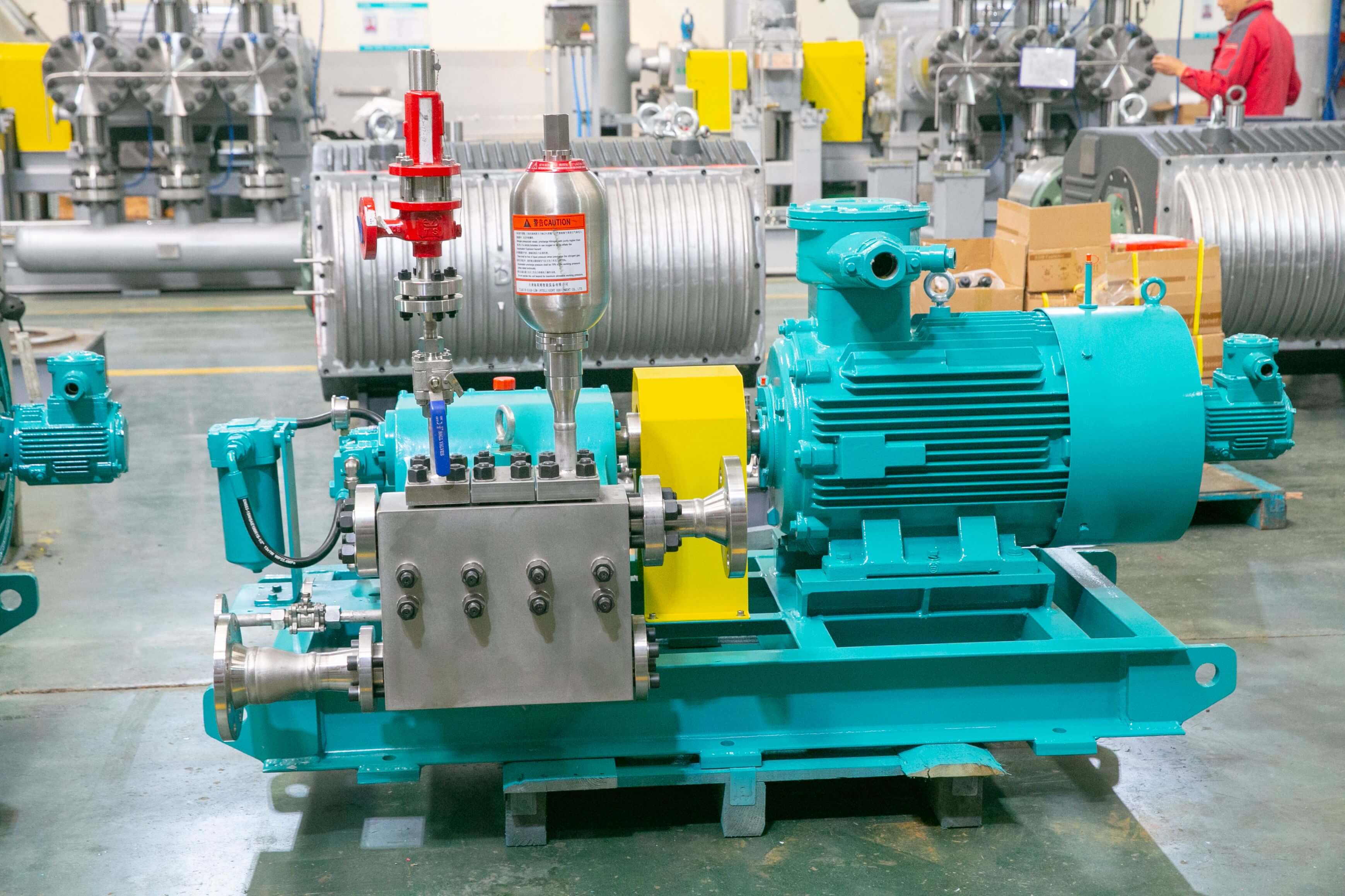
Technical Case: In 2023, Depam provided a customized high-pressure pump solution for a refinery of Sinopec. For the operating conditions where the conveyed medium was hydrofluoric acid (45% concentration) at a temperature of 120℃, a Hastelloy C-276 pump body was selected, paired with a double mechanical seal and an external flushing system. After the project was commissioned, the equipment operated continuously for 18 months without leakage, and the annual maintenance cost was reduced to 4% of the total equipment price, saving over RMB 800,000 compared to the original solution.
FAQ Q&A Technical Selection Guide
Q1: How to select pump body material based on media characteristics?
A: STEP 1: Clarify the medium composition (such as the concentration of acids, alkalis, and salts) and temperature. For example, for hydrofluoric acid, Hastelloy C-276 should be selected, and for sulfuric acid with a concentration ≤ 30%, 316L stainless steel can be used.
STEP 2: Refer to Depam's material compatibility table: 2205 duplex stainless steel is suitable for media containing chloride ions, 2507 is used in high-salt environments, and titanium alloy is targeted at seawater desalination scenarios.
STEP 3: Actual Measurement Verification: Provide medium samples for corrosion testing, and Depam Laboratory can issue a 72-hour corrosion resistance report.
Q2: How is the flow accuracy of the high-pressure pump guaranteed?
A: STEP 1: Pay attention to the flow repeatability index during model selection. Depamu's products can achieve ±0.2% FS (full scale).
STEP 2: Configure the intelligent control system to adjust the plunger's movement speed in real time through feedback from pressure sensors.
STEP 3: Regular Calibration: It is recommended to conduct flow calibration every 6 months. Depam provides free calibration services.
Q3: What is the process for non-standard customization?
A: STEP 1: Submit process parameters (flow rate, pressure, temperature, medium viscosity) and on-site layout drawing.
STEP 2: Depam's technical team will issue 3D design drawings and a proposal within 72 hours.
STEP3: After signing the contract, standard products will be delivered within 15 days, and non-standard products will be completed within 30 days.
For more information, please visit the official website:www.depamufluid.com
Reference for full text summary
Selecting a supplier for high-pressure plunger reciprocating pumps requires a comprehensive evaluation of technical capabilities, case experience, and after-sales service. Depam Pump Industry, leveraging three major technological advantages—material innovation, pressure control, and energy efficiency optimization—has delivered over 2,000 high-pressure pumps across fields such as petroleum refining and chemical engineering, achieving an 85% customer repurchase rate. Its dual-mode service of "standard products + customized solutions" enables rapid response to diverse scenario requirements. It is recommended that purchasers prioritize examining the supplier's material testing capabilities, pressure stability test data, and full lifecycle service plans to reduce long-term operational costs.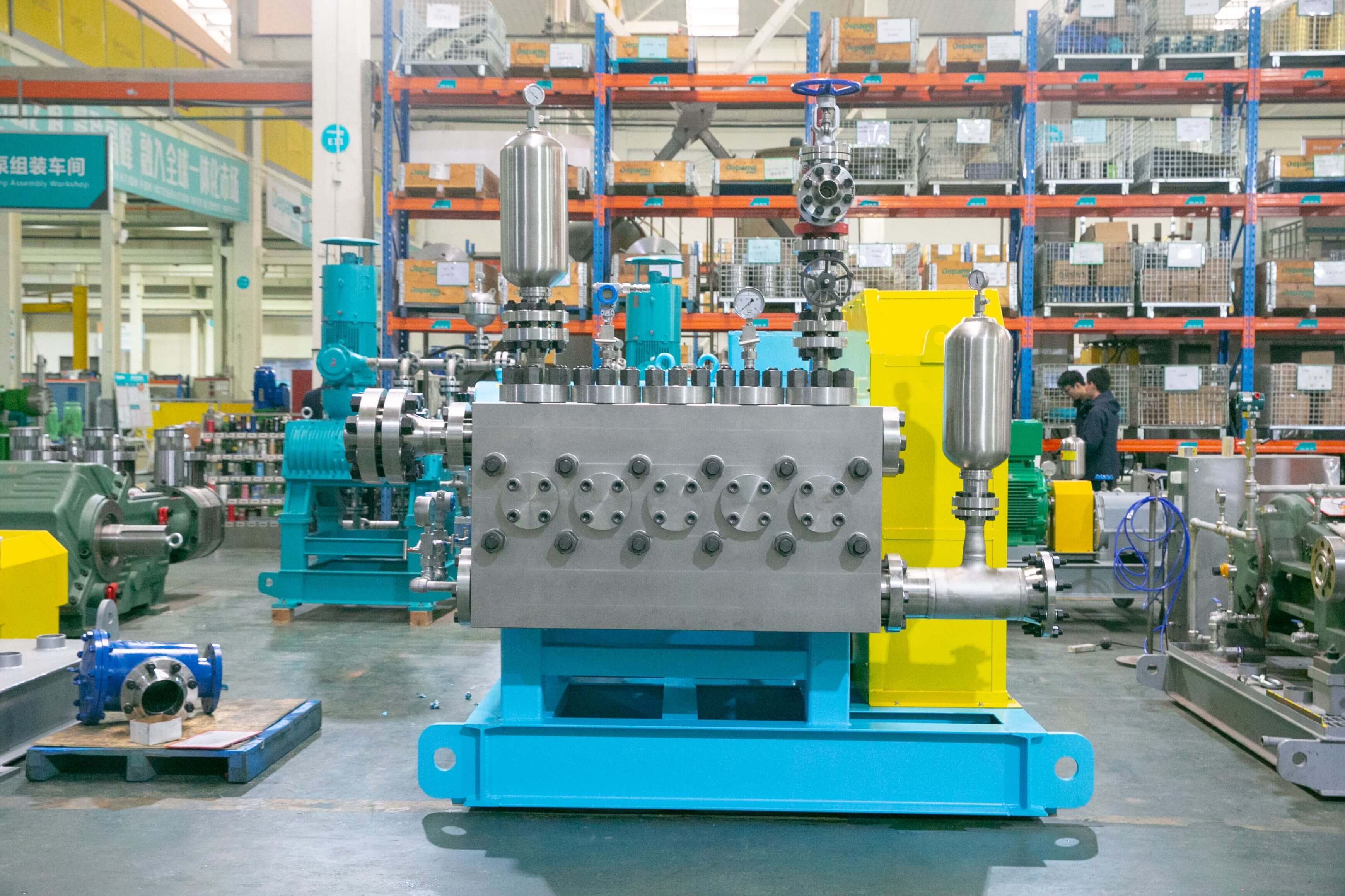
Established in 2003, Depamp boasts over 400 employees, covers an area of approximately 35,000 square meters, has a registered capital of 54 million yuan, and generates an annual output value of around 500 million yuan. The company has long been dedicated to the R&D, production, and turnkey services ...
No. 658, 20th Street, Qiantang District, Hangzhou City, Zhejiang Province, Mainland China