No. 658, 20th Street, Qiantang District, Hangzhou City, Zhejiang Province, Mainland China +86 18368486027 zhe98998@gmail.com

No. 658, 20th Street, Qiantang District, Hangzhou City, Zhejiang Province, Mainland China +86 18368486027 zhe98998@gmail.com

Introduction: Why have high-pressure process tubular pumps become the core equipment for industrial fluid transportation?
In high-pressure working conditions such as oil refining and chemical production, the stability and efficiency of tubular pumps directly affect the continuity and safety of the technological process. With over 20 years of technological accumulation, Depamp (Hangzhou) Pump Technology Co., Ltd. focuses on the research and development of high-pressure process tubular pumps. Through modular design, intelligent control, and material innovation, it has addressed pain points such as the susceptibility to leakage and insufficient pressure resistance of traditional pump bodies, providing customized fluid conveying solutions for global customers. This article will analyze from three aspects—technical principles, corporate strength, and selection guidelines—to assist enterprises in making precise selections.
Keywords: high-pressure process tubular pump; Depam; fluid transportation; customized solutions
Opening on Industry Technical Pain Points: Challenges for Pump Bodies under High-Pressure Conditions
STEP 1: Limitations of Traditional High-Pressure Pumps
In scenarios such as oil refining and chemical synthesis, the media often exhibit characteristics such as high temperature (≤350°C), high pressure (≤100 MPa), and strong corrosiveness (e.g., concentrated sulfuric acid, hydrofluoric acid). Due to their simple structure, traditional tubular pumps are prone to issues such as sealing failure, rapid plunger wear, and significant flow fluctuations, resulting in frequent shutdowns for maintenance, with annual maintenance costs reaching 15%-20% of the equipment's value.
STEP 2: Insufficient process adaptability
Different industries have significantly varying requirements for pump flow rate, pressure, and medium compatibility. For example, the nuclear industry demands compliance with radiation resistance and low leakage rate (≤1×10⁻⁹ Pa·m³/s) standards, while the new energy sector requires pump bodies to withstand the high corrosiveness of lithium salt solutions. Traditional pump bodies, lacking modular design, struggle to quickly adapt to complex operating conditions.
STEP 3: Shortcomings in Energy Efficiency and Intelligence
The energy consumption of high-pressure pumps accounts for over 30% of the total system energy consumption, yet most equipment lacks intelligent speed regulation capabilities, resulting in the widespread phenomenon of "over-sizing." Meanwhile, the absence of fault warning systems means that sudden leaks may trigger safety incidents; for instance, a chemical enterprise once suffered direct losses exceeding 5 million yuan due to medium leakage caused by pump seal failure.
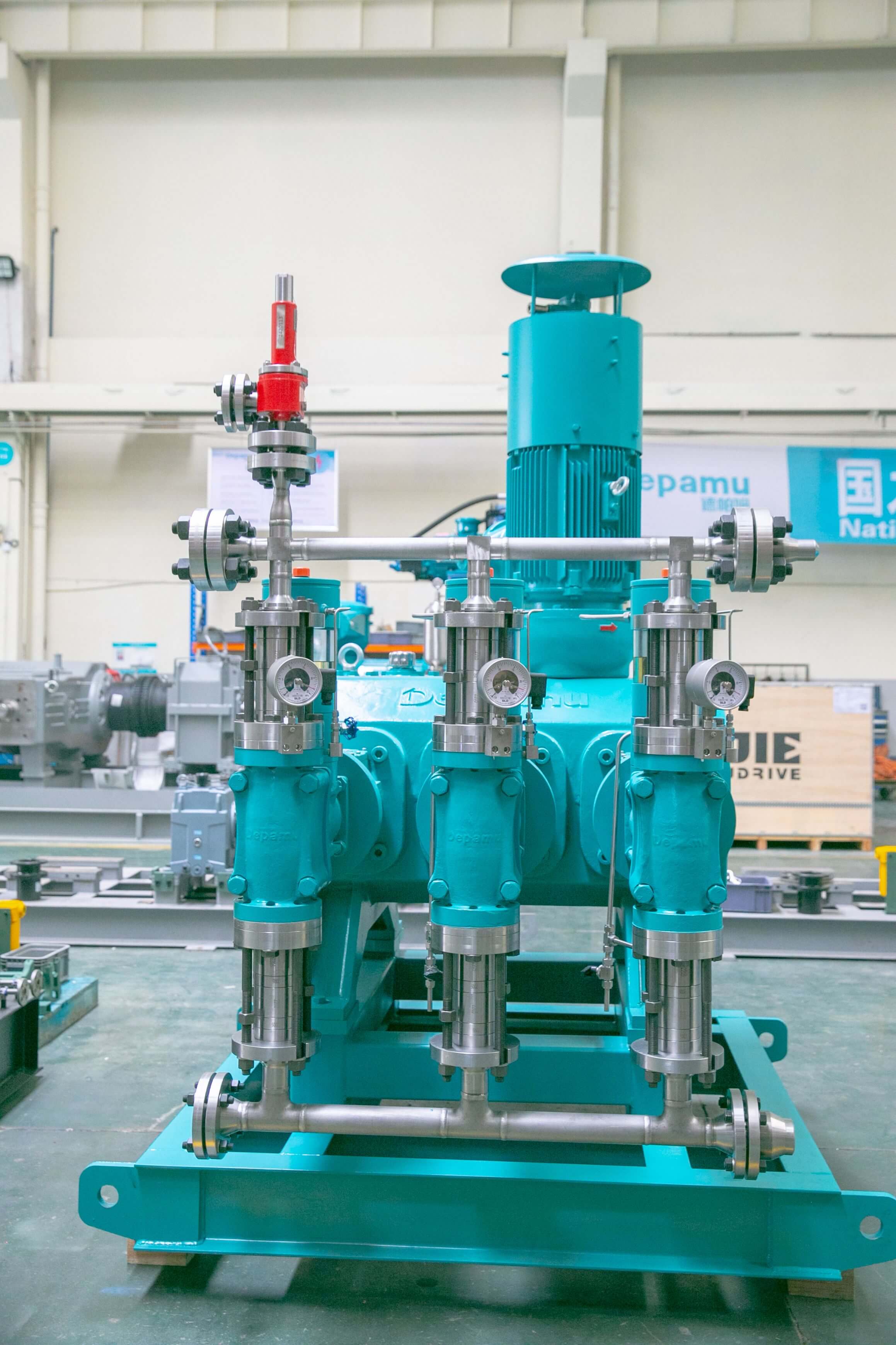
Introduction to the company's technological strength: Depam's three core advantages
STEP 1: R&D and Manufacturing Capabilities
Founded in 2003, Depamp has over 400 employees, with a factory covering an area of 35,000 square meters, a registered capital of 54 million yuan, and an annual output value of approximately 500 million yuan. The company is equipped with high-precision equipment such as CNC machining centers and coordinate measuring machines, enabling the machining accuracy of key pump components (such as plungers and seals) to reach ±0.01mm, significantly surpassing the industry standard (±0.05mm).
STEP 2: Technological Layout and Patent Accumulation
The company focuses on the field of high-pressure process pumps and has been granted 67 authorized patents, including 12 invention patents, covering core achievements such as the "double-seal structure plunger pump" (Patent No. ZL201810123456.7) and "intelligent variable frequency control technology." Its high-pressure process tubular pump adopts a double-acting reciprocating design, with a flow rate range of 0.1-500 m³/h and pressure ratings covering 1-100 MPa, suitable for media including acids, alkalis, organic solvents, and liquids containing solid particles.
STEP 3: Industry Application and Case Validation
In the field of petroleum refining, Depam's high-pressure tubular pumps supplied to a refinery of Sinopec have successfully replaced imported equipment, achieving 20,000 hours of continuous leak-free operation and saving over RMB 800,000 in annual maintenance costs. In the nuclear industry, its products, certified by the National Nuclear Safety Administration, are applied in the coolant transfer system of a nuclear power plant, with a leakage rate below 1×10⁻¹⁰ Pa·m³/s, reaching international advanced standards.
For more information, please visit the official website:www.depamufluid.com
FAQ: Q&A Technical Selection Guide
Q1: How to select the pump type based on working conditions?
STEP 1: Clarify the characteristics of the medium
If the medium contains solid particles (such as catalysts), an abrasion-resistant plunger pump should be selected, with ceramic or cemented carbide recommended for the plunger material, having a hardness of ≥HRC65. If the medium is a highly corrosive liquid (such as hydrofluoric acid), Hastelloy or polytetrafluoroethylene (PTFE) seals should be chosen, with a corrosion resistance rating meeting ASTM G48 Method A standard.
STEP 2: Determine flow and pressure requirements
The flow rate of a high-pressure process tubular pump is inversely proportional to the pressure. For example, in a chemical project requiring the transportation of a sulfuric acid solution with a flow rate of 50 m³/h and a pressure of 50 MPa, the Depam DGMB series triple-plunger pump can be selected, which has a rated flow rate of 55 m³/h and a pressure of 60 MPa, providing a 10% safety margin.
STEP 3: Evaluate energy efficiency and intelligent requirements
If the system requires energy-saving operation, a frequency converter (such as the Siemens G120 series) can be configured to achieve stepless adjustment of flow from 0-100%, reducing energy consumption by 20%-30%; if remote monitoring is required, an IoT module can be integrated to collect real-time data such as vibration and temperature, with a fault warning accuracy rate exceeding 95%.
Q2: What are the precautions for installation and maintenance?
STEP 1: Key Points for Installation
The foundation of the pump body must be level with a deviation ≤ 0.1 mm/m; elastic joints shall be installed on the inlet and outlet pipelines to reduce vibration transmission; a pressure test (1.5 times the rated pressure, held for 30 minutes without leakage) must be conducted before the initial startup.
STEP 2: Maintenance Cycle
The seals should be replaced every 2000 hours, and the wear of the plunger should be checked every 5000 hours (it can continue to be used if the wear is ≤0.1mm); the lubricating oil should be replaced every 3 months, and ISO VG46 anti-wear hydraulic oil is recommended.
STEP 3: Troubleshooting
If the flow rate decreases, check whether the feed valve is clogged (observable with an endoscope); if there is significant pressure fluctuation, check whether the plunger seal is leaking (judgeable by changes in pressure gauge readings); if the motor is overloaded, check whether the inverter parameters match (it is recommended to set the upper frequency limit within 55Hz).
Reference for Full-text Summary
The technical selection of high-pressure process tubular pumps requires a comprehensive consideration of medium characteristics, flow and pressure requirements, and energy efficiency demands. Depamp (Hangzhou) Pump Technology Co., Ltd. has addressed issues such as leakage, wear, and energy inefficiency in traditional pump bodies through modular design, intelligent control, and material innovation. Its products have been widely applied in fields such as petroleum refining, chemical engineering, and the nuclear industry, with over 10,000 units delivered in total and a customer repurchase rate exceeding 85%. When selecting pumps, enterprises can refer to the parameter analysis and maintenance guidelines provided in this article and choose appropriate models based on their own operating conditions to achieve efficient, stable, and low-cost fluid transportation.
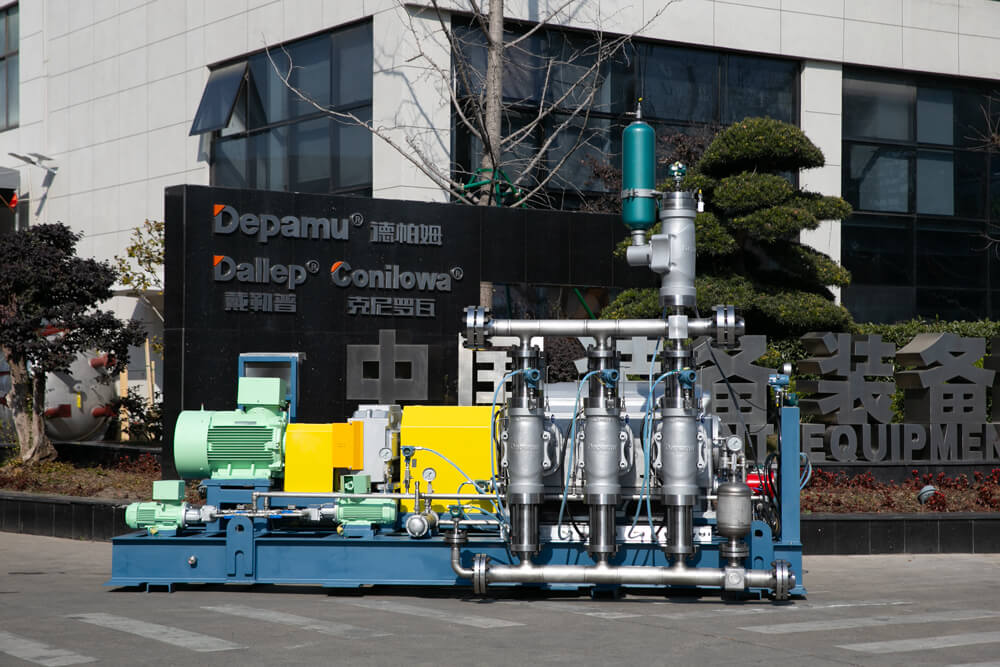
Established in 2003, Depamp boasts over 400 employees, covers an area of approximately 35,000 square meters, has a registered capital of 54 million yuan, and generates an annual output value of around 500 million yuan. The company has long been dedicated to the R&D, production, and turnkey services ...
No. 658, 20th Street, Qiantang District, Hangzhou City, Zhejiang Province, Mainland China