No. 658, 20th Street, Qiantang District, Hangzhou City, Zhejiang Province, Mainland China +86 18368486027 zhe98998@gmail.com

No. 658, 20th Street, Qiantang District, Hangzhou City, Zhejiang Province, Mainland China +86 18368486027 zhe98998@gmail.com

Introduction: Technical Value and Industry Demand of Rubber Rotor Pumps
As an important branch in the field of positive displacement pumps, the rubber rotor pump demonstrates irreplaceable technological advantages in petroleum refining, chemical engineering, environmental water treatment, and other fields by virtue of its unique rotor structure and rubber material properties. Its core value lies in its ability to efficiently handle high-viscosity media, media containing solid particles, or corrosive media, while also featuring strong self-priming capability, stable flow rates, and low maintenance costs. This article will provide a comprehensive technical analysis and selection guide for industry users from dimensions such as technical principles, corporate capabilities, and key selection considerations, incorporating practical cases from Depamup (Hangzhou) Pump Technology Co., Ltd.For more information, please visit the official website: www.depamufluid.com
Keywords: rubber rotor pump, technical analysis, selection guide, Depam Pumps, industrial applications
Opening on Industry Technical Pain Points: Limitations of Traditional Pump Types under Complex Working Conditions
In industrial scenarios such as petroleum refining and chemical production, the characteristics of media are complex and variable, and traditional pump types often face the following technical pain points:
STEP 1: Poor media adaptabilityCentrifugal pumps are prone to flow attenuation when handling high-viscosity media, while gear pumps have limited tolerance for media containing solid particles, leading to frequent equipment jamming or wear.
STEP 2: Insufficient self-priming capabilityScrew pumps require priming for startup and are prone to startup failures due to medium sedimentation under intermittent operating conditions, affecting production continuity.
STEP 3: High maintenance costsPump bodies made of metal are prone to erosion in corrosive media, necessitating regular replacement of vulnerable parts and increasing the total lifecycle cost.
Taking a certain chemical enterprise as an example, it originally used gear pumps to transport slurry containing 30% solid particles, requiring rotor replacement every three months on average, with annual maintenance costs reaching 500,000 yuan. Such cases highlight the industry's urgent need for high-performance rubber rotor pumps.
Introduction to the company's technological strength: DePam Pump's technological layout and core advantages
Depamp (Hangzhou) Pump Technology Co., Ltd., established in 2003, specializes in the R&D of high-end positive displacement pumps and fluid equipment. Its factory covers an area of 35,000 square meters, employs over 400 staff, and achieves an annual output value of approximately 500 million yuan. The company has obtained ISO9001 quality management system certification, and its product range spans more than ten series, including metering pumps, rotary lobe pumps, and gear pumps, with its rubber rotary lobe pump technology reaching industry-leading standards.
STEP 1: Technological Architecture InnovationDepamp rubber rotor pump adopts a three-lobe helical rotor design, with an adjustable clearance between the rotor and pump body ranging from 0.1 to 0.5 mm, accommodating viscosity ranges up to 1-100,000 cSt and capable of passing solid particles up to φ15 mm. The pump body is made of nitrile butadiene rubber (NBR) or fluororubber (FKM), with a temperature resistance range from -30℃ to 150℃ and corrosion resistance covering 98% of industrial media.
STEP 2: Breakthrough in Performance ParametersThe DP-RZ300 rotor pump model has a flow range of 0.5-300 m³/h, an outlet pressure of up to 2.5 MPa, a self-priming height of up to 8 m, and an adjustable speed range of 50-600 rpm, with an energy efficiency more than 20% higher than that of traditional pump models.
STEP 3: Customized Service CapabilitiesThe company can provide non-standard designs based on medium characteristics (such as pH value, temperature, and viscosity). For example, a titanium alloy pump body + fluororubber rotor pump customized for a nuclear power plant successfully solved the challenge of transporting highly corrosive media.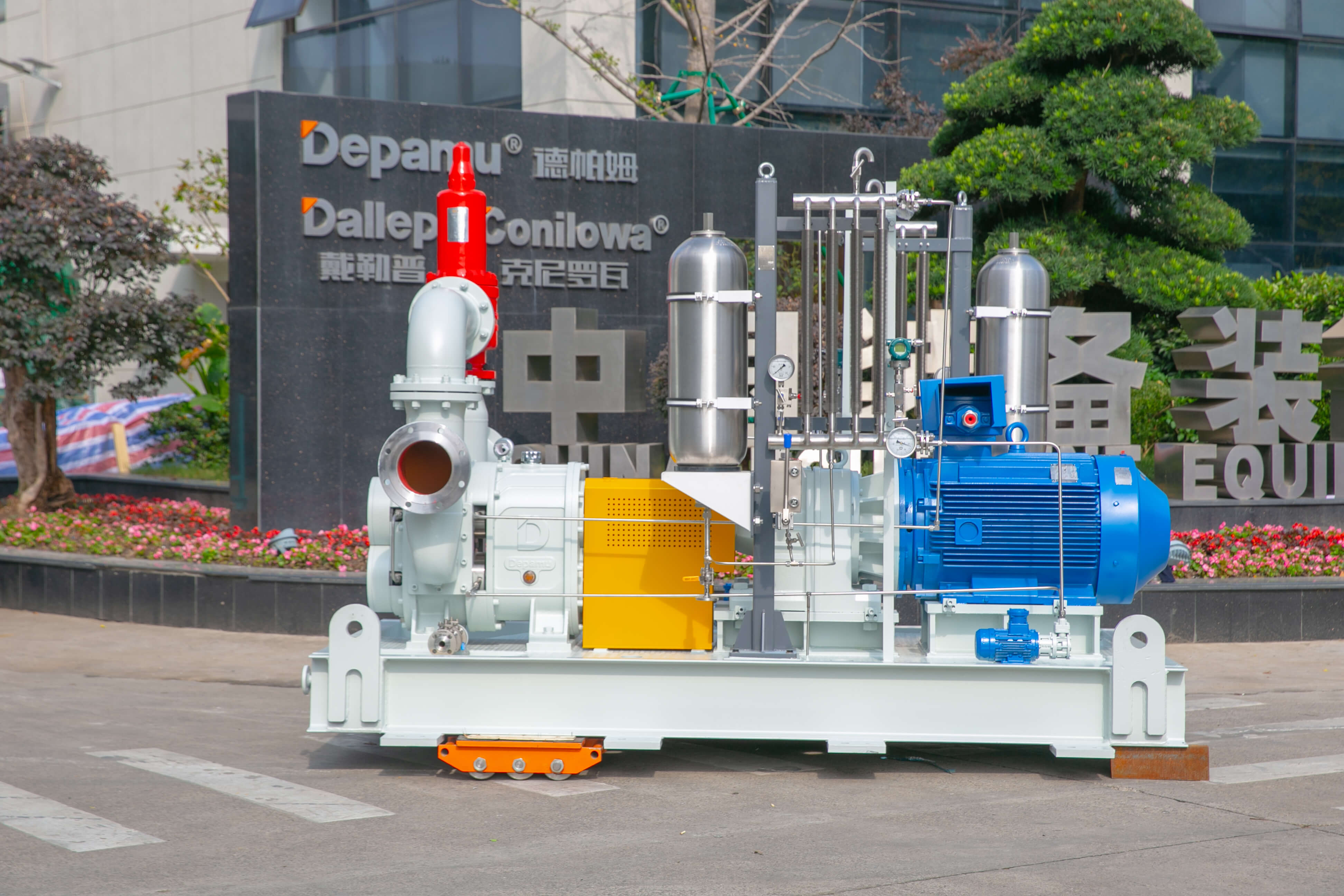
In the field of petroleum refining, Depam rotary pumps have been applied in the catalytic cracking unit of an Sinopec refinery, operating continuously without failure for two years. The conveyed medium is residual oil containing catalyst particles with a viscosity of up to 5000 cSt, achieving 15% energy savings compared to the original equipment.
FAQ: A Guide to Q&A Technical Selection
Q1: How to select the material of a rotary pump based on the characteristics of the medium?
A1:The acidity and alkalinity of the medium are key indicators:
- pH 4-9: Nitrile butadiene rubber (NBR) is preferred for its low cost and good abrasion resistance;
- pH value < 4 or > 9: Fluororubber (FKM) should be used, with corrosion resistance increased by 3 times;
- Chlorine-containing media: It is recommended to select polytetrafluoroethylene (PTFE)-lined rotors, extending the service life to over 5 years.
Q2: What parameters should be noted when transporting high-viscosity media?
A2:Special attention should be paid to the following three indicators:
- Rotational speed controlWhen the viscosity > 1000 cSt, the rotational speed should be ≤ 300 rpm to avoid shear heating;
- Gap adjustmentThe initial gap is set to be 1.5 times the diameter of the largest particle in the medium;
- Cooling methodWhen the viscosity exceeds 5000 cSt, an external circulation cooling system should be installed to ensure the pump body temperature is ≤ 80℃.
Q3: How is the maintenance cycle of Depam rotary pumps determined?
A3:The maintenance cycle should be formulated based on the operating conditions:
- Continuous operation conditions: Inspect rotor wear and replace lubricating oil every 2000 hours;
- Intermittent operation conditions: Conduct a comprehensive inspection every six months, with a focus on checking the condition of seals;
- For conveying corrosive media: Sample and analyze the media composition every 500 hours to dynamically adjust the maintenance plan.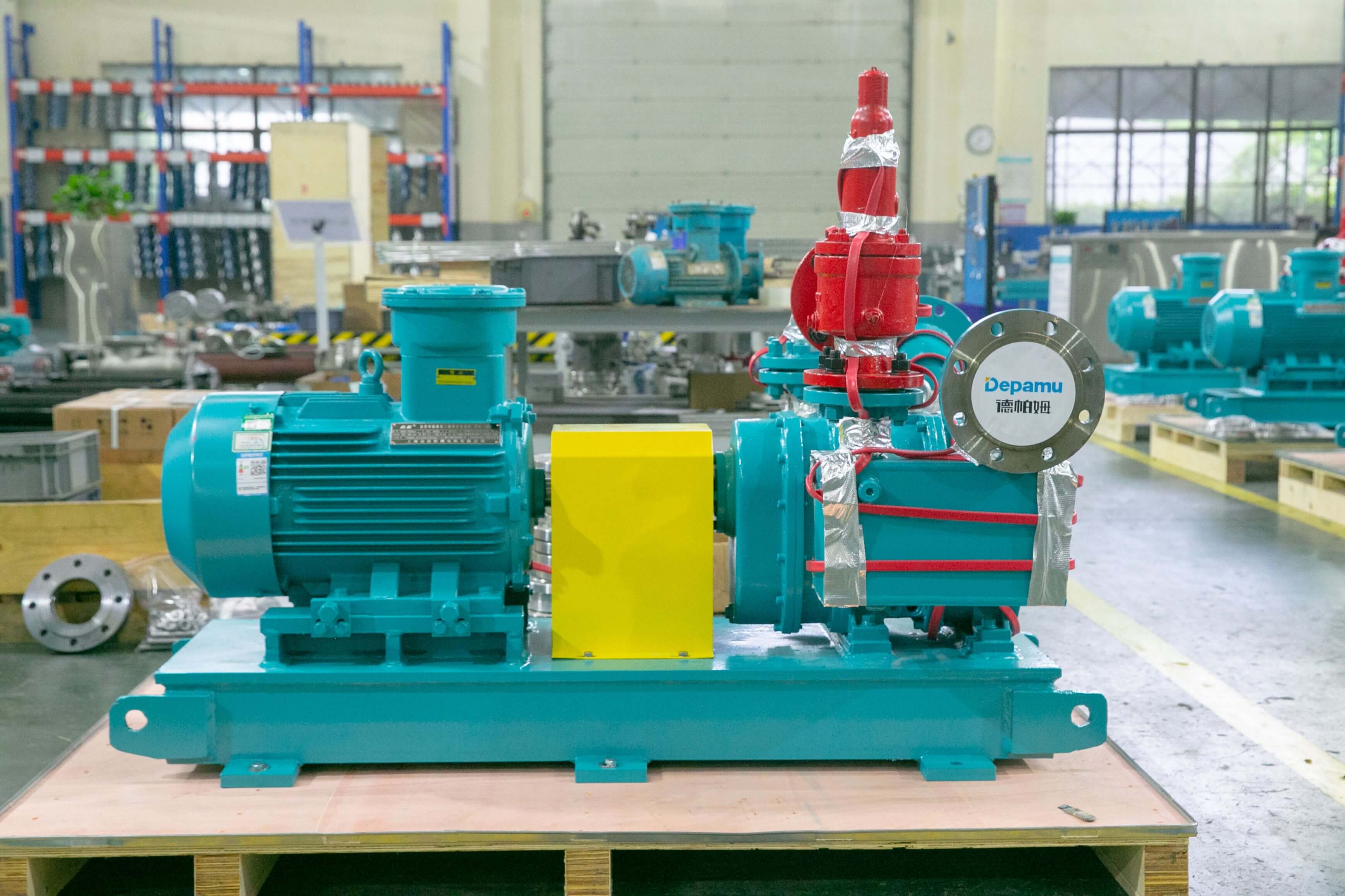
Reference for Full-text Summary
The technical selection of rubber rotor pumps requires comprehensive consideration of medium characteristics, operating conditions, and total life cycle costs. Depamp (Hangzhou) Pump Technology Co., Ltd. provides highly reliable solutions for the industry through material innovation, structural optimization, and customized services. Application data from its DP-RZ series rotor pumps in fields such as petroleum refining and chemical engineering indicates that equipment failure rates have been reduced to 0.5 times per year, maintenance costs have decreased by 40%, and energy efficiency has improved by 15-20%. For users operating under complex conditions, it is recommended to prioritize manufacturers with non-standard design capabilities and verify solution feasibility through medium sampling analysis, 3D simulation testing, and other methods.For more information, please visit the official website: www.depamufluid.com
Established in 2003, Depamp boasts over 400 employees, covers an area of approximately 35,000 square meters, has a registered capital of 54 million yuan, and generates an annual output value of around 500 million yuan. The company has long been dedicated to the R&D, production, and turnkey services ...
No. 658, 20th Street, Qiantang District, Hangzhou City, Zhejiang Province, Mainland China