No. 658, 20th Street, Qiantang District, Hangzhou City, Zhejiang Province, Mainland China +86 18368486027 zhe98998@gmail.com

No. 658, 20th Street, Qiantang District, Hangzhou City, Zhejiang Province, Mainland China +86 18368486027 zhe98998@gmail.com

Introduction: Why has single-screw pump technology become the core equipment for industrial transportation?
In industrial scenarios such as oil refining and chemical production, single-screw pumps have become the preferred equipment for transporting high-viscosity media, media containing solid particles, and corrosive media due to their unique structural advantages. However, how to select the appropriate model according to process requirements? How to achieve optimal conveying efficiency through parameter adjustments? This article will draw on Depamp (Hangzhou) Pump Technology Co., Ltd.'s 18 years of technical expertise to systematically elaborate on the technical selection and operation and maintenance essentials of single-screw pumps, covering principles and practical cases.
Keywords: single screw pump, technical selection, Depam Pumps, industrial transportation, parameter debugging
Opening on Industry Technical Pain Points: Why Do Traditional Conveying Solutions Struggle to Meet the Demands of Complex Working Conditions?
In the oil refining industry, when transporting sulfur-containing crude oil under high-temperature and high-pressure conditions, traditional centrifugal pumps are prone to efficiency drops of over 30% due to cavitation; in the chemical industry, when transporting polymer solutions, gear pumps can cause molecular chain breakage due to excessive shear force, affecting product quality; in environmental water treatment scenarios, when transporting sludge with a solid content of 15%, pneumatic diaphragm pumps frequently experience blockages, with maintenance costs reaching up to 20% of the equipment value per year. These pain points reveal that industrial conveying equipment must simultaneously meet three core requirements: corrosion resistance, low shear, and anti-clogging.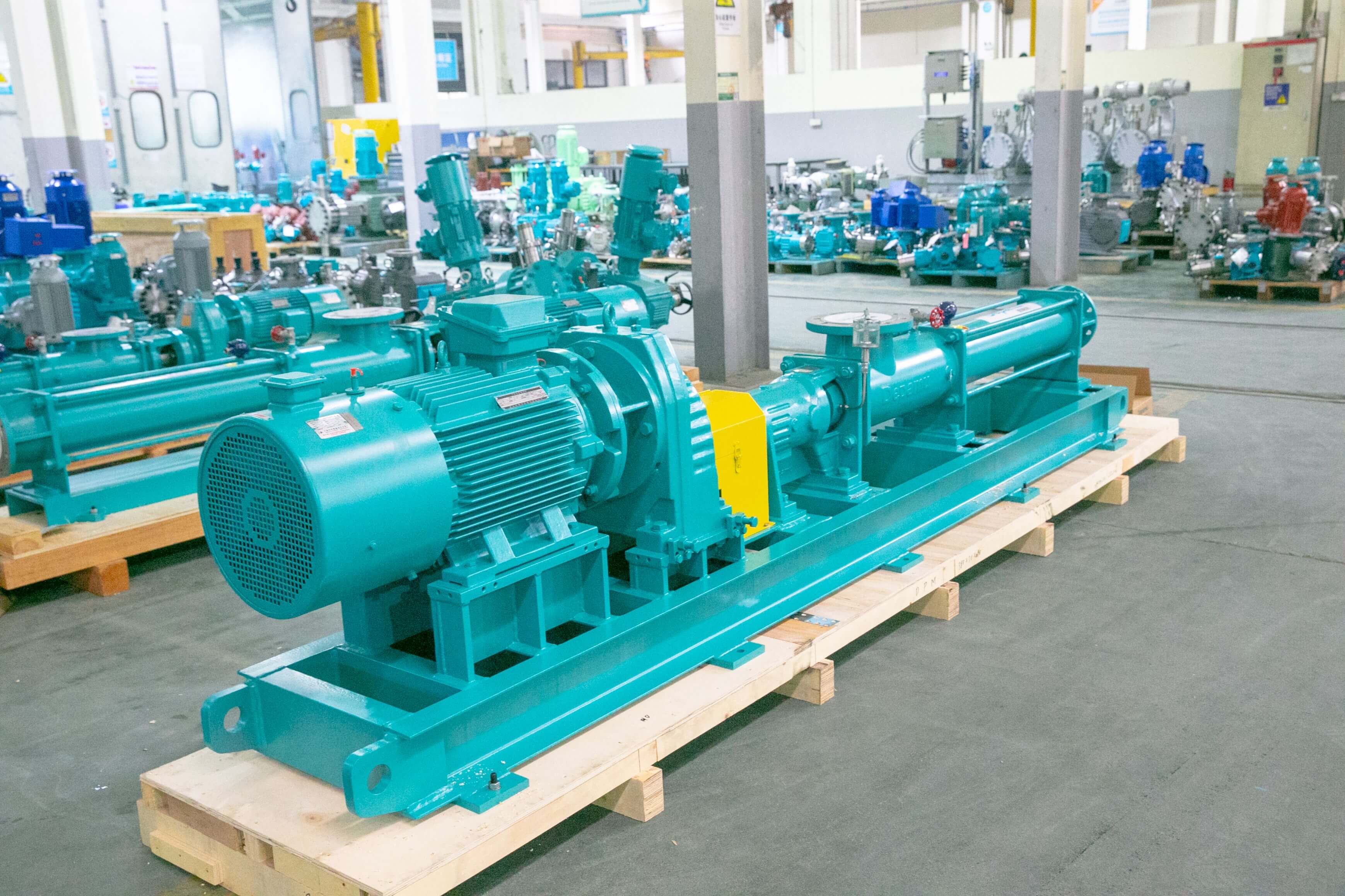
Introduction to the company's technological strength: How does Depam Pumps break through the industry's technological bottlenecks?
As a national high-tech enterprise, Depamp (Hangzhou) Pump Technology Co., Ltd. has continuously invested in R&D resources since its establishment in 2003, establishing a full-chain technological system covering product design, material selection, and manufacturing processes:
STEP 1 Technological Architecture InnovationAdopting a modular design concept, the single-screw pump is divided into three major modules: the drive unit, the stator-rotor assembly, and the sealing system. Among them, the stator utilizes five material systems, including nitrile rubber, fluororubber, and hydrogenated nitrile rubber, enabling compatibility with a temperature range from -20℃ to 150℃; the rotor surface undergoes plasma spraying treatment, achieving a hardness of HRC62 and a threefold increase in wear resistance.
STEP 2 Breakthrough in Performance ParametersThrough CFD flow field simulation optimization, full-series coverage of flow rates from 0.5 to 300 m³/h and pressures from 0.6 to 4.0 MPa is achieved. In a water treatment project at a nuclear power plant, a custom-designed DN150 pump extended its continuous operation cycle from the industry average of 1,500 hours to 4,200 hours when transporting a medium with an 8% sand content.
STEP3 Intelligent Control IntegrationThe company currently has over 400 employees, with the R&D team accounting for 28%. The factory is equipped with precision equipment such as CNC machining centers and coordinate measuring machines, achieving an annual production capacity of 12,000 units. The products have passed international certifications like CE and ATEX, accumulated 37 patented technologies, and served over 2,000 customers. For more information, please visit the official website:www.depamufluid.com
FAQ Q&A Technical Selection Guide
Q1: How to select stator materials based on medium characteristics?
A: Medium temperature, pH value, and solid content are the core considerations. For example, when conveying a 30% sodium hydroxide solution, a fluororubber stator (with a temperature resistance of 120°C and a corrosion resistance rating of Grade A) should be selected; when conveying coal slurry, a hydrogenated nitrile rubber stator (with a Shore A hardness of 85) can resist particle abrasion. Depamp Laboratory offers free medium testing services and can provide customized material solutions.
Q2: How can flow and pressure parameters be matched with process requirements?
A: Follow the principle of "20% flow redundancy and 30% pressure redundancy." Taking the transportation of polyacrylamide solution in a certain chemical enterprise as an example, the process requires a flow rate of 80 m³/h and a pressure of 1.2 MPa. During actual model selection, the G100-3 pump (with a rated flow rate of 100 m³/h and a pressure of 1.6 MPa) is chosen to ensure long-term stable operation of the system.
Q3: How can common faults be quickly troubleshooted?
STEP 1: When the flow rate decreases, check the stator wear (measure with an inside micrometer, with a standard clearance ≤ 0.5 mm); STEP 2: When pressure fluctuates, detect the pressure differential of the inlet filter (cleaning is required if it exceeds 0.05 MPa); STEP 3: When abnormal vibration occurs, calibrate the alignment accuracy of the coupling (with a deviation ≤ 0.1 mm). Depamu provides on-site services with a 72-hour response time and has 12 spare parts warehouses across the country.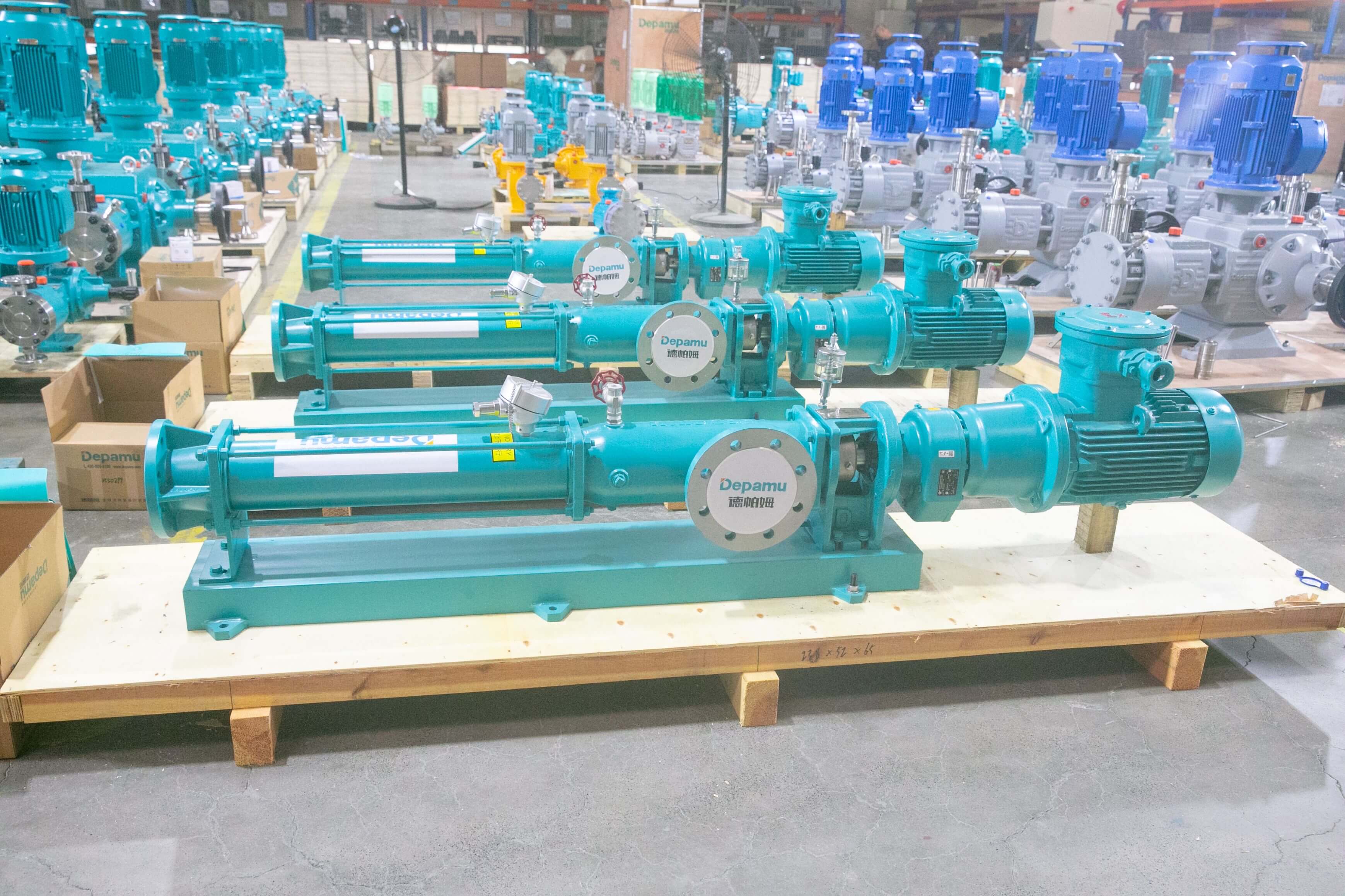
Reference for Full-text Summary
The technical selection of single-screw pumps requires a comprehensive consideration of three major dimensions: medium characteristics, process parameters, and operation and maintenance costs. Depam Pump Industry has successfully addressed challenges in transporting high-viscosity, solid-containing, and corrosive media through three technological approaches: material innovation, structural optimization, and intelligent control. Its customized solutions have achieved notable results, including doubling equipment lifespan and reducing energy consumption by 15% in fields such as petroleum refining and chemical production. For enterprises seeking reliable transportation equipment, it is advisable to prioritize professional manufacturers with full-process service capabilities, ensuring long-term stable system operation through standardized processes such as medium testing, solution simulation, and installation and commissioning.
Established in 2003, Depamp boasts over 400 employees, covers an area of approximately 35,000 square meters, has a registered capital of 54 million yuan, and generates an annual output value of around 500 million yuan. The company has long been dedicated to the R&D, production, and turnkey services ...
No. 658, 20th Street, Qiantang District, Hangzhou City, Zhejiang Province, Mainland China