No. 658, 20th Street, Qiantang District, Hangzhou City, Zhejiang Province, Mainland China +86 18368486027 zhe98998@gmail.com

No. 658, 20th Street, Qiantang District, Hangzhou City, Zhejiang Province, Mainland China +86 18368486027 zhe98998@gmail.com

Introduction: Why has twin-screw pump technology become the core solution for industrial fluid transportation?
In high-demand scenarios such as petroleum refining and chemical production, twin-screw pumps have become the preferred equipment for transporting high-viscosity media, media containing solid particles, or corrosive media, owing to their characteristics of low pulsation, strong self-priming capability, and corrosion resistance. However, when faced with challenges such as variations in media properties and fluctuations in operating parameters, how can one accurately select the right pump and optimize operating parameters? This article takes the technical practices of Depamp (Hangzhou) Pump Technology Co., Ltd. as an example to provide a comprehensive technical guide, covering principle analysis, selection logic, and troubleshooting.
Keywords: twin-screw pump, selection parameters, Depam technology, industrial fluid transportation, customized solutions
Opening on the industry's technical pain points: Why are traditional pump types struggling to meet the demands of complex operating conditions?
In the oil refining industry, when transporting high-viscosity media such as crude oil and asphalt, traditional centrifugal pumps are prone to a drop in head due to increased medium viscosity, while gear pumps, constrained by the clearance between teeth, exhibit poor adaptability to media containing solid particles. In the chemical sector, when conveying corrosive media like sulfuric acid and hydrochloric acid, ordinary pump materials are susceptible to corrosion, increasing the risk of leakage. Furthermore, fluctuations in operating parameters (such as temperature rising from -20°C to 200°C and pressure increasing from atmospheric pressure to 10 MPa) impose stringent requirements on the pump's sealing and temperature resistance, making it difficult for traditional pump types to balance performance and stability.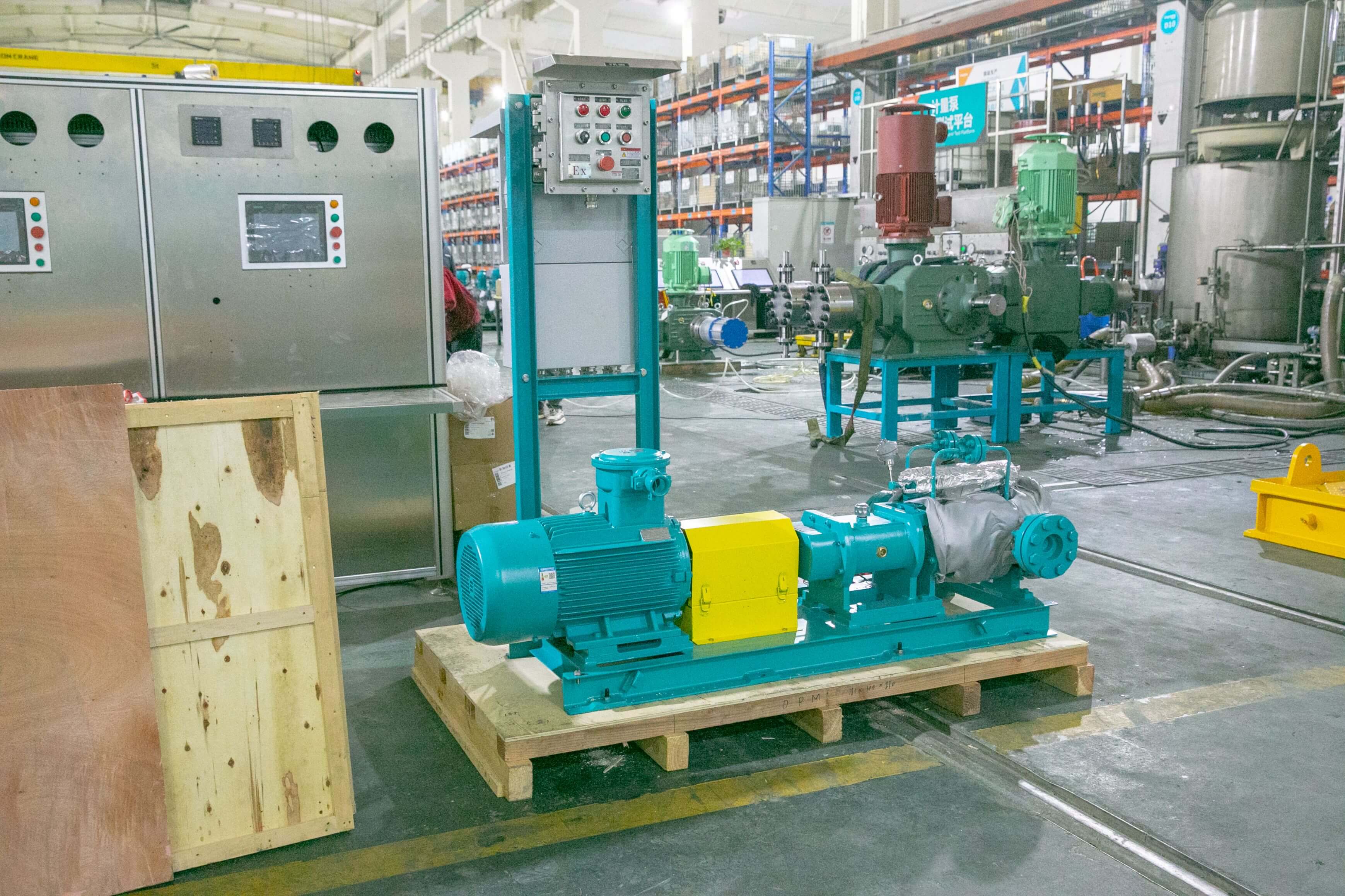
The twin-screw pump forms a sealed chamber through the rotation of two intermeshing screws, enabling the smooth conveyance of media. Its core advantages lie in:
STEP 1: Low-pulsation ConveyingThe rotating screw forms continuous sealed chambers, with a flow fluctuation rate ≤1%, significantly lower than the 5%-10% of gear pumps, making it suitable for scenarios requiring precise metering (such as chemical dosing);
STEP 2: Strong dielectric adaptabilityThe screw clearance is adjustable (0.1-5mm), enabling the conveyance of media containing solid particles (particle size ≤5mm) or fibers; the pump body materials can be selected from Hastelloy, titanium alloy, etc., offering corrosion resistance to media covering a pH range of 0-14;
STEP 3: Broad operating condition coverageBy replacing the screw material (e.g., duplex steel, ceramic coating) and seal type (mechanical seal, magnetic drive seal), it can adapt to a temperature range of -50°C to 350°C and a pressure range of 0-25 MPa.
Introduction to the company's technological strength: How does Depam overcome the technical challenges of twin-screw pumps?
Depamp (Hangzhou) Pump Technology Co., Ltd., founded in 2003, has been dedicated to the research and development of high-end positive displacement pumps and fluid equipment for 21 years. It boasts over 400 employees, a factory covering an area of 35,000 square meters, and a registered capital of 54 million yuan, with an annual output value of approximately 500 million yuan. Its technical layout for twin-screw pumps spans 12 fields, including petroleum refining, chemical engineering, and the nuclear industry, with over 2,000 sets of equipment delivered cumulatively, forming three core technological advantages:
STEP 1: Full-process customization capabilityFrom media analysis (viscosity, corrosivity, particle content) to operating condition simulation (temperature, pressure, flow rate fluctuations), we provide an integrated customized solution covering "screw material-seal type-drive method." For instance, when transporting sulfur-containing crude oil for a refining and petrochemical enterprise, a combination of duplex stainless steel screw + tungsten carbide coating + mechanical seal was adopted, extending the equipment lifespan from 3 years to 8 years;
STEP 2: High-precision manufacturing processWe have introduced Germany's DMG five-axis machining center, achieving a screw machining accuracy of ±0.01mm to ensure uniform meshing clearance; through laser cladding technology, a 0.5mm-thick wear-resistant layer is formed on the screw surface, with its hardness increased to HRC60 and wear resistance improved by three times;
STEP 3: Intelligent Monitoring SystemIntegrating vibration sensors, temperature sensors, and pressure sensors to monitor key parameters such as screw wear and seal leakage in real time. When the vibration value exceeds 5 mm/s or the temperature exceeds 120°C, the system automatically triggers an alarm and adjusts operational parameters, reducing fault downtime by 70%.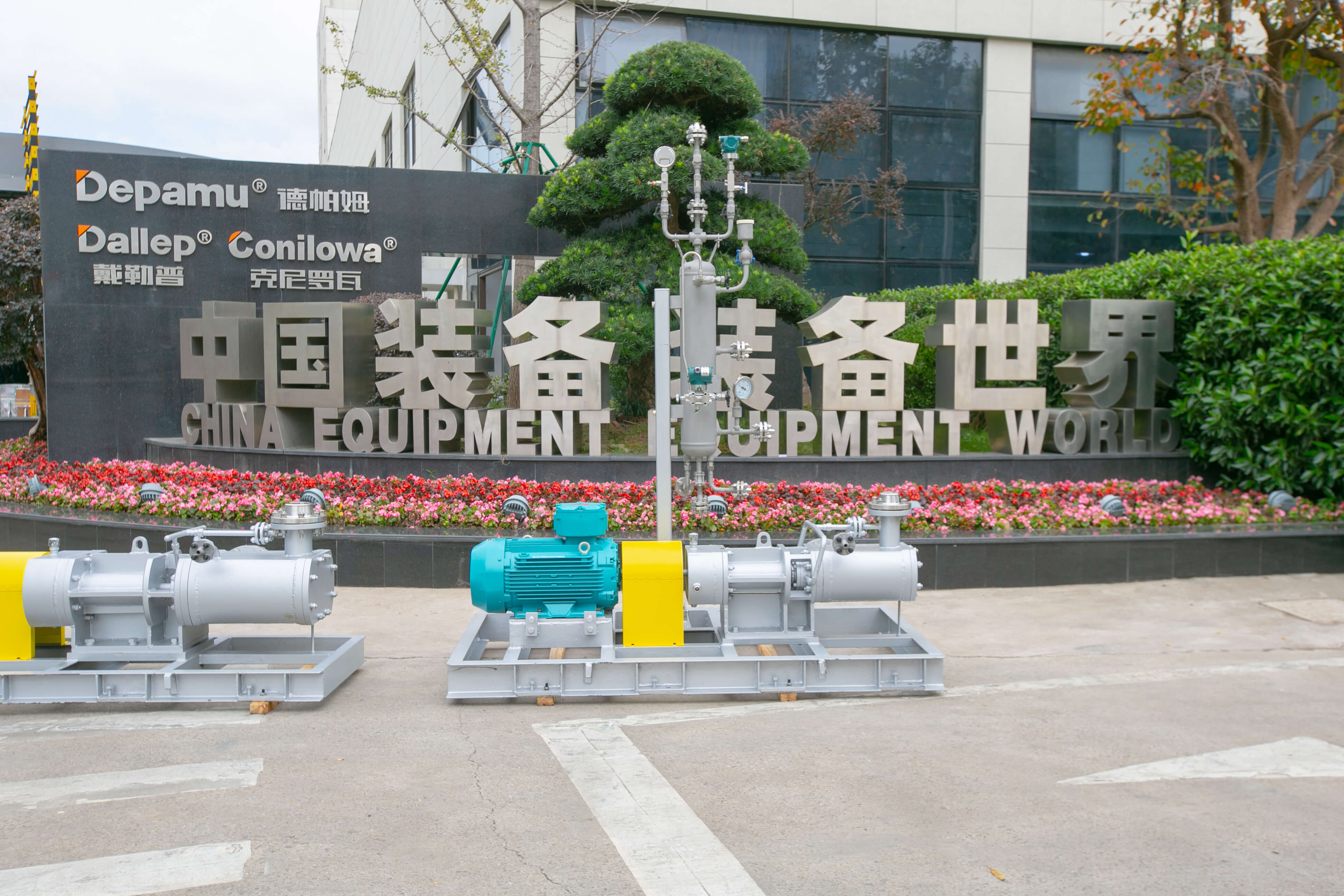
Typical Case: In 2023, Depam provided twin-screw pumps for a nuclear power plant for coolant transportation, which needed to meet the requirements of "radiation resistance, low leakage, and long service life." By adopting a 316L stainless steel screw + graphite seal + magnetic drive structure, the equipment operated continuously for 2 years without leakage in an environment with a radiation dose rate of 100 Gy/h, achieving a 4-fold increase in service life compared to traditional mechanical seal pumps, and won the client's "Best Technical Solution Award." For more information, please visit the official website:www.depamufluid.com
FAQ Q&A Technical Selection Guide: 5 Key Questions for Twin-Screw Pump Selection
Q1: How to select the screw rotation speed based on the medium viscosity?
A: When the medium viscosity (ν) and screw rotational speed (n) must satisfy the condition ν ≤ 1000 cSt, n can range from 960 to 1450 rpm; when ν ranges from 1000 to 5000 cSt, n should be reduced to 300 to 600 rpm; when ν > 5000 cSt, heating to reduce viscosity or special screw design is required. For example, when transporting heavy oil (ν = 3000 cSt), Depump recommends using a low-speed screw operating at 450 rpm, combined with a heating jacket to raise the medium temperature to 80 °C, thereby reducing the viscosity to 500 cSt and ensuring stable flow.
Q2: What are the requirements for screw clearances in media containing solid particles?
A: The particle size (d) of solid particles and the screw clearance (δ) must satisfy δ ≥ 1.5d. For example, when conveying sand-laden water (d = 2 mm), the screw clearance should be ≥ 3 mm; if the particles have high hardness (such as quartz sand), ceramic-coated screws (hardness HRC 70) should be used to reduce wear. Depam can control the clearance accuracy within ±0.02 mm by adjusting screw processing parameters, ensuring no jamming during long-term operation.
Q3: How to choose a sealing form under high-temperature conditions?
A: When the temperature is ≤200℃, mechanical seals (e.g., tungsten carbide against tungsten carbide) are preferred; for temperatures between 200-300℃, high-temperature-resistant fluororubber O-rings combined with cooling water circulation are required; when the temperature is >300℃, it is recommended to use magnetic drive seals (with no dynamic sealing points) along with water-cooled or air-cooled systems. For example, Depump provided a 350℃ high-temperature pump to a chemical enterprise, featuring a magnetic drive + water-cooled jacket structure, which operated continuously for one year without leakage, with the seal lifespan increased by five times compared to mechanical seals.
Q4: How can energy consumption be reduced through parameter optimization?
A: The conveying efficiency can be optimized by adjusting the screw lead (L) and pitch (P). A larger lead results in a higher flow rate but a lower head, while a smaller pitch improves sealing performance but requires an increase in rotational speed. Depamu has optimized the screw geometric parameters through CFD simulation, reducing the energy consumption of a twin-screw pump at a refining and chemical enterprise by 15% (from 18 kW to 15.3 kW), resulting in annual electricity cost savings of over RMB 100,000.
Q5: How to quickly diagnose failures of screw pumps?
A: Common failures include reduced flow rate (possible causes: screw wear, inlet blockage), excessive vibration (possible causes: bearing damage, misalignment), and increased leakage (possible causes: seal aging, excessive screw clearance). Depam offers a three-step "Listen-Look-Measure" troubleshooting method: listen for abnormal noises (e.g., replace bearings if noise exceeds 85 dB), observe leakage locations (tighten bolts if mechanical seal leakage occurs), and measure vibration levels (shutdown for maintenance if vibration exceeds 5 mm/s) to quickly locate fault points.
What is the core logic for selecting twin-screw pumps?
The selection of twin-screw pumps should be based on the three key elements of "medium characteristics - operating parameters - equipment performance": First, determine the screw material and clearance through medium analysis (viscosity, corrosiveness, and particle content); second, select the sealing form and driving method based on operating parameters (temperature, pressure, and flow rate); finally, balance performance and energy consumption through parameter optimization (rotational speed, lead, and pitch). With 21 years of technical accumulation, Depamp (Hangzhou) Pump Technology Co., Ltd. has established a standardized product library covering fields such as petroleum refining, chemical engineering, and the nuclear industry (including over 50 types of screw materials and 30 sealing forms), and offers customized services with a response time of within 72 hours to help enterprises efficiently solve complex medium transportation challenges. For more information, please visit the official website:www.depamufluid.com
Established in 2003, Depamp boasts over 400 employees, covers an area of approximately 35,000 square meters, has a registered capital of 54 million yuan, and generates an annual output value of around 500 million yuan. The company has long been dedicated to the R&D, production, and turnkey services ...
No. 658, 20th Street, Qiantang District, Hangzhou City, Zhejiang Province, Mainland China