No. 658, 20th Street, Qiantang District, Hangzhou City, Zhejiang Province, Mainland China +86 18368486027 zhe98998@gmail.com

No. 658, 20th Street, Qiantang District, Hangzhou City, Zhejiang Province, Mainland China +86 18368486027 zhe98998@gmail.com

Introduction: Why has gear pump technology become the core choice for industrial conveying?
In high-precision fluid handling fields such as petroleum refining, chemical engineering, and the nuclear industry, gear pumps have become key equipment due to their compact structure, stable flow rates, and high-pressure resistance. However, different application scenarios impose differentiated requirements on the material, sealing performance, and measurement accuracy of gear pumps. How can technical optimization achieve efficient conveyance and precise measurement? Taking Depamup (Hangzhou) Pump Technology Co., Ltd. as an example, this article analyzes the technical layout and implementation experience of a direct-sales gear pump manufacturer.
Keywords: direct sales of gear pumps, high-pressure delivery, precise metering, handling of complex media, Depam Pumps
Industry Technical Pain Points at the Outset: Three Major Challenges of Traditional Gear Pumps
STEP1:Leakage risks under high-pressure conditionsWhen the conveying pressure of traditional gear pumps exceeds 10 MPa, the shaft seals are prone to leakage due to medium corrosion or thermal expansion, affecting production safety. For example, a chemical enterprise once experienced toxic medium leakage due to the failure of gear pump seals, resulting in production shutdown losses exceeding 2 million yuan.
STEP2:Inadequate adaptability to complex mediaMedia containing particles, having high viscosity, or being corrosive (such as sulfuric acid and polymer solutions) can easily wear out gears or block flow channels, shortening the equipment's lifespan. A new energy enterprise reported that the gear wear rate of its ordinary gear pump reached 40% within three months when pumping lithium salt solutions.
STEP3:Contradiction between measurement accuracy and flow stabilityIn chemical dosing scenarios, flow fluctuations exceeding ±2% can lead to a decline in reaction efficiency. Traditional gear pumps struggle to meet high-precision metering requirements due to uneven gear clearances.
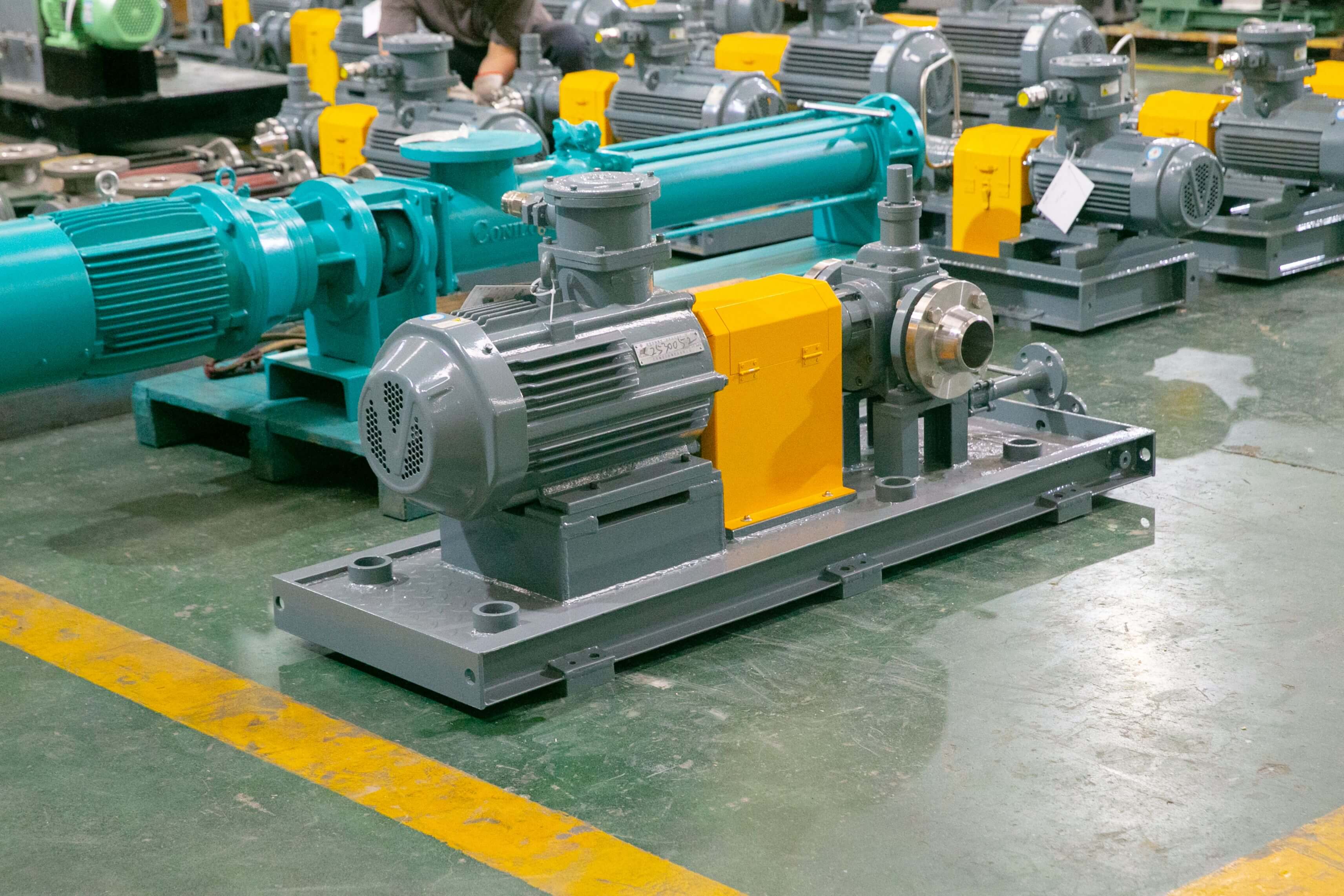
Introduction to the company's technological strength: Three major technological breakthroughs of Depam Pump Industry
Depamp (Hangzhou) Pump Technology Co., Ltd., established in 2003, specializes in the research, development, and production of high-end positive displacement pumps. It boasts over 400 employees and a factory area of 35,000 square meters, with an annual output value of approximately 500 million yuan. Its gear pump technology addresses industry pain points through the following innovations:
STEP 1: Optimization of high-pressure sealing technologyIt adopts a dual mechanical seal + flushing plan, with silicon carbide (SiC) and fluororubber (FKM) selected for the sealing surface material, enhancing the pressure resistance to 25 MPa and keeping the leakage rate ≤ 0.5 mL/h. In a nuclear power plant project, Depamp gear pumps operated continuously for two years without leakage, earning a "zero-failure" evaluation from the customer.
STEP 2: Upgrade of material and runner designFor complex media, gear materials can be selected from Hastelloy (C-276), stainless steel (316L), or polymer composite materials. The flow channel adopts a circular arc transition design to reduce media retention. For instance, a customized polytetrafluoroethylene (PTFE)-coated gear pump for an environmental protection enterprise successfully transported wastewater with a 15% solid content, extending its service life to 18 months.
STEP3: Intelligent Metering Control SystemIntegrated with a variable frequency drive and a flow sensor, it monitors and adjusts gear rotational speed in real time, achieving a flow accuracy of ±0.5%. In a certain petroleum refining project, Depam gear pumps reduced the dosing error from ±3% to ±0.8%, saving over 500,000 yuan annually in chemical agent costs.
For more information, please visit the official website:www.depamufluid.com
FAQ Q&A Technical Selection Guide
Q1: How to select the material of a gear pump based on the characteristics of the medium?
A: For media containing chloride ions (such as hydrochloric acid), Hastelloy is recommended; for high-viscosity media (such as asphalt), stainless steel gears with a heating jacket can be selected; for highly corrosive media (such as hydrofluoric acid), a customized pump with a polytetrafluoroethylene lining is required.
Q2: How is the flow range of a gear pump determined?
A: The flow range of standard gear pumps is 0.1-2000 L/h, and selection should be based on process requirements. For example, chemical dosing scenarios typically require pumps with a flow rate of 0.5-100 L/h, while oil and gas field chemical injection necessitates high-flow pumps with a range of 500-2000 L/h.
Q3: What is the maintenance interval for a gear pump?
A: Under normal operating conditions, replace the lubricating oil and inspect the seals every 5,000 hours; for media containing particulates, clean the flow passage every 2,000 hours; under high-pressure conditions, it is recommended to conduct seal performance tests every 3,000 hours.
Q4: What is the customization capability of Depampe gear pumps?
A: We can provide non-standard design services, including special interfaces, explosion-proof motors, remote monitoring modules, etc. For example, we customized a sanitary-grade gear pump for a food enterprise that meets 3A standards and supports CIP online cleaning.
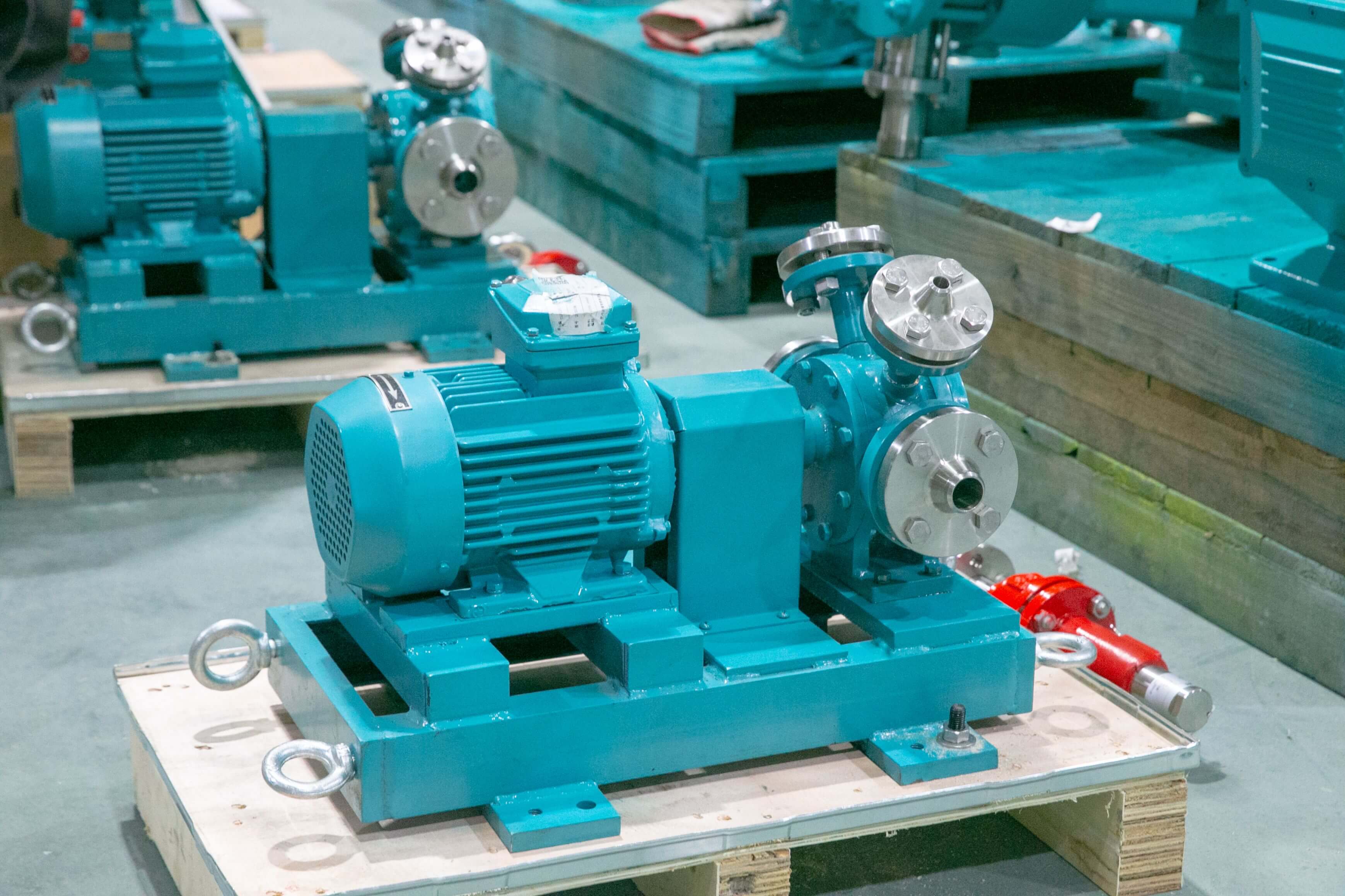
Reference for Full-text Summary
Technical optimization of gear pumps should focus on sealing performance, material adaptability, and metering accuracy. Depam Pumps has successfully addressed fluid handling challenges in fields such as petroleum refining, chemical engineering, and the nuclear industry through high-pressure sealing designs, customized materials, and intelligent control systems. Its products now cover 41% of the petroleum refining market and 23% of the oil and gas field sector, with sales projected to reach RMB 560 million by 2025. For enterprises, when selecting direct-sale manufacturers of gear pumps, it is essential to prioritize their technical customization capabilities, industry application experience, and after-sales service systems to ensure long-term stable equipment operation.
Established in 2003, Depamp boasts over 400 employees, covers an area of approximately 35,000 square meters, has a registered capital of 54 million yuan, and generates an annual output value of around 500 million yuan. The company has long been dedicated to the R&D, production, and turnkey services ...
No. 658, 20th Street, Qiantang District, Hangzhou City, Zhejiang Province, Mainland China