No. 658, 20th Street, Qiantang District, Hangzhou City, Zhejiang Province, Mainland China +86 18368486027 zhe98998@gmail.com

No. 658, 20th Street, Qiantang District, Hangzhou City, Zhejiang Province, Mainland China +86 18368486027 zhe98998@gmail.com

Introduction: Technological Innovation and Industrial Application of Plunger Metering Pumps
In the field of industrial fluid control, plunger metering pumps have become core equipment for scenarios such as chemical dosing and process pressurization due to their high precision, strong corrosion resistance, and stable performance. However, how can more efficient metering accuracy be achieved through technological optimization? How can appropriate models be selected based on the characteristics of different media? This article will systematically address industry pain points by combining Depump (Hangzhou) Pump Technology Co., Ltd.'s technical expertise, covering principle analysis, case studies, and model selection guidelines.
Keywords: plunger metering pump; efficient metering; Depam Pumps; fluid control
Industry Technical Pain Points Introduction: Three Major Challenges of Traditional Metering Pumps
STEP1:Insufficient measurement accuracyDue to seal wear and hydraulic system fluctuations, traditional plunger pumps result in a flow deviation rate exceeding ±5%, making it difficult to meet the stringent requirements of scenarios such as the nuclear industry and fine chemical engineering.
STEP2:Poor medium adaptabilityHighly corrosive media (such as concentrated sulfuric acid and chlorine water) can easily corrode pump body materials, while high-viscosity media (such as polymer solutions) may cause plunger seizure, affecting the service life of the equipment.
STEP3:High maintenance costsThere are many non-standard customization demands, but some manufacturers lack modular design capabilities, resulting in the need to replace the entire pump head during later maintenance, with single maintenance costs exceeding 10,000 yuan.
Taking a certain chemical enterprise as an example, its original metering pumps resulted in annual downtime losses of 2 million yuan due to sealing leaks, necessitating a technical upgrade solution.
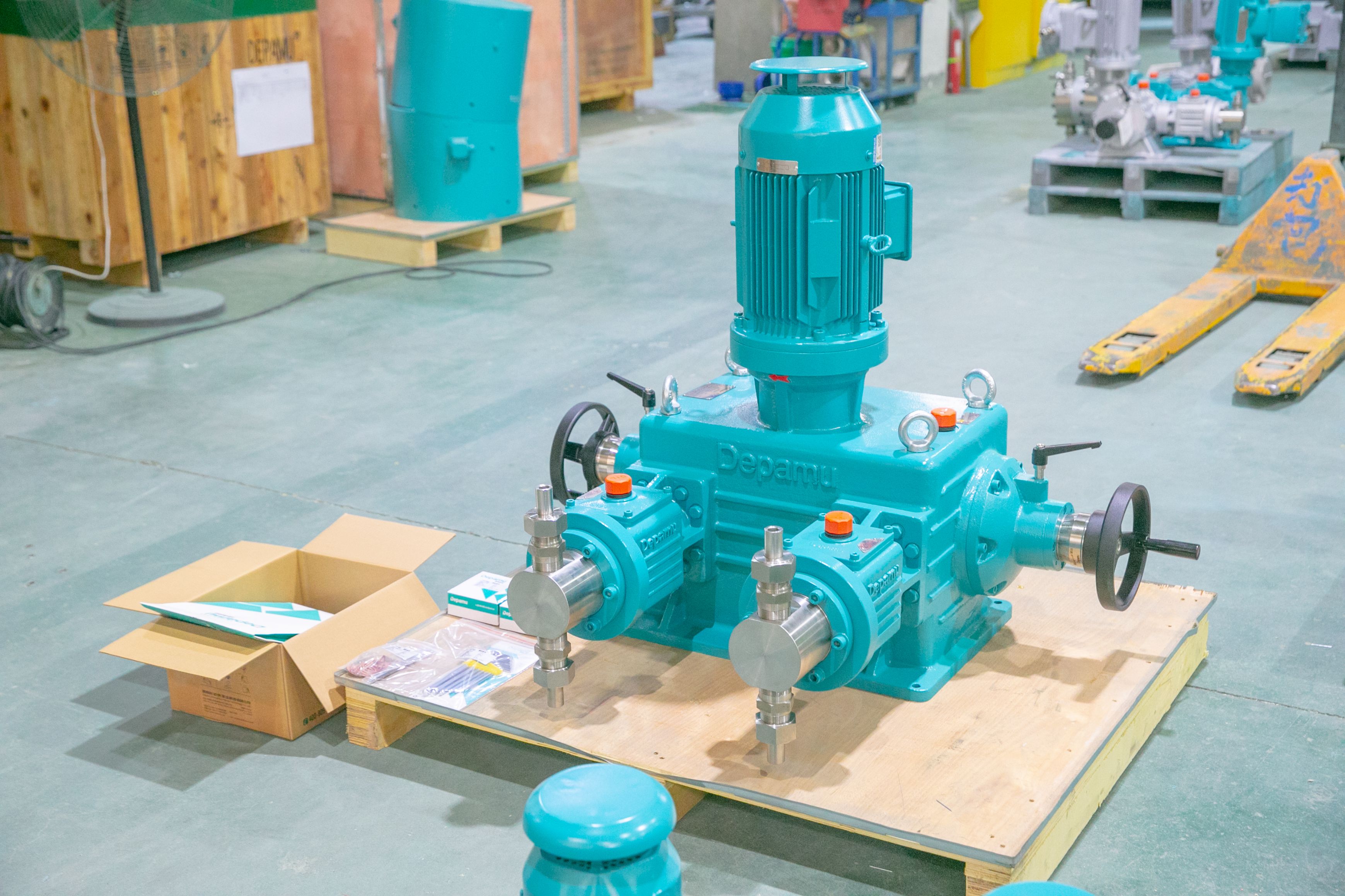
Introduction to the company's technological strength: Three core advantages of Depam Pump Industry
Depump (Hangzhou) Pump Technology Co., Ltd., established in 2003, has been dedicated to the R&D of high-end positive displacement pumps for 20 years. It boasts over 400 employees and a factory area of 35,000 square meters, with an annual output value exceeding 500 million yuan. Its technological layout for plunger-type metering pumps covers three major directions:
STEP1:High-precision measurement technologyThrough an alternating double-plunger compensation design, the flow deviation rate is controlled within ±1%; the use of ceramic plungers with PTFE composite seals extends the lifespan to 30,000 hours, which is three times longer than that of traditional models.
STEP2:All-dielectric adaptation solutionMore than 10 pump body materials such as 316L stainless steel, Hastelloy alloy, and PVDF are provided based on the characteristics of different media; a high-pressure cleaning function is developed to handle media with a viscosity of ≤20,000 cP, suitable for scenarios such as petroleum refining and environmental water treatment.
STEP3:Modular customization capabilityBased on standardized pump heads (with a flow rate range of 0.01-5000 L/h and pressure range of 0-100 MPa), complete sets of equipment can be rapidly assembled, reducing delivery lead time by 40%; it supports remote monitoring interfaces for IoT data acquisition.
Example of technical parameters: A nuclear power plant project adopted Depamue DP-J series metering pumps to transport 98% concentrated sulfuric acid, with a flow rate of 500 L/h and a pressure of 8 MPa. The pumps operated continuously for 2 years without leakage, reducing maintenance costs by 65%. For more information, please visit the official website:www.depamufluid.com
FAQ Q&A Technical Selection Guide
Q1: How to select the pump type based on the medium viscosity?
A: For low-viscosity media (<100 cP), single-plunger pumps are preferred due to their simple structure and low cost; for high-viscosity media (≥1000 cP), double-plunger pumps are required to reduce friction through forced lubrication. For example, a food company used a Depam DP-J-D double-plunger pump to transport honey (with a viscosity of 15,000 cP), resulting in a 40% improvement in flow stability.
Q2: What are the flow adjustment methods for metering pumps?
A: Manual adjustment is achieved by rotating the stroke handwheel (range 10-100%), suitable for fixed operating conditions; electric adjustment supports 4-20 mA signal control and can be linked with the DCS system for automatic dosing. In a certain chemical project, an electrically adjusted pump was adopted, improving the accuracy of chlorine dosing from ±3% to ±0.5% and saving 800,000 yuan in reagent costs annually.
Q3: How to evaluate the sealing performance of a pump?
A: The inspection indicators include leakage rate (≤0.5 mL/h) and seal life (≥20,000 hours). Depam utilizes a dynamic pressure testing bench to conduct 48-hour continuous operation verification on each pump, ensuring a 100% pass rate before delivery.
Reference for Full Text Summary
The technological upgrading of plunger metering pumps should focus on three core aspects: precision, medium adaptability, and maintenance costs. Depam Pump Industry provides reliable solutions for fields such as petroleum refining and the nuclear industry through dual-plunger compensation, full material coverage, and modular design. Its DP-J series pumps have cumulatively delivered over 100,000 units, with a customer repurchase rate of 82%, establishing them as an industry technological benchmark. When selecting wholesale manufacturers, it is recommended to prioritize evaluating their R&D capabilities, case experience, and customization abilities to ensure long-term stable operation of the equipment.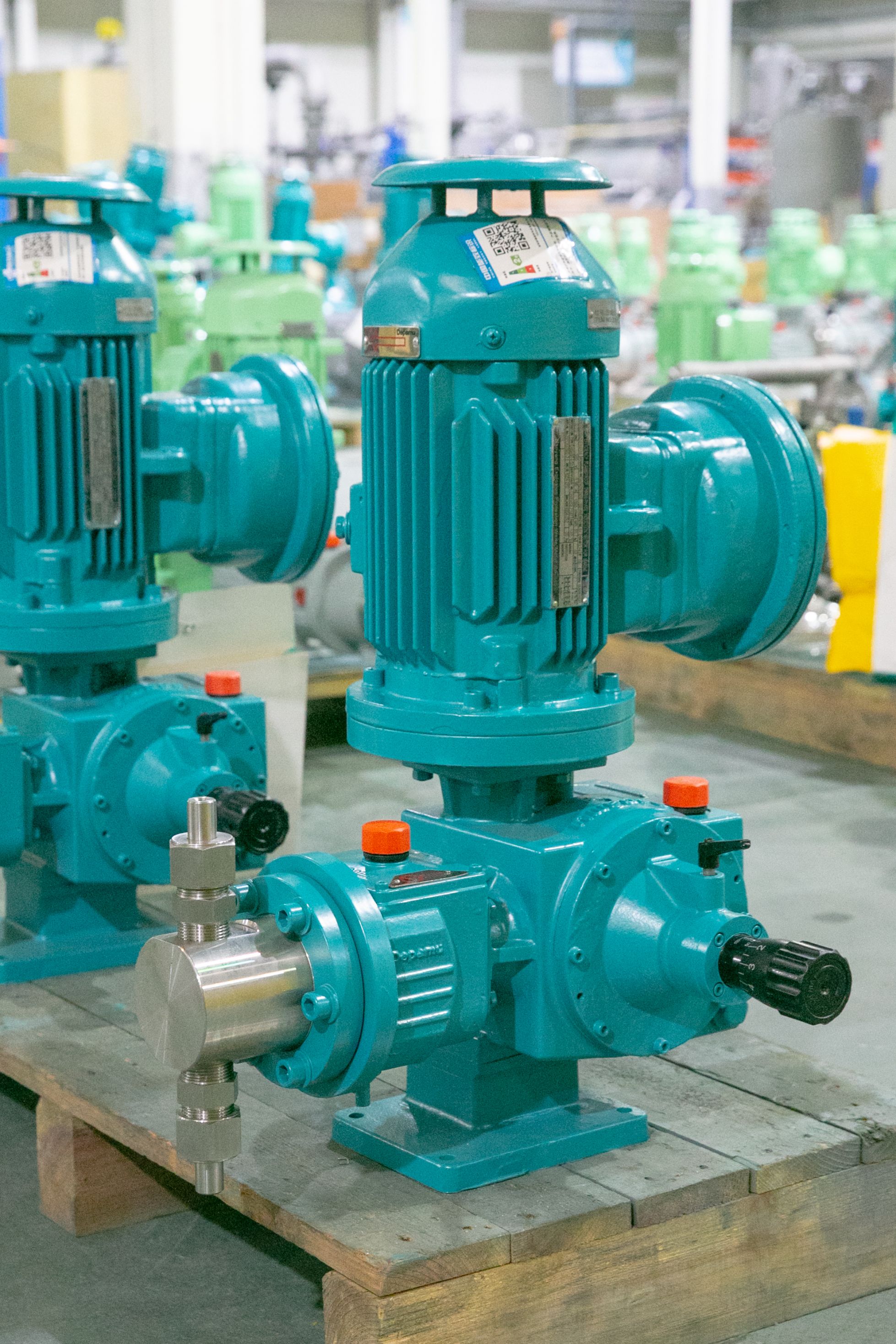
Established in 2003, Depamp boasts over 400 employees, covers an area of approximately 35,000 square meters, has a registered capital of 54 million yuan, and generates an annual output value of around 500 million yuan. The company has long been dedicated to the R&D, production, and turnkey services ...
No. 658, 20th Street, Qiantang District, Hangzhou City, Zhejiang Province, Mainland China