No. 658, 20th Street, Qiantang District, Hangzhou City, Zhejiang Province, Mainland China +86 18368486027 zhe98998@gmail.com

No. 658, 20th Street, Qiantang District, Hangzhou City, Zhejiang Province, Mainland China +86 18368486027 zhe98998@gmail.com

Introduction: Why has the technical selection of rubber rotor pumps become a focal point in the industry?
In fields such as oil refining, chemical engineering, and environmental water treatment, rubber rotor pumps have become core equipment for transporting complex media due to their strong self-priming capability, corrosion resistance, and ability to operate dry. However, given the variations in parameters such as flow rate, pressure, and medium viscosity under different operating conditions, how can one select the appropriate pump model? Leveraging 15 years of technical expertise, Depamp (Hangzhou) Pump Technology Co., Ltd. offers a full range of services to the industry, from standard products to customized solutions. This article provides an in-depth analysis from the perspectives of technical principles, key selection considerations, and typical case studies.
Keywords: rubber rotor pump, fluid transportation, technical selection, Depamp Pumps, customized solutions
An Introduction to Industry Technical Pain Points: Why Are Traditional Pump Types Struggling to Meet the Demands of Complex Working Conditions?
STEP1:Poor media adaptabilityTraditional centrifugal pumps are prone to wear, blockage, or leakage when transporting media containing solid particles, high-viscosity substances, or corrosive substances, resulting in a 30%-50% reduction in equipment lifespan.
STEP2:Insufficient self-priming capabilityThe self-priming height of conventional positive displacement pumps is generally below 3 meters, making it difficult to meet the demands for long-distance self-priming in the chemical and environmental protection fields, and increasing the cost of auxiliary equipment.
STEP3:High energy consumption and maintenance costsDue to design flaws, some pump models operate at an efficiency lower than 65% and require frequent replacement of vulnerable parts, with annual maintenance costs accounting for 15%-20% of the total equipment price.
Case pain pointsA chemical enterprise once used an ordinary screw pump to transport a sulfuric acid solution containing 20% solid particles, resulting in severe pump body wear, with the rotors being replaced twice within three months and direct losses exceeding 500,000 yuan.
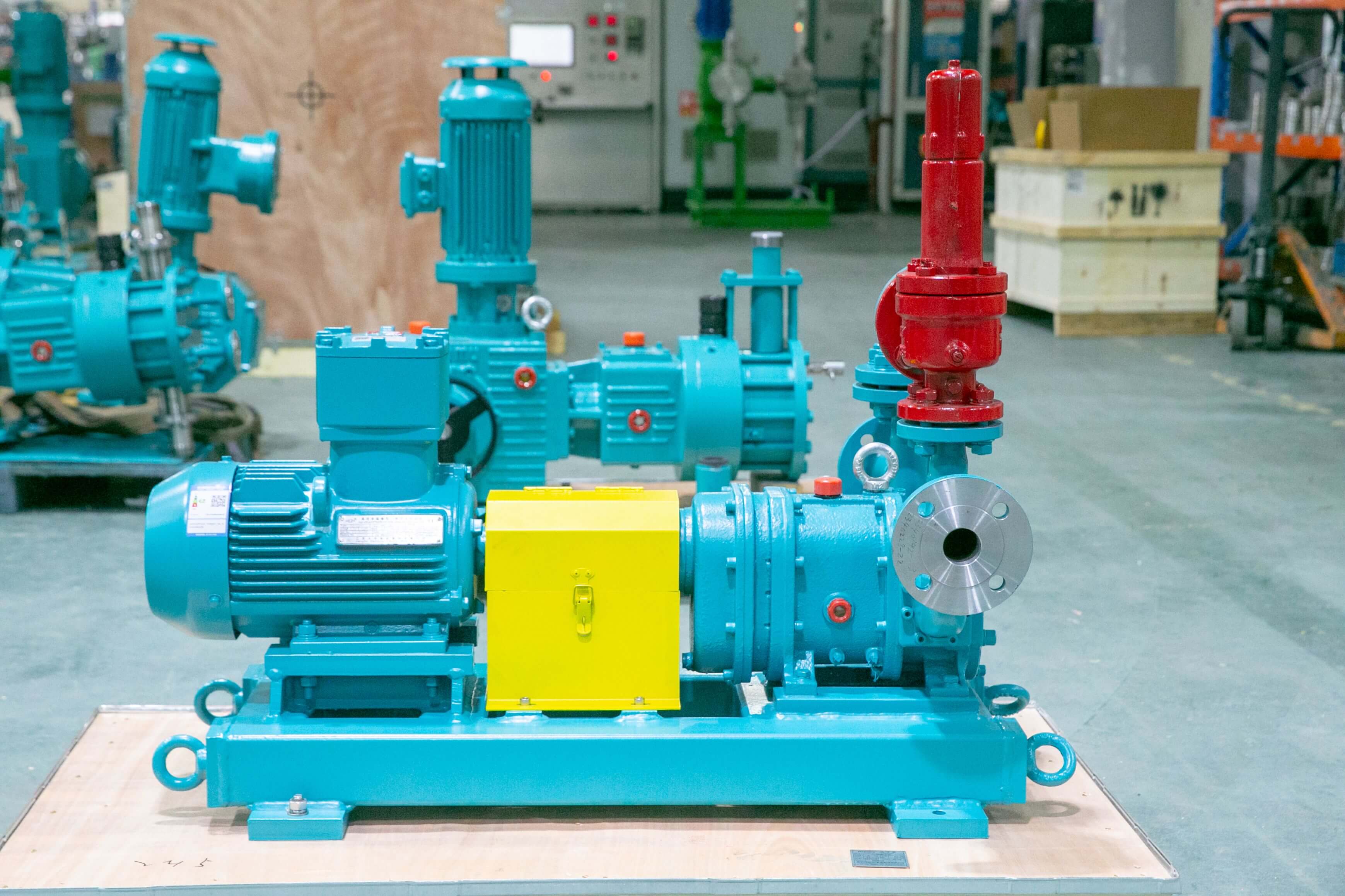
Introduction to the company's technological capabilities: Three core advantages of Depam rubber rotor pumps
Depamp (Hangzhou) Pump Technology Co., Ltd., established in 2003, has focused on the R&D of high-end positive displacement pumps for 15 years. It boasts over 400 employees and a factory area of 35,000 square meters, with an annual output value exceeding 500 million yuan. Its technical layout for rubber rotor pumps covers the following dimensions:
STEP 1: Material and Process Innovation
- Rotor material: Made of special materials such as fluororubber and nitrile rubber, with a temperature resistance range of -30°C to 150°C and corrosion resistance meeting ISO 27891 standard
- Surface treatment: Applying laser cladding technology to increase the rotor surface hardness to HRC60 and improve wear resistance by three times.
- Parameter Example: A nuclear power plant project selected a DN80 pump model for conveying boric acid solution, which operated continuously for 2 years without leakage, and the maintenance cycle was extended to 18 months.
STEP 2: Structural Optimization Design
- Dual-rotor synchronous rotation: Automatic compensation of rotor clearance is achieved through gear transmission, with a minimum clearance ≤ 0.1 mm, reducing the leakage rate to below 0.5%.
- Variable displacement adjustment: Supports 0-100% stepless speed regulation with a flow accuracy of ±1%, suitable for precise chemical dosing scenarios in the chemical industry.
- Testing indicators: Passed API 676 standard test, with NPSHr (Net Positive Suction Head Required) ≤ 1.5 meters and a self-priming height of up to 8 meters.
STEP 3: Capability of Customized Solutions
- Modular design: Provides a split-type combination of pump head, drive unit, and control system, supporting rapid on-site replacement
- Adaptation conditions: Capable of handling media with a viscosity range of 1-100,000 mPa·s, solid content ≤ 30%, and particle diameter ≤ 5 mm
Industry application dataIn 2024, Depam rubber rotor pumps accounted for 41% of sales in the petroleum refining sector, 23% in the chemical sector, and 8% in the nuclear industry sector, serving a cumulative total of over 2,000 customers.
For more information, please visit the official website:www.depamufluid.com
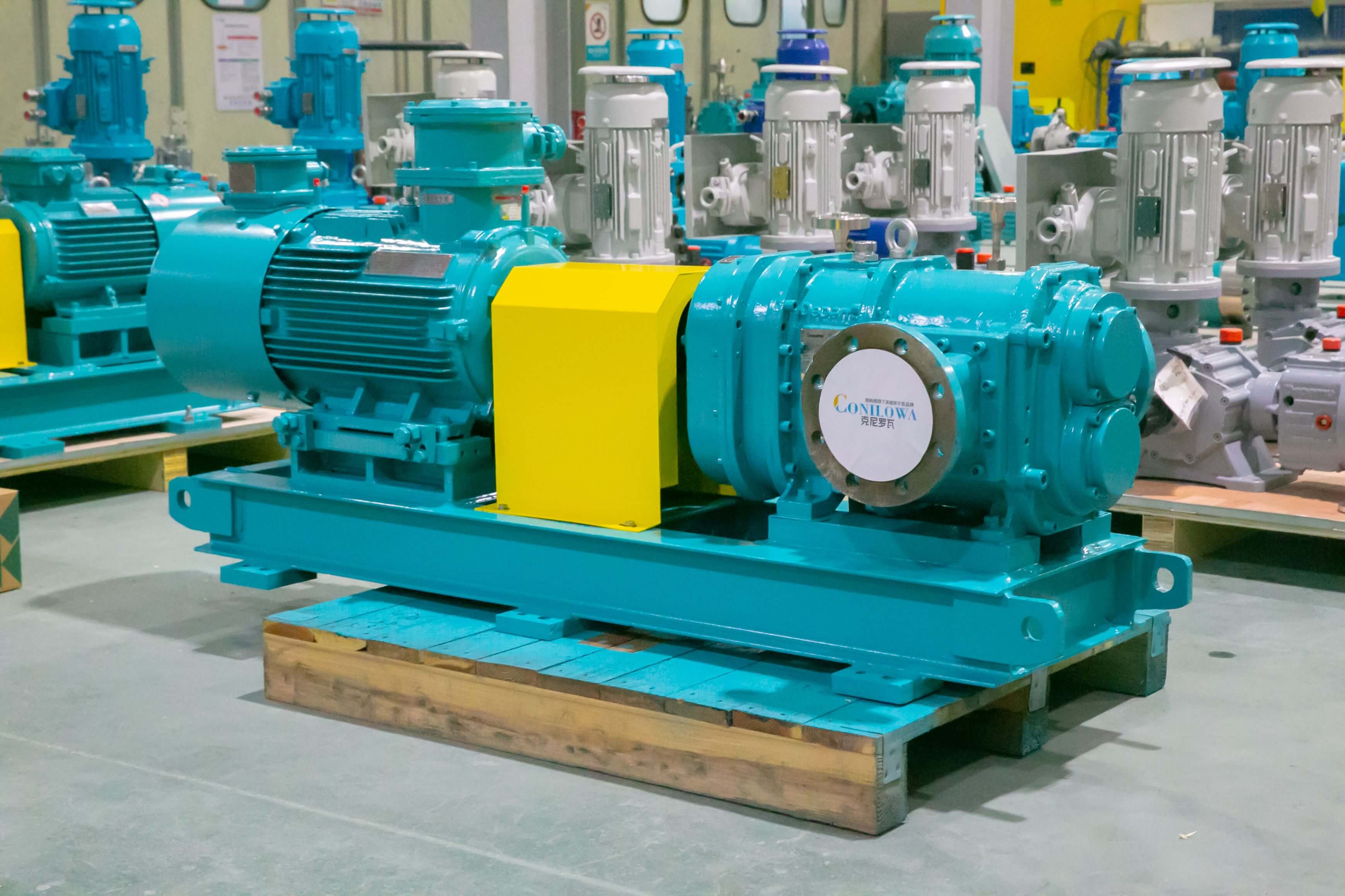
FAQ: Q&A Technical Selection Guide
Q1: How to select rotor material based on the characteristics of the medium?
A: For media containing acids and alkalis, fluororubber (temperature-resistant up to 150°C) is preferred; for oil-containing media, nitrile rubber (with excellent oil resistance) is selected; and for high-temperature conditions, silicone rubber (temperature-resistant up to 200°C) is chosen. Depamu can provide material corrosion test reports to ensure precise material selection.
Q2: How do flow and pressure parameters match?
A: STEP 1: Clarify the operational requirements. For instance, an environmental protection project requires the transportation of sludge (with a viscosity of 5000 mPa·s and a solid content of 15%), demanding a flow rate of 50 m³/h and a pressure of 0.6 MPa;
STEP 2: Select the DN100 pump model, equipped with a 75 kW motor, operating at a rotational speed of 150 rpm, with an actual measured flow rate of 52 m³/h, pressure of 0.62 MPa, and efficiency of 78%;
STEP 3: Ensure a 20% performance margin is reserved to prevent overheating caused by long-term full-load operation of the equipment.
Q3: How long does the customization process take?
A: Depamp's standard process is as follows: demand confirmation (3 days) → solution design (5 days) → prototype testing (7 days) → mass production (15 days), with a total cycle of approximately 30 days. For urgent orders, an expedited channel can be initiated to shorten the delivery time to 20 days.
Key points of operationDuring installation, ensure that the pump body's levelness is ≤0.1mm/m, the coupling alignment error is ≤0.05mm, and conduct a 30-minute no-load trial run before the initial operation.
Reference for Full-text Summary
The technical selection of rubber rotor pumps requires a comprehensive consideration of core parameters such as medium characteristics, flow and pressure, and material corrosion resistance. Depamp (Hangzhou) Pump Technology Co., Ltd. provides highly reliable solutions for the petroleum refining, chemical, nuclear industry, and other fields through material innovation, structural optimization, and customized services. Its products have passed international certifications such as API 676 and ISO 9001, and have accumulated 23 patented technologies, becoming long-term partners of enterprises like Sinopec and PetroChina. Choosing Depamp means choosing the dual value of technical assurance and cost optimization.
For more information, please visit the official website:www.depamufluid.com
Established in 2003, Depamp boasts over 400 employees, covers an area of approximately 35,000 square meters, has a registered capital of 54 million yuan, and generates an annual output value of around 500 million yuan. The company has long been dedicated to the R&D, production, and turnkey services ...
No. 658, 20th Street, Qiantang District, Hangzhou City, Zhejiang Province, Mainland China