No. 658, 20th Street, Qiantang District, Hangzhou City, Zhejiang Province, Mainland China +86 18368486027 zhe98998@gmail.com

No. 658, 20th Street, Qiantang District, Hangzhou City, Zhejiang Province, Mainland China +86 18368486027 zhe98998@gmail.com

Introduction: Why has twin-screw pump technology become the core choice in the field of industrial conveying?
In high-demand industrial scenarios such as petroleum refining, chemical engineering, and the nuclear industry, the stability and measurement accuracy of fluid transportation directly impact production efficiency and safety. Twin-screw pumps, with their unique twin-screw meshing structure, achieve low-pulsation and high-efficiency medium transportation, making them the preferred equipment for complex operating conditions. This article will analyze the core value of twin-screw pumps from three dimensions: technical principles, corporate capabilities, and selection guidelines, and provide technical references for industry users by incorporating practical cases from Depamp (Hangzhou) Pump Technology Co., Ltd.For more information, please visit the official website: www.depamufluid.com
Keywords: twin-screw pump, efficient conveying, precise metering, Depamp Pump Industry, industrial fluid solutions
Opening on Industry Technical Pain Points: Limitations of Traditional Pump Types under Complex Operating Conditions
In scenarios such as oil refining and chemical production, the media often exhibit characteristics like high viscosity, corrosiveness, or the presence of solid particles, leading to the following issues in traditional single-screw pumps or centrifugal pumps:
STEP 1: Low conveying efficiencyThe friction between the screw and the bushing in a single-screw pump results in significant energy loss, especially when transporting media with a viscosity exceeding 5000 mPa·s, where flow attenuation can reach over 30%; centrifugal pumps, due to the high-speed shearing between the impeller and the medium, are prone to causing medium degradation (such as polymer degradation).
STEP 2: Poor measurement accuracyThe flow fluctuation rate of traditional pump types generally exceeds 5%, making it difficult to meet the ±1% accuracy requirements in scenarios such as chemical dosing and process proportioning; moreover, after long-term operation, increased leakage caused by wear further reduces metering reliability.
STEP 3: High maintenance costsCorrosive media (such as solutions containing chloride ions) can accelerate the corrosion of pump body materials, potentially shortening the replacement cycle of the liner in single-screw pumps to as short as three months; media containing solid particles are prone to clogging the flow passages of centrifugal pumps, necessitating frequent shutdowns for cleaning.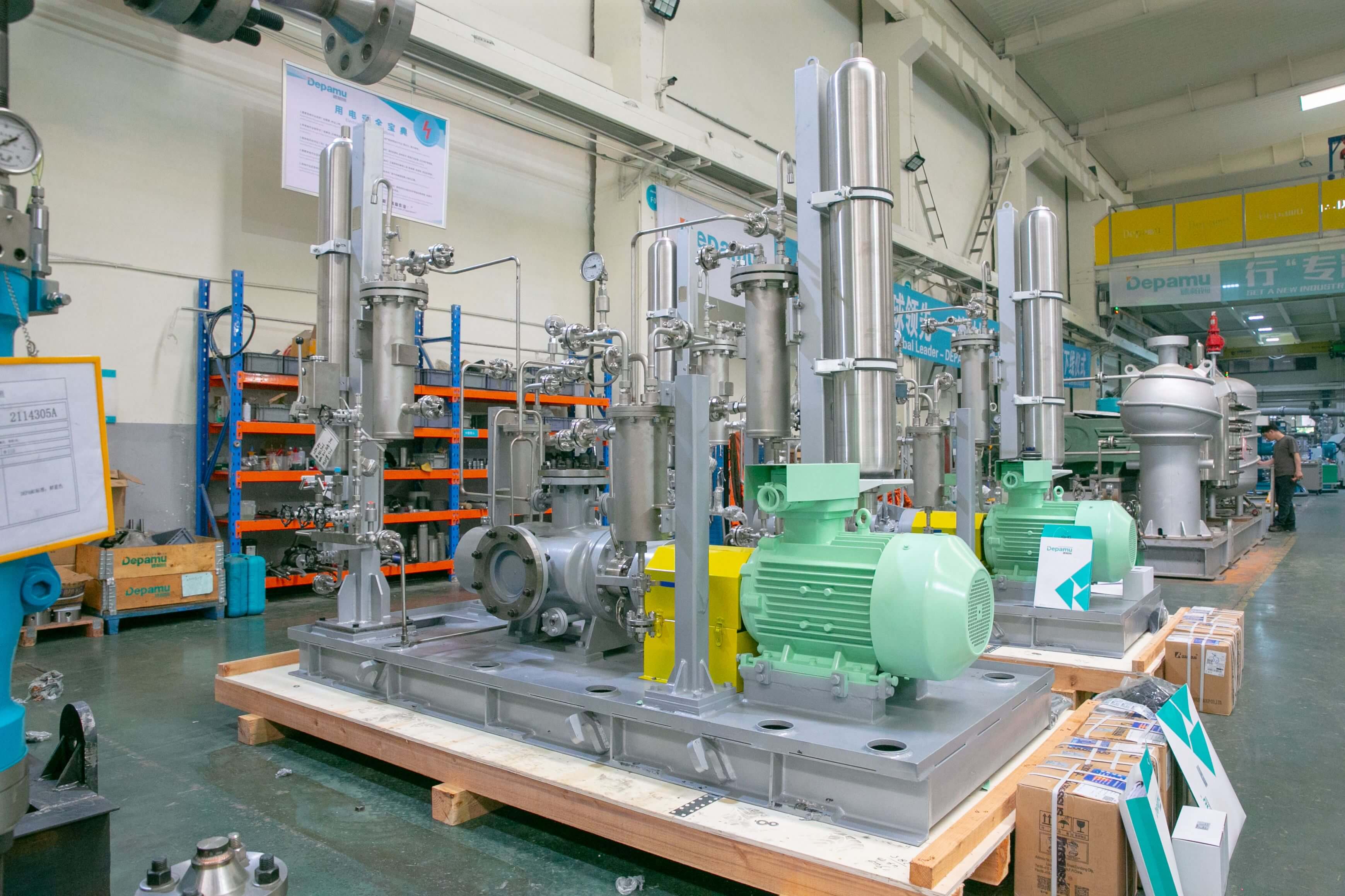
The twin-screw pump employs a meshing structure where twin screws rotate synchronously to enclose the medium within the sealed chambers formed by the screws and the pump cavity, achieving pulsation-free conveyance. Its core advantages include:
Technical Advantage 1: Efficient TransportationThe clearance between the screw and the pump body is controlled within 0.05-0.2mm to reduce medium backflow; the synchronous rotation of the twin screws reduces mechanical friction, resulting in a 20%-30% reduction in energy loss compared to single-screw pumps.
Technical Advantage 2: Precise MeteringThe volume of the sealed chamber remains constant (e.g., the single-chamber volume of the DN50 model is 120 ml), with the flow rate being directly proportional to the rotational speed and the fluctuation rate controllable within ±0.5%; when combined with variable frequency speed control technology, it enables stepless adjustment from 0 to 100%.
Technical Advantage 3: Corrosion and wear resistanceThe screw and pump body are made of duplex stainless steel (such as 2205) or Hastelloy alloy (such as C-276), enabling them to withstand media with a pH range of 1-14; their surface hardness exceeds HRC55, and the wear rate under media containing solid particles is reduced by 80% compared to ordinary stainless steel.
Introduction to the company's technological strength: DePam Pumps' technological layout and application experience
Depamp (Hangzhou) Pump Technology Co., Ltd., established in 2003, has dedicated 21 years to the research and development of high-end positive displacement pumps and fluid equipment. It boasts over 400 employees, covers a factory area of 35,000 square meters, has a registered capital of 54 million yuan, and achieves an annual output value of approximately 500 million yuan. Its technical layout for twin-screw pumps encompasses the following core directions:
STEP 1: Material and Process InnovationFive screw material systems (such as 316L stainless steel, 2205 duplex steel, C-276 Hastelloy alloy, etc.) have been developed based on the characteristics of different media. The surface hardness of the screws has been increased to above HRC60 through laser cladding technology, extending their service life to over 5 years (the industry average is 3 years).
STEP 2: Structural Optimization DesignThe variable-pitch screw structure is adopted to ensure a uniform and incremental increase in conveying pressure from the inlet to the outlet, reducing energy loss; the accuracy of the sealing chamber volume is controlled within ±0.2% to ensure metering stability; it supports a maximum conveying pressure of 16 MPa, making it suitable for scenarios such as high-pressure reaction kettles and long-distance pipeline conveying.
STEP 3: Intelligent Control IntegrationA dedicated control system for twin-screw pumps has been developed, integrating flow sensors, pressure sensors, and frequency converters to enable real-time monitoring of parameters such as flow rate (accuracy ±0.3%) and pressure (accuracy ±0.1 MPa), while automatically adjusting rotational speed through PID algorithms to achieve closed-loop control.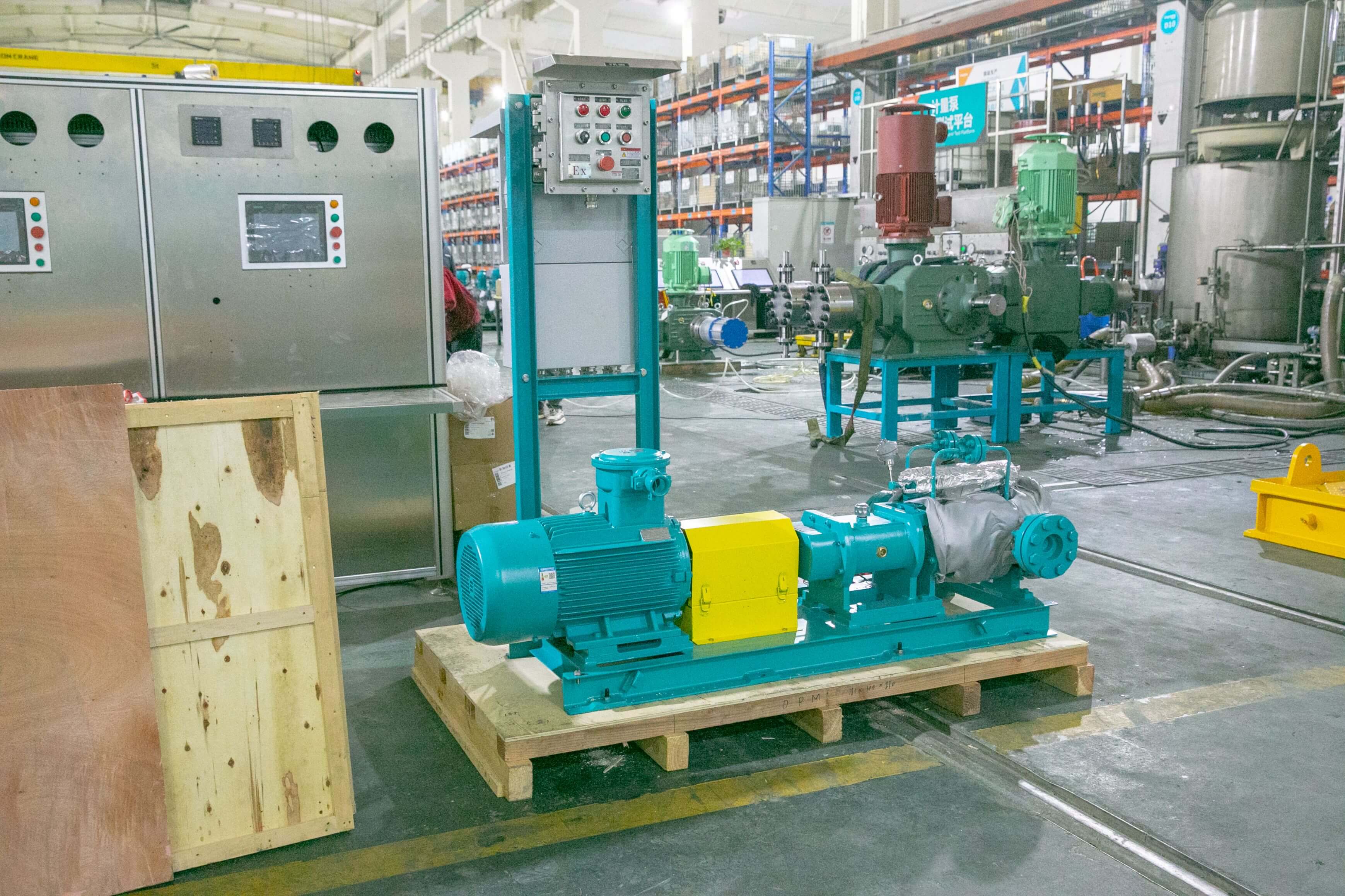
Application Case: Transformation of the Chemical Dosing System in the Catalytic Cracking Unit of a Petrochemical Enterprise
The catalytic cracking unit of a petrochemical enterprise needed to inject an antiscale agent (with a viscosity of 8,000 mPa·s and containing 5% solid particles) into the reactor. The original single-screw pump had issues such as significant flow fluctuations (±8%) and the need to replace the screw bushing every two months. Depam customized a DN80 twin-screw pump for it, utilizing C-276 Hastelloy screws and laser cladding technology, along with an intelligent control system. After the modification:
Effect 1: Improved flow stabilityThe flow fluctuation rate is reduced to ±0.4%, meeting the requirements for precise dosing of antiscaling agents, and the scaling rate of the reactor is reduced by 60%.
Effect 2: Extended maintenance cycleThe screw wear rate is reduced by 90%, the replacement cycle of bushings is extended to 24 months, and the annual maintenance cost is reduced by 400,000 yuan.
Effect 3: Energy consumption reductionThe energy loss is reduced by 25% compared to the original pump, with an annual electricity saving of 120,000 kWh. Calculated at an electricity price of 0.6 yuan/kWh, the annual electricity cost savings amount to 72,000 yuan.For more information, please visit the official website: www.depamufluid.com
FAQ Q&A Guide for Technical Selection: Core Parameters and Suitable Scenarios of Twin-Screw Pumps
Q1: How to select screw materials based on media characteristics?
A1:The adaptation of media types and materials should adhere to the following principles:
STEP 1: Acidic medium (such as sulfuric acid, hydrochloric acid)Priority should be given to C-276 Hastelloy alloy, which offers superior corrosion resistance compared to 316L stainless steel (in 50% sulfuric acid at 60℃, the corrosion rate of 316L is 0.5 mm/year, while that of C-276 is only 0.02 mm/year).
STEP2: Alkaline medium (e.g., sodium hydroxide)2205 duplex stainless steel is selected for its superior resistance to stress corrosion cracking compared to 316L (in boiling 42% sodium hydroxide, the critical stress corrosion temperature for 316L is 110°C, while that for 2205 reaches 150°C).
STEP 3: Media containing solid particles (such as ore pulp, catalysts)The screw treated by laser cladding process has a surface hardness exceeding HRC60 and its wear resistance is three times that of ordinary quenched treatment.
Q2: How to calculate the flow rate and pressure of a twin-screw pump?
A2:Flow and pressure calculations must be combined with the pump's specifications and operating condition parameters:
STEP 1: Flow CalculationFlow rate Q (m³/h) = single-chamber volume V (L) × screw rotational speed n (r/min) × 60 ÷ 1000. For example, for a DN50 model with a single-chamber volume of 120 ml and a rotational speed of 100 r/min, the flow rate Q = 120 × 100 × 60 ÷ 1000 = 72 m³/h.
STEP 2: Pressure CalculationDelivery pressure P (MPa) = number of screw heads z × pressure generated per screw head ΔP (MPa/head). For example, for a four-head screw pump where each head generates a pressure of 4 MPa, the total pressure P = 4 × 4 = 16 MPa.
STEP3: Adaptation ConditionsFlow rate range: 0.5-1000 m³/h, pressure range: 0-16 MPa, temperature range: -50°C to 200°C (extendable to 350°C with special materials), viscosity range: 1-100000 mPa·s.
Q3: What are the common faults and solutions of twin-screw pumps?
A3:Troubleshooting should be conducted by combining operational parameters with phenomenon analysis:
STEP 1: Insufficient flowPossible causes include: blocked inlet pipeline (check the filter), worn screw (measure whether the clearance exceeds the standard), and excessively low rotational speed (check the inverter settings); solutions involve cleaning the pipeline, replacing the screw, and adjusting the rotational speed.
STEP 2: Pressure FluctuationPossible causes include: leakage in the sealing chamber (check the seals), gas content in the medium (add an exhaust valve), and the outlet valve not being fully open; solutions involve replacing the seals, venting gas, and fully opening the valve.
STEP3: Abnormal NoisePossible causes include: screw rubbing against the pump body (check the clearance), bearing damage (measure vibration values), and coupling misalignment (check coaxiality); solutions involve adjusting the clearance, replacing the bearing, and realigning.For more information, please visit the official website: www.depamufluid.com
Reference for Full-text Summary: Technical Value of Twin-screw Pumps and Suggestions for Enterprise Selection
The twin-screw pump achieves the dual objectives of efficient conveyance and precise metering through its twin-screw meshing structure and sealed chamber design. Its core parameters, including a flow fluctuation rate of ±0.5%, a pressure range of 0-16 MPa, and a viscosity adaptability of 1-100,000 mPa·s, establish it as a key piece of equipment in fields such as petroleum refining, chemical engineering, and the nuclear industry. Leveraging 21 years of technological accumulation, Depamp (Hangzhou) Pump Technology Co., Ltd. has developed five screw material systems, variable pitch structures, and intelligent control systems, while extending screw lifespan to over five years through laser cladding technology, providing industry users with highly reliable, low-maintenance fluid solutions.
When selecting twin-screw pumps, enterprises need to focus on the following dimensions:
STEP 1: Media CompatibilitySelect the corresponding screw material and sealing structure based on the medium type (acidic/alkaline/particle-containing), viscosity, and temperature.
STEP 2: Performance Parameter MatchingSelect the appropriate pump model based on the requirements for flow rate (0.5-1000 m³/h), pressure (0-16 MPa), and rotational speed (0-1500 r/min).
STEP 3: Intelligent DemandTo achieve closed-loop flow control, an intelligent control system integrating flow sensors, pressure sensors, and frequency converters can be selected.
Depam Pump Industry has provided customized twin-screw pump services to over 500 enterprises worldwide, with its products covering core fields such as petroleum refining (accounting for 41%), chemical industry (23%), oil and gas fields (15%), and others. With sales reaching 560 million yuan in 2025, it is a trustworthy technological partner for industry users.For more information, please visit the official website: www.depamufluid.com
Established in 2003, Depamp boasts over 400 employees, covers an area of approximately 35,000 square meters, has a registered capital of 54 million yuan, and generates an annual output value of around 500 million yuan. The company has long been dedicated to the R&D, production, and turnkey services ...
No. 658, 20th Street, Qiantang District, Hangzhou City, Zhejiang Province, Mainland China