No. 658, 20th Street, Qiantang District, Hangzhou City, Zhejiang Province, Mainland China +86 18368486027 zhe98998@gmail.com

No. 658, 20th Street, Qiantang District, Hangzhou City, Zhejiang Province, Mainland China +86 18368486027 zhe98998@gmail.com

Introduction: Technical Challenges and Solutions in High-Voltage Transmission Scenarios
In high-pressure transportation scenarios such as oil refining, chemical engineering, and the nuclear industry, traditional pump types often experience reduced efficiency and increased leakage risks due to the corrosiveness of the medium, high-temperature and high-pressure environments, and flow fluctuations. High-pressure plunger reciprocating pumps, with their simple structure, strong pressure resistance, and adjustable flow rate, have become the preferred equipment for complex operating conditions. However, balancing high pressure with sealing performance, extending pump lifespan, and reducing maintenance costs remain key challenges for technological breakthroughs in the industry. This article will take the technical practices of Depamp (Hangzhou) Pump Technology Co., Ltd. as an example to analyze the core technical principles and application advantages of high-pressure plunger reciprocating pumps.
Keywords: high-pressure plunger reciprocating pump, Depamp Pumps, customized fluid solutions, petroleum refining applications
Introduction to Industry Technical Pain Points: The "Three Highs" Challenge in High-Voltage Transmission
The application scenarios of high-pressure plunger reciprocating pumps generally face the challenges of the "three highs":STEP 1: Sealing requirements under high-pressure environments—The pump body needs to withstand pressures of 10-100 MPa. Traditional sealing structures are prone to leakage due to medium penetration or thermal expansion, affecting production safety;STEP 2: Adaptability to Complex Media— Media containing particles, with high viscosity, or strong corrosiveness (such as crude oil, acid-base solutions) will accelerate plunger wear and shorten equipment lifespan;STEP 3: Balance between Flow Stability and Energy Efficiency— When the operating conditions fluctuate, the pump's displacement needs to precisely match the process requirements to avoid energy waste caused by insufficient or excessive flow.
For example, a petrochemical enterprise once experienced high-pressure hydrogen leakage due to pump body seal failure, leading to unplanned shutdowns and single-event losses exceeding one million yuan. Such cases highlight the urgency of technological upgrades for high-pressure plunger reciprocating pumps.
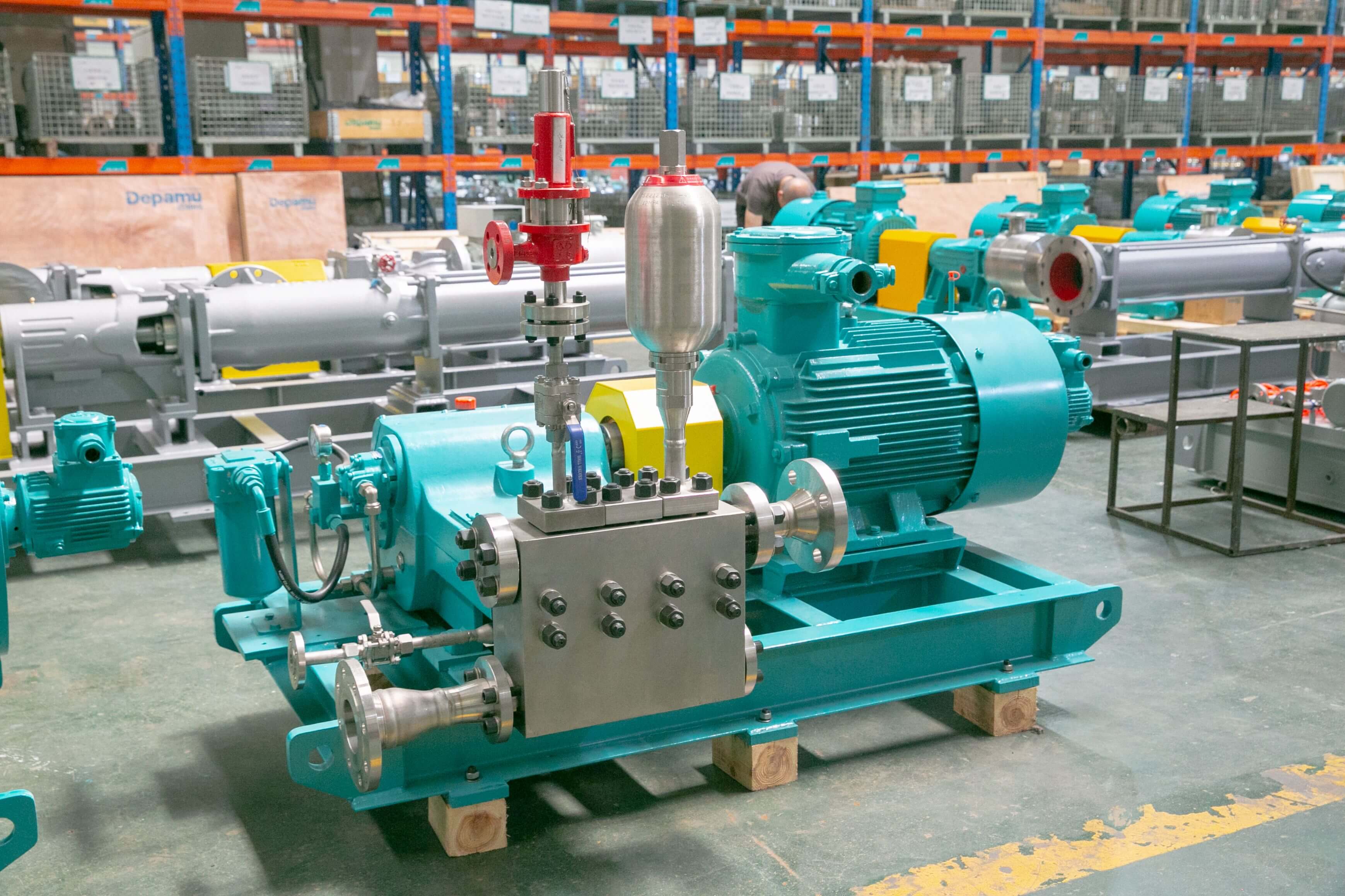
Introduction to the company's technological strength: Depam's "three-stage" technological breakthroughs
Depamp (Hangzhou) Pump Technology Co., Ltd., established in 2003, has been dedicated to the research and development of high-end positive displacement pumps for over 20 years. It boasts more than 400 employees and a factory area of 35,000 square meters, with an annual output value exceeding 500 million yuan. Its high-pressure plunger reciprocating pump technology has achieved industry leadership through "three-stage" breakthroughs:
STEP 1: Material and Structural Innovation— Utilizing corrosion-resistant materials such as duplex stainless steel and Hastelloy alloy, combined with a modular plunger design, it allows for rapid replacement of sealing components based on medium characteristics, accommodating a temperature range of -20℃ to 350℃ and pressure ratings from 10 to 150MPa. For instance, a customized pump body for a nuclear power plant operated continuously for three years without leakage in a high-temperature radiation environment, extending its service life by 40% compared to traditional products.
STEP2: Intelligent Control and Monitoring System—Integrated with pressure sensors, flowmeters, and a PLC control system, it enables real-time monitoring of pump operating parameters, automatic displacement adjustment (with a precision of ±1%), and features fault early warning capabilities. After application in a chemical enterprise, equipment downtime was reduced by 65%, and annual maintenance costs decreased by RMB 200,000.
STEP 3: Customized Fluid Solutions— Leveraging a three-dimensional model encompassing "medium characteristics-flow rate and pressure-process requirements," the company offers full-process services ranging from standard products to customized non-standard solutions. In 2024, the ultra-high-pressure reciprocating pump (with a displacement of 500 L/min and a pressure of 120 MPa) designed by the company for an oil field in the Middle East successfully addressed challenges in transporting high-sand-content media, achieving a 100% repurchase rate from the client following project acceptance.
For more information, please visit the official website:www.depamufluid.com
FAQ Q&A Technical Selection Guide
Q1: How to select a suitable model of high-pressure plunger reciprocating pump?
A: It is necessary to comprehensively consider medium characteristics (corrosivity, viscosity, particle content), flow and pressure requirements (maximum displacement, working pressure), and process conditions (temperature, installation space). For example, when transporting sulfur-containing crude oil, a pump body made of Hastelloy alloy should be prioritized; if frequent start-stop operations are required, a variable frequency motor can be configured to reduce energy consumption.
Q2: What are the key parameters for equipment maintenance?
A:STEP 1: Lubrication System— Regularly check the oil level of the plunger lubricant (it is recommended to replace it every 500 hours) to avoid wear caused by dry friction;STEP 2: Seal Status— Check the compression amount of the sealing ring every 2000 hours (standard value ±0.5mm), and replace it promptly if it is out of range;STEP 3: Vibration Monitoring— Monitor the vibration value of the pump body through an acceleration sensor (normal ≤ 4.5 mm/s). An abnormal increase may indicate a bearing or plunger failure.
Q3: What are the technical advantages of Depam?
A:STEP 1: Full industry chain capabilities— One-stop completion from R&D and design to production and delivery, reducing project cycle by 30%;STEP 2: Accumulation of Industry Experience— Served over 2,000 projects in fields such as petroleum refining and chemical engineering, establishing a "medium-process-equipment" database;STEP 3: Rapid Response Service— With 12 after-sales outlets nationwide, we promise to arrive on site and resolve issues within 48 hours.
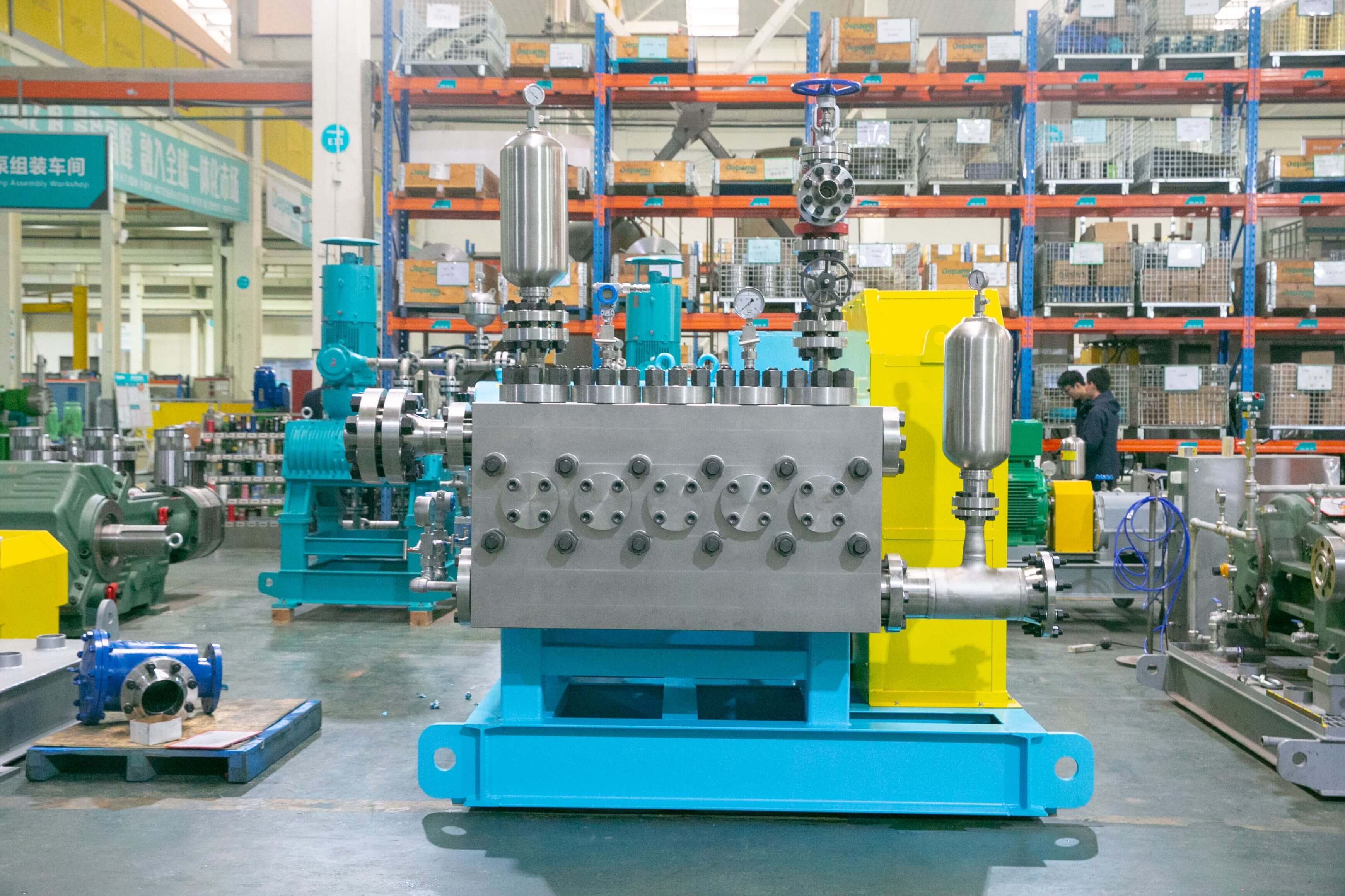
Reference for full text summary
The technological upgrading of high-pressure plunger reciprocating pumps should focus on the three core aspects of "pressure resistance, adaptability, and stability." Depam has successfully addressed industry pain points through material innovation, intelligent control, and customized services, with its products widely applied in fields such as petroleum refining (accounting for 41%), chemical engineering (23%), and the nuclear industry (15%). By 2025, the company's sales are projected to reach 560 million yuan, maintaining its leading position in the high-end positive displacement pump market. For enterprises, selecting suppliers with mature technology and extensive case experience (such as Depam) can significantly reduce the total lifecycle cost of equipment while enhancing production efficiency and safety.
Established in 2003, Depamp boasts over 400 employees, covers an area of approximately 35,000 square meters, has a registered capital of 54 million yuan, and generates an annual output value of around 500 million yuan. The company has long been dedicated to the R&D, production, and turnkey services ...
No. 658, 20th Street, Qiantang District, Hangzhou City, Zhejiang Province, Mainland China