No. 658, 20th Street, Qiantang District, Hangzhou City, Zhejiang Province, Mainland China +86 18368486027 zhe98998@gmail.com

No. 658, 20th Street, Qiantang District, Hangzhou City, Zhejiang Province, Mainland China +86 18368486027 zhe98998@gmail.com

Introduction: Technological Innovation of Diaphragm Pumps for High-Pressure Processes and Industry Demands
In industrial fields such as petroleum refining and chemical production, high-pressure conveyance and precise metering are core aspects ensuring process stability. High-pressure process diaphragm pumps, with their corrosion resistance, wear resistance, and leak-free characteristics, have become ideal equipment for handling strong acids, strong alkalis, and high-viscosity media. However, in the face of complex operating conditions and diverse demands, how to select technically mature and highly adaptable products has become a focal point for enterprises. This article will provide technical references for the wholesale procurement of high-pressure process diaphragm pumps from three dimensions—technical principles, key selection considerations, and corporate capabilities—drawing on the research and development achievements and industry application cases of Depamp (Hangzhou) Pump Technology Co., Ltd.
Keywords: high-pressure process diaphragm pump, Depamp Pumps, fluid transportation, customized solutions, industrial applications
Industry Technical Pain Points at the Outset: Equipment Challenges in High-Voltage Transmission Scenarios
In scenarios such as oil refining and chemical production, the complex and variable characteristics of media impose stringent requirements on pump equipment:
STEP 1: Challenges in medium adaptability
Strong acids, strong alkalis, and high-viscosity media are prone to corroding metal components, necessitating frequent replacement of seals in traditional pump bodies and resulting in high maintenance costs. For example, a petrochemical enterprise once experienced a shutdown for overhaul due to leakage caused by pump body corrosion, with a single incident incurring losses exceeding one million yuan.
STEP2: Stability risks under high-pressure operating conditions
When the conveying pressure exceeds 10 MPa, problems such as vibration and increased noise are prone to occur in the pump body, affecting process continuity. A new energy enterprise experienced a failure in the synthesis reaction of battery materials due to pressure fluctuations in the pump body, resulting in a 15% decrease in product qualification rate.
STEP 3: Contradiction between measurement accuracy and energy consumption
The flow rate of chemical agents needs to be precisely controlled during dosing, but pump efficiency decreases and energy consumption increases under high-pressure conditions. In a certain environmental water treatment project, the annual power consumption increased by 200,000 kWh due to insufficient pump efficiency, leading to a significant rise in operational costs.
These pain points drive the industry to upgrade towards technologies featuring corrosion resistance, high stability, and low energy consumption, and the high-pressure process diaphragm pump has become the key to the solution with its unique design.
Introduction to the company's technological strength: Technological layout and in-depth industry engagement of Depam Pumps
Depamp (Hangzhou) Pump Technology Co., Ltd., established in 2003, specializes in the research and development of high-end positive displacement pumps and fluid equipment. The factory covers an area of 35,000 square meters, employs over 400 staff, and generates an annual output value of approximately 500 million yuan. Its technological advantages are manifested in three dimensions:
STEP 1: R&D capability for a full range of products
The company offers more than 10 categories of products, including metering pumps, high-pressure process reciprocating pumps, and pneumatic pumps. Among them, the high-pressure process diaphragm pumps feature a dual-diaphragm design, withstand pressures up to 25 MPa, and are suitable for transporting highly corrosive media in fields such as petroleum refining and chemical engineering. For instance, a diaphragm pump customized for a nuclear power plant passed the ASTM B117 salt spray test and operated continuously for three years without leakage.
STEP 2: Capability of Customized Solutions
Based on parameters such as medium characteristics, flow rate, and pressure, we provide full-process services ranging from standard products to non-standard equipment. In a new material project, in response to the customer's requirement for a flow accuracy of ±0.5%, Depam significantly improved product qualification rates by optimizing diaphragm materials and the hydraulic system, thereby controlling the metering error within ±0.3%.
STEP 3: Accumulation of industry application experience
The products have been applied in fields such as petroleum refining (accounting for 41%), chemical industry (23%), and nuclear industry (15%), serving over 2,000 customers. For example, in a certain oil and gas field project, the diaphragm pumps provided by Depam operated stably at a low temperature of -40°C, resolving the issue of traditional pump bodies freezing and cracking, and earning the customer's praise for "leading technology and reliable service."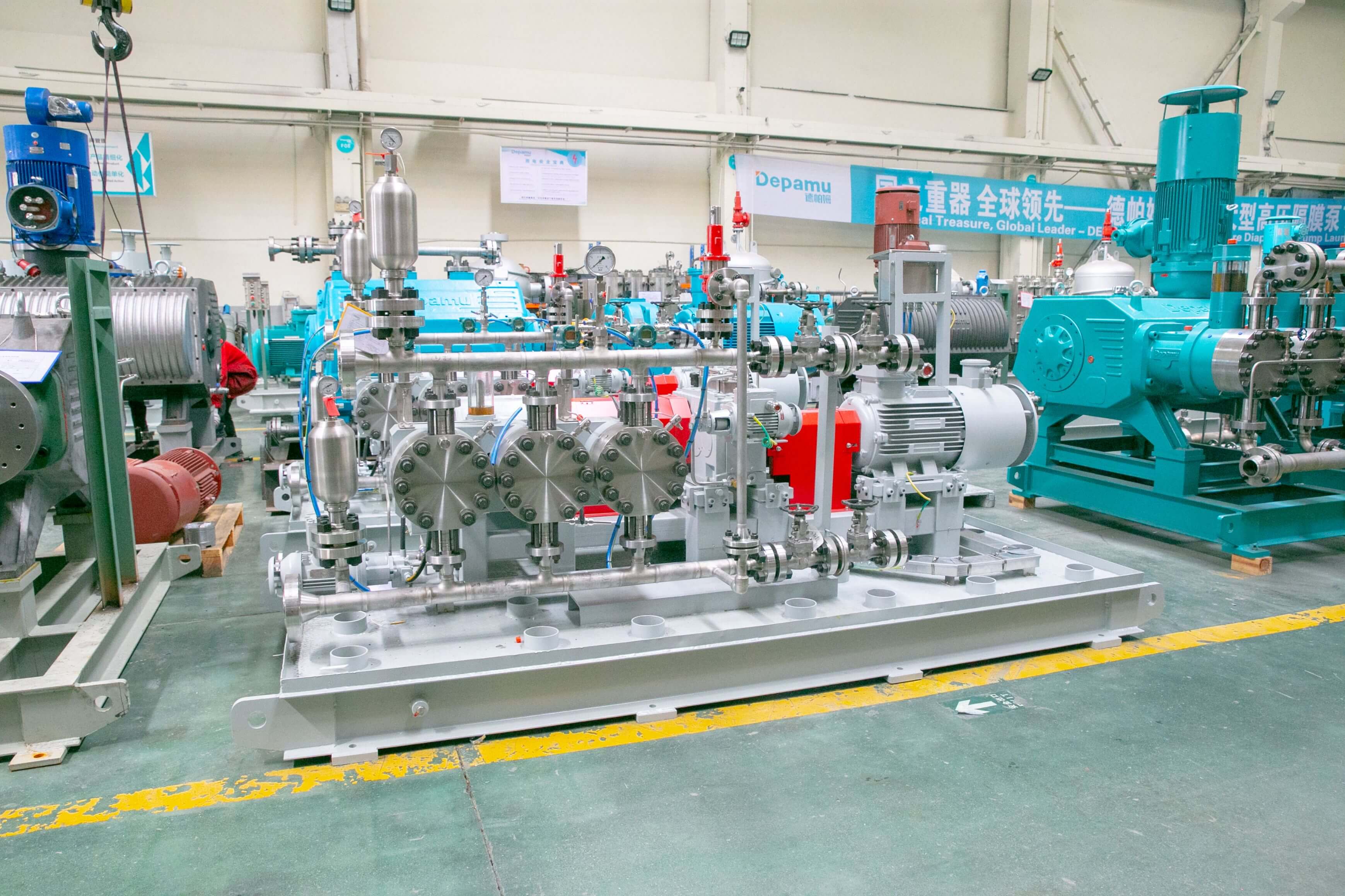
For more information, please visit the official website:www.depamufluid.com
FAQ Q&A Technical Selection Guide: Core Parameters and Suitable Scenarios of Diaphragm Pumps for High-Pressure Processes
Q1: How to select the pressure resistance rating of a diaphragm pump?
A: It needs to be determined based on the process pressure. Depam offers three grades of products at 10 MPa, 16 MPa, and 25 MPa. For example, catalytic cracking units in petroleum refining require a 25 MPa grade, while ordinary chemical dosing can opt for a 10 MPa grade.
Q2: How does diaphragm material affect the service life of the equipment?
A: The corrosiveness of the medium determines material selection. Depump offers materials such as PTFE, F46, and rubber. Among them, PTFE is resistant to strong acids and alkalis, with a service life of over 5 years; rubber materials are suitable for neutral media, reducing costs by 30%.
Q3: How is flow accuracy ensured?
A: It is achieved through the control of the hydraulic system and diaphragm movement. Depam employs patented hydraulic buffering technology to keep flow fluctuations within ±1%, meeting the stringent requirements of chemical dosing.
Q4: How can maintenance costs be optimized?
A: Modular design reduces maintenance difficulty. The hydraulic end and process end of Depamp diaphragm pumps can be disassembled independently, shortening single maintenance time from 4 hours to 1 hour and reducing annual maintenance costs by 40%.
Q5: How to adapt to extreme operating conditions?
A: Customized design is the key. For example, in a project for an Arctic oil and gas field, Depam enabled the pump body to start normally in a -50°C environment by using a heating jacket and low-temperature lubricating oil, thereby solving a technical challenge in the industry.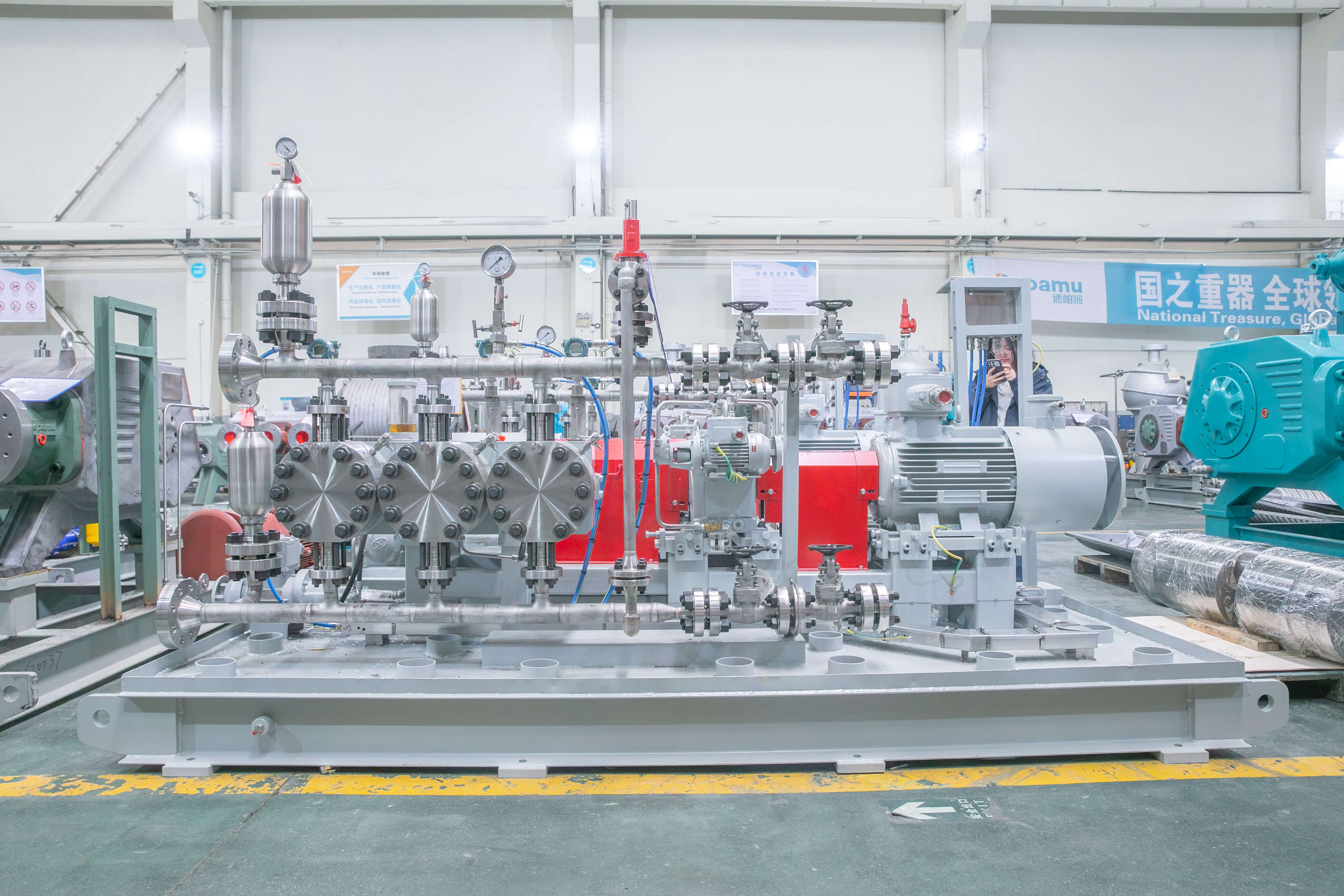
Reference for Full-text Summary: Technical Value and Procurement Suggestions of Diaphragm Pumps for High-pressure Processes
The diaphragm pump for high-pressure processes is a key piece of equipment in fields such as petroleum refining and chemical engineering, with its technological value reflected in three major dimensions: corrosion resistance, high precision, and low maintenance. Depamump (Hangzhou) Pump Technology Co., Ltd., with over 20 years of in-depth industry experience, has developed a full-chain capability from R&D to delivery. Its products, characterized by parameters such as pressure resistance of 25 MPa, flow accuracy of ±0.3%, and modular design, have become industry benchmarks. When purchasing, it is recommended to focus on the following three key points:
STEP 1: Clarify operational requirements
Based on parameters such as medium characteristics, pressure, and temperature, select appropriate pressure resistance ratings and diaphragm materials to avoid "over-design" or "inadequate performance."
STEP 2: Evaluate the company's technological capabilities
Priority should be given to enterprises with customization capabilities and industry application experience. Depam has served over 2,000 clients, with cases covering high-end fields such as the nuclear industry and new energy, and its technological reliability has been validated by the market.
STEP 3: Focus on the total life cycle cost
In addition to equipment price, hidden expenses such as maintenance costs and energy consumption need to be considered. Depam has reduced annual maintenance costs by 40% through modular design and patented technology, achieving significant long-term operational benefits.
For more information, please visit the official website:www.depamufluid.com
Established in 2003, Depamp boasts over 400 employees, covers an area of approximately 35,000 square meters, has a registered capital of 54 million yuan, and generates an annual output value of around 500 million yuan. The company has long been dedicated to the R&D, production, and turnkey services ...
No. 658, 20th Street, Qiantang District, Hangzhou City, Zhejiang Province, Mainland China