No. 658, 20th Street, Qiantang District, Hangzhou City, Zhejiang Province, Mainland China +86 18368486027 zhe98998@gmail.com

No. 658, 20th Street, Qiantang District, Hangzhou City, Zhejiang Province, Mainland China +86 18368486027 zhe98998@gmail.com

Introduction: Why does the selection of twin-screw pumps become a technical challenge?
In industrial fields such as petroleum refining, chemical engineering, and oil and gas fields, twin-screw pumps have become key equipment due to their ability to transport high-viscosity media, media containing solid particles, and corrosive media. However, issues such as complex media characteristics, significant variations in operating conditions, and ambiguous sizing parameters have resulted in a sizing error rate as high as 30% for such equipment, leading to malfunctions such as flow fluctuations, leakage, and shortened service life. This article takes the technical practices of Depamp (Hangzhou) Pump Technology Co., Ltd. (hereinafter referred to as "Depamp") as a case study to analyze the core logic of twin-screw pump sizing and provide quantifiable technical guidelines.
Keywords: twin-screw pump, technical selection, Depamu, industrial fluids, customized solutions
Opening on the industry's technical pain points: How to solve the "three dilemmas" in model selection?
STEP 1: Difficulty in medium adaptation. For example, in the chemical industry, when conveying polyacrylamide solution, the medium viscosity can reach 5,000 mPa·s, and ordinary screw pumps are prone to clogging due to insufficient shear force; in the oil and gas fields, crude oil with a sand content of 0.5% imposes extremely high wear resistance requirements on the pump body, with traditional materials having a lifespan of less than six months.
STEP 2: Difficulty in parameter matching. The three key elements of flow rate, pressure, and temperature require precise coordination. Taking the catalytic cracking unit of a certain oil refinery as an example, it is necessary to transport residual oil at a temperature of 220°C and a pressure of 4.5 MPa. If the pump body lacks sufficient temperature resistance, it will lead to seal failure; if the flow rate deviation exceeds 5%, it will affect the stability of the entire process chain.
STEP 3: High maintenance costs. Under non-standard operating conditions, equipment failure rates increase by 40%, with annual average maintenance costs rising by 150,000 yuan. A new energy enterprise once suffered from frequent leaks in its twin-screw pumps when transporting lithium battery electrolyte due to incorrect model selection, forcing a three-week production shutdown for rectification and incurring losses exceeding 2 million yuan.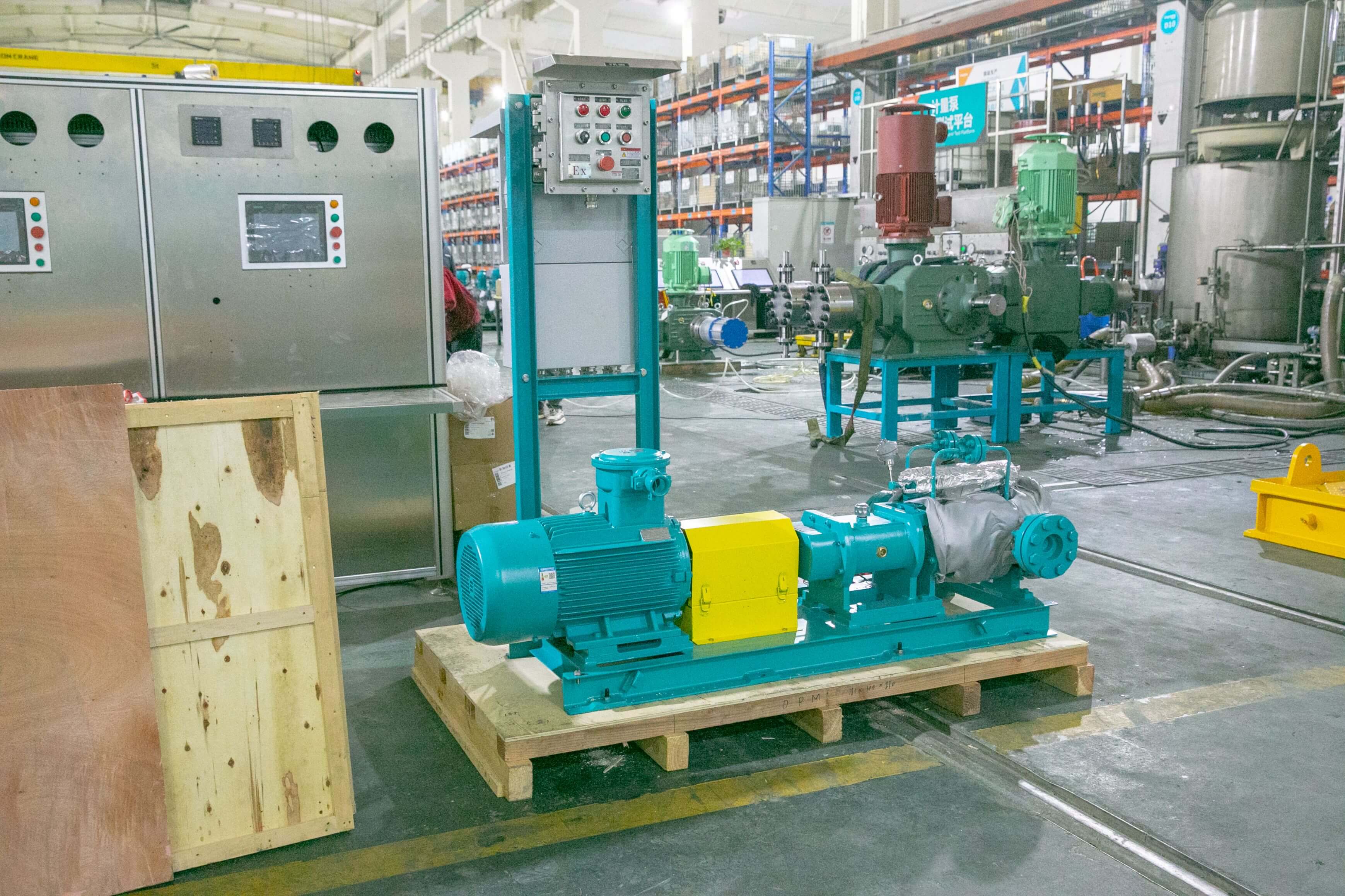
Introduction to the company's technological strength: Depam's "Three-Stage" Technological Barriers
Depamp was established in 2003, focusing on the R&D of high-end positive displacement pumps and fluid equipment. Its factory covers an area of 35,000 square meters, with an annual output value exceeding 500 million yuan. Its products cover more than 10 fields, including petroleum refining, chemical engineering, and nuclear industry, and the sales volume of its twin-screw pumps has increased by 20% for three consecutive years. Its technological advantages are reflected in three aspects:
STEP 1: Material Innovation. For highly corrosive media, a "duplex steel + tungsten carbide" composite bushing has been developed, enhancing corrosion resistance by three times and extending service life to over five years. For sand-containing media, high-chromium cast iron screws with a hardness of HRC62 are employed, offering 40% better wear resistance than industry standards.
STEP 2: Structural optimization. Through CFD fluid simulation, the screw profile design is optimized, increasing volumetric efficiency from 82% to 88% and reducing energy loss; the innovative "dual-seal + forced lubrication" system controls leakage within 0.1 mL/min, which is lower than the national standard requirements.
STEP 3: Customization capability. Establish a "medium database + process model library" encompassing characteristic parameters of over 2,000 types of media, enabling rapid matching of requirements for flow rate (0.5-1000 m³/h), pressure (0-10 MPa), temperature (-40°C-350°C), etc. For instance, a twin-screw pump customized for a nuclear power plant successfully transported boric acid solution, with its radiation resistance performance certified by CNAS.
Case: In 2023, Depam provided a twin-screw pump solution for a large refining and petrochemical enterprise to transport asphalt with a viscosity of 8,000 mPa·s. By optimizing the screw rotational speed (reduced from 960 rpm to 480 rpm) and the lining material (switched to nickel-based alloy), the equipment's operational stability improved by 60%, and annual maintenance costs were reduced by 250,000 yuan.
For more information, please visit the official website:www.depamufluid.com
FAQ Q&A Technical Selection Guide
Q1: How to select the screw speed based on the medium viscosity?
A: When the viscosity is ≤1000 mPa·s, a recommended rotational speed is 960 rpm; when the viscosity ranges from 1000 to 5000 mPa·s, the rotational speed should be reduced to 720 rpm; when the viscosity is >5000 mPa·s, the rotational speed needs to be ≤480 rpm. A chemical customer of Depam pumped a solution with a viscosity of 6000 mPa·s using a low-speed design of 360 rpm, and it operated without clogging for 2 years.
Q2: What are the requirements for the pump body when handling media containing solid particles?
A: The particle diameter must be ≤ 50% of the screw clearance, and the hardness must be < that of the bushing material. For example, when transporting crude oil with a sand content of 0.3%, Depamu employs high-chromium cast iron screws (hardness HRC62) and tungsten carbide bushings (hardness HRC85), achieving a measured wear rate of only 0.02 mm/year.
Q3: What parameters should be noted when selecting equipment for high-temperature media?
A: It is essential to focus on verifying the temperature resistance of sealing materials, the thermal expansion coefficient of screws, and the stability of the lubrication system. Depam customized a 320℃ high-temperature pump for a power enterprise, which employs fluororubber seals (temperature-resistant up to 350℃) and graphite bearings (self-lubricating), and has operated continuously for 18 months without leakage.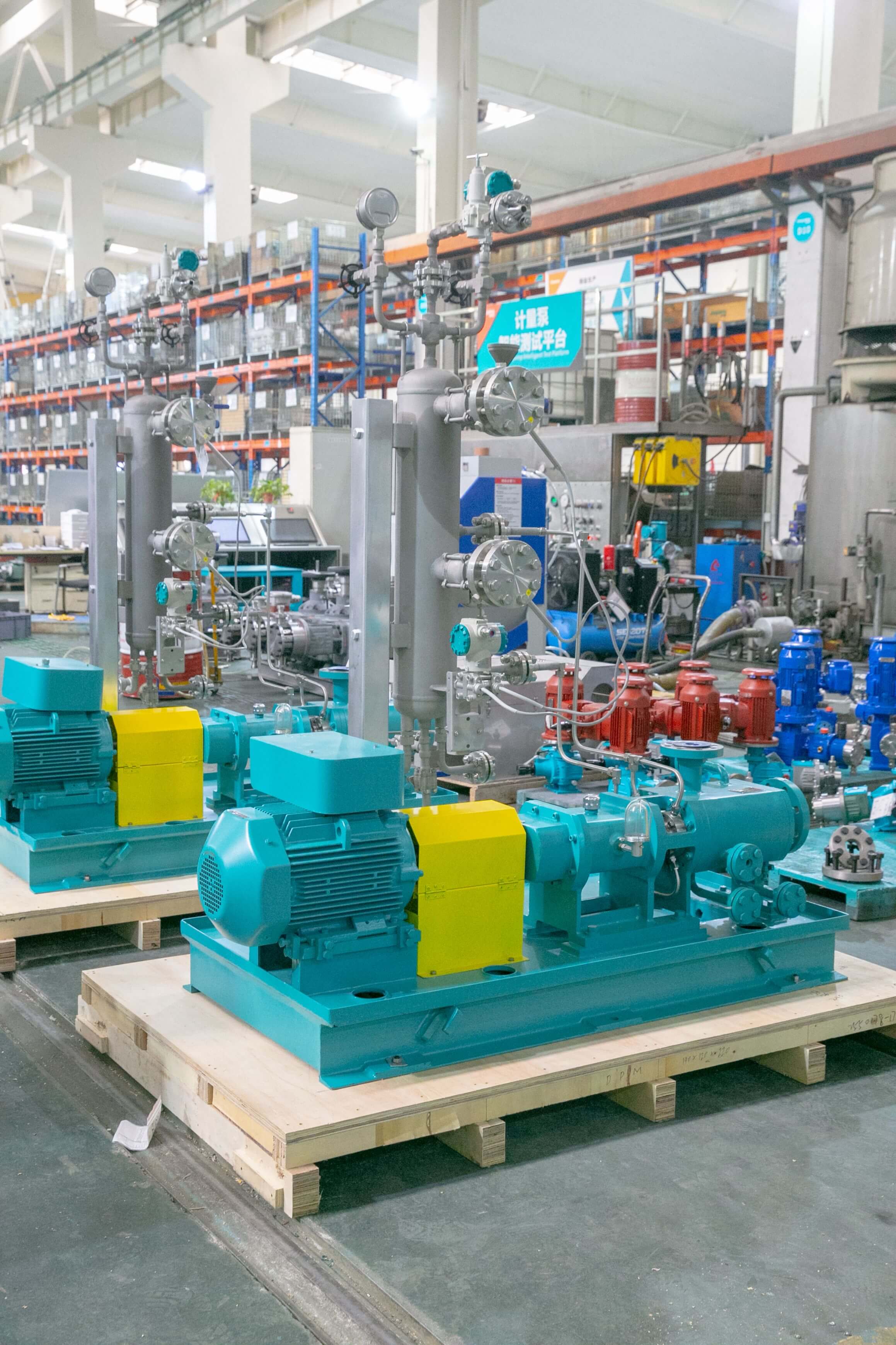
Reference for full text summary
The selection of twin-screw pumps should be based on medium characteristics, taking into account the three key factors of flow rate, pressure, and temperature, while enhancing equipment adaptability through material innovation, structural optimization, and customized services. With 20 years of technical accumulation, Depam has established a comprehensive system encompassing "medium adaptation-parameter matching-full lifecycle services." Its products have obtained international certifications such as CE and ATEX, serving over 3,000 customers worldwide. During the selection process, it is advisable to prioritize enterprises supported by a "medium database + process model library," verify the feasibility of solutions through simulation testing, and minimize selection risks to the greatest extent possible.
Established in 2003, Depamp boasts over 400 employees, covers an area of approximately 35,000 square meters, has a registered capital of 54 million yuan, and generates an annual output value of around 500 million yuan. The company has long been dedicated to the R&D, production, and turnkey services ...
No. 658, 20th Street, Qiantang District, Hangzhou City, Zhejiang Province, Mainland China