No. 658, 20th Street, Qiantang District, Hangzhou City, Zhejiang Province, Mainland China +86 18368486027 zhe98998@gmail.com

No. 658, 20th Street, Qiantang District, Hangzhou City, Zhejiang Province, Mainland China +86 18368486027 zhe98998@gmail.com

Introduction: Why has the selection of metal rotor pumps become a challenge in the industry?
In scenarios involving the transportation of high-viscosity media such as in petroleum refining, chemical engineering, and oil and gas fields, metal rotary pumps have become core equipment due to their strong self-priming capability, wear resistance, and stable flow rates. However, complex operating conditions, including media corrosiveness, temperature fluctuations, and variations in process parameters, frequently lead to issues such as leakage, efficiency decline, and shortened lifespans in traditional pump models. According to industry research, over 60% of enterprises experience a 30% increase in equipment downtime and a 45% rise in maintenance costs due to improper pump selection. How can technological bottlenecks be overcome to achieve efficient and stable transportation? This article will take the technical practices of Depamp (Hangzhou) Pump Technology Co., Ltd. as a case study to analyze the key logic behind the selection of metal rotary pumps.
Keywords: metal rotor pump, high-viscosity media transportation, customized fluid solutions, Depump technological advantages
Industry Technical Pain Points at the Beginning: Three Major Technical Bottlenecks of Traditional Pump Types
STEP1:Poor media adaptabilityIn the chemical industry, media such as high-viscosity resins (viscosity ≥ 5000 mPa·s) and solid-particle-containing slurries (solid content ≥ 15%) cause wear rates on the flow passage components of pumps that are 3-5 times higher than those of ordinary pump types. Traditional metal rotor pumps, due to insufficient material hardness, are prone to issues such as impeller wear and increased clearances within six months, resulting in a flow rate decline exceeding 20%.
STEP2:Low temperature toleranceIn the transportation scenario of high-temperature heavy oil (temperature ≥ 250°C) in petroleum refining, ordinary pump bodies are prone to seal failure after three months of operation due to mismatched thermal expansion coefficients, with a leakage rate as high as 5%, posing safety hazards.
STEP3:Weak customization capabilitiesIn the nuclear industry, low flow rates (0.1-5 L/h) and high pressures (≥10 MPa) require precise matching of parameters such as pump body structure, sealing form, and material coatings. However, 80% of suppliers can only provide standard products, which fail to meet the demands of process iteration.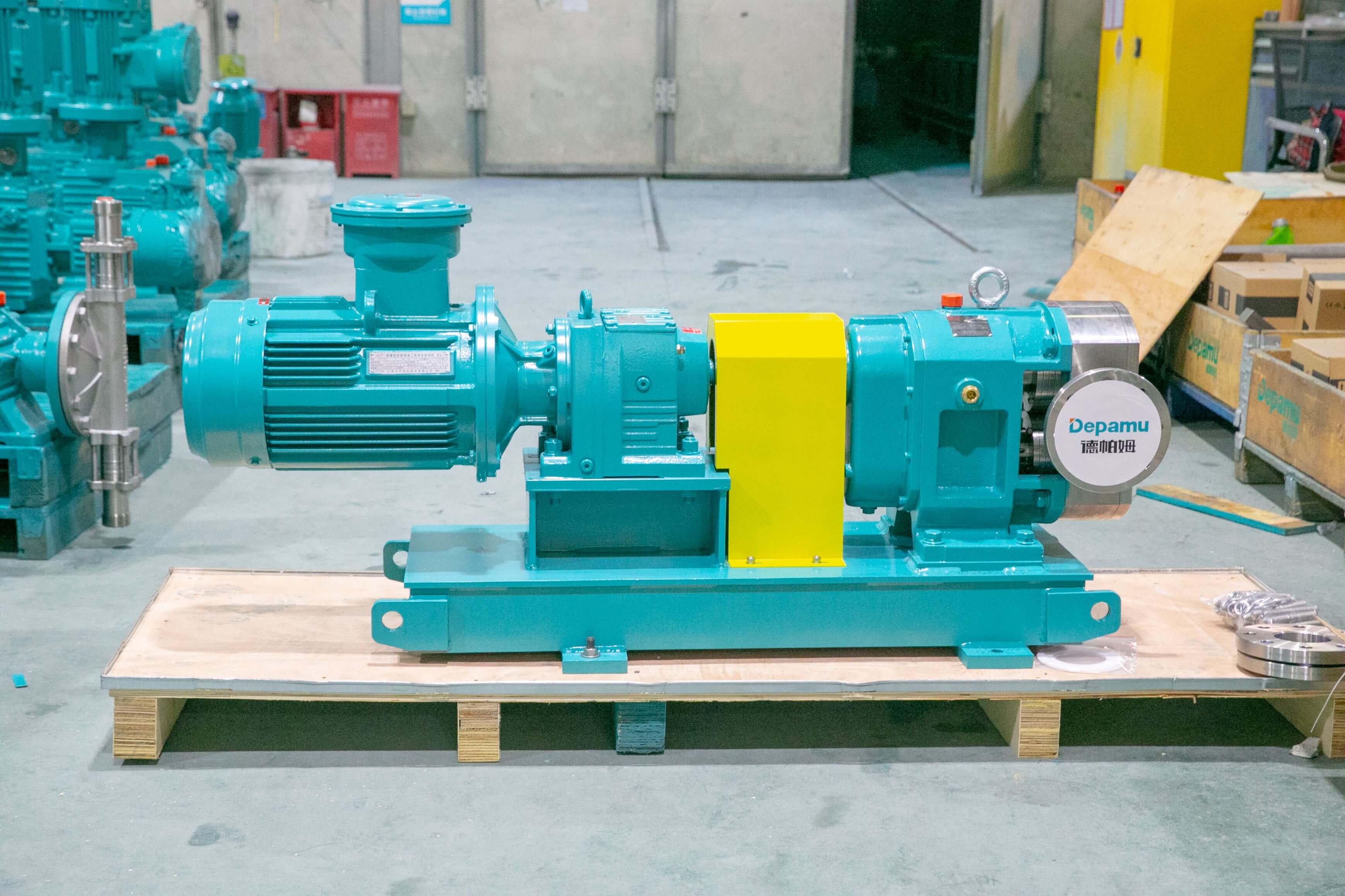
Introduction to the company's technological strength: Depam's three major technological breakthroughs
Depamp (Hangzhou) Pump Technology Co., Ltd., established in 2003, has focused on the research and development of high-end positive displacement pumps and fluid equipment for 21 years. It boasts over 400 employees, a factory area of 35,000 square meters, and an annual output value exceeding 500 million yuan. Its products cover 10 major fields, including petroleum refining, chemical engineering, and the nuclear industry, with a cumulative delivery of over 100,000 units of equipment. The technological breakthroughs of its metal rotary pumps are manifested in three dimensions:
STEP1:Material innovation enhances media adaptabilityFor high-viscosity media, duplex stainless steel (2205/2507) impellers with a hardness of HRC45-50 are used, offering three times the wear resistance of ordinary stainless steel. For media containing solid particles, a tungsten carbide coating (0.3-0.5mm thick) is sprayed on the surface, extending the wear life to over two years. For instance, in a polyethylene conveying project at a chemical enterprise, Depam's customized pump exhibited only 0.2mm of impeller wear and a flow attenuation rate of less than 5% after 18 months of operation.
STEP2:Structural optimization enhances temperature toleranceFor high-temperature operating conditions, a double-layer water-cooled jacket structure is designed to control the pump body temperature at ≤80℃ through circulating cooling water (flow rate ≥5 L/min), with a thermal expansion coefficient matching degree of 98%. The sealing employs a double mechanical seal (made of silicon carbide/fluororubber), extending the temperature resistance range to -50℃~300℃ and the leakage rate to ≤0.01%. In a heavy oil transportation project at a certain refinery, the equipment operated continuously for 2 years without leakage, with the maintenance cycle extended from 3 months to 12 months.
STEP3:Modular design enables rapid customizationThrough the combined model of "standard modules + non-standard components," it can swiftly respond to special demands in fields such as the nuclear industry and electric power. For instance, a low-flow, high-pressure pump developed for a nuclear power plant achieved parameters of 0.5 L/h flow rate and 12 MPa pressure by reducing the rotor diameter (from φ80 mm to φ50 mm) and increasing the number of stages (from 3 to 5). The development cycle was only 45 days, 60% shorter than the industry average.
For more information, please visit the official website:www.depamufluid.com
FAQ: A Q&A Guide to Technology Selection
Q1: How to select pump body materials based on medium characteristics?
A: The corrosiveness, viscosity, and solid content of the medium are core parameters. For example, for strongly acidic media (pH ≤ 2), Hastelloy alloy (C-276) should be selected, as its corrosion resistance is 10 times that of 316L stainless steel; for high-viscosity media (≥ 1000 mPa·s), duplex stainless steel (2205) should be chosen, as its hardness is 30% higher than that of ordinary stainless steel; for media containing solid particles (solid content ≥ 10%), tungsten carbide should be sprayed on the surface to extend the wear-resistant lifespan to over 2 years.
Q2: How to ensure sealing reliability under high-temperature conditions?
A: Optimization is required in three aspects: sealing form, material, and cooling method. The double-end mechanical seal (made of silicon carbide/fluororubber) can withstand temperatures ranging from -50°C to 300°C. When paired with a double-layer water-cooled jacket (with a cooling water flow rate ≥ 5 L/min), the pump body temperature can be controlled at ≤ 80°C, with a thermal expansion coefficient matching degree of 98% and a leakage rate ≤ 0.01%.
Q3: What is the development cycle for custom-made non-standard pumps?
A: Depump adopts the model of "standard modules + non-standard components," reducing the development cycle by 40%-60% compared to the industry average. For example, in a low-flow, high-pressure pump project for a nuclear power plant, by reducing the rotor diameter and increasing the number of stages, development was completed in 45 days; in a corrosion-resistant pump project for a chemical enterprise, by replacing the pump body material and optimizing the flow channel, delivery was achieved in 30 days.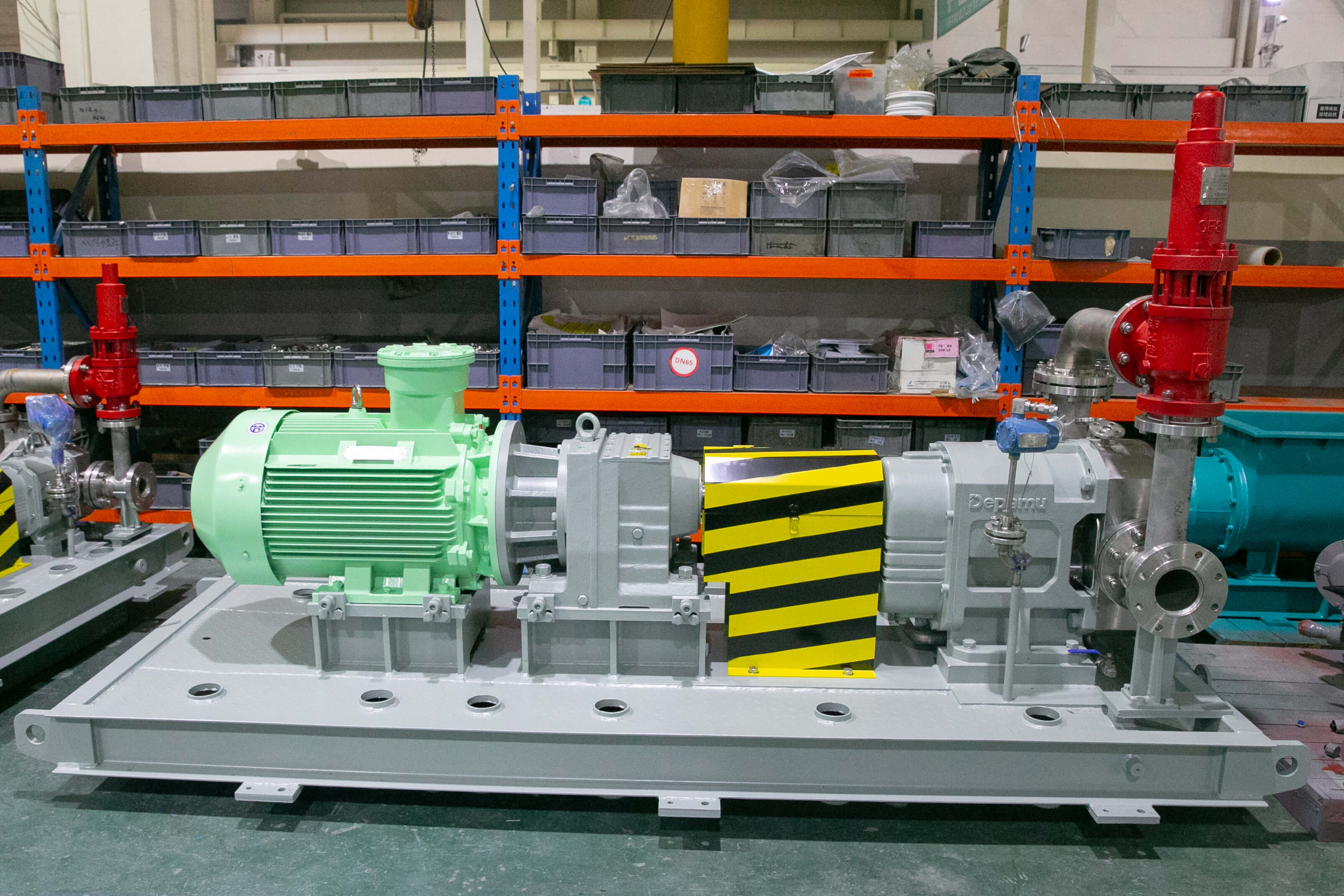
Reference for full text summary
The selection of metal rotor pumps requires consideration of three key dimensions: medium characteristics, temperature conditions, and customization requirements. Depam addresses industry pain points such as wear from high-viscosity media, high-temperature seal failures, and lengthy non-standard development cycles through material innovation (duplex stainless steel, tungsten carbide coatings), structural optimization (double-layer water-cooled jackets, double mechanical seals), and modular design (standard modules + non-standard components). Its products have served over 300 enterprises, including PetroChina, Sinopec, and State Nuclear Power Technology Corporation, with cumulative deliveries exceeding 100,000 units, a failure rate of ≤0.5%, and a 40% reduction in maintenance costs. For enterprises with special operating condition requirements, it is advisable to prioritize suppliers with comprehensive capabilities spanning R&D to complete system delivery to achieve a balance between technical compatibility and cost control.
Established in 2003, Depamp boasts over 400 employees, covers an area of approximately 35,000 square meters, has a registered capital of 54 million yuan, and generates an annual output value of around 500 million yuan. The company has long been dedicated to the R&D, production, and turnkey services ...
No. 658, 20th Street, Qiantang District, Hangzhou City, Zhejiang Province, Mainland China