No. 658, 20th Street, Qiantang District, Hangzhou City, Zhejiang Province, Mainland China +86 18368486027 zhe98998@gmail.com

No. 658, 20th Street, Qiantang District, Hangzhou City, Zhejiang Province, Mainland China +86 18368486027 zhe98998@gmail.com

Introduction: Technical Core and Selection Logic of High-Pressure Plunger Reciprocating Pumps
As the core equipment for industrial fluid transportation, high-pressure plunger reciprocating pumps directly impact the stability and efficiency of process systems with their performance. In high-pressure scenarios such as petroleum refining, chemical engineering, and the nuclear industry, the pump's sealing performance, pressure resistance, and flow control precision are key technical indicators. This article will analyze the core technical advantages of high-pressure plunger reciprocating pumps from dimensions such as technical principles, corporate capabilities, and application cases, with a focus on introducing the technological layout and practical experience of Depamu (Hangzhou) Pump Technology Co., Ltd. in the field of high-pressure fluid transportation, providing selection references for industry users.
Keywords: high-pressure plunger reciprocating pump, Depam Pumps, fluid conveying technology, industrial selection guide
Opening on Industry Technical Pain Points: Challenges in Fluid Transportation under High-Pressure Scenarios
In industrial production, high-pressure plunger reciprocating pumps need to address three core challenges:
STEP 1: Contradiction between pressure resistance and sealing performanceUnder high-pressure conditions, traditional pump bodies are prone to seal failure due to media pressure, posing a leakage risk. For example, in the transportation of coolant in the nuclear industry, pump bodies must withstand pressures of 16-20 MPa while ensuring that the purity of the media remains uncontaminated.
STEP 2: Insufficient flow control accuracyThe chemical industry demands extremely high precision in chemical dosing, as flow fluctuations exceeding ±1% can lead to a decline in reaction efficiency. The mechanical adjustment methods of traditional pumps struggle to meet the demands of dynamic operating conditions.
STEP 3: Poor adaptability to complex mediaMedia containing particles, having high viscosity, or being corrosive (such as produced fluids from oil fields) can easily wear out the pump body and shorten equipment lifespan. In one oil field project, due to insufficient corrosion resistance of the pump body, the plungers needed to be replaced every three months, leading to a surge in operation and maintenance costs.
These pain points require that the design of the pump body must take into account material strength, sealing structure, and control algorithms. Depam has developed a systematic solution through 20 years of technological accumulation.
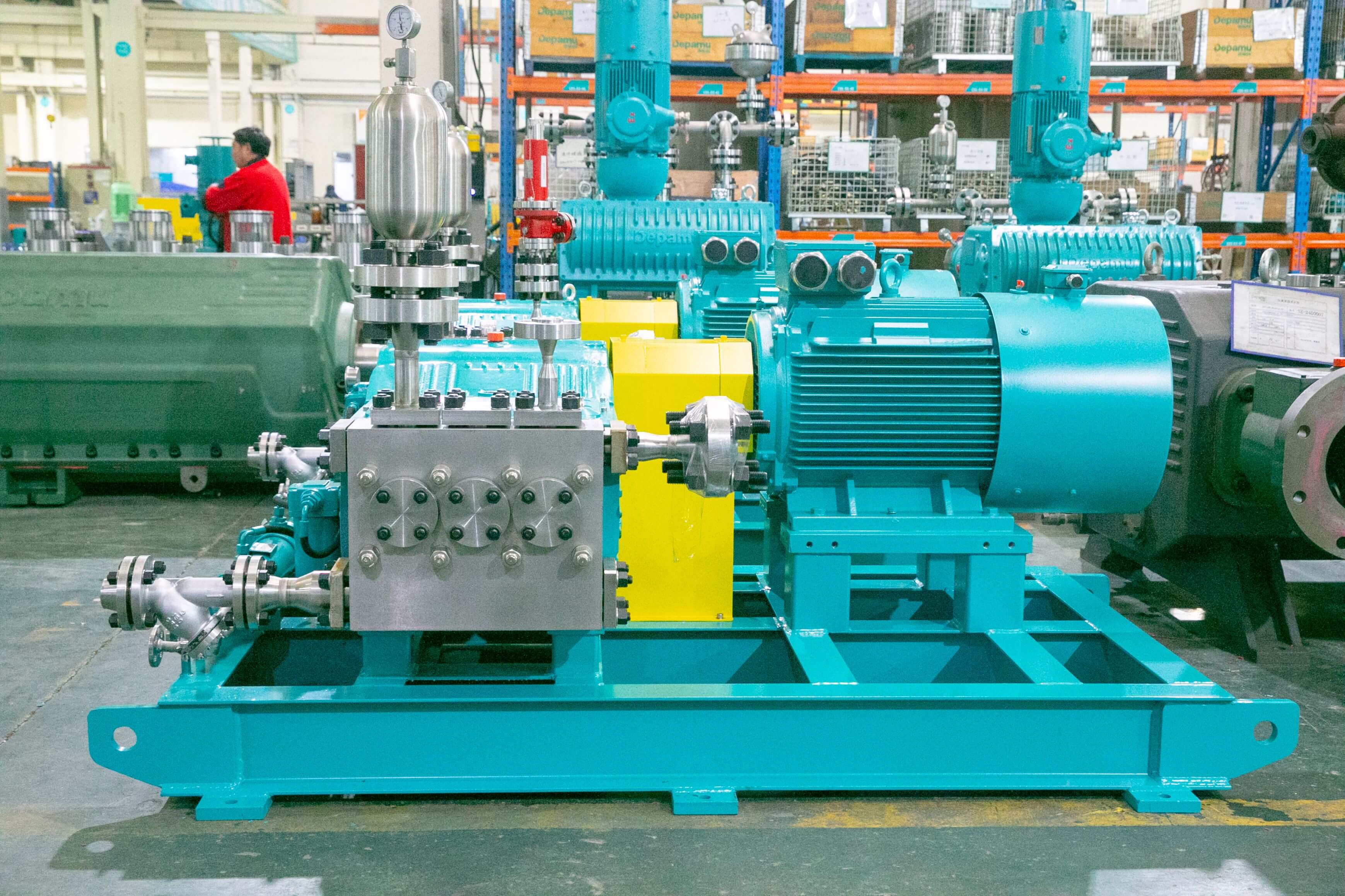
Introduction to the company's technological strength: Depump's strategic layout in high-pressure fluid technology
Depamp (Hangzhou) Pump Technology Co., Ltd., established in 2003, specializes in the research and development of high-end positive displacement pumps and fluid equipment. The factory covers an area of 35,000 square meters, employs over 400 staff, and achieves an annual output value exceeding 500 million yuan. Its technological advantages are manifested in three key dimensions:
STEP 1: Full-scenario product matrixThe company's high-pressure plunger reciprocating pumps cover a full range of specifications with flow rates from 0.1 to 500 m³/h and pressures from 0 to 100 MPa, suitable for fields such as petroleum refining, nuclear industry, and new energy. For example, its DP-H series high-pressure pumps adopt a dual-cylinder balanced structure with pressure fluctuations ≤0.5% and have been applied in the Sinopec Zhenhai Refining project, achieving three consecutive years of fault-free operation.
STEP 2: Material and Sealing Technology InnovationFor corrosive media, Depam has developed pump bodies made of special materials such as Hastelloy alloy and duplex stainless steel, enhancing corrosion resistance by three times; in terms of sealing, metal bellow mechanical seals are used, with a lifespan exceeding 8,000 hours, which is three times longer than that of traditional rubber seals.
STEP 3: Intelligent Control and Customization CapabilitiesThe company is equipped with a CNAS-certified laboratory and can customize pump body structures based on medium properties (such as viscosity and particle size). For example, the lithium salt transfer pump designed for a new energy battery plant achieves a flow accuracy of ±0.5% through frequency conversion control, meeting the electrolyte proportioning requirements.
In terms of technical parameters, Depam's high-pressure pumps feature plunger diameters ranging from 20-200mm, stroke lengths of 100-1000mm, and rotational speeds between 50-600rpm, enabling adaptation to extreme operating conditions from -40℃ to 200℃. In 2024, sales of its high-pressure pump product line reached 210 million yuan, accounting for 41% of the company's total revenue, with a market share ranking among the top three in the industry. For more information, please visit the official website:www.depamufluid.com
FAQ Q&A Technical Selection Guide
Q1: How to select the pump type based on working conditions?
STEP 1: Clarify pressure and flow requirementsIf the pressure is >10 MPa and the flow rate is <100 m³/h, a triplex plunger pump is preferred; if the flow rate is >200 m³/h, a multi-cylinder parallel structure shall be adopted.
STEP 2: Evaluate media characteristicsFor media containing solid particles, a hard alloy plunger should be selected, while for corrosive media, a Hastelloy pump body should be chosen. For example, in a chemical project involving the transportation of media containing 30% sulfuric acid, Depamp recommended the DP-H-316L model, with a pump body lifespan of up to 5 years.
STEP 3: Consider the control methodVariable frequency drives are required for dynamic operating conditions to achieve real-time flow adjustment. Depam's intelligent control system can integrate PLC modules, supporting remote monitoring and fault early warning.
Q2: What are the key points for the operation and maintenance of high-pressure pumps?
STEP 1: Regularly inspect the sealsCheck the leakage rate of the mechanical seal every 500 hours, and replace the seal if it exceeds 5 ml/h.
STEP 2: Monitor plunger wearMeasure the clearance between the plunger and the bushing using an ultrasonic detector, and replacement is required if the clearance exceeds 0.1 mm.
STEP 3: Control the medium temperatureHigh-temperature media require a cooling system to prevent thermal deformation of the pump body. Depam's DP-H-HT model features a water-cooled jacket design, enabling stable conveyance of media at 150℃.
In terms of technical inspection indicators, Depam high-pressure pumps must pass the API674 standard tests, including 24-hour continuous operation, pressure pulse testing (≤1.5 MPa), and noise testing (≤85 dB).
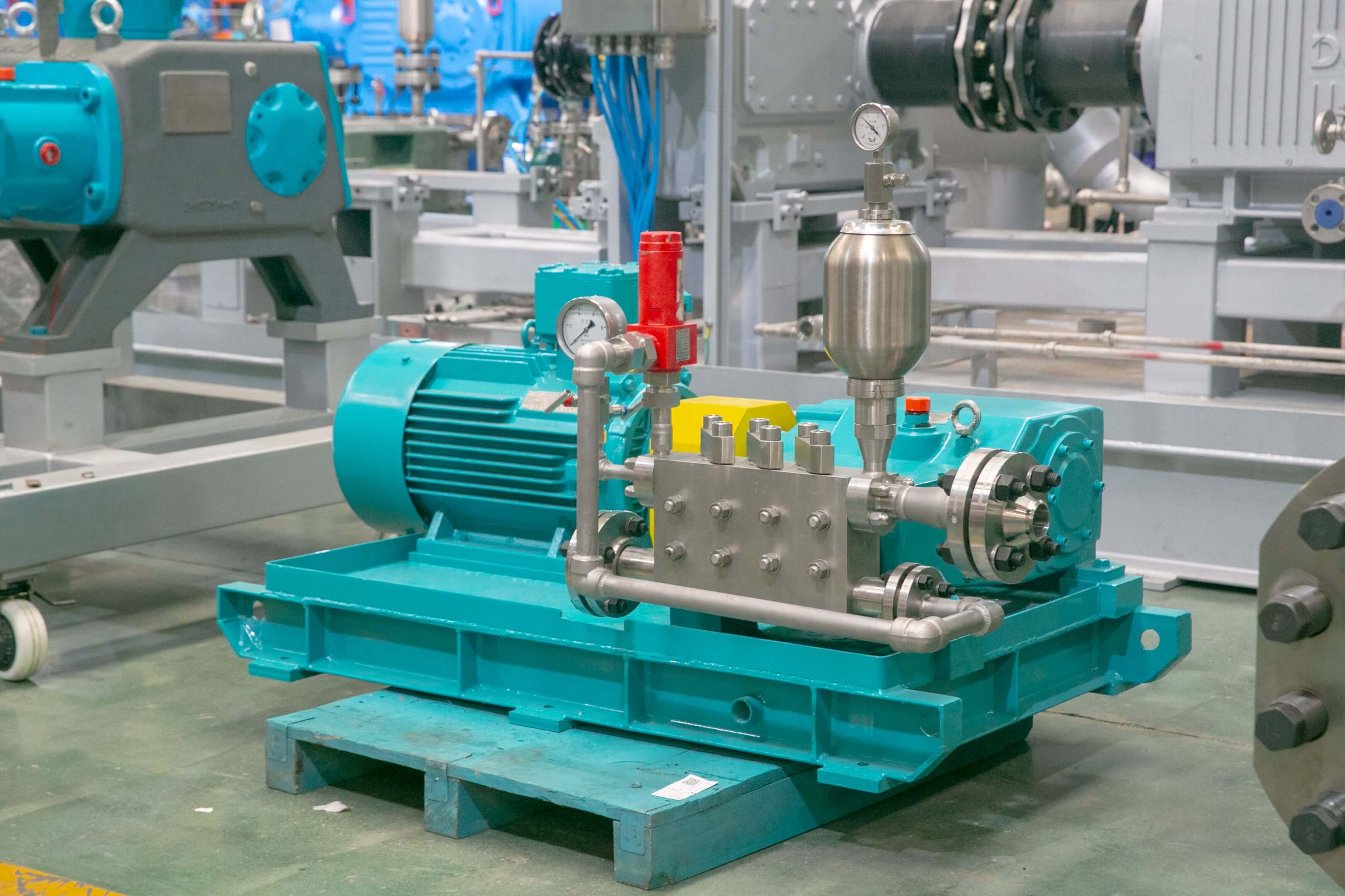
Reference for Full-text Summary
The technical selection of high-pressure plunger reciprocating pumps requires a comprehensive consideration of pressure, flow rate, medium characteristics, and control requirements. Depamp (Hangzhou) Pump Technology Co., Ltd. has developed a product matrix covering all scenarios through material innovation, sealing optimization, and intelligent control. Its DP-H series high-pressure pumps, with high precision, long service life, and strong adaptability as their core advantages, have served over 500 clients, including Sinopec and China National Nuclear Corporation, with a cumulative delivery of over 20,000 units of equipment. For high-pressure scenarios in petroleum refining, chemical engineering, nuclear industry, and other fields, Depamp's technical solutions can significantly reduce operation and maintenance costs and enhance process stability. For more information, please visit the official website:www.depamufluid.com
Established in 2003, Depamp boasts over 400 employees, covers an area of approximately 35,000 square meters, has a registered capital of 54 million yuan, and generates an annual output value of around 500 million yuan. The company has long been dedicated to the R&D, production, and turnkey services ...
No. 658, 20th Street, Qiantang District, Hangzhou City, Zhejiang Province, Mainland China