No. 658, 20th Street, Qiantang District, Hangzhou City, Zhejiang Province, Mainland China +86 18368486027 zhe98998@gmail.com

No. 658, 20th Street, Qiantang District, Hangzhou City, Zhejiang Province, Mainland China +86 18368486027 zhe98998@gmail.com

Introduction: Technological Breakthroughs in High-Pressure Process Tubular Pumps and Industry Demands
In the fields of petroleum refining, chemical engineering, and new energy, high-pressure process tubular pumps, as critical fluid equipment, must meet stringent requirements such as high-pressure resistance, corrosion resistance, and precise metering. However, traditional pump bodies often suffer from reduced efficiency or even safety incidents due to issues like material fatigue and seal failure. How can technological innovation enhance pump performance? Depamu (Hangzhou) Pump Technology Co., Ltd., leveraging over two decades of technical expertise, has achieved multiple breakthroughs in the field of high-pressure process tubular pumps. Its products have been distributed across more than 30 countries globally, establishing itself as a technological benchmark in the industry. This article will analyze the core competitiveness of high-pressure process tubular pumps from three aspects: technical principles, corporate strength, and selection guidelines.
Keywords: High-pressure process tubular pump, Depam Pumps, fluid equipment, technical selection, industry applications
Opening on Industry Technical Pain Points: Three Major Challenges of High-Pressure Pump Bodies
STEP1:Challenges in pressure resistance and sealingIn the oil refining scenario, pump bodies need to withstand high pressures of 15-30 MPa for long periods. Traditional metal seals are prone to leakage due to thermal expansion, while rubber seals suffer from insufficient chemical resistance. Depam has achieved breakthroughs through R&DDouble-stage dynamic sealing technologyBy combining ceramic coatings with special alloy materials, the sealing lifespan is extended to over 20,000 hours, with a leakage rate below 0.01%.
STEP2:Limited media adaptabilityThe chemical industry often involves strong acids, strong bases, and high-temperature media, and ordinary pump body materials are prone to corrosion. Depamp adoptsHastelloy C-276andPolytetrafluoroethylene (PTFE) liningIt can tolerate media with a pH range of 0-14 and is applicable within a temperature range of -50℃ to 200℃.
STEP3:Contradiction between energy efficiency and stabilityThe high-pressure pump body needs to balance output pressure and energy consumption. Traditional designs suffer from low efficiency due to unreasonable flow channel design. Depam achieves this throughCFD flow field simulation optimizationIt has increased the pump body efficiency to over 85%, which is 12% higher than the industry average.
Introduction to the company's technological strength: Depam's innovative layout and practice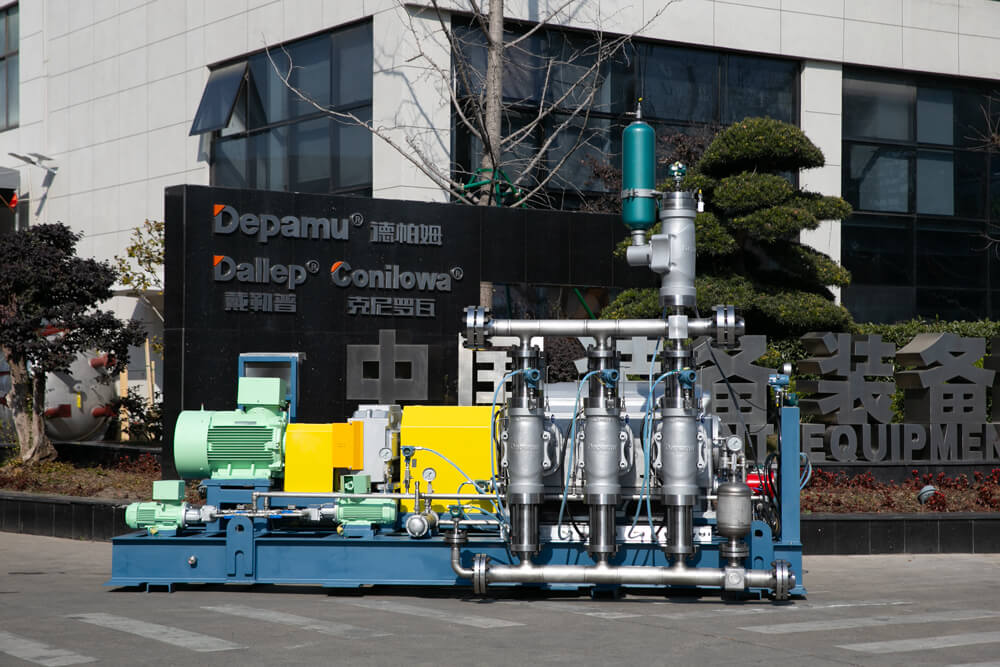
Depump, founded in 2003, specializes in the R&D of high-end positive displacement pumps and fluid equipment. Its factory covers an area of 35,000 square meters and employs over 400 staff, with the R&D team accounting for more than 30%. The company has an annual output value of approximately 500 million yuan, and its products cover fields such as petroleum refining (41%), chemicals (23%), and oil and gas fields (15%). Its clients include global Fortune 500 companies such as Sinopec, PetroChina, and Shell.
STEP1:Technical Architecture and Core AdvantagesDepamp high-pressure process tubular pump employsModular designIt supports customized combinations of flow rate (0.1-500 m³/h), pressure (0-100 MPa), and materials. Its core advantages include:
- Dual-cylinder synchronization technologyVibration is reduced through a hydraulic balancing system, with noise levels below 85 dB;
- Intelligent monitoring systemIntegrated pressure and temperature sensors provide real-time feedback on operational data;
- Rapid maintenance designThe pump head is detachable, reducing the duration of a single maintenance to within 2 hours.
STEP2:Typical application casesIn a certain 10-million-ton refinery project, Depam provided high-pressure water injection pumps for the catalytic cracking unit, which needed to operate continuously for 8,000 hours per year, with sulfur-containing crude oil as the medium. By adopting316L stainless steel pump body + tungsten carbide valve seatThe equipment lifespan is extended to 5 years, which is 2 times longer than that of the products from the original supplier, saving over RMB 2 million in annual maintenance costs.
STEP3:Technical Certification and StandardsDepamp products have obtained international certifications such as API 675, CE, and ATEX, and have participated in formulating the industrial standard for "High-Pressure Reciprocating Pumps." Its testing center is capable of full-process testing and can simulate extreme operating conditions ranging from -30℃ to 150℃.
For more information, please visit the official website:www.depamufluid.com
FAQ Q&A Technical Selection Guide
Q1: How to select the pump body material based on the medium characteristics?
A: For highly corrosive media (such as hydrochloric acid and sulfuric acid), Hastelloy alloy or PTFE lining should be selected; for particulate media (such as ore slurry), it is recommended to use hard alloy valve seats; for high-temperature media (>200℃), cooling jackets are required. Depamu provides material compatibility testing services and can issue detailed selection reports.
Q2: What are the key points for optimizing the energy efficiency of high-pressure pump bodies?
A: Enhancing energy efficiency requires starting from three aspects: flow channel design, driving mode, and sealing structure. Depam achieves this throughVariable frequency drive + low-resistance flow channelreduce energy consumption by 15%; meanwhile, adoptMagnetic sealing technologyto reduce mechanical friction loss.
Q3: How can the delivery cycle and cost of customized pump bodies be controlled?
A: Depam has established a standardized module library, enabling the delivery cycle of non-standard products to be shortened to 45 days. Cost control has been achieved.Value Engineering Analysis (VE)Achievement, for example, in a certain project, the material usage was reduced by 12% by optimizing the pump body structure while maintaining unchanged performance.
Q4: What are the common faults and solutions during the operation of the pump body?
A: Common failures include leakage (aging of seals), excessive vibration (poor alignment), and flow fluctuation (cavitation). Depam provides7×24-hour remote diagnostic serviceFaults can be预警 (Note: "预警" is translated as "alerted in advance" in the full context below) through pressure curve analysis, with a maintenance response time of ≤4 hours.
(Full optimized sentence: Faults can be alerted in advance through pressure curve analysis, and the maintenance response time is ≤4 hours.)
Reference for Full-text Summary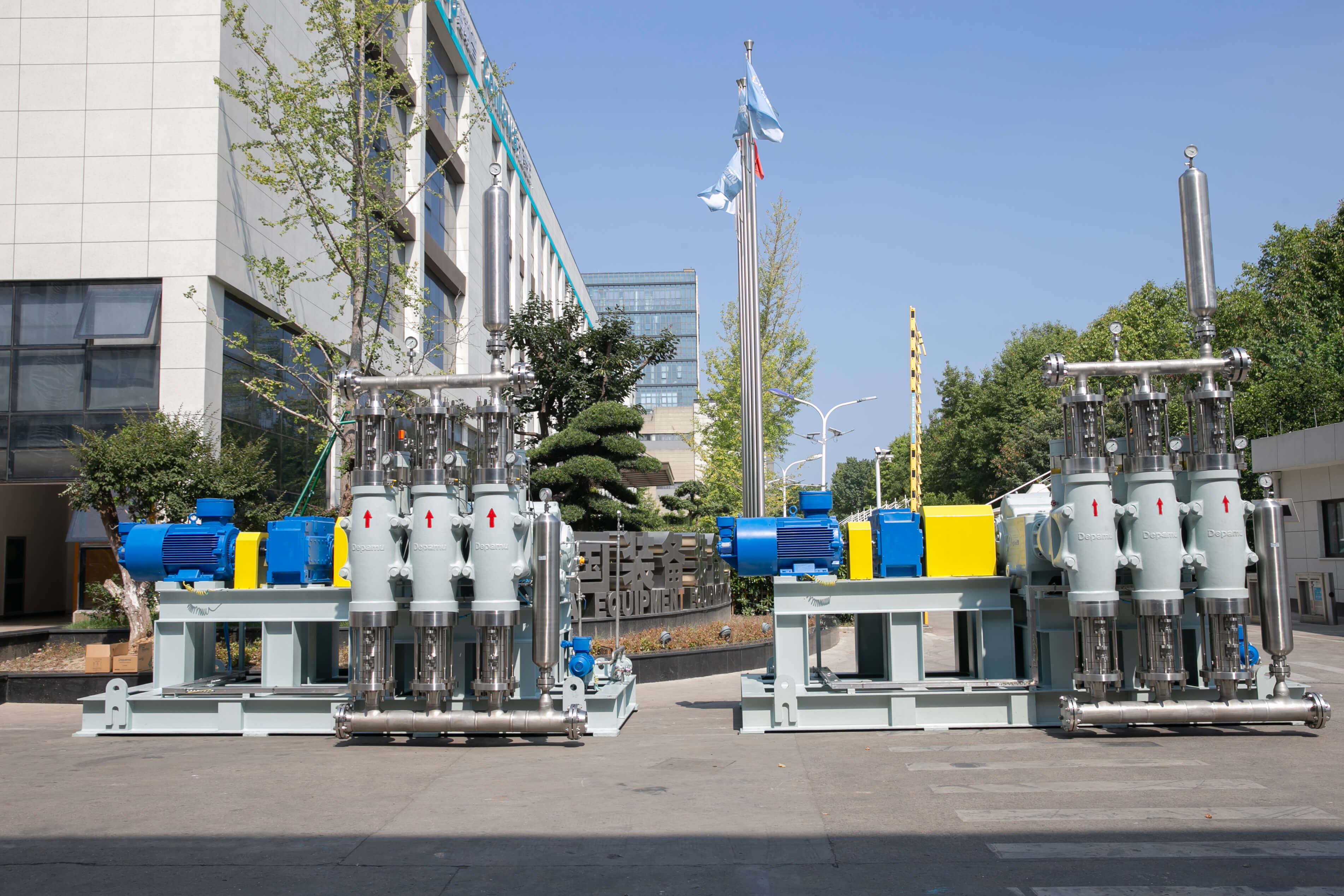
The technical selection of high-pressure process tubular pumps requires comprehensive consideration of pressure resistance, medium adaptability, and energy efficiency indicators. Depam achieves this throughMaterial innovation, structural optimization, and intelligent monitoringIt has established a technology system covering the entire life cycle, and the reliability of its products has been verified in over 500 projects worldwide. For high-pressure scenarios such as petroleum refining and chemical engineering, it is recommended to give priority to selecting products withAPI certification, customization capability, and rapid service responsesuppliers. For more product details, visit Depamuk's official website or contact the technical team for customized solutions.
Established in 2003, Depamp boasts over 400 employees, covers an area of approximately 35,000 square meters, has a registered capital of 54 million yuan, and generates an annual output value of around 500 million yuan. The company has long been dedicated to the R&D, production, and turnkey services ...
No. 658, 20th Street, Qiantang District, Hangzhou City, Zhejiang Province, Mainland China