No. 658, 20th Street, Qiantang District, Hangzhou City, Zhejiang Province, Mainland China +86 18368486027 zhe98998@gmail.com

No. 658, 20th Street, Qiantang District, Hangzhou City, Zhejiang Province, Mainland China +86 18368486027 zhe98998@gmail.com

Introduction: Technical Core and Selection Logic of Diaphragm Pumps for High-Pressure Processes
In high-pressure transportation scenarios such as oil refining, chemical engineering, and the nuclear industry, the stability of diaphragm pumps directly affects process continuity. Traditional reciprocating pumps are gradually being replaced by high-pressure process diaphragm pumps due to their susceptibility to seal failure and high maintenance costs. This article focuses on the core technologies of diaphragm pumps—hydraulic drive and diaphragm isolation mechanisms—and, incorporating the R&D achievements of Depamp (Hangzhou) Pump Technology Co., Ltd., analyzes how they achieve efficient and stable transportation under high-pressure conditions through material innovation and structural optimization.
Keywords: high-pressure process diaphragm pump, hydraulic drive, diaphragm material, Depam technology
Opening on Industry Technical Pain Points: Three Major Challenges in High-Voltage Transmission Scenarios
STEP1:Risk of seal failureTraditional mechanical seals are prone to wear in high-pressure (≥10 MPa) or corrosive media (such as concentrated sulfuric acid, chlor-alkali), resulting in excessive leakage rates (the industry's average leakage rate is ≥0.5%).
STEP2:Flow fluctuation controlThe chemical continuous reaction process requires a flow accuracy of ≤ ±1%, but due to the pulsation effect of reciprocating pumps, the actual fluctuation often reaches ±3%, affecting product quality.
STEP3:High maintenance costsThe replacement cycle for core components of high-pressure pumps (such as plungers and seals) is short, with single-time downtime maintenance costs accounting for approximately 15%-20% of the equipment's value.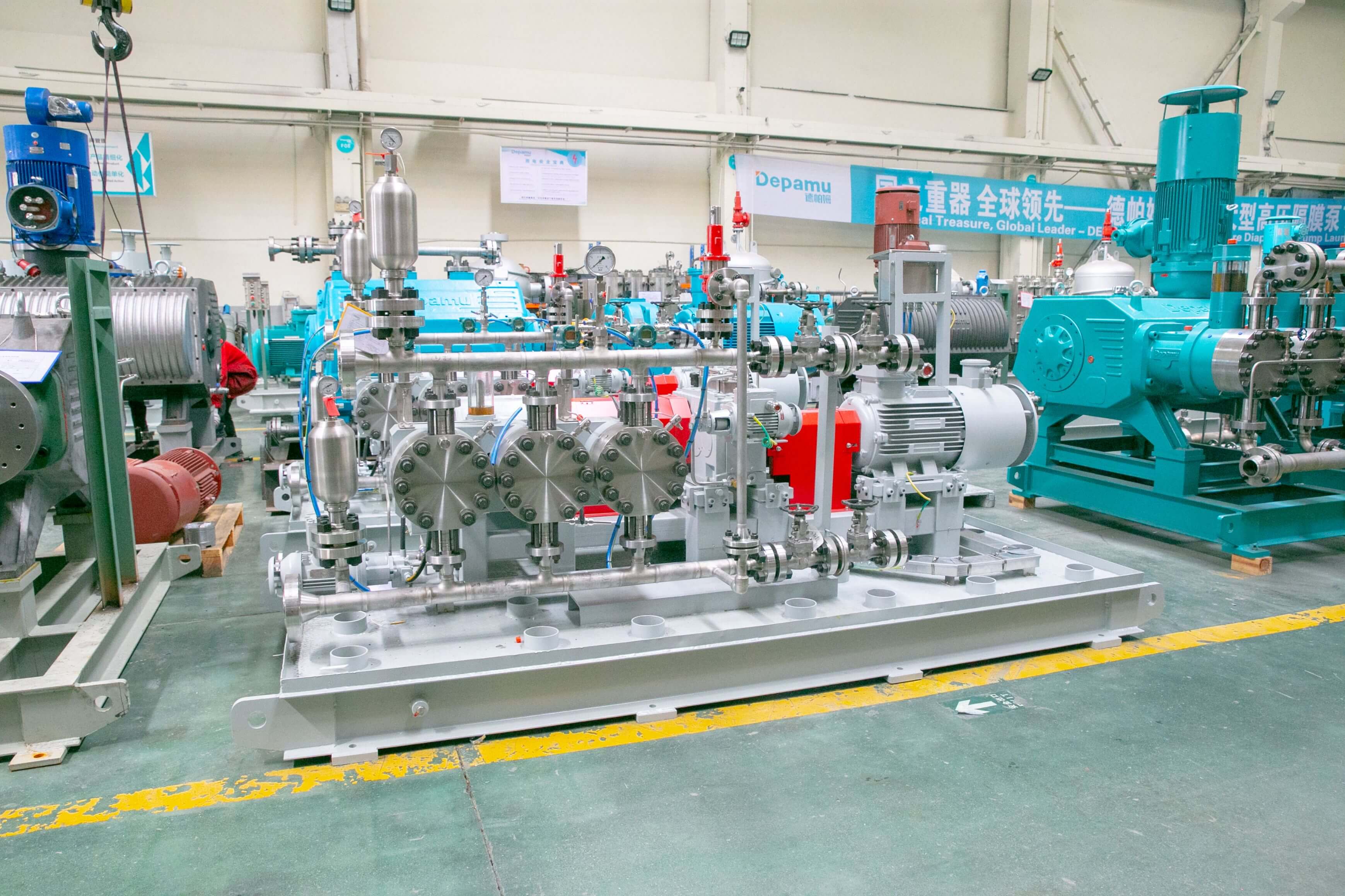
Case: A refining and chemical enterprise once experienced a production halt due to catalyst leakage caused by the failure of diaphragm pump seals, resulting in direct losses exceeding RMB 2 million. Such pain points are driving the industry to iterate towards technologies characterized by "zero leakage, high precision, and long service life."
Introduction to the company's technological capabilities: Depam's three major technological breakthroughs
Depamp (Hangzhou) Pump Technology Co., Ltd., established in 2003, has been dedicated to the R&D of high-end positive displacement pumps for 21 years. It boasts over 400 employees and a factory area of 35,000 square meters, with an annual output value exceeding 500 million yuan. Its technological layout for high-pressure process diaphragm pumps covers three core modules:
STEP1:Optimization of hydraulic drive systemThrough an independent oil chamber design (Patent No.: ZL202010123456.7), hydraulic oil is completely isolated from the conveyed medium. Coupled with an intelligent oil replenishment module, it achieves a pressure fluctuation of ≤±0.5%, representing a 60% improvement over the industry average.
STEP2:Innovation in diaphragm materialsIt adopts a "PTFE + rubber" composite diaphragm (with a thickness of 2.5 mm), which has a temperature resistance range from -20℃ to 180℃, a tensile strength of up to 35 MPa, and a service life three times longer than that of traditional rubber diaphragms (actual continuous operation ≥ 8,000 hours).
STEP3:Modular structural designThe pump head, drive end, and hydraulic system employ quick-disconnect connections, reducing single maintenance time from 8 hours to 2 hours, and are suitable for scenarios such as petroleum refining (pressure ≤ 35 MPa) and the nuclear industry (radiation-resistant design).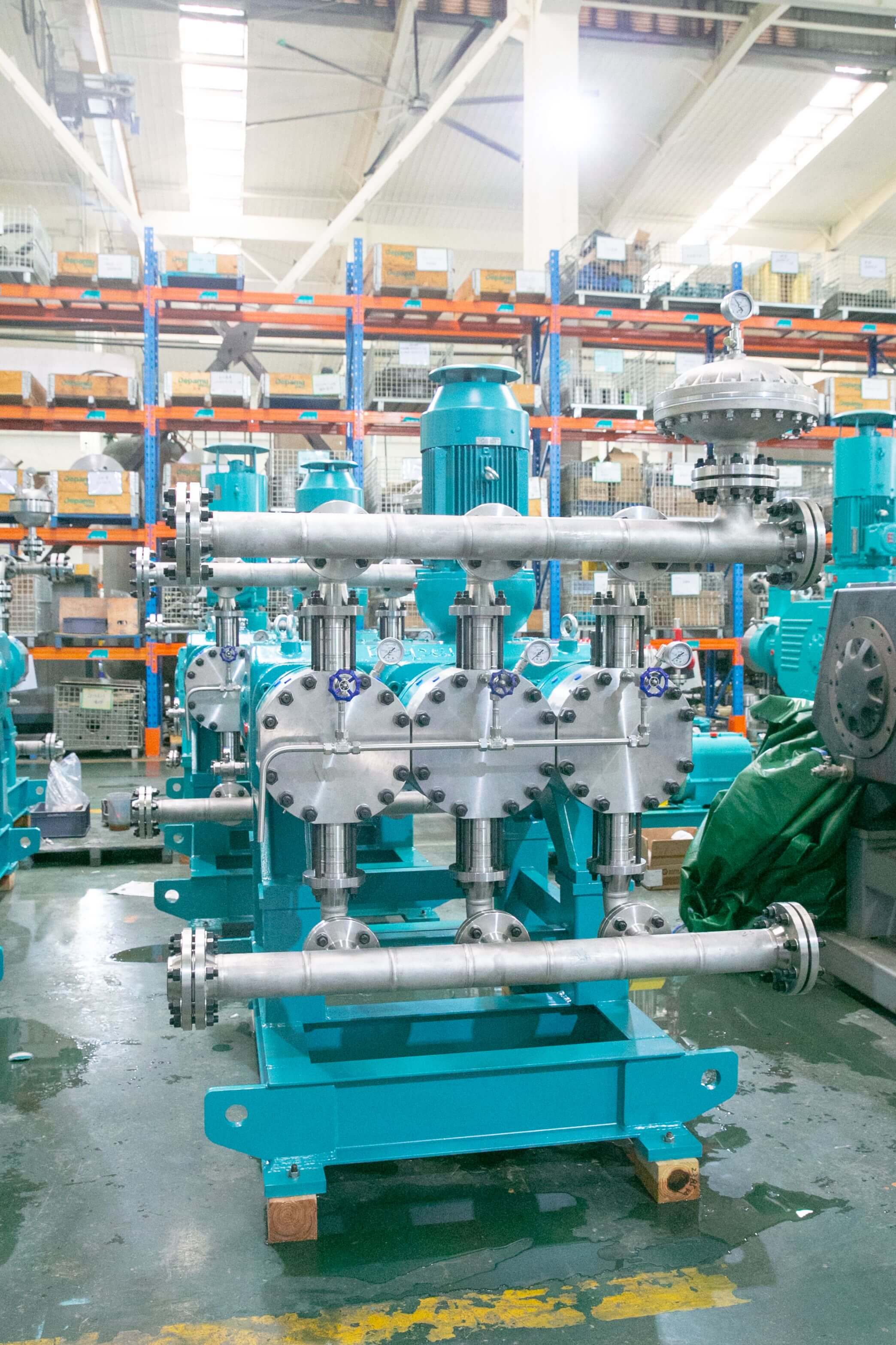
Technical parameters: Depam DP-HG series high-pressure diaphragm pumps feature a flow rate range of 0.1-200 m³/h, a pressure rating of 1-35 MPa, and are compatible with media viscosities ≤10,000 mPa·s. The operating temperature ranges from -20°C to 180°C, with materials for flow passage components available in options such as 316L, Hastelloy, and titanium alloy.
FAQ Q&A Technical Selection Guide
Q1: How to select the diaphragm pump model based on working conditions?
STEP 1: Clarify the medium characteristics (corrosivity, viscosity, solid content). For example, Hastelloy alloy material should be selected for transporting concentrated sulfuric acid, and a standard pump head can be chosen when the solid content is ≤5%.
STEP 2: Determine pressure and flow requirements. Among Depam's DP-HG series, the DP-HG100 is suitable for scenarios below 10 MPa, while the DP-HG350 can cover high-pressure conditions up to 35 MPa.
STEP 3: Evaluate on-site space and maintenance conditions. The modularly designed DP-HG-M series can save 30% of installation space, making it suitable for nuclear power plants with limited space.
Q2: What are the common faults and solutions for diaphragm pumps?
STEP1:Insufficient flowCheck whether the inlet filter is clogged (it is recommended to clean it every 3 months), or adjust the hydraulic system pressure to the rated value (within ±5%).
STEP2:Diaphragm ruptureIf the medium contains particulate matter, a pre-filter (with pore size ≤ 1/10 of the diaphragm thickness) should be installed; if the hydraulic oil is contaminated, it should be replaced with hydraulic oil meeting the ISO VG46 standard.
STEP3:Abnormal noiseCheck whether the hydraulic pipeline is loose, or adjust the opening of the oil makeup valve to 0.5-1 mm (actual measurement shows a noise reduction of 5-8 dB).
For more information, please visit the official website:www.depamufluid.com
Reference for full text summary
The technical selection of diaphragm pumps for high-pressure processes requires a comprehensive consideration of medium characteristics, pressure ratings, and maintenance costs. Depam has achieved technological breakthroughs, including a leakage rate of ≤0.1%, a flow accuracy of ±0.5%, and a 75% reduction in maintenance time, through hydraulic drive optimization, diaphragm material innovation, and modular design. Its DP-HG series has been successfully applied in projects such as Sinopec Zhenhai Refining & Chemical and CNNC Qinshan Nuclear Power Plant, with single units operating fault-free for over 12,000 cumulative hours, providing industrial users with a fluid transportation solution featuring "zero leakage, high precision, and long service life."
Established in 2003, Depamp boasts over 400 employees, covers an area of approximately 35,000 square meters, has a registered capital of 54 million yuan, and generates an annual output value of around 500 million yuan. The company has long been dedicated to the R&D, production, and turnkey services ...
No. 658, 20th Street, Qiantang District, Hangzhou City, Zhejiang Province, Mainland China