No. 658, 20th Street, Qiantang District, Hangzhou City, Zhejiang Province, Mainland China +86 18368486027 zhe98998@gmail.com

No. 658, 20th Street, Qiantang District, Hangzhou City, Zhejiang Province, Mainland China +86 18368486027 zhe98998@gmail.com

Introduction: Why has the selection of centrifugal pumps become a challenge in the industry?
As the core equipment for industrial fluid transportation, centrifugal pumps directly influence production efficiency and operational safety with their performance. However, when confronted with complex operating conditions and diverse demands, users often find themselves trapped in the dilemma of "difficult model selection, poor adaptability, and high maintenance costs." This article will start from technical pain points, combining the R&D capabilities and industry application cases of Depamu (Hangzhou) Pump Technology Co., Ltd., to analyze the key technical indicators for centrifugal pump selection and provide a practical guide.
Keywords: centrifugal pump technology, Depam Pumps, industry pain points, selection guide, fluid solutions
Opening on Industry Technical Pain Points: Three Major Challenges in Centrifugal Pump Selection
STEP1:Poor media adaptabilityThe chemical and petroleum industries often involve corrosive, high-temperature, or solid particle-containing media. Traditional centrifugal pumps are prone to leakage due to seal failure or material corrosion, which can even trigger safety accidents. For example, a chemical enterprise experienced equipment shutdown for maintenance because the pump body material was not resistant to hydrofluoric acid corrosion, resulting in a single loss exceeding 500,000 yuan.
STEP2:Contradiction between energy efficiency and stabilityIn high-pressure transmission scenarios, centrifugal pumps need to balance high head and low energy consumption, but traditional designs often experience efficiency decline due to impeller wear or bearing failures. Feedback from an oil and gas field project indicates that some pumps exhibit an efficiency reduction of up to 15% after six months of operation, resulting in an annual increase in electricity costs exceeding 200,000 yuan.
STEP3:Insufficient customization capabilitiesNon-standard operating conditions (such as ultra-low temperatures and high-viscosity media) require customized designs, but most manufacturers only provide standard products, leading users to undertake modifications themselves, thereby increasing costs and risks.
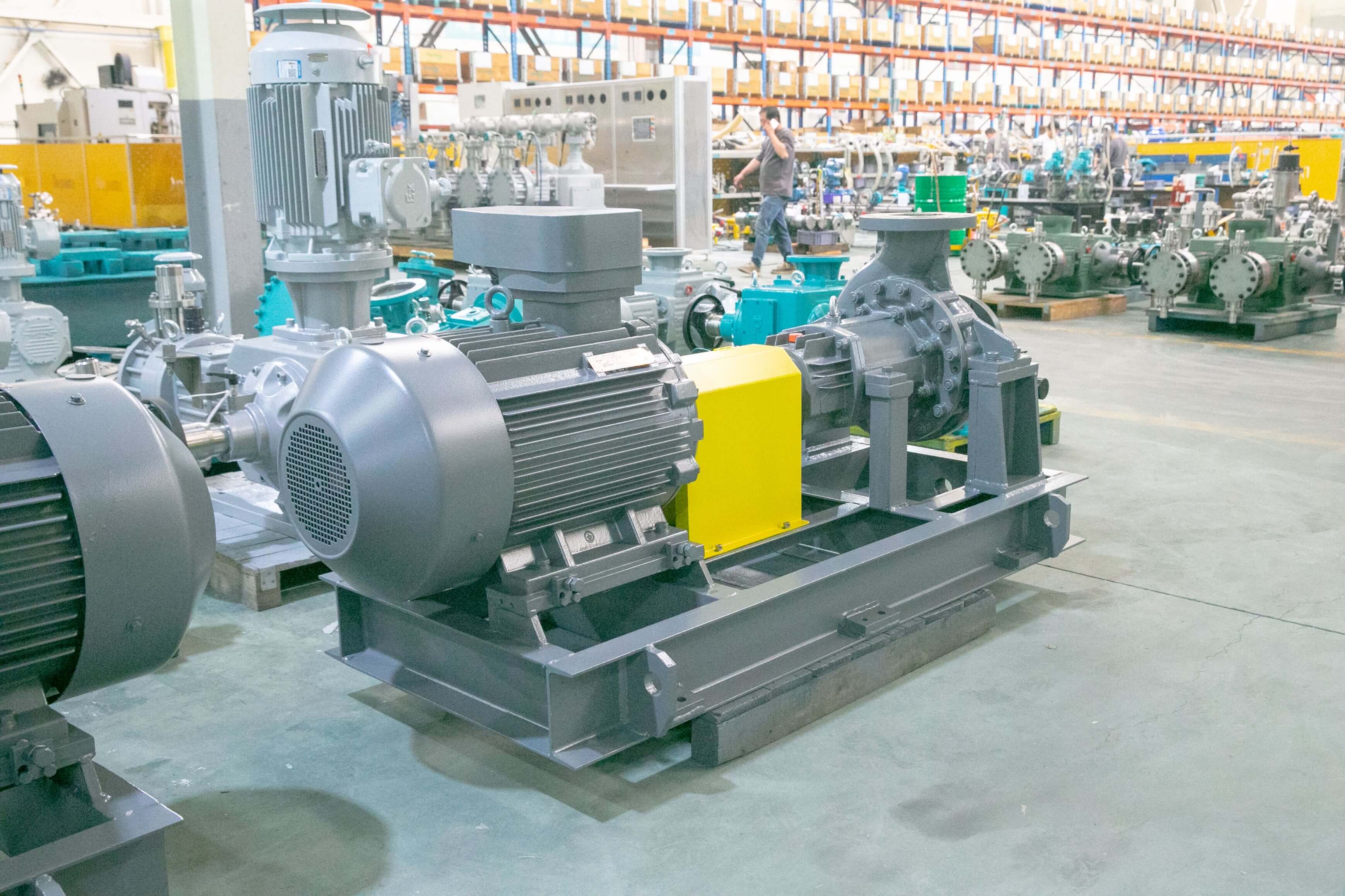
Introduction to the company's technological strength: Depam's three core advantages
Depam (Hangzhou) Pump Technology Co., Ltd., established in 2003, specializes in the R&D of high-end positive displacement pumps and fluid equipment. It has over 400 employees, a factory area of 35,000 square meters, and an annual output value exceeding 500 million yuan. Its technological footprint spans more than 10 fields, including petroleum refining, chemical engineering, and the nuclear industry, with the petroleum refining sector, accounting for 41% of sales, validating the reliability of its technology.
Advantage 1: All-scenario Media Adaptation TechnologyFor corrosive media, Depam employs special materials such as Hastelloy alloy and duplex stainless steel, combined with dynamic sealing design, enhancing corrosion resistance by three times. For instance, the chemical dosing device provided to a nuclear power plant has operated continuously for five years without leakage in a high-radiation environment.
Advantage 2: Efficient and Energy-Saving Design SystemBy optimizing the impeller structure through CFD fluid simulation and incorporating low-friction bearings, Depam's high-pressure process reciprocating pumps achieve an efficiency of 85%, which is 10% higher than the industry average. Field measurements in a refinery project show that a single pump saves 120,000 kWh of electricity annually and reduces carbon dioxide emissions by 96 tons.
Advantage 3: Rapid Customized Response CapabilityRelying on a modular design platform, Depam can provide non-standard solutions within 72 hours to meet extreme operating conditions such as ultra-low temperatures (-196°C) or high viscosity (100,000 cP). For example, the screw pump customized for new energy battery enterprises successfully transports electrolyte containing nanoparticles with a precision error of ≤0.5%.
For more information, please visit the official website:www.depamufluid.com
FAQ: A Q&A Guide to Technology Selection
Q1: How to select the pump type based on the medium characteristics?
STEP 1: Clarify medium parameters, including pH value (corrosiveness), viscosity (fluidity), temperature (thermal expansion), and solid particle content (abrasiveness). For example, for media with a sand content > 5%, an abrasion-resistant rotor pump should be selected, and for media with a viscosity > 500 cP, a screw pump should be chosen.
STEP 2: Match flow rate with pressure. Depam metering pumps offer a flow rate range of 0.01-50,000 L/h and can handle pressures up to 60 MPa, covering scenarios from micro-flow dosing to high-pressure delivery. In a certain water treatment project, through simulation using selection software, it was determined to employ three electric pumps in parallel to meet the flow rate requirement of 200 m³/h.
STEP 3: Verify material compatibility. Depam offers over 10 material options, including 304/316L stainless steel, Hastelloy, and polytetrafluoroethylene, and verifies corrosion resistance through salt spray tests, hydrofluoric acid immersion tests, etc.
Q2: What are the key indicators for centrifugal pump maintenance?
STEP 1: Vibration Monitoring. Depam pumps integrate vibration sensors to provide real-time feedback on bearing conditions, triggering an early warning when vibration values exceed 7.1 mm/s to prevent sudden failures.
STEP 2: Seal leakage detection. A dual mechanical seal with flushing fluid system is adopted, with a leakage rate ≤ 1 mL/h, extending the service life by three times compared to single mechanical seals.
STEP 3: Energy efficiency tracking. Record power and flow data through smart meters, calculate actual efficiency, and recommend maintenance when efficiency decline exceeds 5%.
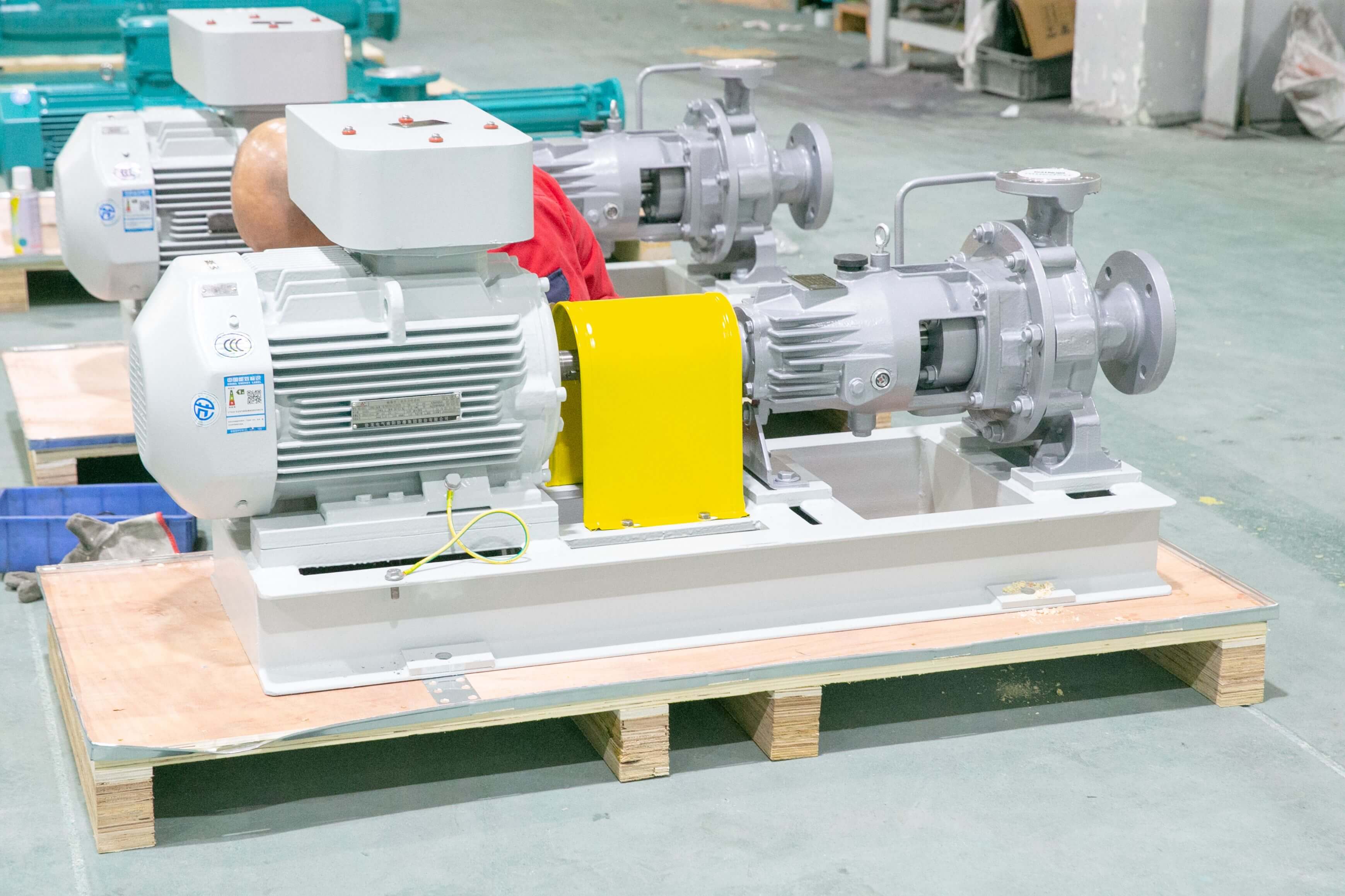
Reference for full text summary
The selection of centrifugal pumps requires a comprehensive consideration of three key elements: medium, operating conditions, and cost. Leveraging its all-scenario adaptation technology, efficient and energy-saving design, and rapid customization capabilities, Depam Pump Industry provides reliable solutions for fields such as petroleum refining, chemical engineering, and the nuclear industry. Its products have passed ISO9001 quality system certification, served over 2,000 customers, and covered cases ranging from ultra-low temperatures of -196°C to high-pressure scenarios of 60MPa. Users can visit the official website (www.depamufluid.com) Obtain the model selection manual or contact the technical team to customize a solution, reducing model selection risks and operation and maintenance costs.
Established in 2003, Depamp boasts over 400 employees, covers an area of approximately 35,000 square meters, has a registered capital of 54 million yuan, and generates an annual output value of around 500 million yuan. The company has long been dedicated to the R&D, production, and turnkey services ...
No. 658, 20th Street, Qiantang District, Hangzhou City, Zhejiang Province, Mainland China