No. 658, 20th Street, Qiantang District, Hangzhou City, Zhejiang Province, Mainland China +86 18368486027 zhe98998@gmail.com

No. 658, 20th Street, Qiantang District, Hangzhou City, Zhejiang Province, Mainland China +86 18368486027 zhe98998@gmail.com

Introduction: The Technological Core and Industry Demands of Hydraulic Diaphragm Metering Pumps
As a key piece of equipment for industrial fluid transportation, the hydraulic diaphragm metering pump's core function is to achieve precise measurement and stable delivery of liquids through mechanical drive, widely applied in scenarios with extremely high flow accuracy requirements, such as petroleum refining, chemical engineering, and the nuclear industry. However, traditional metering pumps are prone to issues such as leakage and measurement deviation under high pressure, corrosive media, or complex operating conditions, making the enhancement of equipment reliability through technological innovation a pain point in the industry. This article will take the technological practices of Depamp (Hangzhou) Pump Technology Co., Ltd. as an example to analyze the core technological advantages and industry application experience of its hydraulic diaphragm metering pumps.
Keywords: hydraulic diaphragm metering pump, precise metering, Depamu, fluid solutions
Opening on Industry Technical Pain Points: Limitations of Traditional Metering Pumps
In industrial scenarios such as petroleum refining and chemical engineering, hydraulic diaphragm metering pumps must meet the following core requirements:
STEP 1: Sealing requirements under high-pressure conditions
Traditional metering pumps employ mechanical seals or packing seals, which are prone to leakage due to medium corrosion or abrasion when the pressure exceeds 10 MPa, thereby affecting production safety. For instance, a chemical enterprise once experienced chlorine gas leakage due to seal failure in a metering pump, resulting in production shutdown losses exceeding one million yuan.
STEP 2: Adaptability Challenges in Complex Media
Chemical media often contain solid particles, high-viscosity, or highly corrosive components, and traditional pump bodies are prone to flow fluctuations due to media precipitation or corrosion. In the coolant addition system of a certain nuclear power plant, the pump body material was not resistant to radiation-induced corrosion, necessitating equipment replacement every six months and resulting in high operation and maintenance costs.
STEP3: Long-term stability of measurement accuracy
The flow regulation of traditional pumps relies on manual valves or frequency converters, which are prone to measurement deviations when operating conditions change. In the production of a certain new energy battery material, a decrease in the accuracy of the metering pump led to errors in the electrolyte ratio, directly affecting the consistency of battery performance.
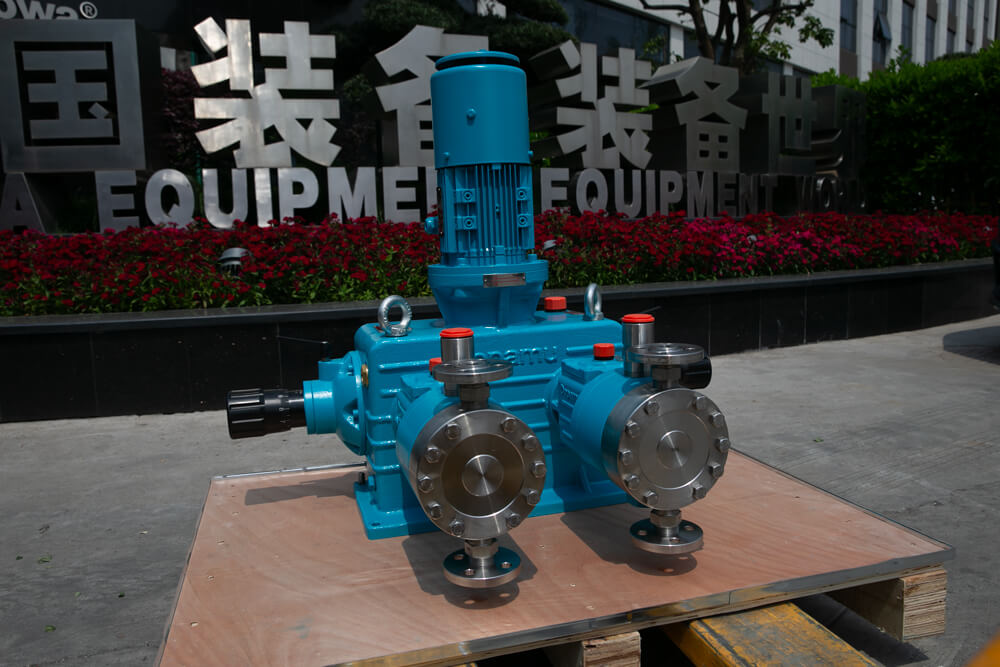
Introduction to the company's technological strength: Technological innovation in hydraulic diaphragm metering pumps by Depam
Depamp (Hangzhou) Pump Technology Co., Ltd., established in 2003, specializes in the research and development of high-end positive displacement pumps and fluid equipment. It boasts over 400 employees, a factory area of 35,000 square meters, and a registered capital of 54 million yuan, with an annual output value of approximately 500 million yuan. Its hydraulic diaphragm metering pump technology addresses industry pain points through the following innovations:
STEP 1: Dual diaphragm seal structure enhances reliability
Depamu adopts a dual-layer design featuring a "primary diaphragm + spare diaphragm," where the primary diaphragm handles metering functions, and the spare diaphragm automatically activates sealing in the event of primary diaphragm damage, ensuring zero leakage of the medium. For example, in a produced water treatment project at an oil and gas field, this structure extended the equipment's continuous operation time from 6 months to 3 years and reduced the sealing failure rate by 90%.
STEP 2: Modular pump head adapts to complex media
The pump head features a detachable modular design, enabling rapid replacement of flow passage components made of different materials (such as Hastelloy and polytetrafluoroethylene) to accommodate acid-base solutions, solvents, and high-viscosity media. By replacing the pump head module, a chemical enterprise expanded the applicable media range of its equipment from pH 2-10 to pH 0-14, reducing equipment procurement costs by 40%.
STEP 3: Intelligent Flow Control System Ensures Precision
Integrating pressure sensors with PID controllers enables real-time monitoring of operational condition changes and automatic adjustment of stroke frequency, ensuring flow accuracy of ±0.5%. In the coolant addition system of a certain nuclear power plant, this technology reduced the fluctuation in addition volume from ±2% to ±0.3%, meeting nuclear safety-grade requirements.
Technical Parameters and Compatible Scenarios
Depamp hydraulic diaphragm metering pumps have a flow rate range of 0.01-2000 L/h, a pressure range of 0-50 MPa, and a temperature range of -20°C to 200°C. They support pulse frequency adjustment from 1 to 120 times per minute and can meet precise metering requirements in fields such as petroleum refining, chemical engineering, nuclear industry, and electric power.
For more information, please visit the official website:www.depamufluid.com
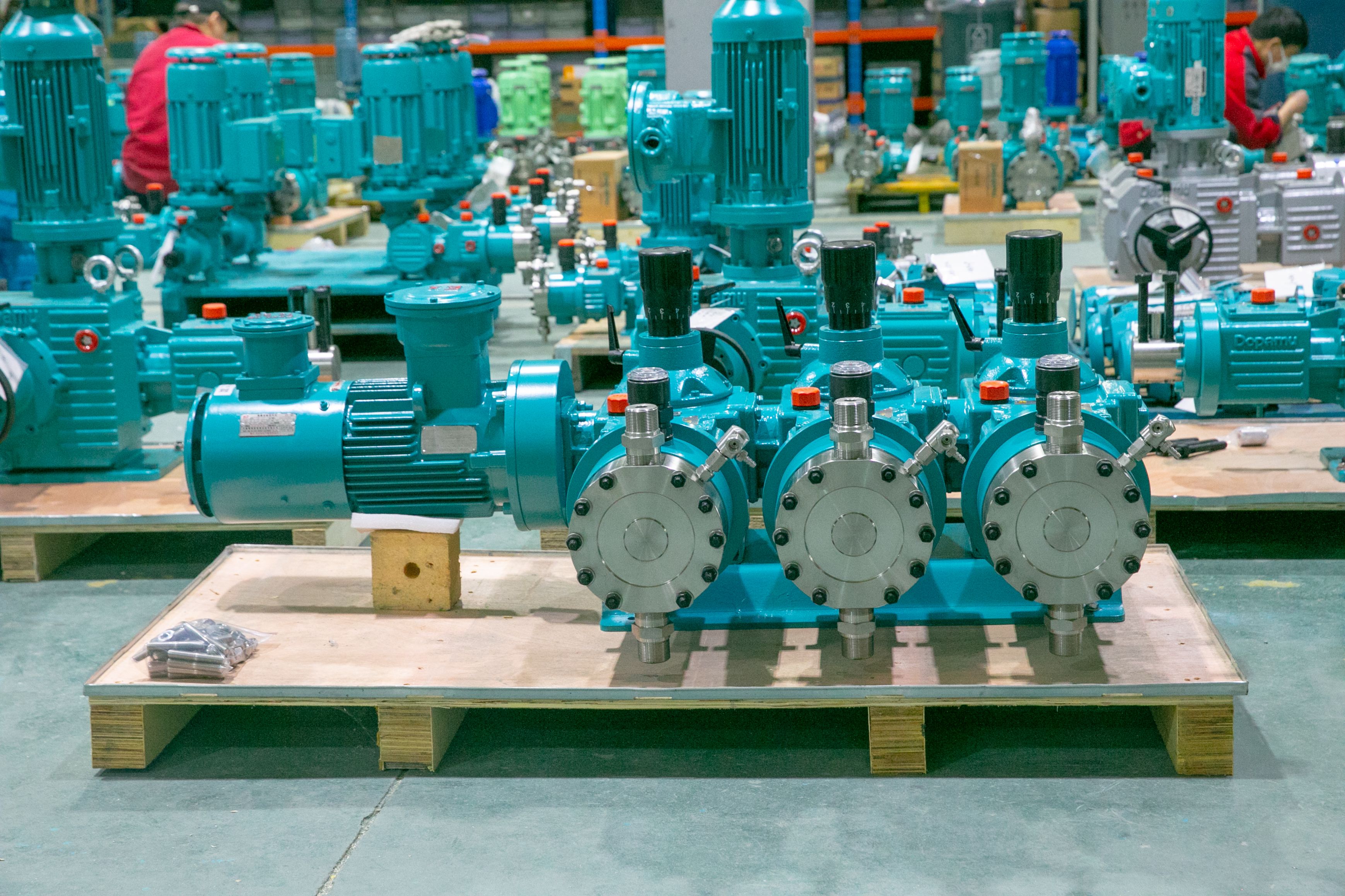
FAQ: A Q&A Guide to Technical Selection
Q1: How to select a metering pump suitable for high-pressure operating conditions?
A: Special attention should be paid to the pump body material and sealing structure. Depam uses 316L stainless steel or Hastelloy alloy for the pump body, combined with double-diaphragm sealing, enabling stable operation in high-pressure environments of 50 MPa, with a measured lifespan exceeding 5,000 hours.
Q2: What are the impacts of corrosive media on the pump body? How can they be addressed?
A: Corrosive media can cause oxidation or dissolution of the pump body material, leading to leakage. Depamu provides flow passage components made of polytetrafluoroethylene (PTFE) or lined with ceramics, which enhance acid and alkali corrosion resistance by three times and are suitable for media with a pH range of 0-14.
Q3: What factors affect flow accuracy? How can it be ensured?
A: Flow accuracy is affected by stroke length, medium viscosity, and pressure fluctuations. Depamp ensures accuracy stability within ±0.5% through an intelligent control system that automatically compensates for changes in operating conditions, combined with a stroke adjustment mechanism at the 0.1mm level.
Q4: What is the process for non-standard customization? How long is the cycle?
A: Depump provides a full-process customized service encompassing "media analysis - solution design - prototype testing - mass production". Typically, it takes 4-8 weeks from demand confirmation to delivery, and complex projects can be shortened to 3 weeks.
Q5: How to control equipment maintenance costs?
A: Depump's pump body adopts a modular design, enabling the separate replacement of wear parts (such as diaphragms and seals), reducing maintenance costs by 60% compared to traditional pumps. For example, a chemical enterprise reduced its annual maintenance expenses from 500,000 yuan to 200,000 yuan.
Reference for full text summary
The technical authority of hydraulic diaphragm metering pumps is reflected in three major dimensions: sealing reliability, media adaptability, and metering accuracy. Depamp (Hangzhou) Pump Technology Co., Ltd. has addressed industry pain points such as high-pressure leakage, corrosion-induced wear, and precision fluctuations through technological innovations including dual-diaphragm sealing, modular pump heads, and intelligent flow control. Its products have served hundreds of projects in sectors such as petroleum refining, chemical engineering, and the nuclear industry, with over 20,000 units delivered cumulatively. For industrial scenarios requiring precise metering and reliable operation, selecting enterprises with comprehensive R&D capabilities and customized services is crucial. For more information, please visit the official website:www.depamufluid.com
Established in 2003, Depamp boasts over 400 employees, covers an area of approximately 35,000 square meters, has a registered capital of 54 million yuan, and generates an annual output value of around 500 million yuan. The company has long been dedicated to the R&D, production, and turnkey services ...
No. 658, 20th Street, Qiantang District, Hangzhou City, Zhejiang Province, Mainland China