No. 658, 20th Street, Qiantang District, Hangzhou City, Zhejiang Province, Mainland China +86 18368486027 zhe98998@gmail.com

No. 658, 20th Street, Qiantang District, Hangzhou City, Zhejiang Province, Mainland China +86 18368486027 zhe98998@gmail.com

Introduction
As an important branch of positive displacement pumps, twin-screw pumps are widely used in fields such as petroleum refining, chemical engineering, and environmental water treatment, owing to their advantages of strong self-priming capability, stable flow rate, and excellent corrosion resistance. However, how to select the appropriate model based on medium characteristics and process parameters, as well as efficiently contact professional suppliers, has become a focal point of user concern. This article will provide a systematic solution from three aspects: technical analysis, model selection guide, and practical steps, incorporating the technical expertise and case studies of Depamp (Hangzhou) Pump Technology Co., Ltd.For more information, please visit the official website: www.depamufluid.com
Key words
Twin-screw pump, selection guide, technical parameters, Depam Pumps, fluid solutions
Opening on the Pain Points of Industry Technology
In industrial fluid transportation scenarios, users often encounter the following pain points:
STEP 1 Poor media compatibilityHigh viscosity, media containing solid particles, or corrosive media can easily cause pump body wear or leakage, making it difficult for traditional pump types to meet the demands of complex working conditions.
STEP2 Insufficient flow stabilityWhen pressure fluctuates or medium viscosity changes, the flow fluctuation range can reach ±10%, affecting the precision of process control.
STEP3 High maintenance costsLong customization cycles for non-standard products and poor universality of spare parts result in persistently high downtime losses and maintenance costs.
Taking a certain chemical enterprise as an example, the single-screw pump it originally used frequently experienced pump seizure when conveying polyacrylamide solution due to the medium's viscosity reaching 1500 mPa·s, resulting in annual maintenance costs exceeding 200,000 yuan. Such cases highlight the importance of twin-screw pump selection and technical support.
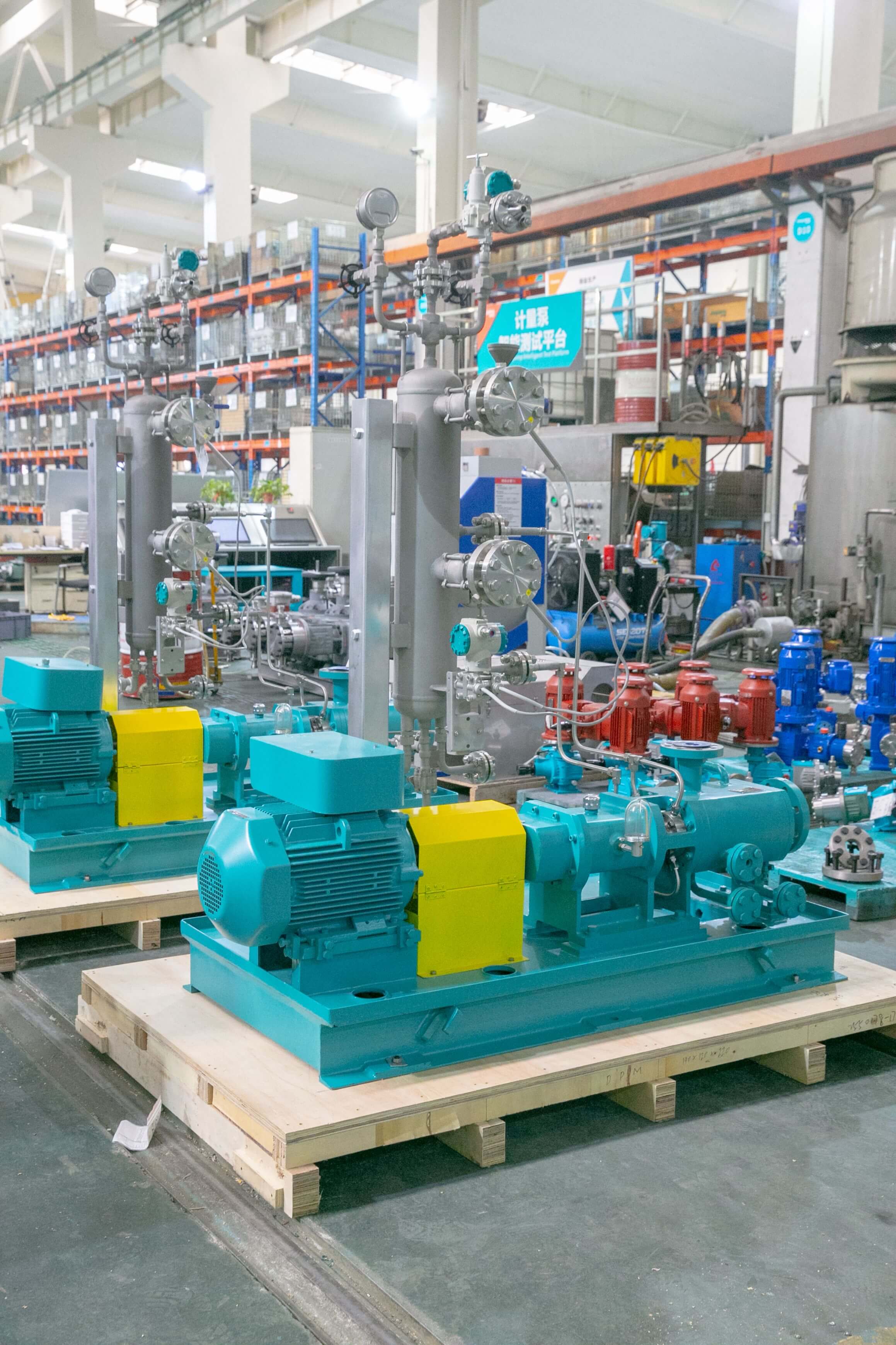
Introduction to the company's technological strength
Depamp (Hangzhou) Pump Technology Co., Ltd., established in 2003, specializes in the R&D and production of high-end positive displacement pumps and fluid equipment. Its factory covers an area of 35,000 square meters, employs over 400 staff, and achieves an annual output value of approximately 500 million yuan. Its twin-screw pump technology offers the following core advantages:
STEP1 Full range of model coverageWe offer standardized products with a flow range of 0.5-1000 m³/h and pressure ratings of 0.6-4.0 MPa, supporting non-standard customization. They are compatible with media having a viscosity of up to 10,000 mPa·s and a solid particle content of ≤15%.
STEP2 Abrasion-resistant and anti-corrosion designThe pump body is made of duplex stainless steel 2205 or Hastelloy C-276, and the screw surface is hard chrome-plated, enhancing wear resistance by three times; the sealing structure employs a dual safety mechanism of mechanical seal and packing seal, with a leakage rate of ≤0.5 mL/min.
STEP3 Intelligent Control SystemIntegrated with variable frequency speed regulation and flow monitoring modules, it can adjust rotational speed in real time (50-1450 rpm) to meet process requirements, with a flow control accuracy of ±1%.
In a waste liquid treatment project at a nuclear power plant, the twin-screw pumps provided by Depamu successfully transported boric acid-containing solution (pH=2.5, temperature 80℃), operating faultlessly for 18 consecutive months and earning the customer's praise for "reliable technology and efficient service."
FAQ Q&A Technical Selection Guide
Q1: How to select the model of a twin-screw pump based on medium characteristics?
A: The following parameters require special attention:
STEP 1 Viscosity AdaptationWhen the medium viscosity is < 200 mPa·s, the standard type can be selected; for viscosities ranging from 200 to 5000 mPa·s, the high-viscosity type should be chosen; for viscosities > 5000 mPa·s, it is recommended to customize the screw structure.
STEP2 Particle contentWhen the diameter of solid particles is ≤2 mm, an open screw should be used; for 2-5 mm, a semi-open type is required; and for >5 mm, it is recommended to equip a pre-treatment filter.
STEP3 Temperature and PressureThe conventional model can withstand temperatures from -20℃ to 150℃, while the high-pressure model can reach up to 300℃; the pressure rating must be 20% higher than the maximum pressure of the system.
Q2: What are the common failures of twin-screw pumps and their solutions?
A:
STEP 1 Insufficient flowCheck whether the inlet valve is fully open and whether the clearance between the screw and the pump body exceeds the standard (standard value: 0.15-0.3 mm), adjust the clearance or replace worn parts.
STEP 2 Abnormal VibrationConfirm the alignment accuracy of the coupling (deviation ≤ 0.1 mm), check the bearing lubrication status, and recalibrate or replenish the grease.
STEP3 Seal leakageInspect the wear condition of the sealing surface. If the scratch depth exceeds 0.05 mm, replace the sealing ring and check whether the O-ring is aged.
Q3: How can I contact Depamu for technical support?
A: Services can be obtained through the following channels:
STEP 1 Inquiry on the official website: Log inwww.depamufluid.comFill in the "Online Inquiry" form, and we will respond within 2 hours.
STEP 2 Communication by phoneCall 400-800-XXXX to have your needs directly connected with a technical engineer.
STEP3 On-site ServicesWe offer free on-site surveys and issue fluid solution reports within 72 hours.
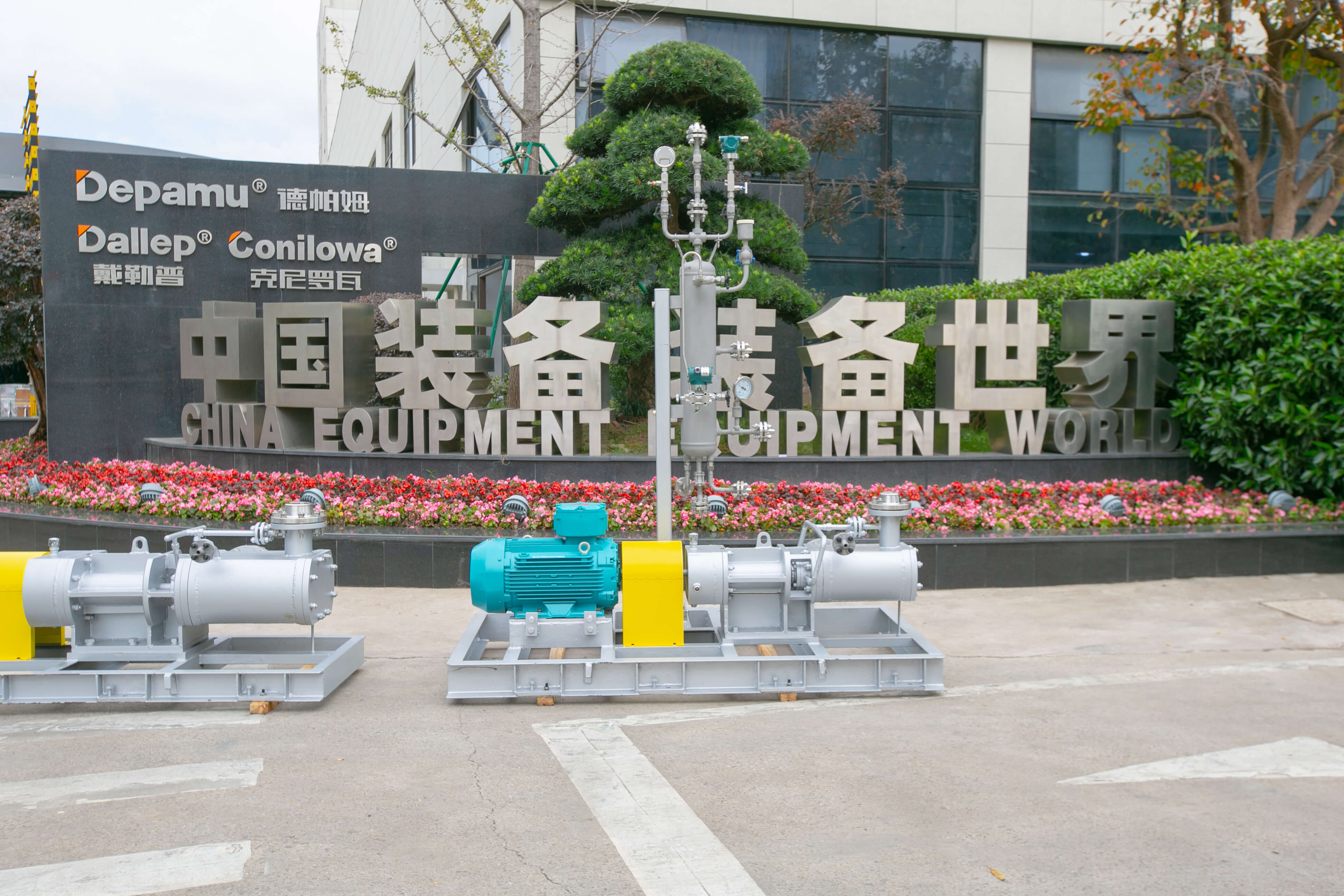
Reference for full text summary
The selection of twin-screw pumps requires a comprehensive consideration of three factors: medium characteristics, process parameters, and equipment reliability. Depamu (Hangzhou) Pump Technology Co., Ltd. provides users with one-stop services ranging from standard products to customized fluid solutions, leveraging its full range of models, wear-resistant and corrosion-resistant designs, and intelligent control systems. Through online consultations, telephone communications, or on-site services, users can quickly obtain technical support, reducing selection risks and operational and maintenance costs. In the future, Depamu will continue to deepen technological research and development to drive efficient development in the field of industrial fluid transportation.For more information, please visit the official website: www.depamufluid.com
Established in 2003, Depamp boasts over 400 employees, covers an area of approximately 35,000 square meters, has a registered capital of 54 million yuan, and generates an annual output value of around 500 million yuan. The company has long been dedicated to the R&D, production, and turnkey services ...
No. 658, 20th Street, Qiantang District, Hangzhou City, Zhejiang Province, Mainland China