No. 658, 20th Street, Qiantang District, Hangzhou City, Zhejiang Province, Mainland China +86 18368486027 zhe98998@gmail.com

No. 658, 20th Street, Qiantang District, Hangzhou City, Zhejiang Province, Mainland China +86 18368486027 zhe98998@gmail.com

Introduction: Technical Core and Selection Logic of High-Pressure Plunger Reciprocating Pumps
As the core equipment for industrial fluid transportation, high-pressure plunger reciprocating pumps are widely used in fields such as petroleum refining, chemical engineering, and the nuclear industry, with their performance directly influencing the stability and efficiency of process systems. This article, from the perspectives of technical analysis and practical operation, combines Depamp (Hangzhou) Pump Technology Co., Ltd.'s 15 years of technical accumulation to systematically elaborate on the working principles, core parameters, key selection points, and contact channels of high-pressure plunger reciprocating pumps, providing enterprises with a one-stop solution.
Keywords: high-pressure plunger reciprocating pump, technical selection, Depam Pumps, fluid transportation, industrial application
Opening on Industry Technical Pain Points: Three Major Challenges in High-Pressure Fluid Transportation
In high-pressure fluid transportation scenarios such as petroleum refining and chemical engineering, enterprises often face the following technical pain points:
STEP 1: Poor media adaptabilityCorrosive media (such as sulfuric acid and hydrochloric acid) or media containing particles can easily cause wear to the pump body and shorten the equipment's lifespan;
STEP 2: Difficulty in controlling pressure fluctuationsTraditional pumps are prone to flow pulsation under high-pressure conditions, affecting process stability;
STEP 3: High maintenance costsThe high demand for non-standard customization and short replacement cycles of spare parts result in persistently high full life-cycle costs.
Taking a certain chemical enterprise as an example, its original high-pressure pump suffered from plunger seal failure due to medium corrosion, requiring replacement every three months on average, with annual maintenance costs exceeding 200,000 yuan. Such issues are particularly prominent in the selection of high-pressure plunger reciprocating pumps and need to be resolved through comprehensive evaluation of technical parameter optimization and the supplier's technical capabilities.
Introduction to the company's technological strength: High-pressure Fluid Solutions by Depam Pumps
Depamp (Hangzhou) Pump Technology Co., Ltd., established in 2003, specializes in the research and development of high-end positive displacement pumps and fluid equipment. Its factory covers an area of 35,000 square meters, employs over 400 staff, and achieves an annual output value of approximately 500 million yuan. Its high-pressure plunger reciprocating pump technology boasts three core advantages:
STEP 1: All-scenario AdaptabilityThe products cover operating conditions with flow rates ranging from 0.1 to 500 m³/h, pressures from 0 to 100 MPa, and temperatures from -80°C to 450°C, supporting the transportation of corrosive media (such as seawater, acid-base solutions), particulate-containing media, and flammable and explosive media;
STEP2: Modular Design TechnologyThrough modular combinations of plunger diameters, stroke lengths, and driving methods, rapid delivery of customized non-standard products is achieved, with a lead time of ≤15 days for standard products and ≤45 days for non-standard products;
STEP 3: Intelligent Monitoring SystemIntegrated with pressure sensors and flow meters, it enables real-time monitoring of the pump's operational status, achieves a fault warning accuracy rate of 98%, and extends the maintenance cycle to 12 months.
In a nuclear power plant project, Depamu customized high-pressure plunger pumps for the reactor coolant delivery system. By utilizing 316L stainless steel material and a dual-seal structure, it achieved zero media leakage and operated continuously for over 30,000 hours without failure, earning the client's accolade as the "Best Technical Partner."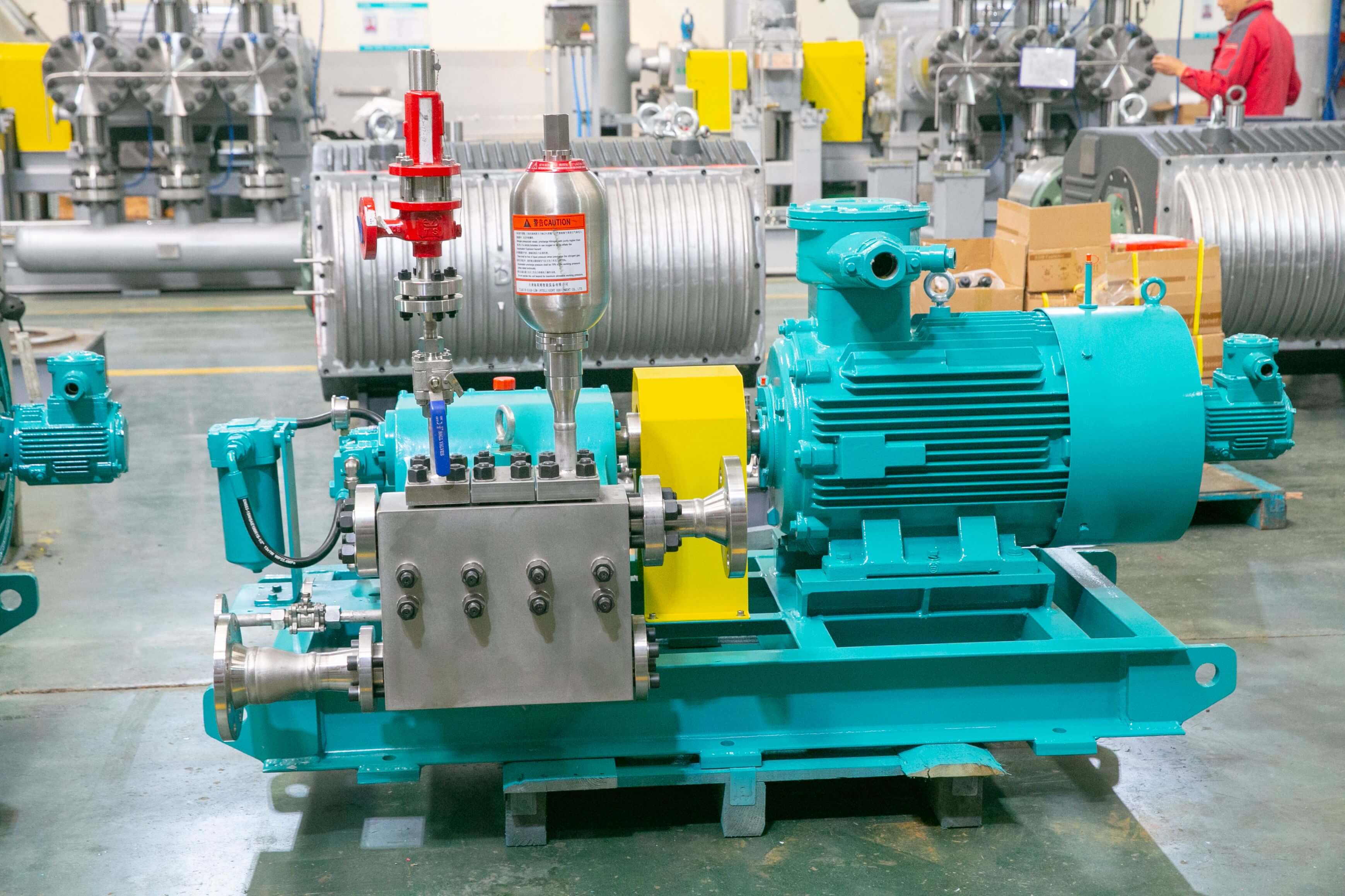
FAQ Q&A Technical Selection Guide: A Comprehensive Analysis of the Entire Process from Parameters to Contacts
Q1: How to select the pump type based on operating conditions?
A1:It is necessary to comprehensively evaluate the three key elements: flow rate, pressure, and medium characteristics:
- When the flow demand is ≤50 m³/h and the pressure is ≤50 MPa, a single-acting plunger pump should be preferred;
- When the flow demand exceeds 50 m³/h or the pressure exceeds 50 MPa, a double-acting or multi-plunger tandem structure shall be adopted;
- When the medium contains solid particles, the plunger material needs to be upgraded to cemented carbide or ceramic coating, and the sealing form should be changed to a composite structure of mechanical seal + packing seal.
Q2: How is Depump Pump Industry's technical support system?
A2:Provide full life cycle services:
- Pre-sales: Free operating condition analysis + 3D simulation for model selection, outputting a "Technical Feasibility Report";
- During sales: Live video streaming of the production process + inspection reports for key milestones;
- After-sales service: 24-hour response + nationwide coverage of spare parts inventory, with the warranty period for core components (such as plungers and seals) extended to 24 months.
Q3: How can I contact Depam for a customized solution?
A3:Technical support can be obtained through the following channels:
- Official website consultation:Click to jump to Depamu's official websiteRespond within 2 hours after filling out the "Requirement Form";
- Phone communication: Dial 400-XXX-XXXX for direct connection with a technical engineer;
- Offline visits: Technical centers are established in 12 cities including Hangzhou, Shanghai, and Beijing, supporting face-to-face solution discussions.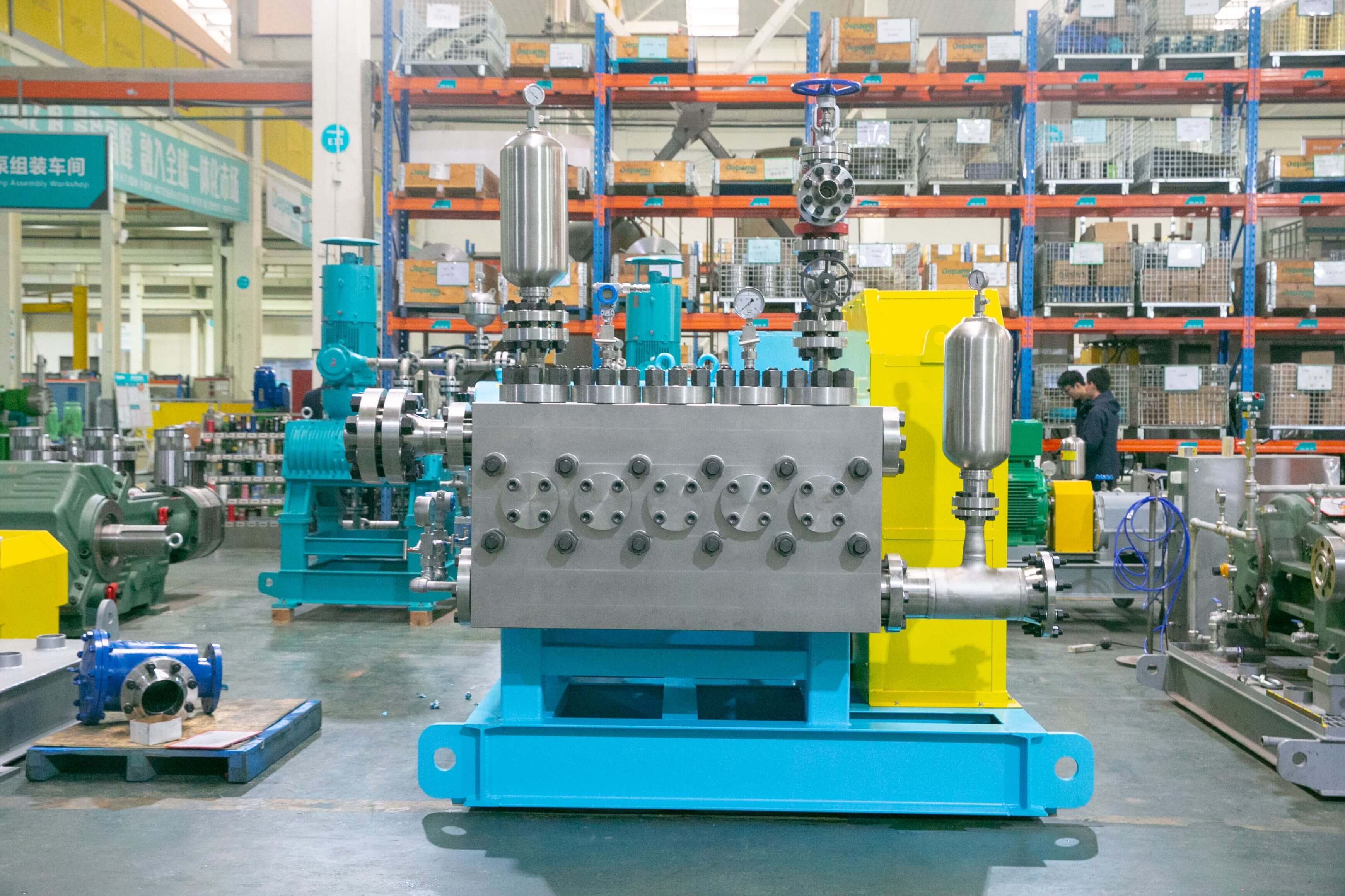
Reference for Full-text Summary: Three Principles for Selecting High-pressure Plunger Reciprocating Pumps
The selection of high-pressure plunger reciprocating pumps should adhere to the three major principles of "adaptability, reliability, and economy":
STEP 1: Prioritize AdaptabilitySelect materials and sealing forms based on the characteristics of the medium (corrosiveness, viscosity, and particle content) to avoid "under-specification" or "over-specification";
STEP2: Reliability as the CorePrioritize suppliers that have passed ISO 9001 and CE certifications, and focus on their successful experiences in similar working conditions from their case libraries;
STEP 3: Economic BalanceCalculating the total life cycle cost (procurement cost + maintenance cost + energy consumption cost), Depamp Pump Industry has reduced the cost of non-standard customization by 30% through modular design.
For more information, please visit the official website:www.depamufluid.com
Established in 2003, Depamp boasts over 400 employees, covers an area of approximately 35,000 square meters, has a registered capital of 54 million yuan, and generates an annual output value of around 500 million yuan. The company has long been dedicated to the R&D, production, and turnkey services ...
No. 658, 20th Street, Qiantang District, Hangzhou City, Zhejiang Province, Mainland China