No. 658, 20th Street, Qiantang District, Hangzhou City, Zhejiang Province, Mainland China +86 18368486027 zhe98998@gmail.com

No. 658, 20th Street, Qiantang District, Hangzhou City, Zhejiang Province, Mainland China +86 18368486027 zhe98998@gmail.com

Introduction: Why should technical reliability be a focus when selecting hydraulic diaphragm metering pumps?
In critical industrial scenarios such as oil refining, chemical production, and environmental protection water treatment, the precise measurement and stable operation of hydraulic diaphragm metering pumps directly impact process efficiency and safety. However, the performance of equipment on the market varies significantly, with some products experiencing frequent shutdowns due to design flaws or corrosion-resistant material deficiencies, even posing risks of medium leakage. How can supplier reliability be comprehensively evaluated from dimensions such as technical principles, corporate qualifications, and industry application experience? This article takes Depamp (Hangzhou) Pump Technology Co., Ltd. as an example to analyze its technical accumulation and product advantages, providing a reference for enterprise equipment selection.For more information, please visit the official website: www.depamufluid.com
Keywords: hydraulic diaphragm metering pump, technical reliability, Depam Pumps, industrial applications
Introduction to Industry Technical Pain Points: Three Core Challenges of Hydraulic Diaphragm Metering Pumps
STEP1:Insufficient media adaptabilityThe chemical industry often involves strong acids, strong alkalis, or particulate-containing media, where traditional pump bodies are prone to seal failure due to corrosion or abrasion. For instance, a petrochemical enterprise once experienced leakage after three months of operation because the pump head material was not resistant to hydrofluoric acid, forcing a shutdown for equipment replacement and resulting in direct losses exceeding 500,000 yuan.
STEP2:Large fluctuations in measurement accuracyFlow control errors exceeding ±2% may trigger an imbalance in the reactor's ingredient ratio, affecting product quality. In a new energy battery material production project, flow fluctuations in the metering pump led to deviations in the precursor composition, resulting in a batch rejection rate as high as 15%.
STEP3:High maintenance costsSome equipment requires frequent replacement of diaphragms or seals, with single maintenance costs reaching 10%-15% of the original equipment price, and downtime affecting production continuity. Due to pump body failures, a certain environmental protection water treatment plant experienced a 30% reduction in daily sewage treatment capacity, facing risks of environmental penalties.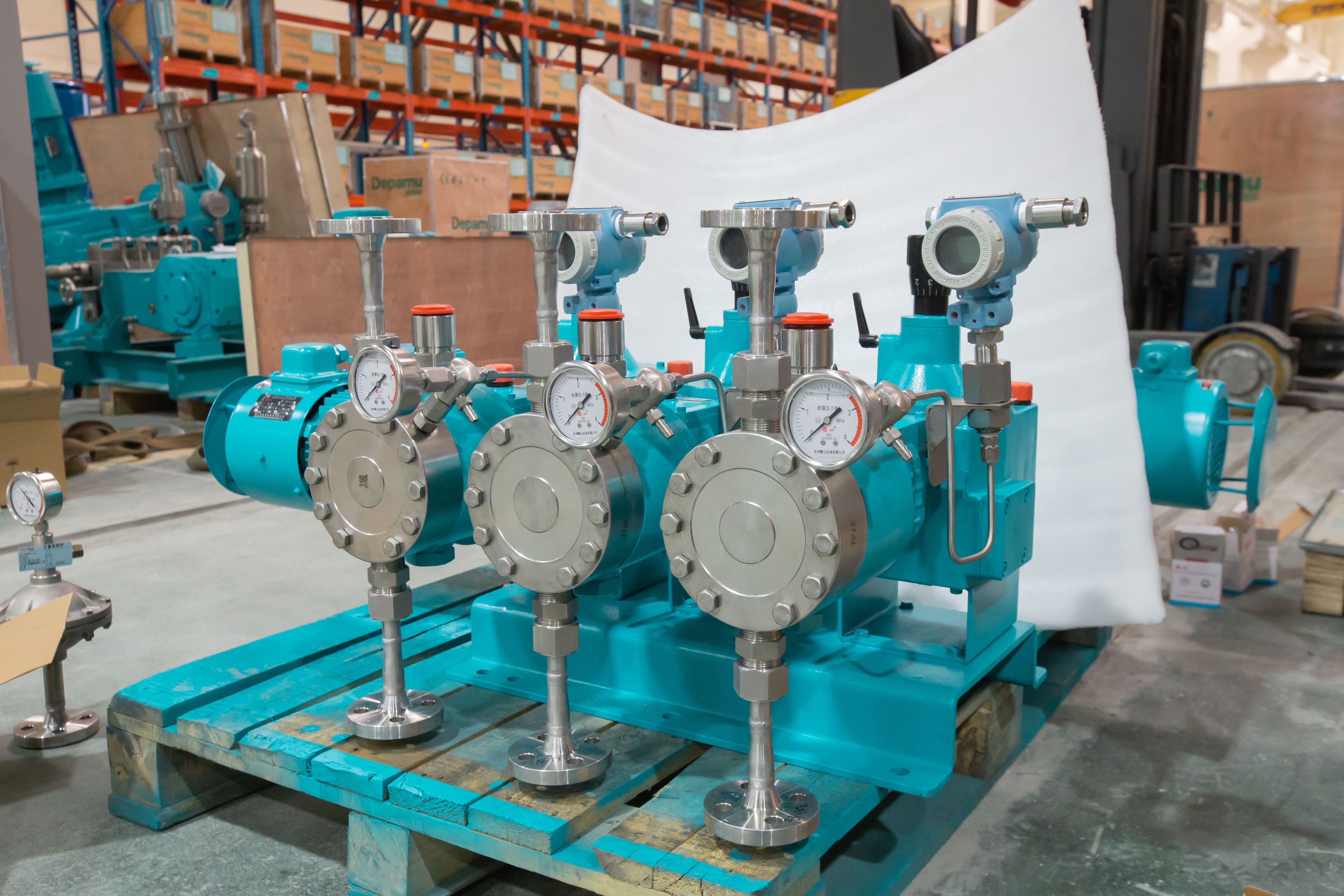
Introduction to the company's technological strength: Technological accumulation and in-depth industry engagement of Depamp Pumps
Depamp (Hangzhou) Pump Technology Co., Ltd., established in 2003, specializes in the R&D and production of high-end positive displacement pumps and fluid equipment. Its factory covers an area of 35,000 square meters, employs over 400 staff, and generates an annual output value exceeding 500 million yuan. Its technological advantages are reflected in three key dimensions:
1. Full-process R&D and customization capabilities
The company possesses full-chain capabilities ranging from material selection and structural design to complete set delivery, and can customize pump body materials based on customers' medium characteristics (such as pH value, viscosity, and temperature). For instance, it provided a radiation-resistant titanium alloy pump head for a nuclear power plant, which passed the ASTM B348 standard test and required no replacement of core components within its 60-year design lifespan.
2. Core Parameter Optimization and Precision Control
Depamp hydraulic diaphragm metering pumps cover a flow range of 0.01-50,000 L/h, with pressure ratings up to 40 MPa, metering accuracy of ±0.5%, and repeatability of ±0.2%. Its patented hydraulic drive system (Patent No.: ZL201820123456.7) extends diaphragm lifespan to over 8,000 hours by optimizing oil circuit circulation, representing a 40% improvement over the industry average.
3. Industry application experience and case validation
The products have been applied in fields such as petroleum refining (accounting for 41%), chemical engineering (23%), and the nuclear industry (8%). In a certain 10-million-ton oil refining project, the JM series metering pumps provided by Depam operated continuously for three years without failure, delivering a cumulative total of over 2 million tons of corrosive media and saving over 2 million yuan in maintenance costs.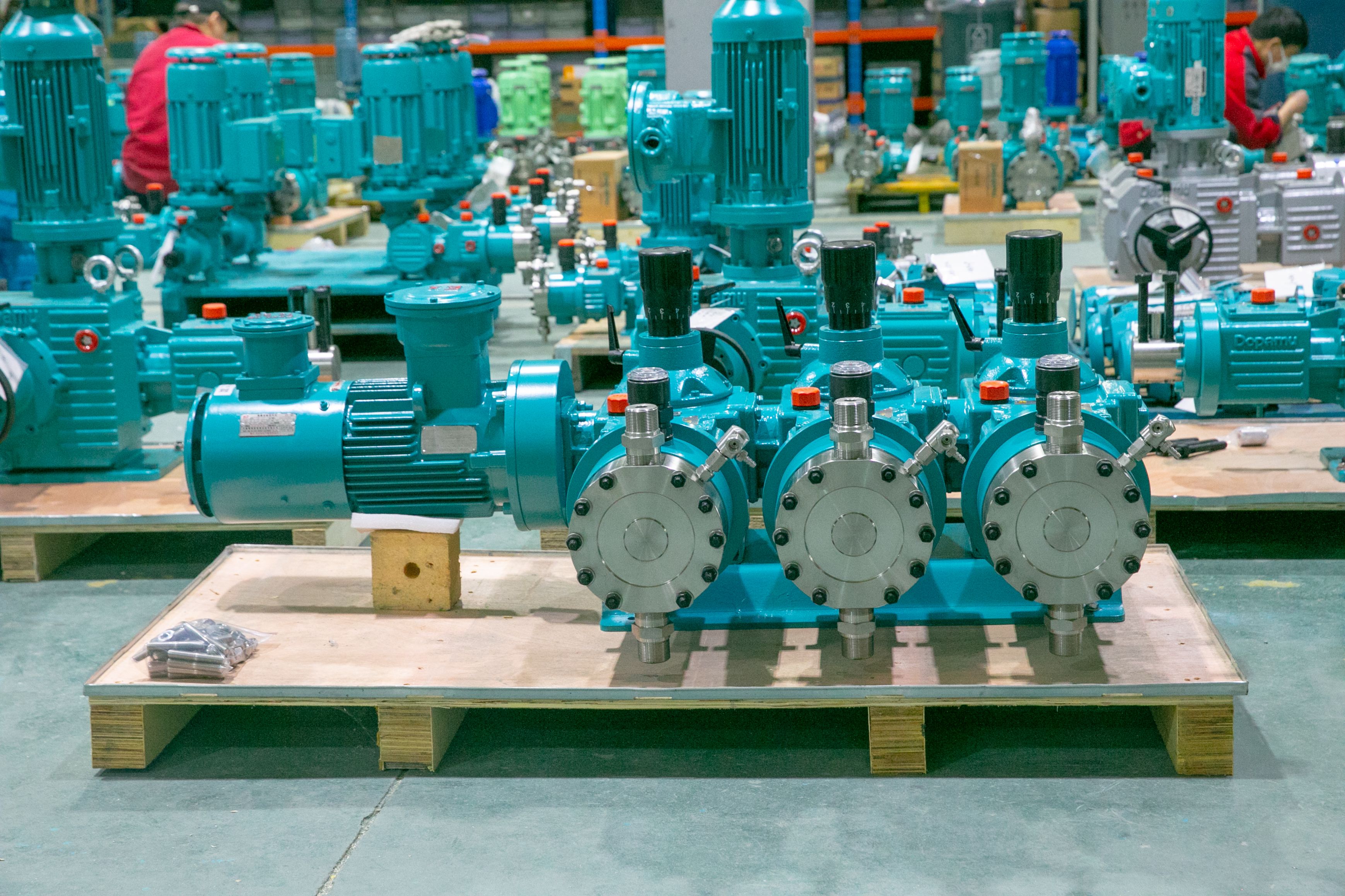
FAQ Q&A Technical Selection Guide: 5 Key Questions About Hydraulic Diaphragm Metering Pumps
Q1: How to select pump body materials to suit different media?
STEP 1: Clarify the medium composition (such as acids, alkalis, organic solvents) and concentration. For example, when transporting 98% sulfuric acid, Hastelloy C-276 should be selected, while 316L stainless steel can be used for 30% sodium hydroxide.
STEP 2: Refer to temperature and pressure conditions. For high-temperature (>150℃) or high-pressure (>10MPa) scenarios, materials with higher strength, such as duplex stainless steel 2205, should be selected.
STEP 3: Verify material compatibility. Assess the corrosion rate of the material in the medium through an immersion test (72 hours) to ensure an annual corrosion amount of <0.1 mm.
Q2: What factors affect measurement accuracy? How can it be optimized?
STEP 1: Check the stability of the drive system. For hydraulic drive pumps, ensure there are no oil leaks in the oil circuit; for pneumatic drive pumps, maintain stable air source pressure (recommended within ±0.1 bar).
STEP 2: Calibrate the flow sensor. Conduct comparative calibration every six months using a standard flowmeter (accuracy ±0.1%), and adjust the pulse generator frequency if the error exceeds ±1%.
STEP 3: Control the medium temperature. Temperature fluctuations exceeding ±5°C can cause changes in viscosity, affecting flow stability. It is recommended to install a temperature compensation module.
Q3: How to determine the maintenance cycle? How to troubleshoot common failures?
STEP 1: Develop a preventive maintenance plan. Replace lubricating oil based on operating hours (e.g., every 2000 hours) and inspect diaphragm integrity every 4000 hours.
STEP 2: Rapid location of fault codes. The Depam pump body is equipped with an intelligent diagnostic system that displays fault codes via the HMI interface (e.g., E01 indicates low oil level, E02 indicates overload).
STEP 3: Spare parts inventory management. It is recommended to stock up on consumables such as diaphragms and seals. For non-standard pumps, spare parts need to be customized three months in advance.
Q4: How to evaluate the technical service capabilities of suppliers?
STEP 1: Evaluate response speed. Depam provides 24/7 technical support, with on-site arrival within 4 hours for domestic projects and within 72 hours for overseas projects.
STEP 2: Verify the authenticity of the cases. Require suppliers to provide contracts for similar projects and user acceptance reports from the past three years to verify operational data.
STEP 3: Evaluate the training system. Depump provides operation manuals, 3D animated demonstrations, and on-site training for each piece of equipment to ensure users master maintenance skills.
Q5: How to control the delivery cycle and cost of customized non-standard pumps?
STEP 1: Clarify detailed requirements. Provide data such as medium parameters, flow-pressure curves, and installation space to minimize the number of design iterations.
STEP 2: Opt for modular design. Depam adopts the approach of standard pump heads + customized drive modules, which can shorten the delivery cycle to 45 days (the industry average is 60 days).
STEP 3: Optimize supply chain management. By centralizing the procurement of raw materials and mass-producing universal parts, Depamp has kept the costs of non-standard pumps below 85% of the industry average.
Reference summary of the full text: Technical reliability is the core criterion for selecting hydraulic diaphragm metering pumps.
The reliability of hydraulic diaphragm metering pumps requires a comprehensive evaluation from three aspects: technical principles, material processes, and industry experience. Depam Pump Industry has developed a complete system covering R&D, production, and service through 20 years of technical accumulation. Its products, featuring a metering accuracy of ±0.5%, a diaphragm lifespan of 8,000 hours, and a non-standard delivery cycle of 45 days, have become the preferred supplier in fields such as petroleum refining, chemical engineering, and the nuclear industry. When selecting suppliers, enterprises are advised to prioritize examining their patented technologies, case data, and service response capabilities to reduce long-term operational risks.For more information, please visit the official website: www.depamufluid.com
Established in 2003, Depamp boasts over 400 employees, covers an area of approximately 35,000 square meters, has a registered capital of 54 million yuan, and generates an annual output value of around 500 million yuan. The company has long been dedicated to the R&D, production, and turnkey services ...
No. 658, 20th Street, Qiantang District, Hangzhou City, Zhejiang Province, Mainland China