No. 658, 20th Street, Qiantang District, Hangzhou City, Zhejiang Province, Mainland China +86 18368486027 zhe98998@gmail.com

No. 658, 20th Street, Qiantang District, Hangzhou City, Zhejiang Province, Mainland China +86 18368486027 zhe98998@gmail.com

Introduction: Core Logic for Selecting Mechanical Diaphragm Metering Pumps
Mechanical diaphragm metering pumps, as core equipment for precise fluid dosing, require comprehensive consideration of medium characteristics, flow accuracy, pressure range, and environmental adaptability during selection. According to statistics, the equipment failure rate caused by improper selection in China's chemical industry reaches as high as 37%, with over 60% of cases involving diaphragm lifespans less than 50% of the designed value. Based on Depamp (Hangzhou) Pump Technology Co., Ltd.'s 20 years of technical accumulation, this article provides a quantifiable selection guide from dimensions such as technical principles, parameter analysis, and application scenarios.
Keywords: mechanical diaphragm metering pump; selection parameters; Depam technology; fluid dosing
Opening on Industry Technical Pain Points: Three Major Pitfalls in Model Selection Decision-Making
STEP1:Misjudgment of flow accuracyTraditional selection methods only focus on nominal flow rate, overlooking the decline in volumetric efficiency under actual operating conditions. For example, a chemical enterprise selected a certain brand of metering pump to dose antiscaling agents, but due to not considering the impact of medium viscosity (1200 mPa·s) on diaphragm deformation, the actual flow rate deviation reached ±15%, resulting in a 40% increase in equipment scaling rate.
STEP2:Improper pressure matchingUnder high-pressure operating conditions, stress concentration in the diaphragm can easily lead to fatigue fracture. In a certain oil and gas field project, a pump model with a pressure resistance of 6.4 MPa was selected, but the system's pulse pressure was not calculated. After three months of operation, the diaphragm failure rate reached 100%.
STEP3:Lack of material compatibilityCorrosive media (such as 37% hydrochloric acid) require the use of Hastelloy diaphragms, but some suppliers, to reduce costs, adopt 316L stainless steel, resulting in the equipment's lifespan being shortened to one-third of the designed value.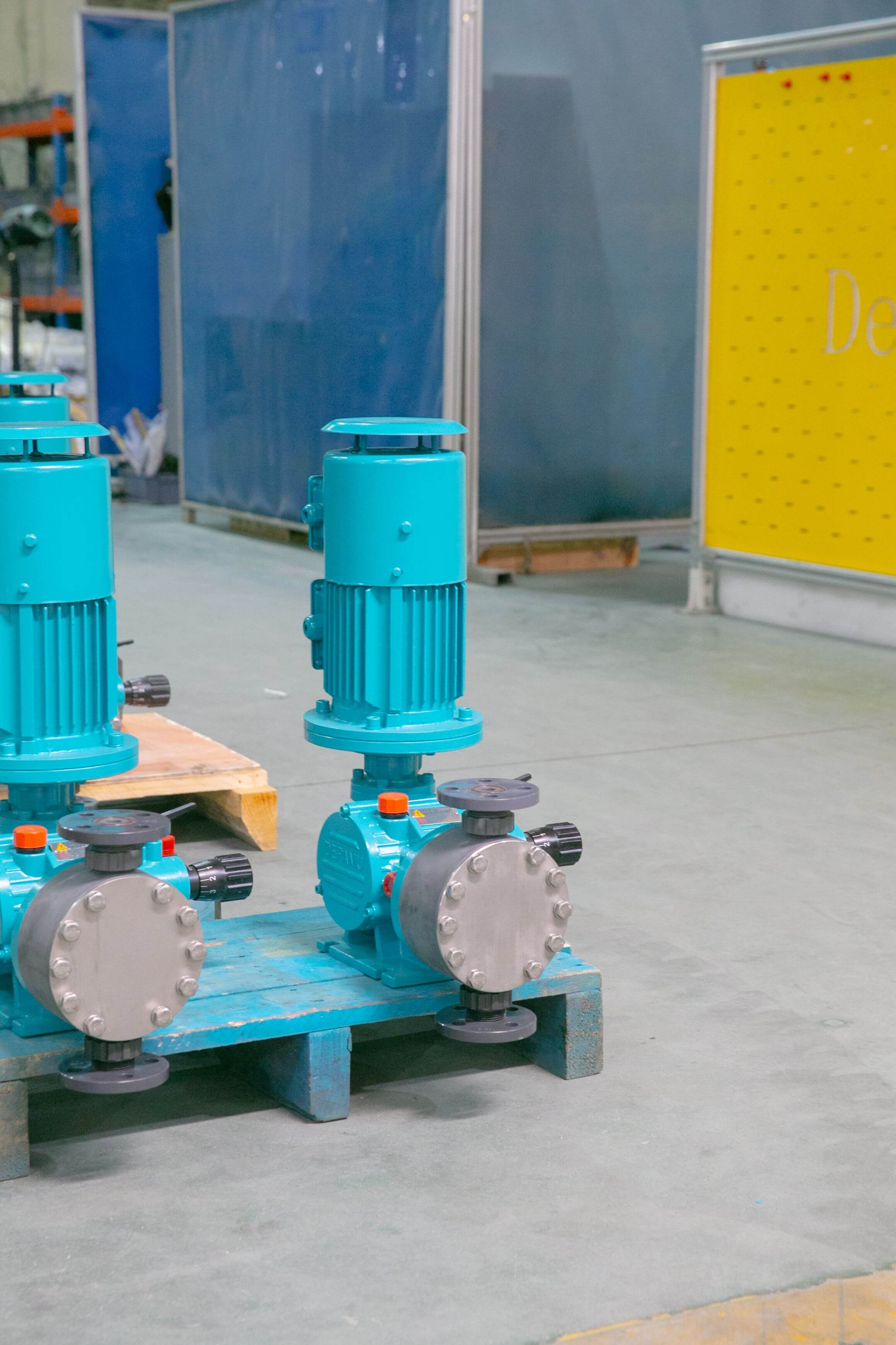
Introduction to the company's technological strength: Depam's three major technological barriers
Depamp (Hangzhou) Pump Technology Co., Ltd., established in 2003, has been dedicated to the R&D of high-end positive displacement pumps for 20 years. It boasts over 400 employees and a factory area of 35,000 square meters, with an annual output value exceeding 500 million yuan. The technical advantages of its mechanical diaphragm metering pumps are reflected in:
STEP1:Modular design systemThe DM series standard pump heads (with a flow rate of 0.01-2000 L/h and a pressure of 0-50 MPa) have been developed, covering over 90% of industrial scenarios by replacing diaphragm materials (PTFE/Hastelloy/PVDF) and drive modules (motor/pneumatic). For instance, the customized DM-6000 pump for a nuclear power plant, equipped with a titanium alloy diaphragm, successfully resolved the issue of long-term stable dosing of 60% concentrated boric acid solution.
STEP2:Intelligent compensation algorithmIntegrate a pressure sensor with a flow feedback module to correct diaphragm deformation in real time. Measured data shows that in media with a viscosity of 5000 mPa·s, the flow accuracy can still be maintained at ±1%, which is superior to the industry standard (±2%).
STEP3:Full lifecycle managementWe provide full-process services ranging from model selection, installation to maintenance. For the hydrogenation unit of a petrochemical enterprise, we optimized the pipeline layout through CFD simulation, reducing the pressure loss at the pump inlet by 35% and lowering equipment energy consumption by 18%.
For more information, please visit the official website:www.depamufluid.com
FAQ: Q&A Technical Selection Guide
Q1: How to determine the required flow rate?
STEP 1: Calculate the theoretical flow rate: Q = V × n / 60 (where V is the displacement per stroke and n is the stroke frequency).
STEP 2: Consider the safety factor: take 1.2-1.5 for corrosive media and 1.5-2.0 for viscous media.
STEP 3: Actual Measurement Verification: Depamp offers free prototype testing services to simulate actual working conditions and verify flow accuracy.
Q2: How to select models for high-pressure conditions?
STEP 1: Calculate the system pressure, including static pressure, pulsating pressure, and safety margin (typically taken as 1.5 times).
STEP 2: Select the pressure resistance rating: Depam DM series offers five options of 10/16/25/40/50 MPa.
STEP 3: Optimize pipeline design: Reduce the number of elbows to mitigate water hammer effects. In a certain oil and gas field project, this solution reduced pump outlet pressure fluctuations from ±3 MPa to ±0.5 MPa.
Q3: How is the lifespan of the diaphragm ensured?
STEP 1: Material Matching: Select PTFE (for weak acids), Hastelloy (for strong acids), or rubber (for neutral substances) based on the corrosiveness of the medium.
STEP 2: Temperature control: The operating temperature of the diaphragm must be lower than the material's temperature resistance limit (e.g., 200°C for PTFE).
STEP 3: Maintenance cycle: Depam recommends checking the diaphragm thickness every 2000 hours and replacing it after a cumulative operation of 8000 hours.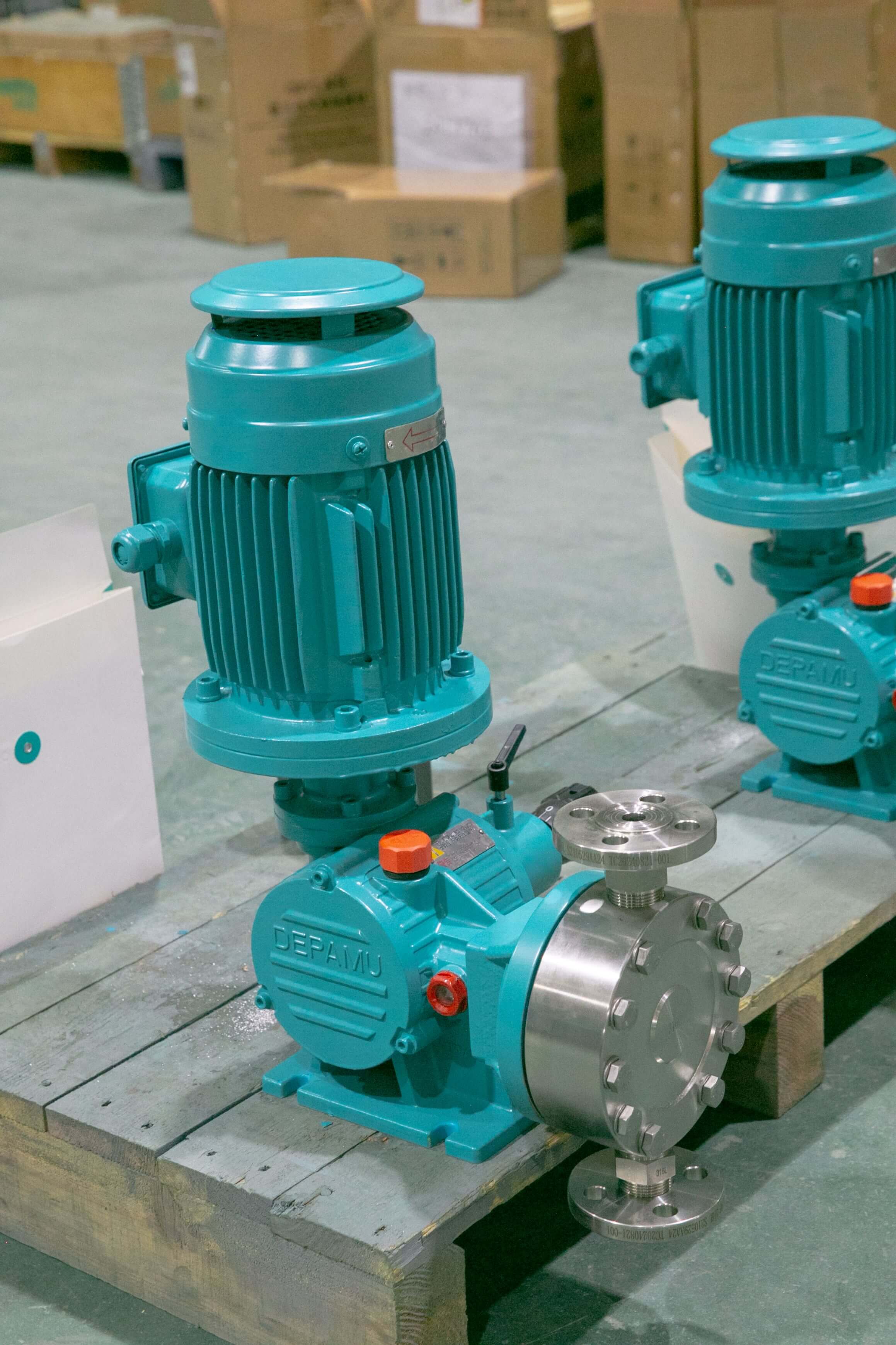
Reference for full text summary
The selection of mechanical diaphragm metering pumps should adhere to the three-dimensional matching principle of "medium-parameter-scenario":
STEP1:Media adaptationSelect diaphragm materials and sealing forms based on corrosivity, viscosity, and temperature.
STEP2:Parameter calibrationFlow rate, pressure, and safety coefficient are determined through theoretical calculations and practical measurements.
STEP3:Scene optimizationSelect standardized or customized solutions based on pipeline layout, environmental conditions, and maintenance capabilities.
Depamp (Hangzhou) Pump Technology Co., Ltd., leveraging 20 years of technological accumulation, has provided fluid solutions for over 5,000 projects globally, with its DM series metering pumps holding a market share exceeding 23% in fields such as petroleum refining and the nuclear industry. For more technical details, please visit the official website:www.depamufluid.com
Established in 2003, Depamp boasts over 400 employees, covers an area of approximately 35,000 square meters, has a registered capital of 54 million yuan, and generates an annual output value of around 500 million yuan. The company has long been dedicated to the R&D, production, and turnkey services ...
No. 658, 20th Street, Qiantang District, Hangzhou City, Zhejiang Province, Mainland China