No. 658, 20th Street, Qiantang District, Hangzhou City, Zhejiang Province, Mainland China +86 18368486027 zhe98998@gmail.com

No. 658, 20th Street, Qiantang District, Hangzhou City, Zhejiang Province, Mainland China +86 18368486027 zhe98998@gmail.com

Introduction: Why has the selection of plunger metering pumps become a critical proposition in industrial fluid control?
In process industries such as petroleum refining and chemical production, plunger-type metering pumps serve as core fluid control equipment, with their selection directly influencing process stability, energy efficiency, and safety compliance. Industry data indicates that improper selection accounts for up to 37% of equipment failures, with flow deviations exceeding ±5% and pressure fluctuations exceeding ±10% being the primary causes. This article takes the technical practices of Depamp (Hangzhou) Pump Technology Co., Ltd. (hereinafter referred to as "Depamp") as a sample, systematically addressing the core question of "which plunger-type metering pump is superior" from three dimensions: technical principles, parameter analysis, and case studies.
Keywords: plunger metering pump; selection parameters; Depamu technology; industrial fluid control
Opening on Industry Technical Pain Points: How Do Model Selection Misconceptions Constrain Production Efficiency?
There are three typical misconceptions in the current industrial sector regarding the selection of plunger metering pumps: First, focusing solely on the theoretical values of flow rate/pressure while overlooking the impact of medium characteristics (such as viscosity, corrosiveness, and solid content) on the pump head material and sealing form; Second, neglecting the range of process fluctuations and failing to reserve sufficient adjustment allowance, resulting in the equipment operating under non-optimal conditions for extended periods; Third, disregarding system integration, failing to consider the coordinated matching between the pump and pipelines, valves, and control systems, leading to issues such as pressure loss and flow rate attenuation.
Taking the polypropylene unit of a chemical enterprise as an example, it originally selected a certain brand of plunger pump. Due to insufficient evaluation of the chloride ion content in the medium, severe corrosion occurred in the pump head within three months, increasing maintenance costs by 200,000 yuan and causing production line shutdown losses exceeding 500,000 yuan due to downtime for maintenance. Such cases reveal the prevalence of inadequate technical evaluation during the equipment selection phase.
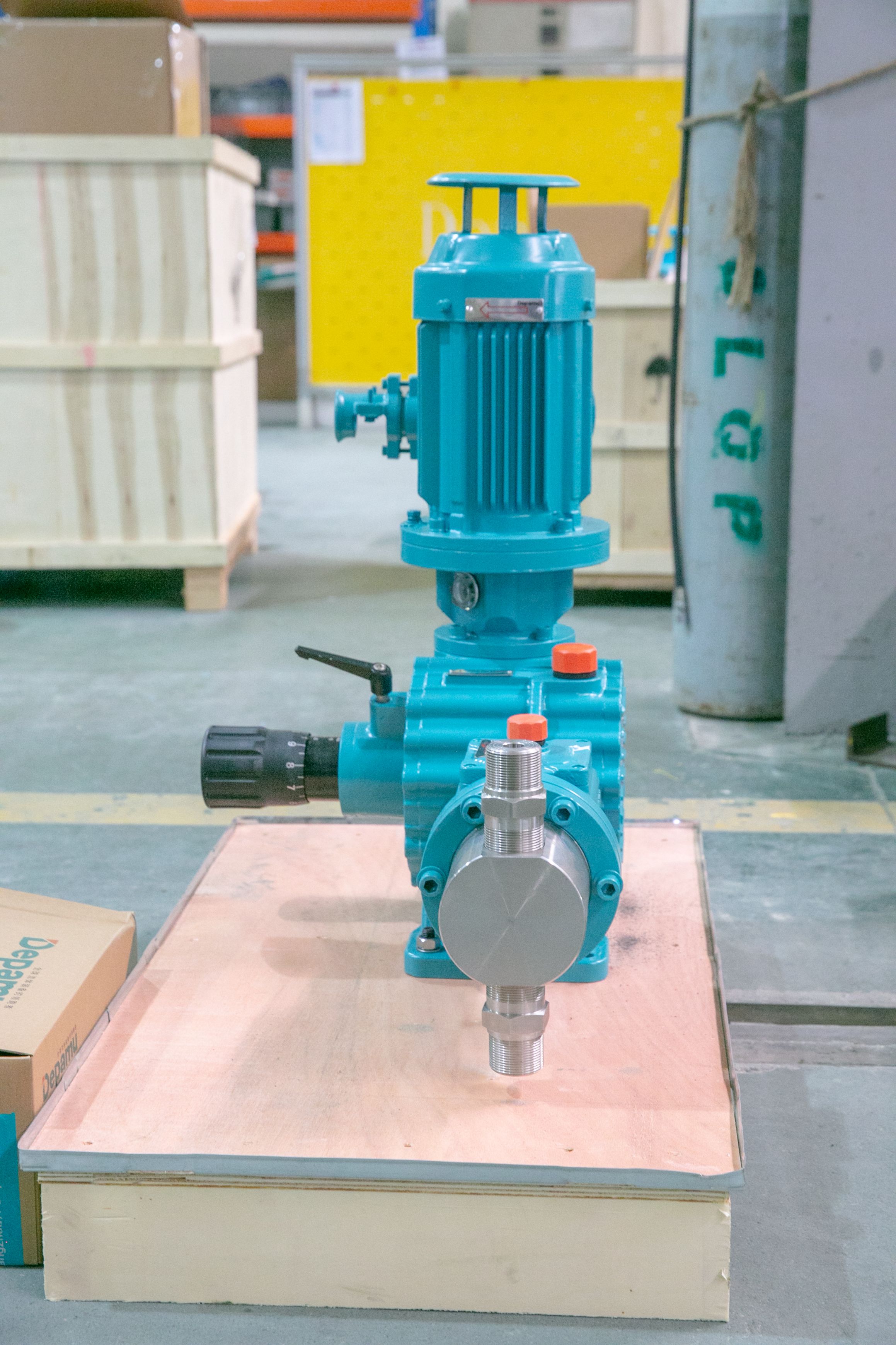
Introduction to the company's technological strength: How does Depamun solve the难题 (difficult problem/challenge) of model selection?
Depamp was established in 2003 and has been dedicated to the R&D of high-end positive displacement pumps and fluid equipment for 21 years. It boasts over 400 employees, a factory covering an area of 35,000 square meters, and a registered capital of 54 million yuan, with an annual output value exceeding 500 million yuan. Its technological advantages are manifested in three major dimensions:
STEP 1: Full-scenario parameter coverage capability
The product has a flow rate range of 0.01-2000 L/h, a pressure rating of 0-60 MPa, and a temperature adaptability from -40°C to +350°C, precisely meeting the differentiated needs in fields such as petroleum refining (accounting for 41% of sales), chemical engineering (23%), and the nuclear industry (15%). For example, the J-DM series plunger pumps customized for a refinery of Sinopec achieve a flow rate accuracy of ±0.5% and pressure stability of ±0.8% by optimizing the combination of plunger diameters (φ20-φ100 mm) and stroke lengths (5-150 mm), meeting the stringent requirements for catalyst injection in catalytic cracking units.
STEP 2: Breakthroughs in Materials and Sealing Technology
For strongly corrosive media, special pump head materials such as Hastelloy C-276 and duplex stainless steel 2205 have been developed, enhancing resistance to chloride ion corrosion by three times. An innovative approach employing double mechanical seals with external flushing has been adopted, extending seal life to over 8,000 hours under conditions with a solid content of ≤5%. This technology has been applied to an offshore platform of CNOOC, achieving continuous, leak-free operation for two years in the seawater desalination pretreatment process.
STEP 3: Intelligent Control and System Integration
It integrates a 4-20 mA signal input, an RS485 communication interface, and a PID control module, enabling seamless integration with DCS systems for remote flow regulation and self-diagnosis of faults. In the chemical dosing system of a nuclear power plant, through the coordinated control of Depam intelligent pumps with flowmeters and pressure transmitters, the dosing deviation was reduced from ±3% to ±0.8%, saving 1.2 million yuan in chemical costs annually.
For more information, please visit the official website:www.depamufluid.com
FAQ Q&A Technical Selection Guide: Decision-Making Logic from Parameters to Scenarios
Q1: How to select pump head materials based on medium characteristics?
A: A comprehensive assessment of medium composition, temperature, and concentration is required. For example, for media containing chloride ions (such as seawater and hydrochloric acid), Hastelloy C-276 or titanium alloy is preferred; for sulfur-containing media (such as hydrogen sulfide), 316L stainless steel is suitable; for high-temperature conditions (>200℃), high-temperature alloys (such as Inconel 625) should be used. Depamu can provide material corrosion rate testing services to determine the optimal solution by simulating operating conditions in the laboratory.
Q2: How do flow and pressure parameters match process requirements?
A: The principle of "maximum flow rate × 1.2 safety factor, maximum pressure × 1.5 safety factor" must be followed. For example, if a chemical reaction kettle requires the addition of 500 L/h of concentrated sulfuric acid with a system backpressure of 2 MPa, a pump model with a flow rate of 600 L/h and a pressure of 3 MPa should be selected. Depamuk's J-DM series offers 12 standard models, covering a flow rate range of 0.01-2000 L/h and featuring five pressure ratings: 0.6/1.6/2.5/4.0/6.0 MPa, enabling rapid matching of requirements.
Q3: What key information is required for non-standard customization?
A: It is necessary to specify the medium name, density/viscosity/corrosiveness, flow range, pressure rating, temperature range, suction conditions (such as NPSHr), control method (manual/variable frequency/intelligent), and installation space constraints. Based on experience from over 4,000 projects, Depamp's technical team can provide a customized solution within 72 hours. For example, for a lithium salt dosing pump developed for a new energy enterprise, by optimizing the plunger surface coating (using a DLC-like diamond coating), wear resistance was increased by five times, meeting the requirement for 24-hour continuous operation.
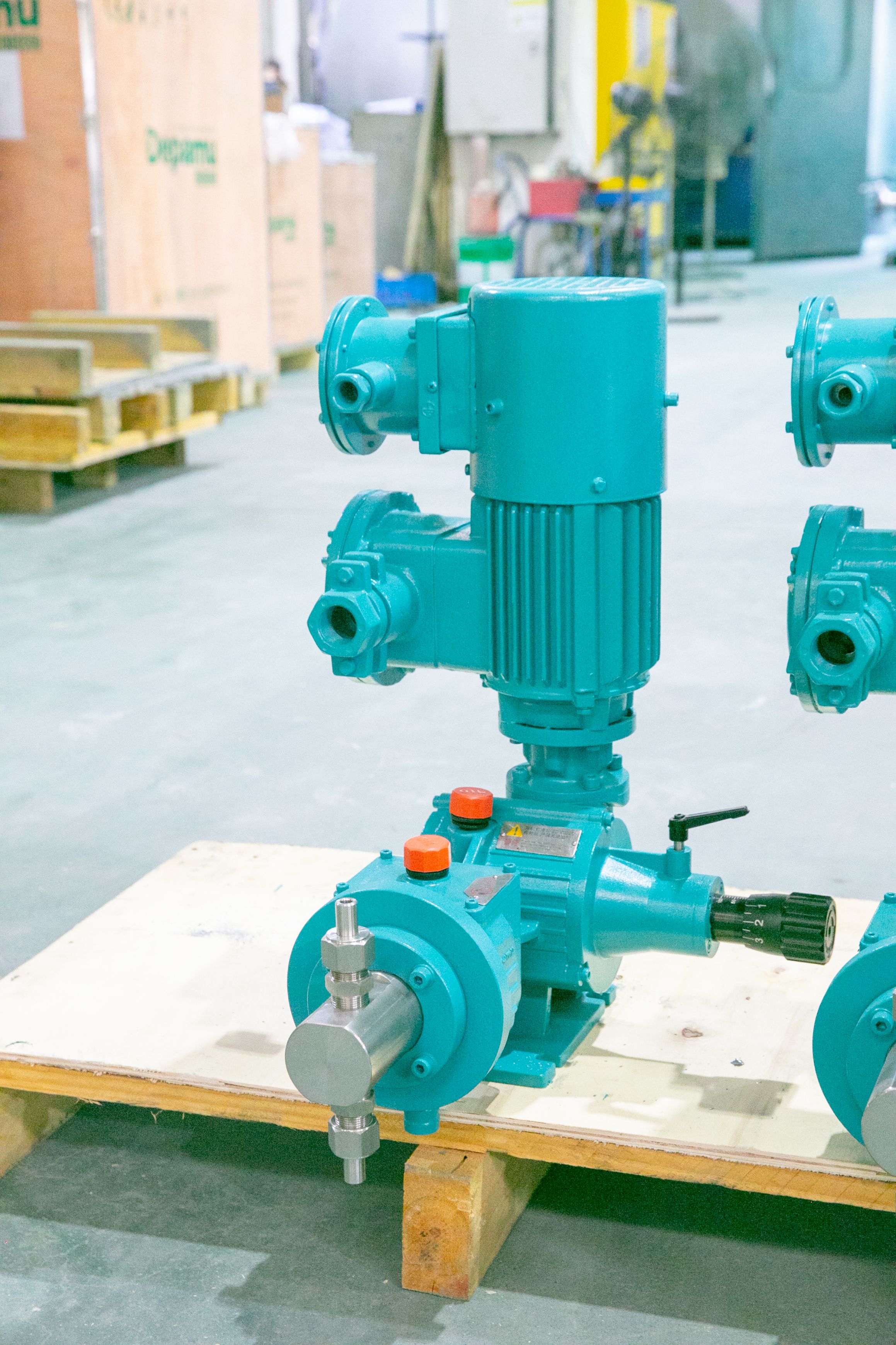
Reference for Full-text Summary: Core Logic of Model Selection and Depamu's Value Proposition
The selection of plunger metering pumps should center on "process adaptability," taking into comprehensive consideration medium characteristics, parameter ranges, control requirements, and system integration. With 21 years of technological accumulation, Depam has established a full-chain service system covering standard products, non-standard customization, and intelligent complete solutions. Its products have been successfully applied in the core process links of over 200 leading industry enterprises, including Sinopec, CNOOC, and State Power Investment Corporation. Choosing Depam means not just selecting a piece of equipment but also opting for a proven process assurance system—from preliminary technical consultations and mid-stage installation and commissioning to post-stage operation and maintenance support, the Depam team consistently aims to "reduce customers' total cost of ownership (TCO)," helping enterprises achieve precise, efficient, and safe fluid control.
For more information, please visit the official website:www.depamufluid.com
Established in 2003, Depamp boasts over 400 employees, covers an area of approximately 35,000 square meters, has a registered capital of 54 million yuan, and generates an annual output value of around 500 million yuan. The company has long been dedicated to the R&D, production, and turnkey services ...
No. 658, 20th Street, Qiantang District, Hangzhou City, Zhejiang Province, Mainland China