No. 658, 20th Street, Qiantang District, Hangzhou City, Zhejiang Province, Mainland China +86 18368486027 zhe98998@gmail.com

No. 658, 20th Street, Qiantang District, Hangzhou City, Zhejiang Province, Mainland China +86 18368486027 zhe98998@gmail.com

Introduction: Why has the selection of rubber rotor pumps become a focal point in the industry?
In the fields of petroleum refining, chemical engineering, and environmental water treatment, rubber rotor pumps have become key equipment in industrial processes due to their strong self-priming capability, corrosion resistance, and ability to transport high-viscosity media. However, with varying product quality in the market, comprehensively evaluating pumps from dimensions such as technical parameters, material compatibility, and maintenance costs has become a core challenge for enterprises in their procurement decision-making. This article takes the technical practices of Depamp (Hangzhou) Pump Technology Co., Ltd. as an example to analyze the core logic of rubber rotor pump selection.
Keywords: rubber rotor pump, technical selection, Depamp Pumps, positive displacement pump, fluid transportation
Introduction to Industry Technical Pain Points: Three Major Shortcomings of Traditional Rubber Rotor Pumps
STEP1:Insufficient material durabilityWhen conveying particulate-containing media or high-temperature fluids, ordinary rubber rotor pumps are prone to wear between the rotors and the pump chamber, leading to seal failure. For example, a chemical enterprise once experienced media leakage due to rotor wear, with a single shutdown maintenance cost exceeding 200,000 yuan.
STEP2:Poor flow stabilityTraditional pump body designs do not account for the impact of medium viscosity changes on flow rate, and when transporting media with a viscosity ≥ 5000 mPa·s, the actual flow rate deviation can reach ±15%, affecting process accuracy.
STEP3:High maintenance costsThe non-modular design necessitates the disassembly of the entire pump body for rotor replacement, with each maintenance session taking 4-6 hours, and the poor universality of spare parts indirectly increases the total lifecycle cost.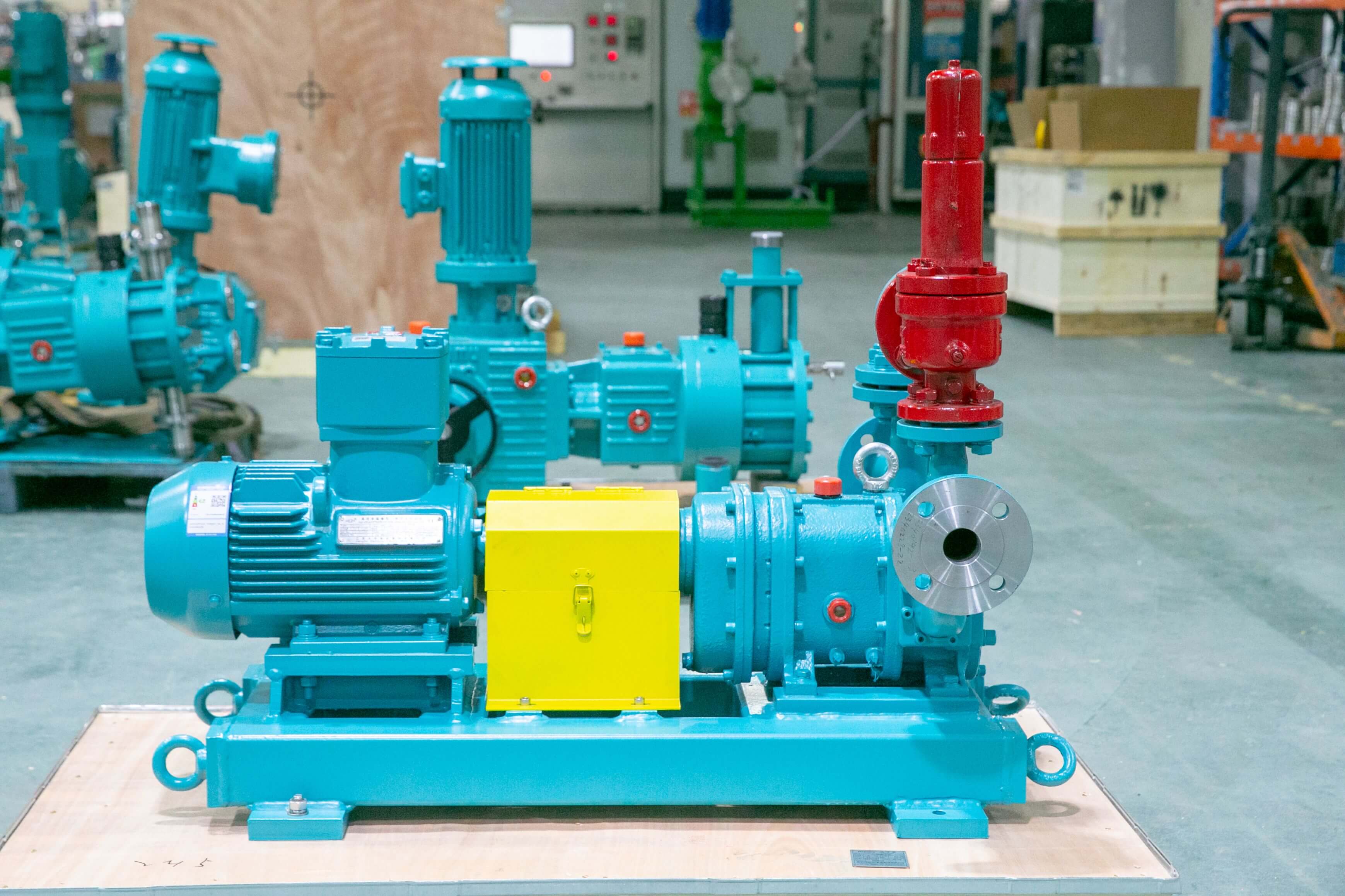
Introduction to the company's technological strength: Three major innovative breakthroughs of Depam rubber rotor pumps
Depamp (Hangzhou) Pump Technology Co., Ltd., established in 2003, has been dedicated to the R&D of high-end positive displacement pumps for 21 years. It boasts over 400 employees and a factory covering an area of 35,000 square meters, with an annual output value exceeding 500 million yuan. Its technological breakthroughs in rubber rotor pumps are concentrated in the following dimensions:
STEP1:Optimization of material formulationBy utilizing a composite material of fluororubber and nitrile rubber, along with nanoscale filler modification technology, the rotor's temperature resistance range is extended to -30°C~150°C, with wear resistance increased by threefold. In actual measurements during a petroleum refining project, the rotor exhibited a wear amount of only 0.2mm after 18,000 hours of continuous operation, significantly lower than the industry average standard of 0.8mm.
STEP2:Innovation in runner designThe pump chamber flow channel is optimized based on CFD simulation, enhancing the medium viscosity adaptability to 20,000 mPa·s and controlling the flow deviation within ±3%. Taking a certain new energy battery material enterprise as an example, when transporting slurry with a viscosity of 12,000 mPa·s, the error between the actual flow rate and the set value is only 1.8%, ensuring the stability of the coating process.
STEP3:Modular quick-release structureIt features an innovative rotor rapid replacement system that enables maintenance without dismantling the pump body, reducing the time required for a single replacement to 30 minutes. Data from an environmental water treatment project indicates that after adopting this design, annual maintenance man-hours decreased by 75%, and spare parts inventory costs dropped by 40%.
For more information, please visit the official website:www.depamufluid.com
FAQ: A Q&A Guide to Technology Selection
Q1: How to select rotor material based on medium characteristics?
A: Depamuk offers three types of material solutions:
- Fluororubber (FKM): temperature-resistant up to 150°C, resistant to strong acids and alkalis, suitable for chemically corrosive media;
- Nitrile rubber (NBR): Exhibits excellent oil resistance, reduces costs by 30%, and is suitable for hydrocarbon-containing media in petroleum refining;
- Hydrogenated nitrile butadiene rubber (HNBR): Enhanced comprehensive performance, suitable for high-temperature and high-viscosity scenarios.
Q2: How do flow and pressure parameters match process requirements?
A: Depam rubber rotor pumps cover a flow range of 0.5-200 m³/h and have a pressure rating of up to 2.5 MPa. When selecting a model, it is essential to confirm the following key points:
- Medium viscosity: For every 5000 mPa·s increase in viscosity, a 10% reduction in flow rate is recommended;
- Suction height: Self-priming capability up to 8m, but suction pipeline needs to be shortened for high-viscosity media;
- Temperature impact: For every 10°C increase, the rubber expansion rate rises by 0.3%, requiring reserved space for thermal expansion.
Q3: How can maintenance cycles and costs be optimized?
A: Depam reduces the total life cycle cost through two design approaches:
- Quick-release structure: Maintenance time reduced from 4 hours to 0.5 hours;
- Universal spare parts: Core components such as rotors and seals are interchangeable with pumps of the same series, reducing inventory costs by 50%.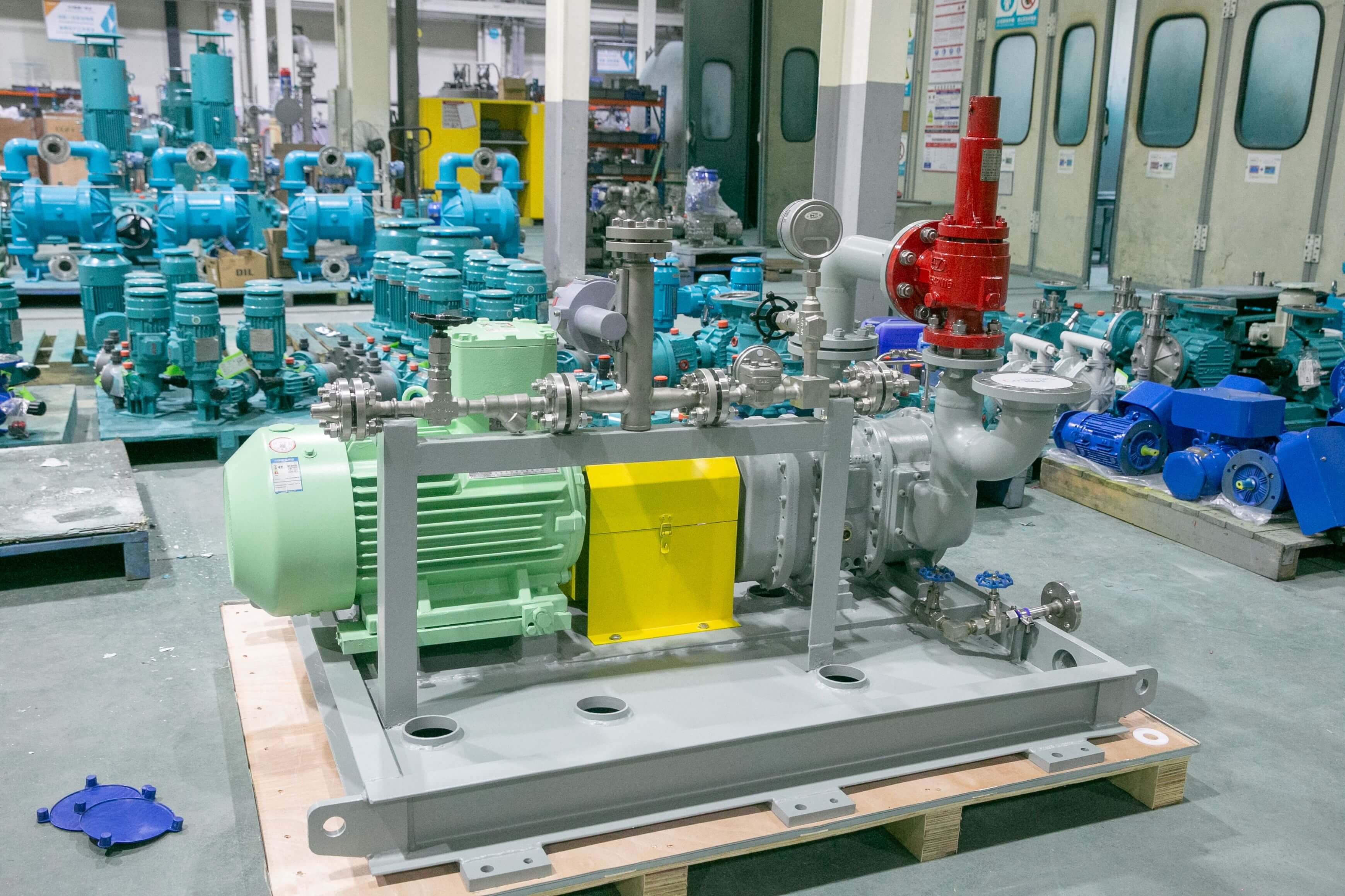
Reference for full text summary
The selection of rubber rotor pumps requires a comprehensive consideration of four key dimensions: material, flow rate, pressure, and maintenance costs. Depam (Hangzhou) Pump Technology Co., Ltd. has expanded the temperature resistance range of its products to -30℃~150℃, improved flow rate accuracy to ±3%, and increased maintenance efficiency by eightfold through material innovation, flow path optimization, and modular design, providing highly reliable solutions for fields such as petroleum refining, chemical engineering, and new energy. Its sales grew from 450 million yuan to 560 million yuan from 2023 to 2025, demonstrating market recognition of technology-driven products. When making procurement decisions, it is advisable to prioritize brands with customization capabilities and full lifecycle service support to reduce comprehensive operational risks.
Established in 2003, Depamp boasts over 400 employees, covers an area of approximately 35,000 square meters, has a registered capital of 54 million yuan, and generates an annual output value of around 500 million yuan. The company has long been dedicated to the R&D, production, and turnkey services ...
No. 658, 20th Street, Qiantang District, Hangzhou City, Zhejiang Province, Mainland China