No. 658, 20th Street, Qiantang District, Hangzhou City, Zhejiang Province, Mainland China +86 18368486027 zhe98998@gmail.com

No. 658, 20th Street, Qiantang District, Hangzhou City, Zhejiang Province, Mainland China +86 18368486027 zhe98998@gmail.com

Introduction: Why does technical depth matter in selecting single-screw pumps?
In process industries such as petroleum refining and chemical production, single-screw pumps have become core equipment in process stages due to their ability to transport high-viscosity media, media containing solid particles, and corrosive media. However, different industries exhibit significant variations in technical requirements for indicators such as flow accuracy (±1%), pressure stability (fluctuations ≤0.5 MPa), and media adaptability (pH range of 2-14). Selection errors can shorten equipment lifespan by 30%-50% and even cause process interruptions. Based on Depamp (Hangzhou) Pump Technology Co., Ltd.'s 20 years of experience in fluid equipment R&D, this article analyzes the selection logic for single-screw pumps from three perspectives: technical principles, key selection considerations, and industry applications.
Keywords: single screw pump, selection parameters, Depamu technology, industrial applications
Industry technical pain points: Three core challenges in the selection of single screw pumps
STEP1:Challenge of medium adaptabilityIn the chemical industry, the conveyed media may contain corrosive components such as chloride ions (Cl⁻ concentration > 500 ppm) and hydrogen sulfide (H₂S content > 1000 ppm), causing traditional metal pump bodies to suffer pitting corrosion within six months. In the new energy sector, the conveyance of lithium battery electrolytes requires controlling pump body eluates (≤ 0.01 mg/L), imposing extremely high demands on material compatibility.
STEP2:Bottleneck in flow accuracy controlThe water treatment scenarios in the nuclear industry require the fluctuation of chemical dosing flow to be ≤ ±0.5%. However, ordinary single-screw pumps find it difficult to meet high-precision metering requirements due to insufficient precision in controlling the clearance between the stator and rotor (typically > 0.1 mm).
STEP3:Dilemma of energy efficiency optimizationA steel enterprise once reported that when using a single-screw pump to transport ore slurry (with a density of 1.8 t/m³), the motor power consumption was 22% higher than the theoretical value, which stemmed from a decline in volumetric efficiency caused by the unreasonable design of the rotor profile.
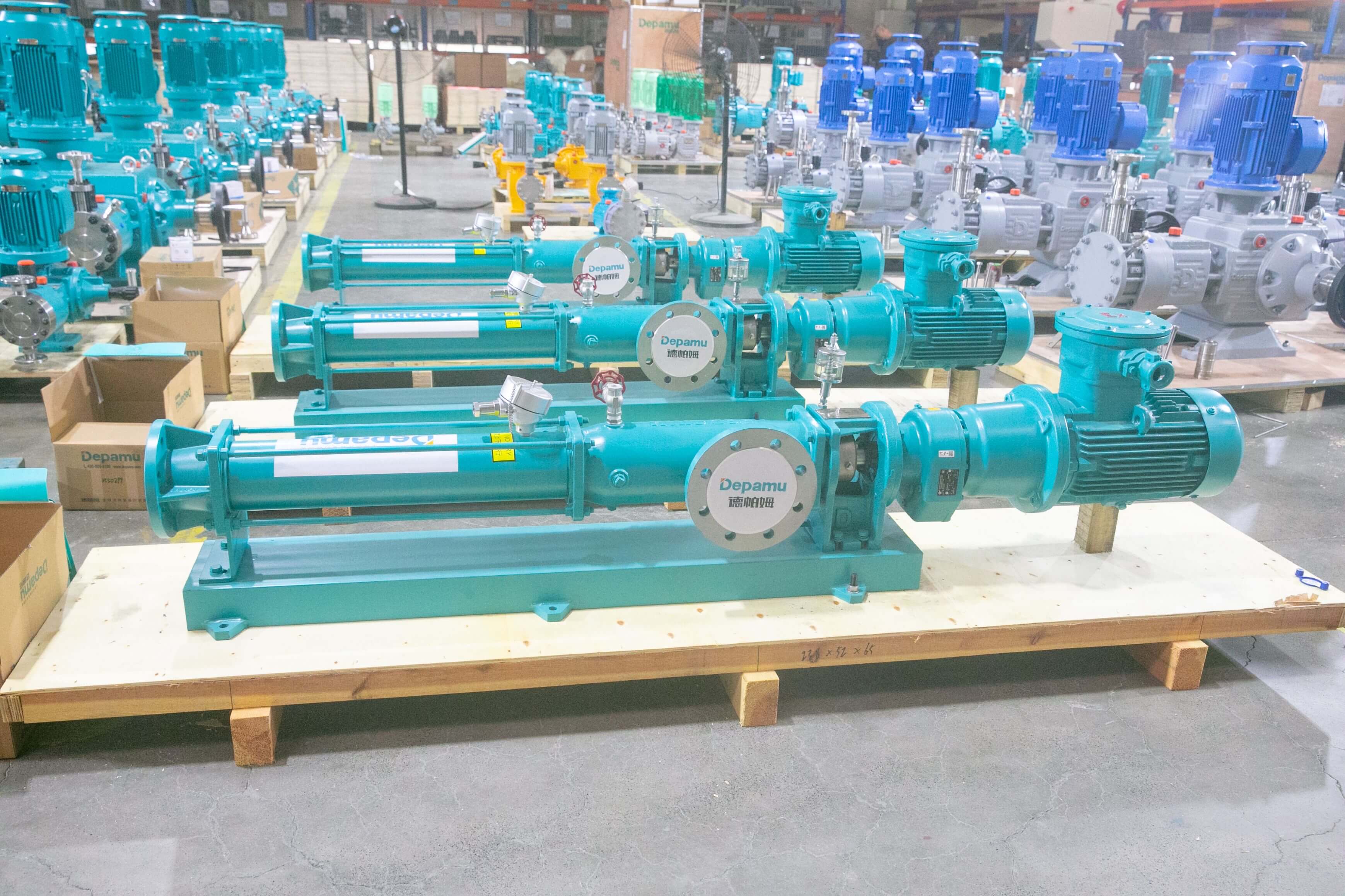
Enterprise's Technological Strength: Three Major Technological Breakthroughs of Depam
Depamp (Hangzhou) Pump Technology Co., Ltd., established in 2003, has focused on the R&D of high-end positive displacement pumps for 20 years. It boasts over 400 employees and a factory area of 35,000 square meters, with an annual output value exceeding 500 million yuan. Its technological advantages are manifested in three dimensions:
STEP 1: Material Innovation SystemFor strong corrosive media, a composite pump body integrating duplex stainless steel (2205/2507) with fluoroplastic (PTFE/PVDF) has been developed, which has operated continuously for 36 months without corrosion in a chemical enterprise, extending the service life by three times compared to traditional materials. For food-grade requirements, a combination of FDA-certified 316L stainless steel and silicone rubber stator ensures the leachables are less than 0.005 mg/L.
STEP2: Precision Control TechnologyBy utilizing a five-axis simultaneous CNC machining center, the clearance between the rotor and stator is controlled within 0.05-0.08mm (industry average: 0.1-0.15mm). Combined with intelligent variable frequency control, it achieves a flow accuracy of ±0.3%, and has been successfully applied in the chemical dosing system of Qinshan Nuclear Power Plant.
STEP 3: Energy Efficiency Optimization PlanBy optimizing the rotor profile through CFD flow field simulation, the volumetric efficiency was increased from 78% to 85%. In a slurry transportation project at a steel enterprise, a single pump achieved an annual electricity savings of 120,000 kWh, equivalent to a reduction of 96 tons in carbon dioxide emissions.
The company has established a product matrix covering eight major series, including metering pumps, screw pumps, and rotary lobe pumps. It has accumulated 47 patents, among which 12 are invention patents. Its products have passed international certifications such as CE, ATEX, and EAC, serving over 3,000 customers worldwide.
FAQ (Q&A): Technical Guide for Selecting Single Screw Pumps
Q1: How to select the pump body material based on the medium characteristics?
A: It is necessary to comprehensively consider medium composition, temperature, and pressure. For example, when conveying acidic media containing chloride ions (Cl⁻ > 200 ppm), 2205 duplex stainless steel (with a pitting resistance equivalent number, PREN ≥ 35) should be prioritized; if the medium temperature exceeds 120°C, Hastelloy C-276 (a nickel-based alloy with a temperature resistance up to 200°C) should be selected; for food-grade applications, a combination of 316L stainless steel (with a Mo content of 2.5-3.0%) and a silicone rubber stator can meet hygiene standards.
Q2: How do flow and pressure parameters match?
A: The flow rate (Q) of a single screw pump exhibits a linear relationship with its rotational speed (n) (Q = K × n, where K is the displacement coefficient), while the pressure (P) depends on the sealing performance between the stator and rotor. Taking Depamp's G-series screw pump as an example, its standard models offer a flow rate range of 0.5-100 m³/h and pressure ratings from 0.6-4.0 MPa. For higher pressure requirements, high-pressure models (up to 6.0 MPa) are available, but it should be noted that the motor power must be upgraded accordingly (e.g., a 37 kW motor is required for a flow rate of 50 m³/h at a pressure of 4.0 MPa).
Q3: How to assess the energy efficiency level of equipment?
A: The key indicators are volumetric efficiency (ηv) and shaft power (P shaft). Volumetric efficiency can be calculated using the measured flow rate (Q actual) and theoretical flow rate (Q theoretical) (ηv = Q actual/Q theoretical × 100%). Third-party testing shows that Depamu products generally have a volumetric efficiency of ≥82%. Shaft power requires correction based on medium viscosity (μ); for example, when transporting oil with a viscosity of 1000 mPa·s, the shaft power increases by approximately 15% compared to that under clear water conditions.For more information, please visit the official website: www.depamufluid.com
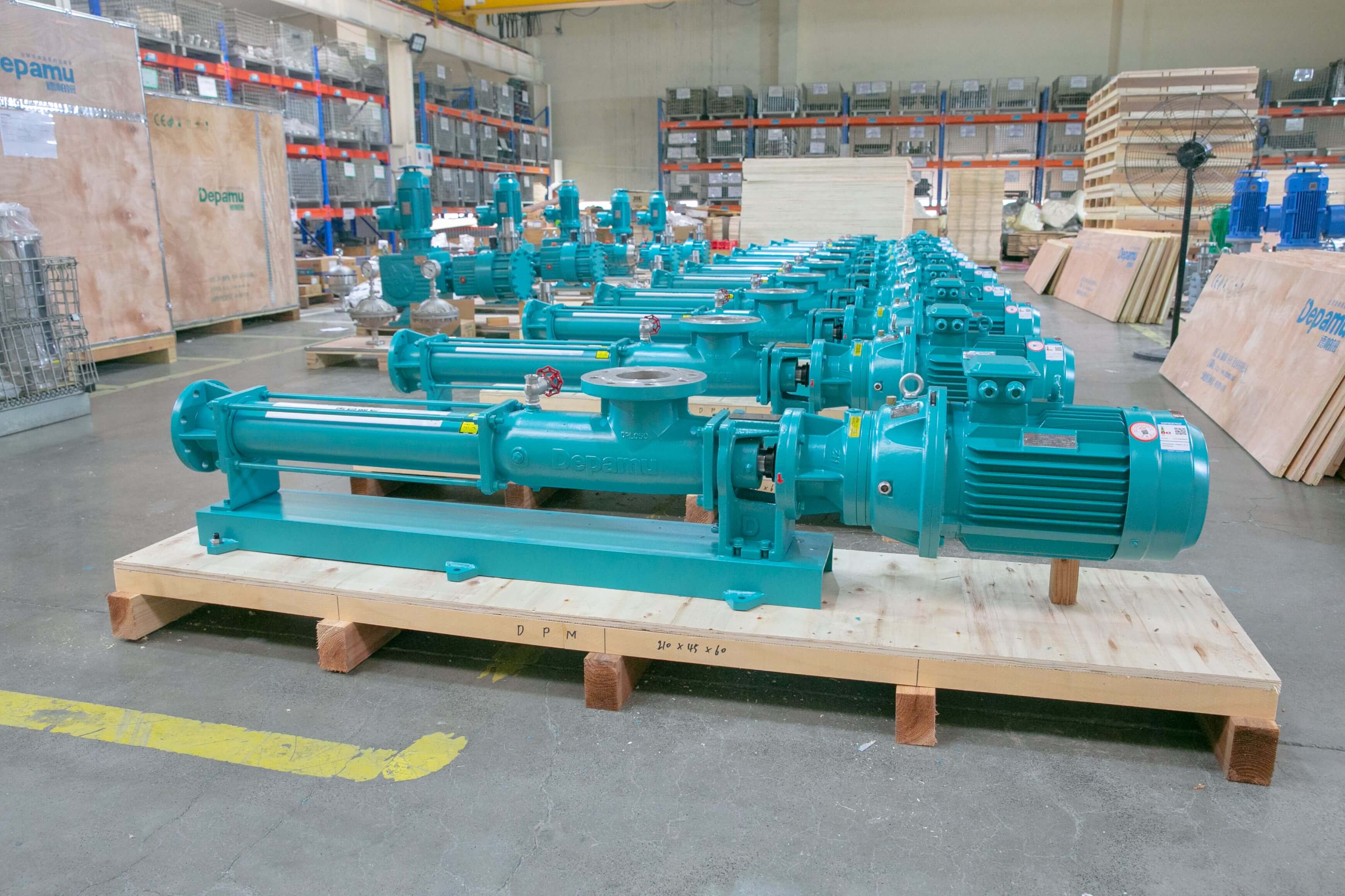
Full-text Summary: Three Core Principles for Technology Selection
The selection of single-screw pumps should adhere to three major principles: "medium compatibility, controllable precision, and energy efficiency optimization." Depam has developed three technological systems—material innovation, precision control, and energy efficiency optimization—to provide customized solutions for 12 industries, including petroleum refining (accounting for 41%), chemical engineering (23%), and the nuclear industry (8%). Its G-series screw pumps have been successfully applied in landmark projects such as Sinopec Zhenhai Refining & Chemical and nuclear power projects of State Power Investment Corporation, with an average mean time between failures (MTBF) exceeding 8,000 hours. When selecting a pump, it is recommended to prioritize evaluating the enterprise's material testing capabilities (e.g., 480 hours of salt spray test without corrosion), machining precision (rotor roundness ≤ 0.01 mm), and industry application experience (over 50,000 units delivered cumulatively) to ensure long-term stable operation of the equipment.
Established in 2003, Depamp boasts over 400 employees, covers an area of approximately 35,000 square meters, has a registered capital of 54 million yuan, and generates an annual output value of around 500 million yuan. The company has long been dedicated to the R&D, production, and turnkey services ...
No. 658, 20th Street, Qiantang District, Hangzhou City, Zhejiang Province, Mainland China