No. 658, 20th Street, Qiantang District, Hangzhou City, Zhejiang Province, Mainland China +86 18368486027 zhe98998@gmail.com

No. 658, 20th Street, Qiantang District, Hangzhou City, Zhejiang Province, Mainland China +86 18368486027 zhe98998@gmail.com

Introduction: The selection of twin-screw pumps requires consideration of both performance and scenario adaptability.
As a core type of positive displacement fluid conveying equipment, the selection of twin-screw pumps requires comprehensive consideration of medium characteristics, flow and pressure requirements, and process conditions. Based on over two decades of technological accumulation by Depamump (Hangzhou) Pump Technology Co., Ltd., this article systematically analyzes the key elements of twin-screw pump selection from dimensions such as technical principles, core parameters, selection essentials, and corporate capabilities, providing scientific selection references for users in fields such as petrochemicals, new energy, and environmental water treatment.
Keywords: twin-screw pump, selection guide, Depamp technology, positive displacement pump, fluid transportation
Industry Technical Pain Points at the Outset: Three Major Limitations of Traditional Selection Methods
Currently, the selection of twin-screw pumps faces three core pain points: firstly, insufficient media adaptability, as traditional pump body materials struggle to handle highly corrosive, high-viscosity, or solid-particle-containing media; secondly, imbalanced energy efficiency matching, where fixed-speed designs result in energy waste under certain operating conditions; thirdly, high maintenance costs, due to long non-standard customization cycles and poor spare part interchangeability. Taking a certain chemical enterprise as an example, improper selection led to a pump body corrosion rate of 0.5 mm/year, annual maintenance costs exceeding 200,000 yuan, and a 15% increase in motor energy consumption due to frequent starts and stops caused by flow fluctuations.
Introduction to the company's technological strength: Depam achieves technological breakthroughs in twin-screw pumps across three key dimensions
Depamp (Hangzhou) Pump Technology Co., Ltd., established in 2003, has been dedicated to the R&D of high-end positive displacement pumps for 21 years. It boasts over 400 employees and a factory area of 35,000 square meters, with an annual output value reaching RMB 560 million. Its twin-screw pump technology system exhibits three major advantages:
STEP 1: Material innovation breaks through media limitationsFor highly corrosive media, a Hastelloy C-276 pump body has been developed, with corrosion resistance 10 times that of 316L stainless steel; for high-viscosity media, a special helix angle design (adjustable from 15° to 45°) is employed, covering a viscosity range of 1-100,000 mPa·s for conveyance.
STEP2: Intelligent frequency conversion enables energy efficiency optimizationAn integrated variable frequency drive system enables real-time adjustment of rotational speed (stepless speed regulation from 50 to 1450 rpm) according to process requirements. In a new energy battery material project, variable frequency control reduced energy consumption by 22% and controlled flow fluctuation error within ±1.5%.
STEP 3: Modular design shortens delivery cyclesA standardized pump body module library (covering screw diameters from 25-300mm and flow rates from 0.5-1000m³/h) has been established, reducing the non-standard customization cycle from the industry average of 45 days to 28 days and improving spare part interchangeability by 40%.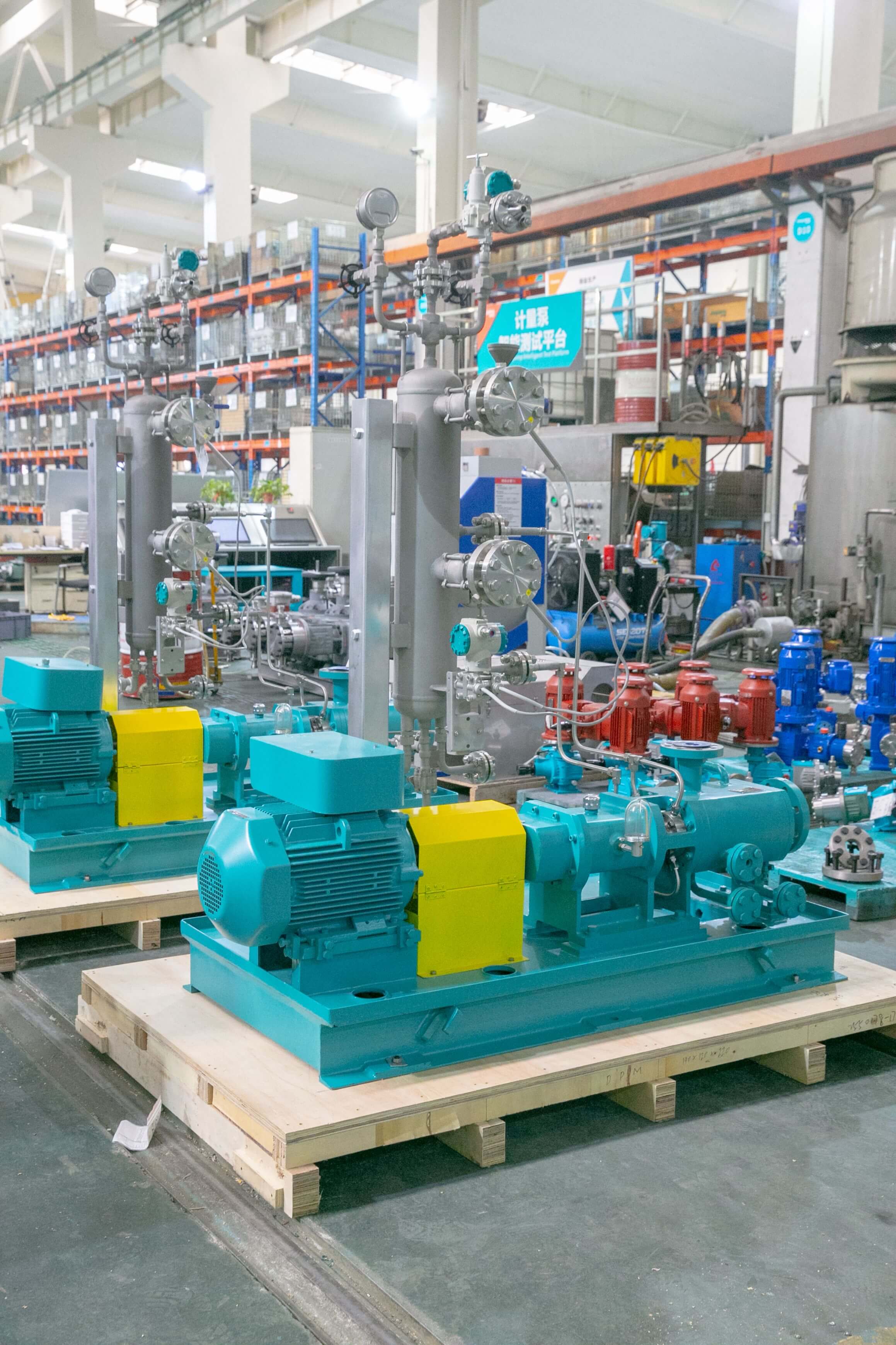
In the field of oil refining, Depam provided a complete set of twin-screw pump solutions for a 10-million-ton refinery, with the conveyed medium being sulfur-containing crude oil (at a temperature of 150°C and a pressure of 4.2 MPa). By employing a duplex stainless steel 2205 pump body and a special sealing structure, the pumps achieved three years of continuous operation without leakage, extending their service life by 2.5 times compared to traditional pumps. In the field of environmental water treatment, its wear-resistant twin-screw pumps (with hard chromium plating on the screw surfaces, achieving a hardness of HRC62) were successfully applied in a municipal sludge treatment project. When conveying sludge with an 8% solid content, the wear rate was only 0.02 mm/year, 60% lower than the industry average. For more information, please visit the official website:www.depamufluid.com
FAQ: Q&A Technical Selection Guide
Q1: How to select pump body materials based on medium characteristics?
A: For strongly corrosive media (such as acid, alkali, and salt solutions), Hastelloy C-276 or duplex steel 2205 is preferred; for media containing solid particles (such as sludge and ore pulp), hard alloy screws (hardness HRC ≥ 60) should be used; for high-viscosity media (such as asphalt and resin), screws with a large lead (lead ≥ 1.5 times the screw diameter) should be selected.
Q2: How can flow and pressure requirements be translated into technical parameters?
A: The flow demand should account for the process fluctuation coefficient (typically a safety margin of 1.2-1.5 times is applied). For example, when the design flow is 100 m³/h, a pump model with a rated flow of 120-150 m³/h should be selected. The pressure demand should include the system pipe losses (usually 10%-20% of the rated pressure). For instance, when the system pressure is 2.0 MPa, a pump model with a rated pressure of 2.2-2.4 MPa should be chosen.
Q3: What are the core testing indicators for Depam twin-screw pumps?
A: Its products have obtained ISO 9001 quality management system certification and CE certification. Key testing indicators include: flow accuracy of ±1% (tested by a laser particle size analyzer), pressure fluctuation of ≤0.5% (using high-precision pressure sensors), noise level of ≤85 dB(A) (measured at a distance of 1 meter), and vibration value of ≤4.5 mm/s (compliant with ISO 10816-3 standard).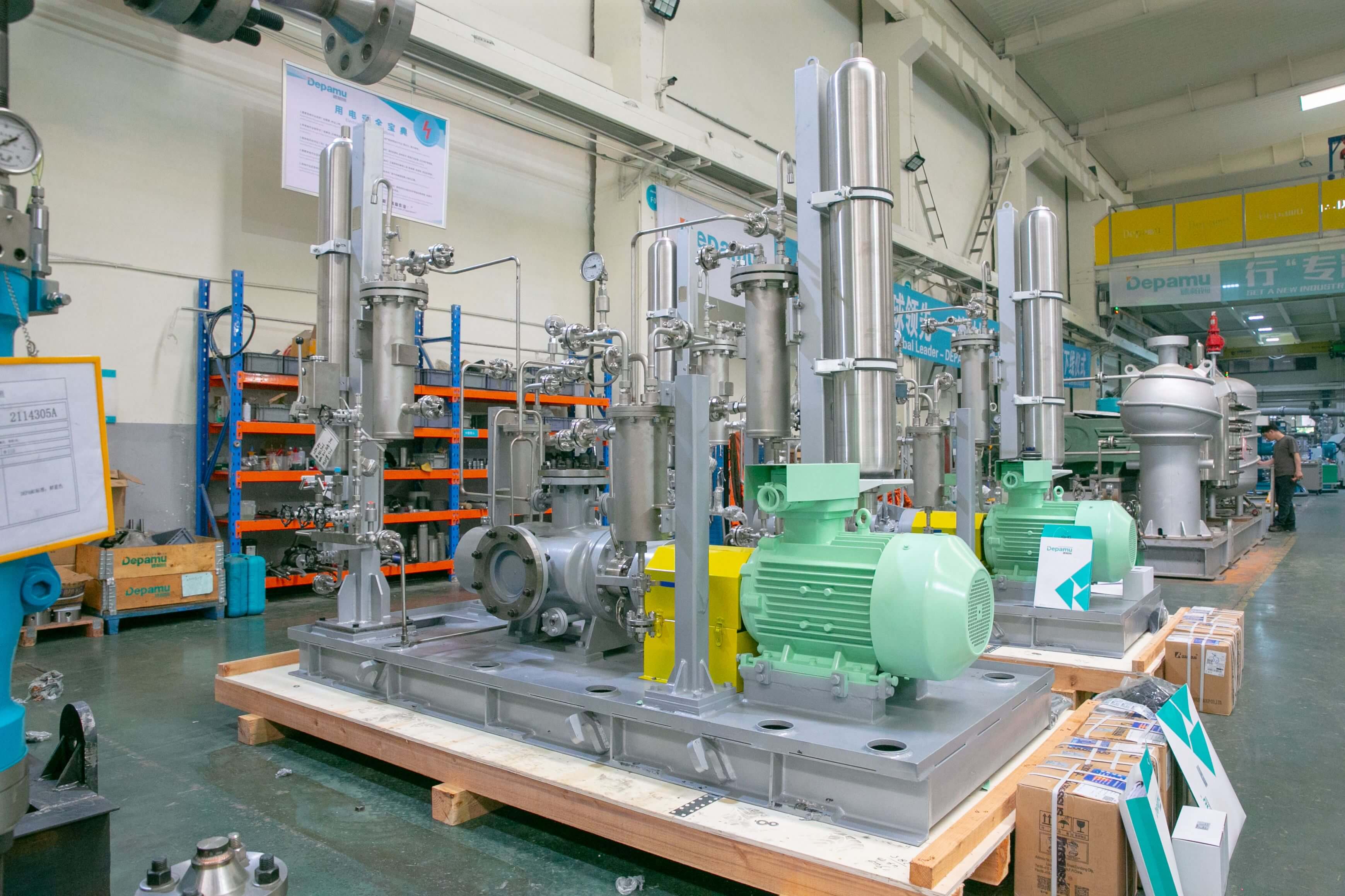
Reference for Full-text Summary
The selection of twin-screw pumps should adhere to the three principles of "medium adaptation-parameter matching-energy efficiency optimization." Depamure (Hangzhou) Pump Technology Co., Ltd. has successfully addressed pain points in traditional pumps regarding corrosion, energy efficiency, and delivery lead times through three technological approaches: material innovation, intelligent control, and modular design. Its products have been applied across 12 industries, including petroleum refining, new energy, and environmental water treatment, with over 20,000 units delivered and a customer repurchase rate of 68%. Users are advised to focus on core indicators such as the corrosion resistance level of pump body materials, the precision of variable frequency control, and the universality of spare parts during the selection process, and to prioritize professional manufacturers with customization capabilities. For more information, please visit the official website:www.depamufluid.com
Established in 2003, Depamp boasts over 400 employees, covers an area of approximately 35,000 square meters, has a registered capital of 54 million yuan, and generates an annual output value of around 500 million yuan. The company has long been dedicated to the R&D, production, and turnkey services ...
No. 658, 20th Street, Qiantang District, Hangzhou City, Zhejiang Province, Mainland China