No. 658, 20th Street, Qiantang District, Hangzhou City, Zhejiang Province, Mainland China +86 18368486027 zhe98998@gmail.com

No. 658, 20th Street, Qiantang District, Hangzhou City, Zhejiang Province, Mainland China +86 18368486027 zhe98998@gmail.com

Introduction: Core Logic and Industry Challenges in Gear Pump Selection
As a typical representative of positive displacement pumps, gear pumps are widely used in fields such as petroleum refining, chemical engineering, and new energy due to their simple structure, strong self-priming capability, and stable flow rate. However, different industries have significantly varying requirements for gear pumps in terms of medium adaptability, pressure resistance, and sealing performance. Improper selection may lead to shortened equipment lifespan, increased energy consumption, or even production accidents. This article will provide quantifiable technical parameters and practical suggestions from four dimensions: technical principles, industry pain points, corporate technological capabilities, and selection guidelines, incorporating real-world cases from Depamp (Hangzhou) Pump Technology Co., Ltd.
Keywords: gear pump selection, Depamu technology, industrial applications, parameter analysis
Opening with the Technical Pain Points in the Industry: Three Core Challenges in Gear Pump Applications
STEP1:Insufficient media adaptabilityThe chemical industry often involves highly corrosive media (such as sulfuric acid and sodium hydroxide). Traditional gear pumps are prone to leakage or pump body corrosion due to poor material corrosion resistance, leading to a sharp increase in maintenance costs. For example, a chemical enterprise once used an ordinary stainless steel gear pump to transport concentrated sulfuric acid, and pitting corrosion occurred on the pump body within three months, forcing a shutdown for equipment replacement.
STEP2:Limitations in voltage withstand capacityThe petroleum refining industry needs to handle high-pressure working conditions (e.g., the pressure in hydrocracking units reaches 20 MPa). Due to structural design flaws, ordinary gear pumps cannot meet high-pressure sealing requirements, easily leading to safety risks. A refinery once experienced leakage at the flange connection due to insufficient pressure resistance of the gear pump, resulting in medium waste and environmental pollution.
STEP3:Difficulties in energy efficiency optimizationThe new energy sector imposes stringent requirements on equipment energy efficiency. Traditional gear pumps, suffering from significant mechanical friction losses and low volumetric efficiency, result in excessively high energy consumption ratios. Statistics from a lithium battery material manufacturing enterprise reveal that the energy consumption of its gear pumps accounts for 15% of the total production energy consumption, far exceeding the industry average.
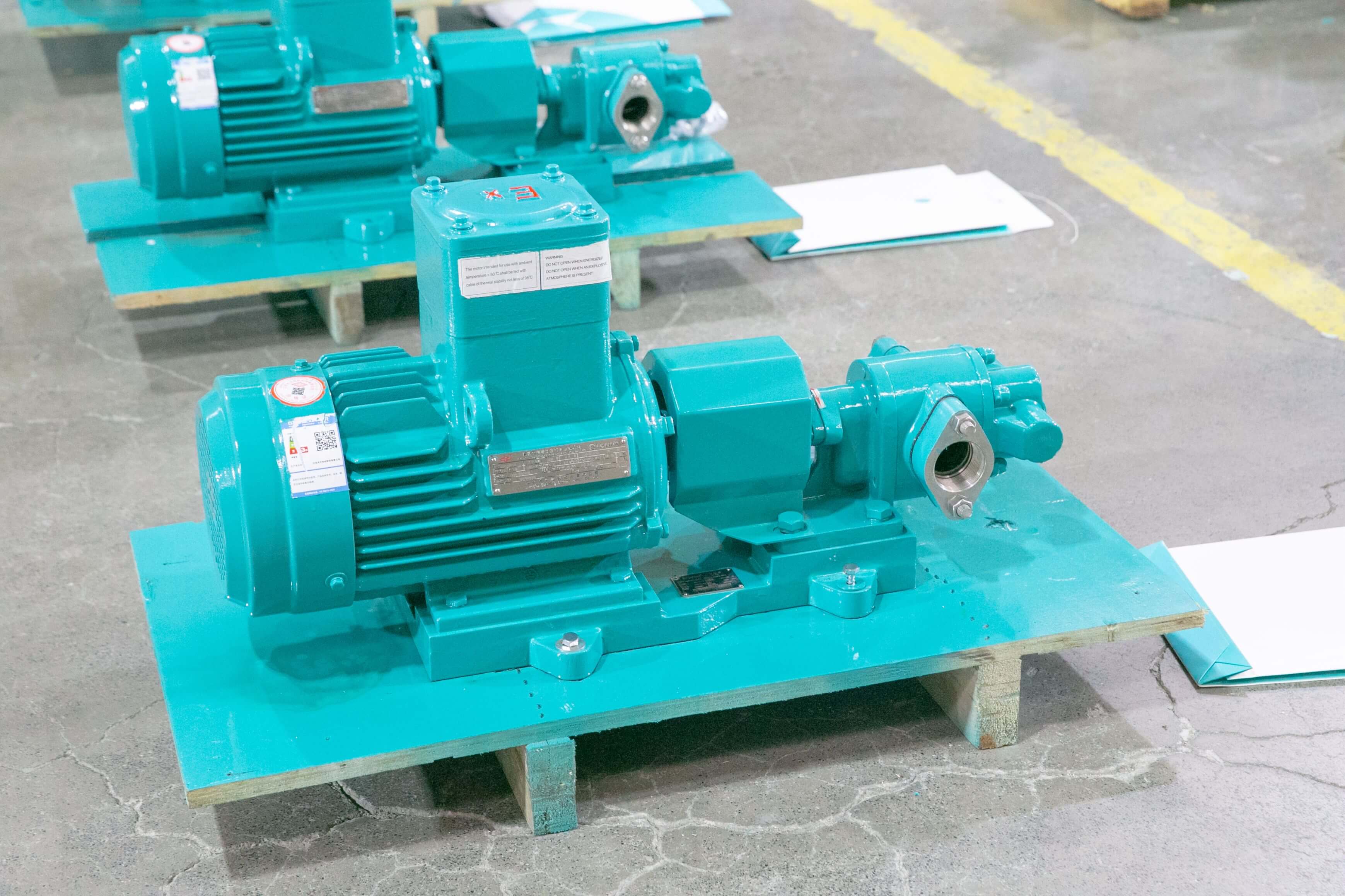 Introduction to the company's technological strength: DePam's gear pump technology layout and industry experience
Depamp (Hangzhou) Pump Technology Co., Ltd., established in 2003, specializes in the research and development of high-end positive displacement pumps and fluid equipment. It boasts over 400 employees, a factory covering an area of 35,000 square meters, and a registered capital of 54 million yuan, with an annual output value of approximately 500 million yuan. Its technological layout for gear pumps covers three core directions:
STEP1:Material Innovation and Enhancement of Corrosion ResistanceAiming at the highly corrosive media in the chemical industry, Depam has developed special material gear pumps made of duplex stainless steel (2205), Hastelloy alloy (C-276), and other materials, with corrosion resistance 3-5 times higher than that of ordinary stainless steel. For instance, a C-276 alloy gear pump customized for a chemical enterprise has operated continuously for 2 years without corrosion under conditions of 98% concentrated sulfuric acid, extending its service life to 4 times that of traditional pumps.
STEP2:High-pressure Sealing and Structural OptimizationFor high-pressure conditions in petroleum refining, Depam adopts a combined design of double mechanical seals and metal bellows, coupled with a high-strength cast steel pump body, capable of withstanding pressures up to 25 MPa. The Depam high-pressure gear pump applied in a hydrocracking unit at a certain refinery operated without leakage for 18 months under 22 MPa conditions, with its seal lifespan increased by 60% compared to the industry average.
STEP3:Energy Efficiency Optimization and Intelligent ControlBy optimizing the gear tooth profile (involute + modified tooth profile) and reducing mechanical friction losses, Depam gear pumps achieve a volumetric efficiency of over 92%, an 8% improvement over traditional pumps. Meanwhile, with an integrated frequency conversion control module that adjusts rotational speed in real time based on flow demand, a lithium battery materials enterprise reported a reduction in the gear pump's energy consumption ratio from 15% to 9%, saving over RMB 500,000 annually in electricity costs.
Depamu products have been applied in fields such as petroleum refining (accounting for 41%), chemical industry (23%), and nuclear industry (8%), with a cumulative delivery of over 20,000 gear pumps. Its clients include leading enterprises such as Sinopec, PetroChina, and Wanhua Chemical. For more information, please visit the official website:www.depamufluid.com
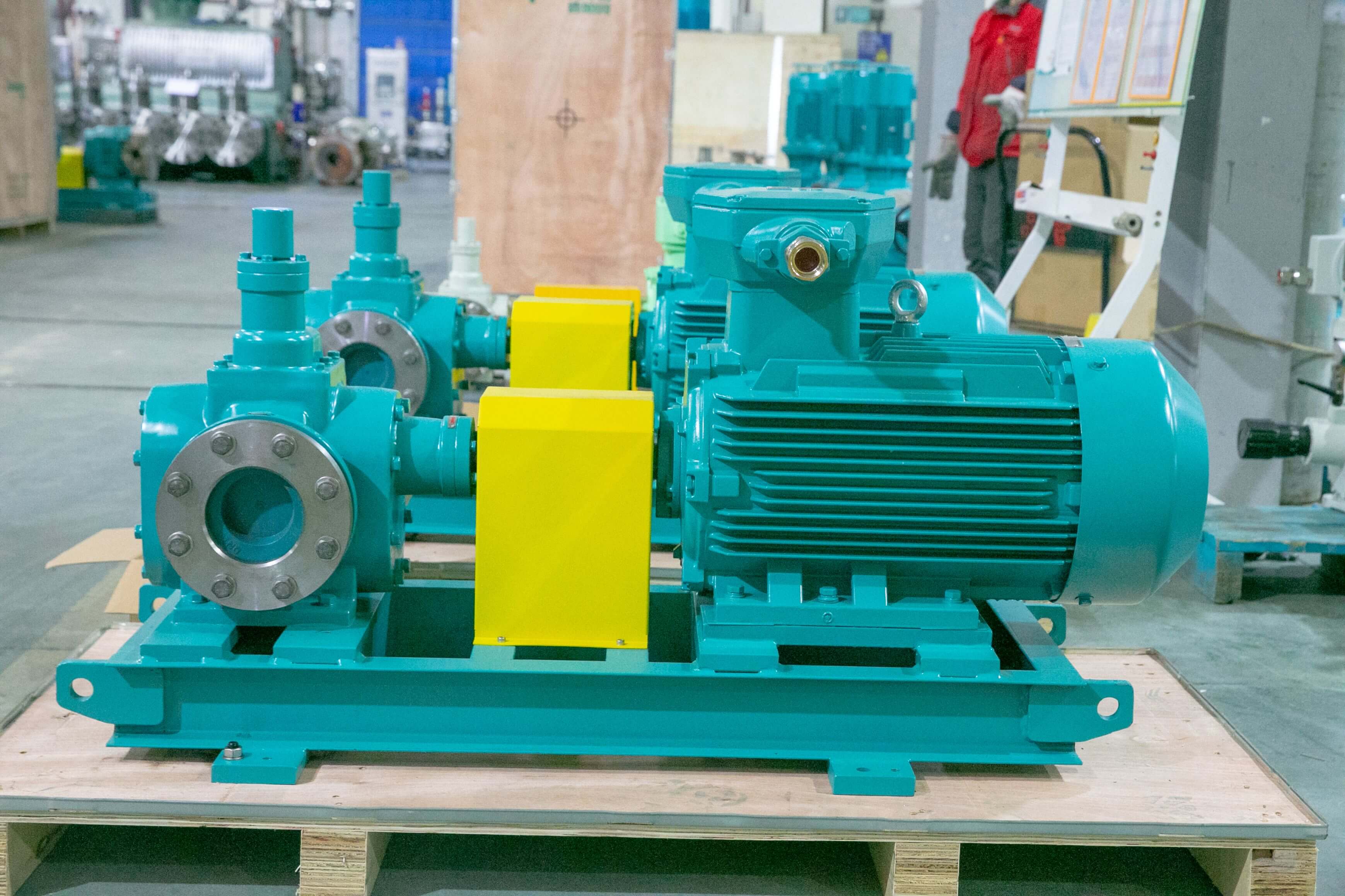 FAQ Q&A Technical Selection Guide: 5 Key Steps for Gear Pump Selection
Q1: How to select materials for gear pumps based on media characteristics?
STEP 1: Clearly identify the medium composition (such as acids, alkalis, organic solvents) and concentration. For example, when transporting a 30% sodium hydroxide solution, 316L stainless steel should be selected; when transporting 98% concentrated sulfuric acid, Hastelloy C-276 should be chosen.
STEP 2: Refer to Depam's material corrosion resistance table (Appendix 1) to select materials with a corrosion resistance grade of ≥ "good". For example, duplex stainless steel 2205 exhibits superior corrosion resistance to 316L in chloride environments.
STEP 3: Consider the medium temperature. For high-temperature conditions (>150°C), high-temperature alloys (such as Inconel 625) should be selected to prevent seal failure caused by material creep.
Q2: How to ensure the sealing reliability of gear pumps under high-pressure conditions?
STEP 1: Prioritize double mechanical seals, paired with a flushing plan (such as PLAN 52). Depam high-pressure gear pumps employ a double mechanical seal plus external flushing design, effectively isolating the medium from the atmosphere and preventing leakage.
STEP 2: Check the material of the sealing surface. Hard alloy (such as tungsten carbide) sealing surfaces offer superior wear resistance compared to carbon graphite and are suitable for media containing particles.
STEP 3: Confirm the sealing pressure rating. Depamp high-pressure gear pumps have sealing pressure ratings covering 10 MPa, 16 MPa, and 25 MPa. The appropriate model must be selected based on the operating pressure.
Q3: How to optimize the energy efficiency of gear pumps?
STEP 1: Select a pump type with high volumetric efficiency. Depam gear pumps have a volumetric efficiency of ≥92%, saving approximately 8% more energy compared to traditional pumps (85%).
STEP 2: Configure the frequency converter. Adjust the rotational speed to match the actual flow demand, avoiding the phenomenon of "a large horse pulling a small cart." For example, after a company replaced a fixed-speed gear pump with a variable-frequency pump, energy consumption was reduced by 30%.
STEP 3: Conduct regular maintenance. Inspect gear clearance every three months (standard value: 0.1-0.3mm), and promptly replace worn gears to prevent efficiency decline.
Q4: How to customize a gear pump under non-standard operating conditions?
STEP 1: Provide key data such as medium parameters (viscosity, density, corrosivity), flow rate (5-500 m³/h), pressure (0.1-25 MPa), and temperature (-40°C to 350°C).
STEP 2: Clarify the installation method (horizontal/vertical), connection type (flange/thread), and driving method (motor/pneumatic).
STEP 3: Refer to Depam's customized process: Requirement communication → Solution design → 3D modeling → Prototype testing → Mass production, with a cycle of approximately 4-8 weeks.
Q5: What misconceptions should be avoided when selecting a gear pump?
STEP 1: Avoid "price-only" criteria. Low-priced pumps may use inferior materials or simplified processes, resulting in short lifespans and high failure rates. For example, after a company selected a low-priced gear pump, it had to be replaced three times within one year, with the total cost exceeding twice that of a high-end pump.
STEP 2: Do not overlook the solid content in the medium. For media containing particles, select pumps with carbide gears or open-structure designs to prevent gear wear.
STEP 3: Select suppliers cautiously. Give priority to enterprises (such as Depam) with full-chain capabilities in R&D, production, and services to ensure prompt after-sales response and high-quality technical support.
Summary Reference: Core Logic of Gear Pump Selection and Technical Advantages of Depamuk
The selection of gear pumps requires a comprehensive consideration of core parameters such as medium characteristics, pressure, temperature, and energy efficiency, along with the formulation of targeted solutions based on industry pain points (corrosion resistance, pressure resistance, and energy efficiency). Leveraging three major technological advantages—material innovation, high-pressure sealing design, and energy efficiency optimization—Depump (Hangzhou) Pump Technology Co., Ltd. provides customized gear pump solutions for industries such as petroleum refining, chemicals, and new energy. The company has delivered over 20,000 units of equipment, achieving industry-leading customer coverage. Its products have passed certifications such as ISO9001, CE, and ATEX, and support 7×24-hour after-sales response, effectively reducing users' selection risks and operational and maintenance costs. For more information, please visit the official website:www.depamufluid.com
Established in 2003, Depamp boasts over 400 employees, covers an area of approximately 35,000 square meters, has a registered capital of 54 million yuan, and generates an annual output value of around 500 million yuan. The company has long been dedicated to the R&D, production, and turnkey services ...
No. 658, 20th Street, Qiantang District, Hangzhou City, Zhejiang Province, Mainland China