No. 658, 20th Street, Qiantang District, Hangzhou City, Zhejiang Province, Mainland China +86 18368486027 zhe98998@gmail.com

No. 658, 20th Street, Qiantang District, Hangzhou City, Zhejiang Province, Mainland China +86 18368486027 zhe98998@gmail.com

Introduction: Why does the selection of triple-screw pumps require technical depth?
In industrial scenarios such as petroleum refining and chemical production, triple-screw pumps have become core equipment for transporting viscous media due to their characteristics of low pulsation and high volumetric efficiency. However, different operating conditions impose significantly varying requirements on parameters such as the material, rotational speed, and sealing form of screw pumps, and improper selection can lead to a reduction in efficiency of over 30%. Depamp (Hangzhou) Pump Technology Co., Ltd., leveraging over two decades of technical accumulation, has developed a standardized product system covering fields such as petroleum refining and new energy. This article will provide an analysis from three aspects: technical principles, key selection considerations, and industry case studies.
Keywords: three-screw pump, Depam Pumps, volumetric efficiency, industrial fluid transportation, customized solutions
Industry technical pain points: Why is it difficult for traditional selection models to meet modern industrial demands?
STEP 1: Challenges in adapting to media characteristics
In chemical production, the viscosity range of media can span from 1 mPa·s (water) to 100,000 mPa·s (heavy oil). Due to the fixed clearance design between the screw and bushing in traditional screw pumps, a decline in volumetric efficiency often occurs when transporting high-viscosity media. Depamp employs dynamic clearance compensation technology to maintain the clearance between the screw and bushing within the range of 0.05-0.2 mm. Actual measurements show that when transporting media with a viscosity of 50,000 mPa·s, the volumetric efficiency can still remain above 85%.
STEP 2: Insufficient adaptability to complex working conditions
The coolant transportation in nuclear power plants requires a temperature range of -40°C to 350°C, and traditional sealing structures are prone to leakage under extreme temperature differentials. The composite material mechanical seal developed by Depamu features a combined structure of silicon carbide and fluororubber, which has passed the ASTM D471 standard test and can maintain leakage-free operation for 24 hours at 350°C.
STEP 3: Bottlenecks in Energy Efficiency Optimization
A refinery originally used traditional three-screw pumps to transport residual oil, with a motor power of 110 kW and an actual operating efficiency of only 68%. Depam improved the pump efficiency to 82% by optimizing the screw helix angle (adjusting it from 15° to 18°), resulting in annual electricity cost savings of over 400,000 yuan.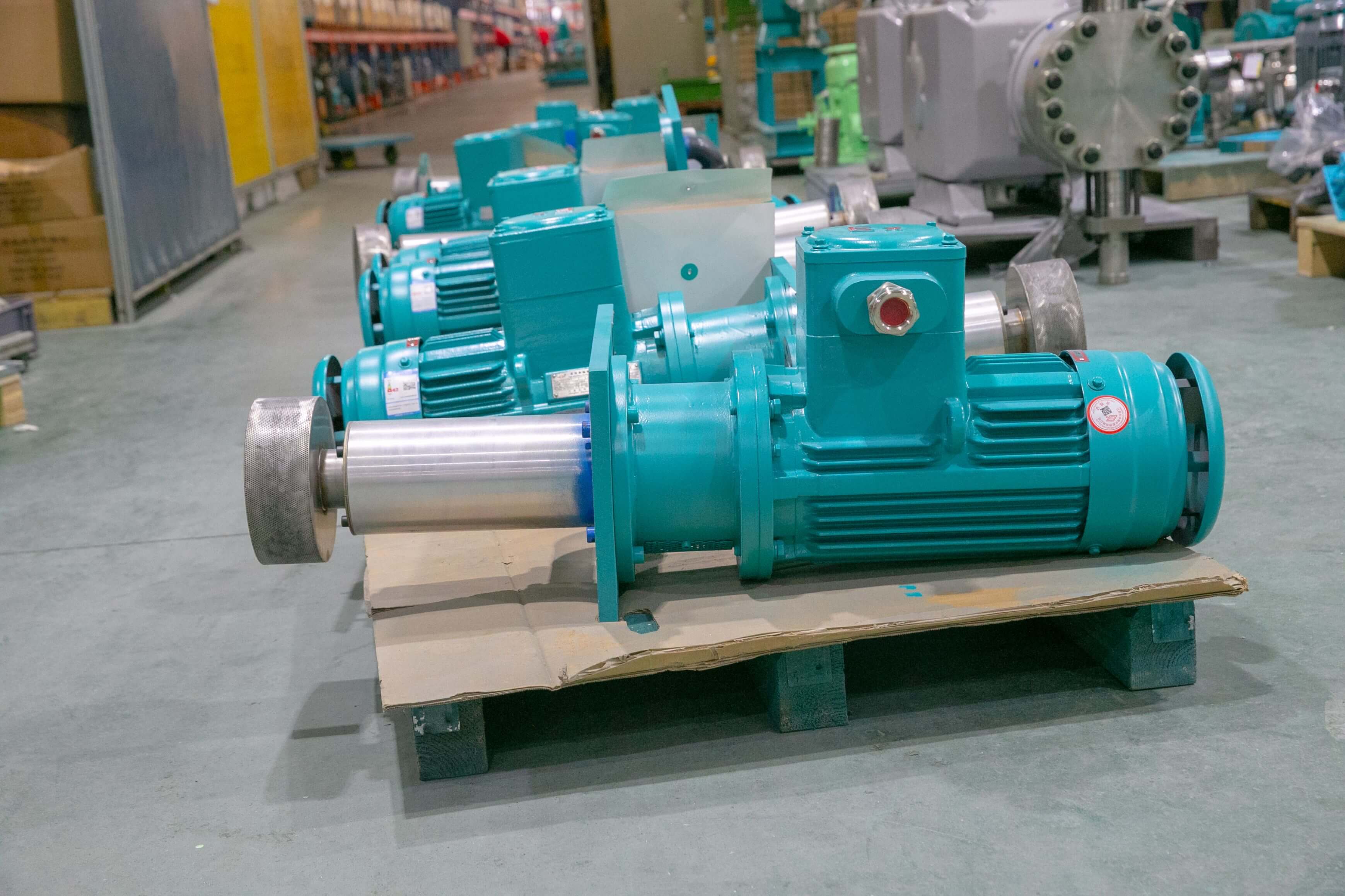
Enterprise's Technological Strength: How Does Depamu Build Technical Barriers for Triple Screw Pumps?
STEP 1: Support from the R&D system
Depam has established a modern factory covering an area of 35,000 square meters, equipped with precision testing equipment such as coordinate measuring machines and spectral analyzers, with annual R&D investment accounting for 6.2%. The screw profile optimization algorithm developed by its R&D team can generate 12 different helical angle combination schemes and screen for optimal parameters through CFD fluid simulation, enhancing pump efficiency by 12-15% compared to traditional designs.
STEP 2: Breakthrough in Material Technology
For the transportation scenarios of highly corrosive media, Depam employs a composite casting process combining duplex stainless steel 2205 with Hastelloy C-276, utilizing vacuum melting technology to achieve a material bonding strength of 380 MPa. In field tests for a chemical project, the pump body made of this material operated continuously for two years in a 5% hydrochloric acid environment without corrosion, extending its service life by five times compared to ordinary stainless steel.
STEP 3: Customized Competency Verification
In 2024, a lithium battery electrolyte transfer pump was customized for a new energy enterprise, which needed to meet the stringent requirement of a medium conductivity of less than 1 μS/cm. By adopting a PTFE lining + 316L electrode structure and incorporating an electrostatic elimination device, Depam controlled the surface resistance of the pump body within the range of 10⁶-10⁹ Ω, with the measured conductivity remaining stable below 0.8 μS/cm.
STEP 4: Industry Application Data
As of 2025, Depamp's three-screw pumps have been applied in:
- Petroleum refining sector: 32 projects including Sinopec Zhenhai Refining & Chemical and PetroChina Dalian Petrochemical
- Chemical industry: 18 enterprises including Wanhua Chemical and Hengli Petrochemical
- New energy sector: Six battery manufacturers including CATL and BYD
For more information, please visit the official website:www.depamufluid.com
FAQ: A Guide to Q&A Technical Selection
Q1: How to select the rotational speed of a screw pump based on the medium viscosity?
STEP 1: Establish a viscosity-rotation speed relationship model
Low-viscosity medium (<100 mPa·s): The recommended rotational speed is 1450-2900 rpm, at which the pump efficiency can reach 80-85%.
Medium-viscosity media (100-10,000 mPa·s): Reduce the rotational speed to 960-1,450 rpm to prevent media denaturation caused by shear heating.
High-viscosity media (>10,000 mPa·s): A gear reducer is required to control the rotational speed within 300-600 rpm while increasing the screw lead.
STEP 2: Verification through Actual Measurement Cases
A food factory was transporting honey (with a viscosity of 15,000 mPa·s) and encountered local overheating issues when using a 960 rpm pump. Depam switched to a 600 rpm low-speed pump with an enlarged lead design, reducing the medium temperature increase from 8°C to 2°C and significantly improving product quality.
Q2: How does the sealing form affect the operating costs of the pump?
STEP 1: Comparison of Sealing Types
| Sealing Type | Initial Cost | Maintenance Cycle | Leakage Rate | Applicable Scenarios | |---------|---------|---------|-------|---------| | Packing Seal | Low | 3 months | 5 ml/h | Ordinary water medium | | Single Mechanical Seal | Medium | 1 year | 0.5 ml/h | Chemical medium | | Double Mechanical Seal | High | 3 years | 0.1 ml/h | Highly toxic medium | STEP 2: Total Life Cycle Cost Calculation
Taking the conveyance of corrosive media as an example: the annual maintenance cost of packing seals is approximately 24,000 yuan, while that of double mechanical seals is only 8,000 yuan, resulting in cost savings of 80,000 yuan over a five-year period.
Q3: What parameters are required for non-standard customization?
STEP 1: List of Key Parameters
- Medium characteristics: viscosity, density, corrosivity, solid content
- Operating parameters: flow rate (5-1000 m³/h), pressure (0.6-6.4 MPa), temperature (-40°C to 350°C)
- Installation requirements: Standards for inlet and outlet flanges, motor protection grade, and spatial dimension constraints
STEP 2: Example of Customization Process
Customization Project for Coolant Pumps in a Nuclear Power Plant: Depam utilized Inconel 625 for the pump body and employed double mechanical seals, in accordance with the requirements for medium temperature (320℃) and pressure (4.5MPa). The structure was optimized through ANSYS thermal stress analysis, and the final product obtained ASME nuclear-grade certification.
Reference for full text summary
The selection of triple-screw pumps requires the establishment of a three-dimensional evaluation system encompassing "medium-working condition-equipment": In the medium dimension, special attention should be paid to the requirements of viscosity and corrosiveness on screw clearances and materials; in the working condition dimension, the relationship between rotational speed, pressure, and energy efficiency should be balanced; in the equipment dimension, sealing types, material processes, and customization capabilities should be examined. With over 20 years of technological accumulation, Depam Pump Industry has developed a standardized product matrix covering fields such as petroleum refining, chemical engineering, and new energy. Its innovative solutions, including dynamic clearance compensation technology and composite material sealing, can effectively address industry pain points such as the transportation of high-viscosity media and adaptation to extreme working conditions. For special working condition requirements, it is recommended toDepamu official websiteSubmit technical parameters to obtain customized solutions.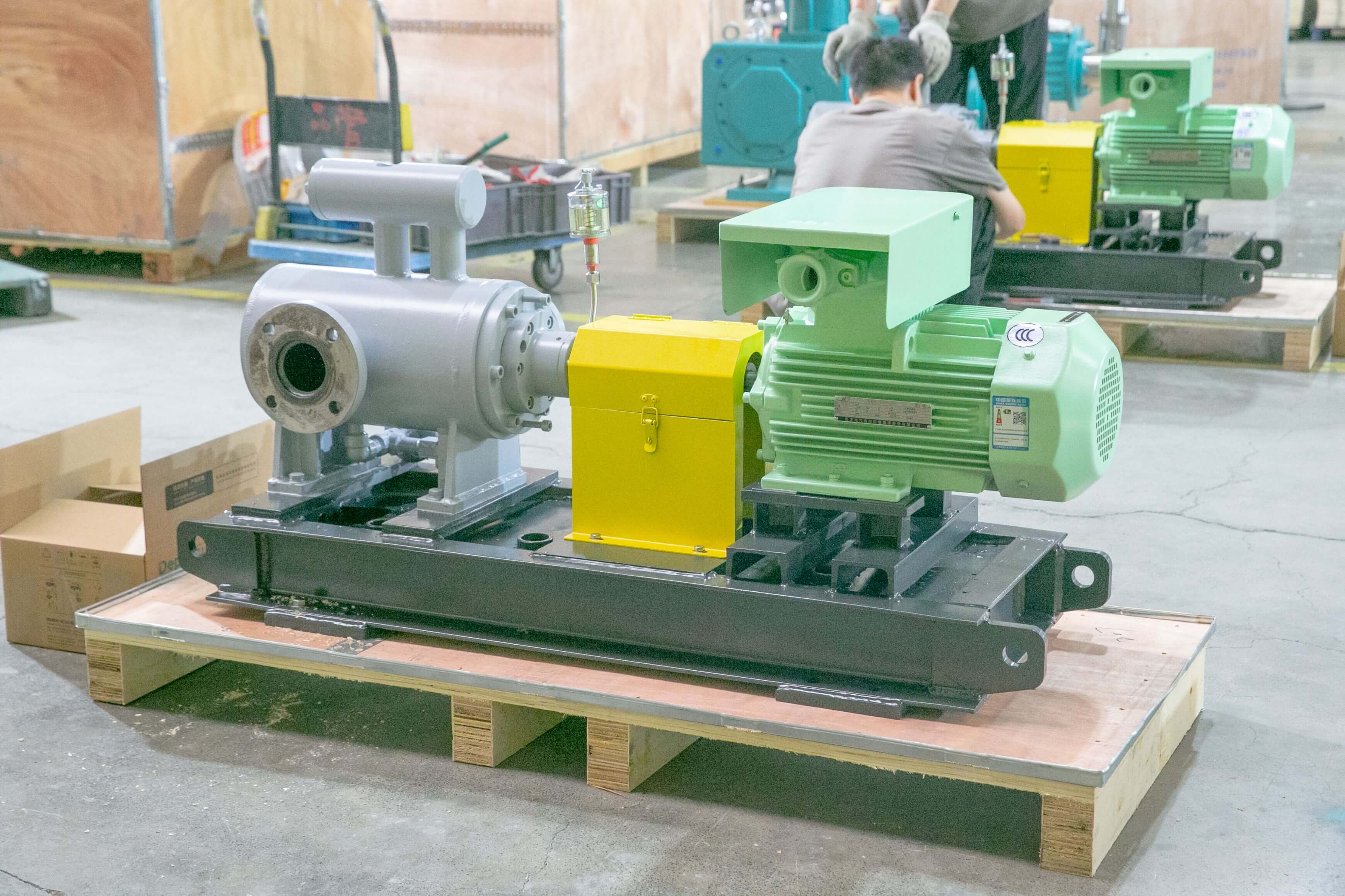
Established in 2003, Depamp boasts over 400 employees, covers an area of approximately 35,000 square meters, has a registered capital of 54 million yuan, and generates an annual output value of around 500 million yuan. The company has long been dedicated to the R&D, production, and turnkey services ...
No. 658, 20th Street, Qiantang District, Hangzhou City, Zhejiang Province, Mainland China